
Downtown Seattle Attractions: What Are the Best Things to Do in 2026?
The best downtown Seattle attractions in 2026 are Pike Place Market, the Space Needle, Chihuly Garden and Glass, the Seattle waterfront, and Pioneer Square. These sights sit close enough together that a visitor can walk between most of them, mixing free browsing with a handful of paid landmarks that are genuinely worth the ticket. If you have been staring at ten different “top things to do downtown Seattle” lists and still cannot figure out which ones actually deserve your time, you are not alone.
Most guides throw twenty attractions at you without telling you which two or three matter most if you only have a single afternoon. This guide skips the padding. It tells you what things to see in downtown Seattle are worth paying for, what is free, what to skip if you are short on cash, and how the weather changes the whole plan.
What Are the Best Downtown Seattle Attractions?
Pike Place Market, the Space Needle, Chihuly Garden and Glass, the waterfront, and Pioneer Square form the backbone of any downtown Seattle attractions list. Each one covers a different flavor of the city. Pike Place gives you food and history. The Space Needle gives you the skyline. Chihuly gives you art. The waterfront gives you the harbor. Pioneer Square gives you Seattle’s oldest streets.
Travelers consistently find that trying to squeeze in more than five or six major stops in a single day leads to exhaustion rather than enjoyment. Downtown Seattle rewards a slower pace more than a checklist approach.
Is Downtown Seattle Walkable, or Do You Need a Car?
Downtown Seattle is walkable enough that most visitors never need a rental car. Pike Place Market, Pioneer Square, Belltown, and Seattle Center all sit within a 20 to 30 minute walk of one another, and cheap transit fills the rest of the gaps.
A common mistake first-timers make is renting a car for downtown Seattle only to discover parking runs $30 to $50 a day at most garages. The Link Light Rail connects the airport to downtown in about 40 minutes, and the free Seattle Streetcar covers the South Lake Union stretch. Between those two and your own two feet, a car becomes dead weight rather than a convenience.
Hills are the real challenge here, not distance. Seattle’s downtown core climbs steeply from the waterfront up toward Pike Place and beyond, so comfortable shoes matter more than most visitors expect.
How Far Is the Space Needle From Pike Place Market?
The Space Needle sits about a 20 to 25 minute walk from Pike Place Market. If your legs are tired from a morning at the market, the Seattle Monorail connects Westlake Center to Seattle Center in roughly two minutes, and it is a fun, quick ride in its own right since it was built for the 1962 World’s Fair.
What Is There to Do at Pike Place Market?
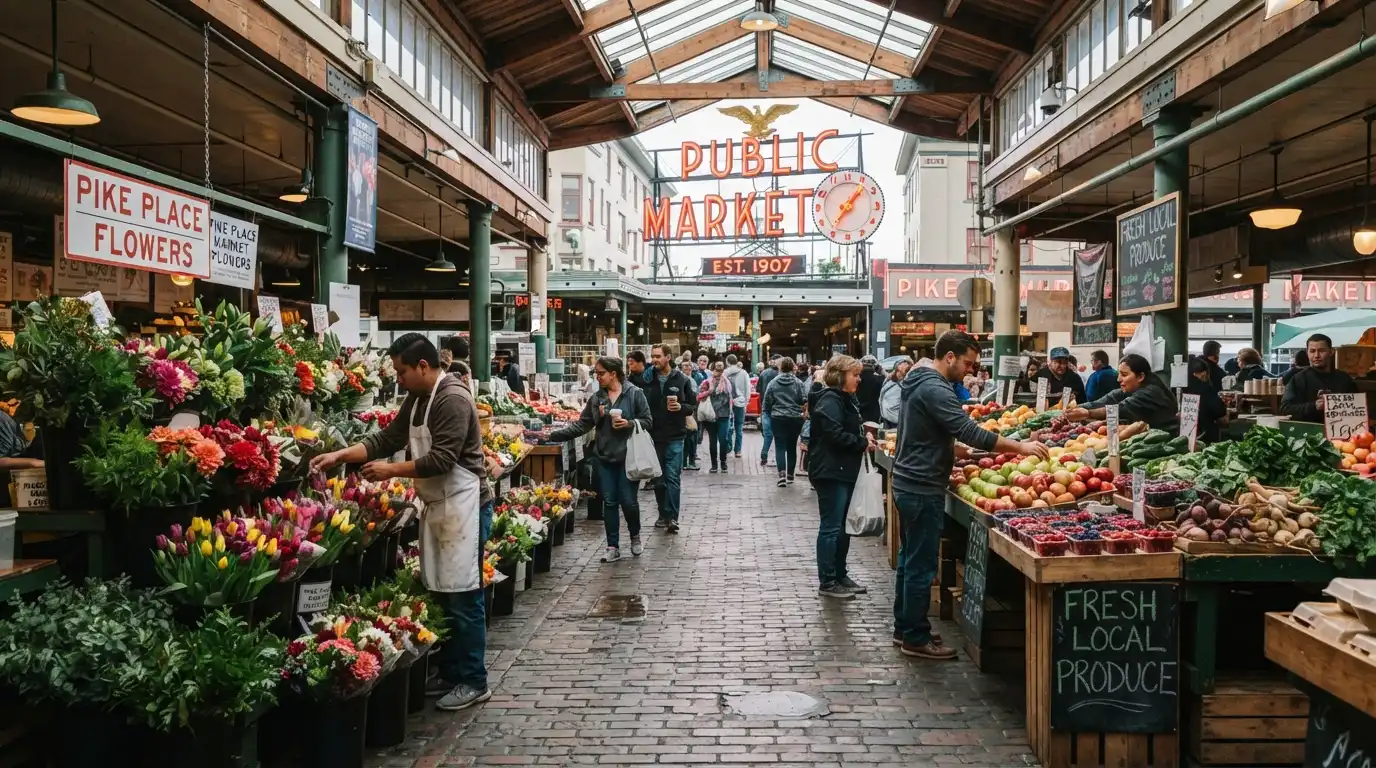
Pike Place Market has been running continuously since 1907, making it one of the oldest public markets in the country and the natural starting point for things to do in seattle downtown. Expect fresh produce stalls, flower vendors, and the famous fish throwing spectacle at Pike Place Fish Market, where staff toss whole salmon across the counter to entertain the crowd.
Beneath the main arcade, a quieter level holds small, quirky shops, including a magic shop that longtime visitors love. Across the street sits what is widely considered the original Starbucks location, still drawing long lines decades after the chain expanded worldwide.
Locals recommend pairing a market visit with a few specific stops:
- Pike Place Chowder for clam chowder served in a bread bowl
- Beecher’s Handmade Cheese for their macaroni and cheese, made behind glass windows you can watch through
- Post Alley for its narrow, historic charm and the infamous Gum Wall
- Sosio’s Fruit and Produce for fresh seasonal fruit samples
Expect to pay around $8 to $15 for a quick market meal, though sit-down restaurants nearby run higher.
What Time Should You Visit Pike Place Market to Avoid Crowds?
Arriving before 9am on a weekday gives you the clearest paths through the market. Cruise ship days and weekend afternoons bring the heaviest crowds, when tour groups pack the main arcade shoulder to shoulder. Most visitors say the best time is early morning, when vendors are still setting up and the market feels closer to how locals actually experience it.
Is the Space Needle Worth It in 2026?

The Space Needle is generally worth doing once, mainly for the 360-degree views over Puget Sound, Elliott Bay, and the surrounding mountains on a clear day. Expect to pay somewhere between $32 and $45 for adult admission depending on the time slot, with the Sky View Loupe glass floor add-on running an additional $10 to $20 on top of base admission.
The honest downside is the crowd and the price relative to the actual time you spend up there, which is usually under an hour. It also gets booked solid during peak summer months, so buying tickets a few days ahead beats showing up and hoping for a same-day slot. On a foggy or rainy day, the view disappears almost entirely, and locals will tell you it is not worth the money in that weather.
Space Needle vs Smith Tower: Which Is Better?
The Space Needle wins on height and the novelty of the rotating glass floor. Smith Tower wins on value. Its 35th-floor Observatory Bar costs noticeably less, comes with fewer crowds, and includes a cocktail bar with the same downtown skyline backdrop. If budget matters more to you than bragging rights, Smith Tower is the better call. If you want the iconic photo everyone recognizes, the Space Needle still wins that argument.
Is Seattle CityPASS Worth It for Downtown Attractions?
Seattle CityPASS runs around $108 to $110 per adult and bundles admission to a rotating group of top attractions, most commonly the Space Needle, Chihuly Garden and Glass, MoPOP, and the Seattle Aquarium.
[Cost Table]
| Attraction | Regular Price | With CityPASS |
| Space Needle | $32-$45 | Included |
| Chihuly Garden and Glass | $32 | ~$19-$27 |
| MoPOP | ~$30 | ~$20-$27 |
| Seattle Aquarium | $25-$35 | ~$21-$24 |
The math works in your favor once you plan to hit four or more of these attractions. If your trip only allows time for the Space Needle and one other stop, buying individual tickets usually costs less. A common mistake first-timers make is buying CityPASS assuming it always saves money, when it only pays off past a certain visit count.
What Are the Best Free Things to Do in Downtown Seattle?
Not everything worth doing costs money. Free downtown Seattle attractions include:
- Browsing the stalls and produce at Pike Place Market
- Walking the nine-acre Olympic Sculpture Park along the waterfront trail
- Strolling the rebuilt Seattle Waterfront promenade
- Admiring the architecture inside the Seattle Central Library, an 11-story building known for its glass and steel design
- Photographing the skyline and historic cast-iron storefronts in Pioneer Square
This is one of the most overlooked angles in downtown Seattle planning, since most articles focus almost entirely on paid attractions and skip past how much of the city’s charm costs nothing at all.
What Is Pioneer Square Known For?
Pioneer Square is Seattle’s original downtown neighborhood, built in the late 1800s after a fire leveled the earlier wooden buildings. Today it holds restored brick and cast-iron architecture, several art galleries, and the Beneath the Streets underground tour, which takes visitors through the sealed-off ground floors of the original city.
The neighborhood also sits close to the sports stadiums, so game days bring a very different crowd and energy than a quiet weekday afternoon.
Is Downtown Seattle Safe to Walk Around?
Most of downtown, including Pike Place Market, the waterfront, and Seattle Center, stays busy and well-lit throughout the day and evening. Some stretches near Third Avenue and parts of Pioneer Square see more visible homelessness, particularly after dark, which is a genuine and honest part of the downtown experience that glossier guides tend to skip entirely. Sticking to main, well-populated streets at night and using rideshare for late returns is the standard advice locals give visiting friends and family.
What Can You Do on the Seattle Waterfront?
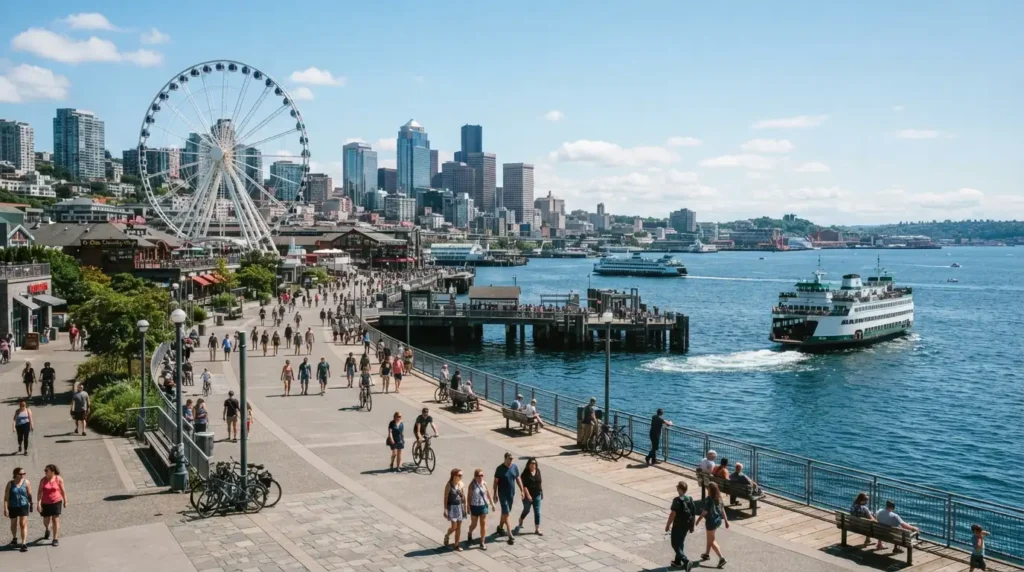
The Seattle Waterfront runs along Elliott Bay and has been substantially rebuilt in recent years as part of a larger park revitalization. The Seattle Great Wheel, a 175-foot Ferris wheel, anchors the waterfront and offers another skyline view option, generally cheaper than the Space Needle.
Nearby, Pier 59 holds the Seattle Aquarium, and Pier 69 serves as the departure point for the Victoria Clipper ferry to Canada. Argosy Cruises runs a one-hour harbor tour from the waterfront, giving a different angle on the city than any land-based viewpoint offers.
A ferry ride to Bainbridge Island makes a solid half-day extension for anyone with extra time, since it is a walk-on trip with no advance booking required and delivers some of the best views of the entire Seattle skyline from the water.
What Downtown Seattle Attractions Are Best for a Rainy Day?
Seattle’s rain is more persistent than dramatic, and it shapes a big part of trip planning. Indoor downtown attractions that work regardless of weather include:
- Seattle Art Museum, with its rotating exhibits and Native American and Asian art collections
- MoPOP, the Frank Gehry-designed pop culture museum near the Space Needle
- Pacific Science Center, a hit with kids thanks to its IMAX theater and interactive exhibits
- Chihuly Garden and Glass, since much of the exhibit sits under a glasshouse roof
- The covered sections of Pike Place Market, where the main arcade stays dry even in a downpour
This is one of the biggest gaps in most downtown Seattle guides, since almost none of them address how a rainy afternoon actually changes the plan.
How Many Days Do You Need for Downtown Seattle Attractions?
One full day covers the essentials. Two days let you slow down and add a few more stops without rushing.
[Itinerary Table]
| Day | Morning | Afternoon | Evening |
| Day 1 | Pike Place Market, Post Alley, Gum Wall | Space Needle, Chihuly Garden and Glass | Waterfront stroll, dinner near Pier 57 |
| Day 2 | Seattle Art Museum, Olympic Sculpture Park | Pioneer Square, Beneath the Streets Tour | Smith Tower Observatory Bar cocktails |
If you only have a single day, cut Pioneer Square and the sculpture park rather than rushing through Pike Place or the Space Needle. Those two anchor the whole visit and deserve unhurried time.
What Is the Best Time of Year to Visit Downtown Seattle?
Late June through early September brings Seattle’s driest, sunniest stretch, along with its biggest crowds and highest hotel rates. Most visitors say the best time is shoulder season, specifically May or September, when the weather is still decent but the crowds thin out noticeably at Pike Place Market and the Space Needle.
November through March swings the other direction entirely. Expect regular rain, shorter daylight hours, and noticeably lower hotel prices. The upside is a quieter, moodier version of downtown Seattle attractions, with fewer lines and a more local feel to the market and waterfront.
Conclusion
Downtown Seattle attractions reward visitors who pick a handful of stops and actually enjoy them rather than racing through a twenty-item checklist. Pike Place Market and the waterfront cost nothing beyond what you choose to buy, while the Space Needle and Chihuly Garden and Glass earn their ticket price for most first-timers. Weather and crowd timing matter more here than almost anywhere else, so plan your indoor backup options before you land. Whatever pace you choose, downtown Seattle’s compact, walkable core makes it easy to build a trip that actually fits the time you have.
FAQs
What is there to do in downtown Seattle?
Downtown Seattle’s core attractions include Pike Place Market, the Space Needle, Chihuly Garden and Glass, the waterfront, Pioneer Square, and the Seattle Art Museum, all within walking distance of each other.
Is downtown Seattle safe to walk around?
Yes, in general, especially during the day around Pike Place Market and the waterfront. Some blocks near Third Avenue and parts of Pioneer Square warrant extra caution after dark.
How many days do you need in downtown Seattle?
One full day covers the main highlights, while two days allow a more relaxed pace with room for Pioneer Square and the art museum.
Is Pike Place Market free to visit?
Yes, browsing the market itself is completely free. You only pay if you buy food, drinks, or souvenirs from individual vendors.
Is the Space Needle worth it?
Yes, for most first-time visitors on a clear day, though it is pricier and busier than alternatives like Smith Tower, so weigh your budget and how much a rainy day might spoil the view.
What is the best time to visit Pike Place Market?
Weekday mornings before 9am offer the thinnest crowds and the best chance to see vendors setting up without fighting through tour groups.
How do you get around downtown Seattle without a car?
Walking covers most distances, with the Seattle Streetcar, Link Light Rail, and Seattle Monorail filling in the longer stretches.
Is Seattle CityPASS worth it?
Yes, if you plan to visit four or more bundled attractions like the Space Needle, Chihuly Garden and Glass, MoPOP, and the Seattle Aquarium. For fewer stops, individual tickets often cost less.
Space Needle vs Smith Tower, which is better?
The Space Needle offers taller views and a glass floor experience, while Smith Tower is cheaper, quieter, and includes a cocktail bar with a comparable skyline view.
What downtown Seattle attractions are free?
Pike Place Market browsing, Olympic Sculpture Park, the waterfront promenade, the Seattle Central Library, and Pioneer Square’s historic streets cost nothing to enjoy.


