
Seville Day Trips: The 2026 Guide to Córdoba, Cádiz, Ronda and the White Towns
The best Seville day trips are Córdoba, Cádiz, Jerez de la Frontera, Ronda and the Roman ruins of Itálica. Córdoba sits just 45 minutes away by high-speed train, Cádiz reaches the Atlantic in under two hours, and Itálica takes barely half a day. Most travellers pick two and skip Granada.
That last part surprises people. Granada looks close on a map, and almost every list includes it, but the round trip eats nine hours before you have seen a single Nasrid ceiling. The real question is not where you could go from Seville. It is which trip gives you a full, unhurried day and still gets you back in time for tapas in Triana.
What are the best day trips from Seville?
Seville sits at the centre of Andalusia’s transport web, which is why day trips from here work so well. Santa Justa station runs fast trains north and south, Plaza de Armas and Prado de San Sebastián handle the buses, and the AP4 and A4 motorways reach the coast and the caliphate city in under two hours.
| Destination | Travel time one way | Best by | Best for |
| Itálica, Santiponce | 30 minutes | Bus M-170A | Roman ruins, half day |
| Carmona | 40 minutes | Bus | Necropolis, quiet streets |
| Córdoba | 45 minutes | AVE train | Moorish architecture |
| Jerez de la Frontera | 1 hour | Train | Sherry bodegas, horses |
| Cádiz | 1 hour 40 minutes | Train | Beaches, fried fish |
| Aracena | 1 hour 15 minutes | Car or bus | Caves, ham country |
| Ronda | 1 hour 50 minutes | Car or bus | Gorge views, white towns |
| Granada | 2 hours 30 minutes | Train | Alhambra, long day |
How do you get from Seville to Córdoba for the day?
Take the AVE from Santa Justa and you are standing in Córdoba 45 minutes later. The slower Media Distancia service takes about 1 hour 20 minutes and costs noticeably less, so check both before booking on Renfe. Drivers head straight up the A4.
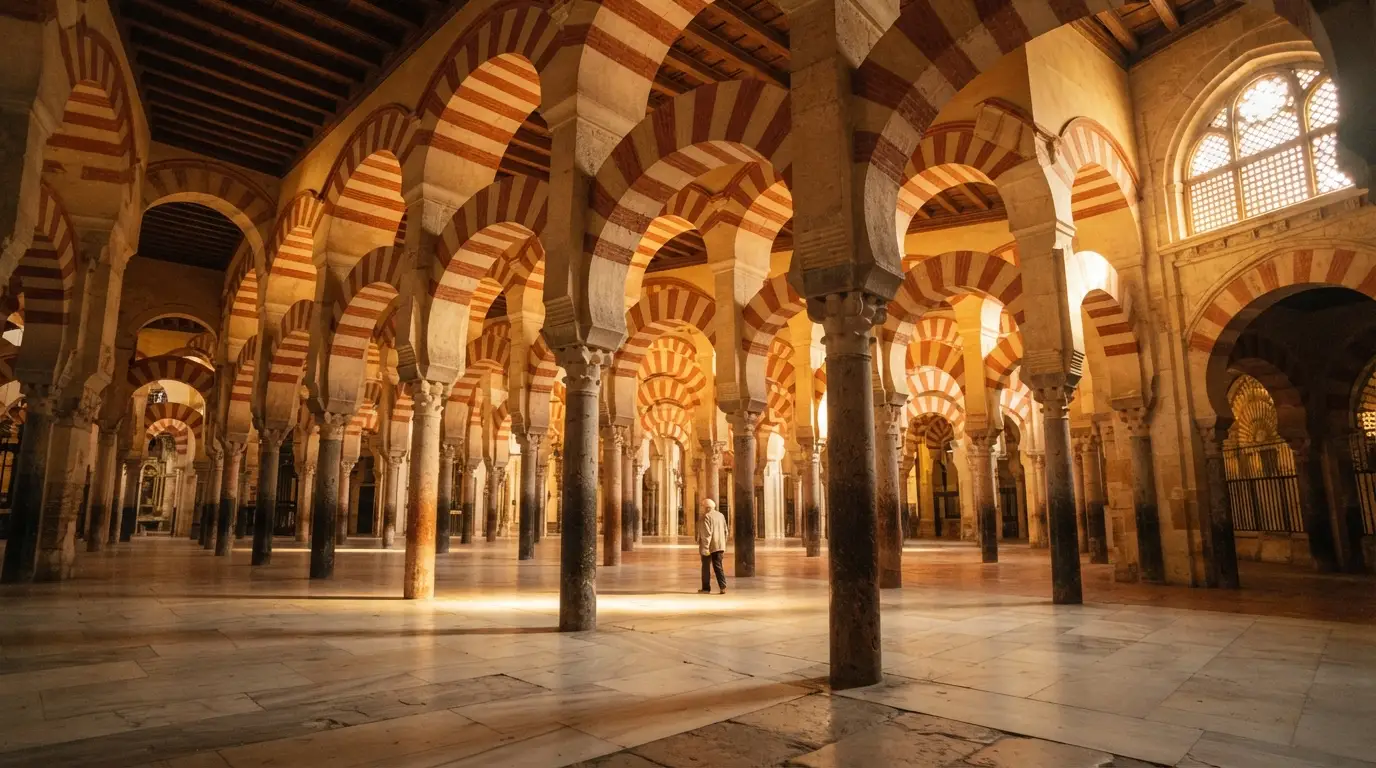
The Mezquita-Catedral is the reason you came. Adult entry runs around €15 in 2026, with reduced rates near €12 for students and over-65s and about €8 for children aged 10 to 14. Here is the detail most guides skip: entry is free Monday to Saturday from 8:30 to 9:30am during morning mass. Staff stop admitting new arrivals around 9:20, the central cathedral area stays closed, and no audio guides are offered. Travellers who take that early slot consistently describe the light through the red and white arches as the best of the day. The bell tower needs a separate ticket of roughly €3, and the Patio de los Naranjos is always free.
After that, walk the Judería, cross the Roman Bridge, and if the calendar allows, visit Palacio de Viana with its twelve planted patios. Skip the menu-board restaurants ringing the mosque. Locals eat salmorejo, flamenquín and rabo de toro two or three streets back, where a menú del día still lands near €14 to €18.
Is Granada worth a day trip from Seville?
Honestly, only if you accept the trade-off. The fast train takes about 2 hours 30 minutes each way, with fares generally between €21 and €47 depending on how early you book. ALSA buses from Plaza de Armas run around €28 one way and take three hours or more.
Official Alhambra tickets sit near €22.27 and sell out one to two months ahead in spring and autumn, partly because a large share of annual capacity is allocated to licensed tour operators before the public sees it. That is why guided tickets around €28 still show stock when the official site shows nothing. Organised day tours from Seville run roughly €79 for adults and last close to thirteen hours.
One more thing to verify: following seismic activity in Granada in August 2026, the Alcazaba was reported closed while the Nasrid Palaces and Generalife reopened on modified routes. Check the official Patronato channels the morning of your visit.
Verdict: worth it if the Alhambra is a lifelong goal. Skip it if you want a relaxed day, and give Granada two nights instead.
Which Seville day trip is best for beaches and seafood?
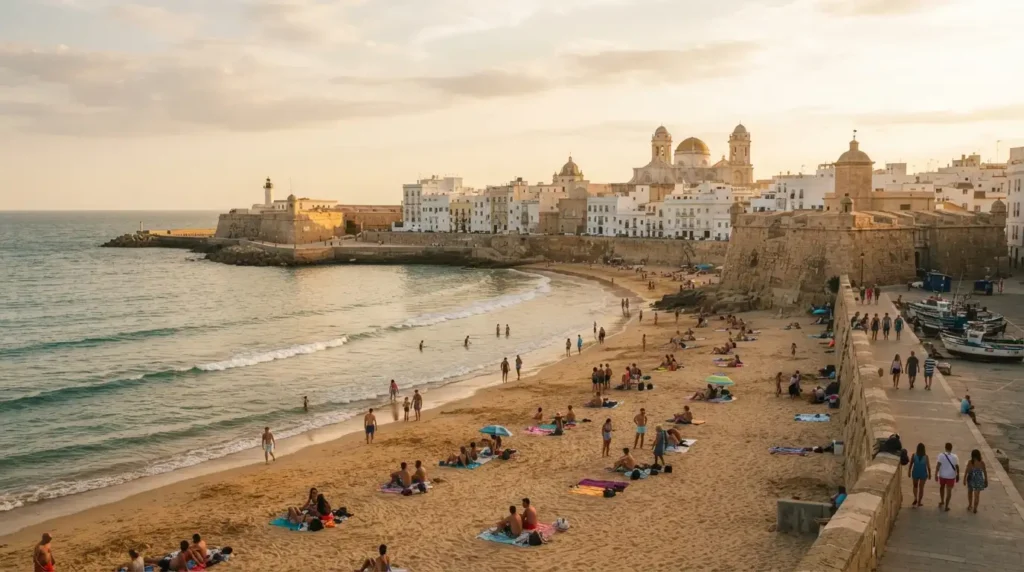
Cádiz, without much debate. Trains from Santa Justa take about 1 hour 40 minutes, and the AP4 gets drivers there in roughly 1 hour 20 minutes. The city was founded by Phoenicians around 1100 BCE, which makes it one of the oldest continuously inhabited spots in Europe.
Playa de la Caleta, framed by the Castillo de Santa Catalina, played Havana in the Bond film Die Another Day, and the golden sand genuinely does sit a five-minute walk from the old town. Climb Torre Tavira for the camera obscura view across the rooftops. Then eat: the Mercado Central de Abastos holds dozens of seafood stalls, and the Rincón Gastronómico inside it is where most visitors find their best meal of the day.
Order tortillitas de camarones, pescaíto frito and cazón en adobo. Expect to pay around €3 to €5 per tapa. One caution: if you visit in February during Carnival, the city is joyful, packed and effectively unbookable.
Where should wine lovers go on a day trip from Seville?
Jerez de la Frontera, about an hour by train. It anchors the Sherry Triangle alongside Sanlúcar de Barrameda and El Puerto de Santa María, and holds roughly 90 bodegas, around 50 of which welcome visitors.
A standard bodega tour explains the solera and criaderas system, then pours fino, manzanilla, amontillado, oloroso and sweet Pedro Ximénez. Tours typically run €20 to €35, with premium tastings climbing higher. Bodegas Tradición pairs its pours with a private collection that includes Goya and Velázquez. Tío Pepe and Lustau run more frequent English-language slots, which matters on a fixed day-trip schedule.
Book ahead. Walk-in availability is unreliable outside summer, and Sunday options thin out sharply. If horses interest you, time the visit for a Real Escuela Andaluza del Arte Ecuestre performance. Jerez and Cádiz can be combined in one long day since they share the same rail line.
What is the best half-day trip from Seville?
Itálica, in Santiponce, just 9 km out. The M-170A Damas bus from Plaza de Armas takes around 30 minutes and costs under €2 each way. Entry is free for EU citizens and about €1.50 for everyone else, which makes it the cheapest serious sight in the province.
Founded in 206 BC by Scipio Africanus and later expanded under Trajan and Hadrian, both born here, the site centres on an amphitheatre built for roughly 25,000 spectators. Mosaic floors survive in the House of Neptune and the House of the Birds. Game of Thrones fans will recognise the arena immediately. Hours shift by season and the site closes Mondays, so confirm before travelling, and bring water because shade is scarce.
Carmona makes an equally good alternative: a Roman Necropolis, the Puerta de Sevilla gate and a terrace at the Parador with views straight across the plain.
How do you visit Ronda and the white towns in one day?
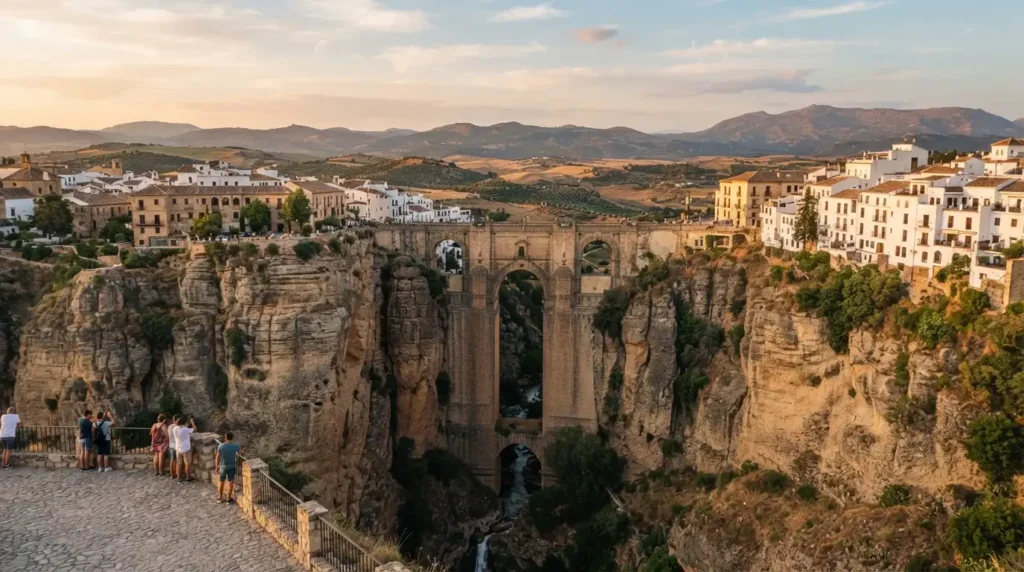
Ronda is about 1 hour 50 minutes by car via the A-375 and A-374, or roughly 2 hours 20 minutes by bus from Prado de San Sebastián. The Puente Nuevo spans El Tajo gorge, carved by the Río Guadalevín, and the drop beneath it is genuinely startling. The bullring and the Baños Árabes fill the rest of a morning.
The honest downside: between 11am and 4pm, coach groups from the Costa del Sol fill Ronda’s centre. Arriving before 10am or staying past 5pm changes the town completely.
With a rental car, a better loop exists:
- Setenil de las Bodegas, where houses sit under overhanging rock shelves
- Zahara de la Sierra, above a turquoise reservoir
- Grazalema, cool and green even in August
- Olvera or Arcos de la Frontera on the return via the A-382
Try queso payoyo along the way. Parking in these villages is tight, so use the marked lots at the edge and walk in.
Which day trip suits nature and caves?
Aracena, about 1 hour 15 minutes by car via the A-66 and N-433, or 1 hour 30 minutes by bus. The Gruta de las Maravillas runs timed guided tours through limestone chambers and underground lakes, usually around €10 to €12, and groups are capped, so arrive early on weekends.
Above ground, a ruined castle and a hilltop church crown the town, and the Sierra de Aracena beyond is walking country dotted with stone villages. This is also the home of jamón ibérico de bellota from acorn-fed pata negra pigs, with Jabugo a short drive away. Be aware that much of Aracena closes between roughly 2pm and 5pm.
For something completely different, Doñana National Park and the sand streets of El Rocío offer wetlands, flamingos and Iberian wildlife that no competitor list mentions.
What should you do in Seville at night after a day trip?
Come back hungry. The best things to do in Seville at night are simple and close together. Climb Metropol Parasol, known locally as Las Setas, for sunset over the rooftops. Walk the Guadalquivir past the Torre del Oro and cross into Triana for tapas at the Mercado de Triana.
Plaza de España looks its best floodlit and mostly empty after 9pm, and the Giralda glows above Barrio Santa Cruz. A tablao flamenco show runs €25 to €40 and lasts about an hour. If your list of places to visit in Seville still includes the Real Alcázar, book its evening slot when offered. That combination of a day trip plus an evening walk is how most people end up seeing the top things to do in Seville without rushing anything.
When is the best time of year for Seville day trips?
March to May and late September to early November. Daytime temperatures sit comfortably in the low twenties, the white towns stay green, and monument queues are manageable.
July and August regularly push past 40°C in the Guadalquivir valley. Itálica and Doñana become genuinely difficult after 11am, and even coastal Cádiz fills up. Winter works well for city trips, though rural sites close earlier and mountain villages like Grazalema get rain.
Two dates to plan around: Semana Santa and Feria de Abril transform Seville itself and tighten transport, while Cádiz Carnival in February makes that particular day trip either a highlight or a mistake, depending on your tolerance for crowds.
How much do Seville day trips cost in 2026?
| Trip | Transport | Main ticket | Rough day total |
| Itálica | €4 return bus | Free EU, €1.50 other | €15–25 |
| Córdoba | €25–50 return AVE | €15 or free 8:30am | €55–90 |
| Jerez | €25–35 return | €20–35 bodega tour | €60–95 |
| Cádiz | €30–45 return | Free beach, €7 Torre Tavira | €55–90 |
| Ronda | €30 return bus | €10–16 sights | €55–85 |
| Granada | €42–94 return or €79 tour | €22.27 Alhambra | €90–140 |
Add €14 to €20 for a menú del día. Córdoba’s Bono Turístico, around €10, pays for itself only if you visit three or more paid sites.
What mistakes should you avoid?
- Driving into old-town centres. Seville and Córdoba both use restricted zones, and camera fines reach rental customers months later.
- Missing the last train back. Check return times before you leave, not after lunch.
- Eating directly beside a major monument. Prices double and quality drops.
- Booking the Alhambra late. Official stock disappears one to two months out in peak season.
- Buying sherry at bodega gift shops. Supermarkets in Jerez sell the same bottles for less.
- Attempting two distant destinations in one day. Cádiz plus Jerez works. Córdoba plus Ronda does not.
Final Thoughts
Pick two trips, not five. Córdoba for the architecture, Cádiz for the food and sea air, and Itálica if you want something short and cheap between them. Book trains the week before, check opening hours the morning of, and leave the evenings free for Seville itself. Done that way, Seville day trips add a second and third Andalusian city to your trip without costing you the one you came for.
FAQs
How far is Córdoba from Seville?
About 45 minutes by AVE, 1 hour 20 by regional train, or 1 hour 40 by car.
Do I need a car?
No. Córdoba, Cádiz and Jerez are all easy by train. A car only helps for the white towns and Aracena.
Can I visit the Mezquita for free?
Yes, Monday to Saturday from 8:30 to 9:30am, excluding Sundays and public holidays.
Is Itálica worth it if I have seen the Colosseum?
Yes, for the mosaics and the near-empty setting, though the structure is less complete.
How many hours do I need in Cádiz?
Five to six covers the old town, Torre Tavira, a beach hour and a long seafood lunch.
Can I do Jerez and Cádiz together?
Yes. Do Jerez in the morning, then continue south on the same line.
Is a guided tour to Granada worth it?
If official Alhambra tickets are sold out, yes. Otherwise the train plus your own ticket costs less.
Is Doñana doable in a day?
Yes, via a booked 4×4 tour from El Rocío or Matalascañas.
What about July heat?
Start by 8am, finish outdoor sights by noon, and plan an indoor afternoon.


