
Attractions North Carolina: Things Which You Need To Visit In This Region
Attractions North Carolina is known for split across three very different regions: the Blue Ridge Mountains, the Outer Banks coastline, and the college cities of the Research Triangle. If you’ve been scrolling lists trying to figure out whether you can actually combine mountains and beach in one trip, the honest answer is that it depends heavily on how much driving you’re willing to do.
North Carolina is bigger than most first-time visitors expect, stretching roughly 500 miles from the Tennessee border to the Atlantic coast. That size is exactly why so many travelers end up confused about what to prioritize. This guide breaks the state down by region so you can actually plan a trip that fits your time and interests instead of trying to see everything at once.
Is North Carolina a Good Vacation Spot?
North Carolina is a genuinely good vacation spot because it packs national park hiking, historic beach towns, and walkable college cities into one state without requiring a cross-country flight to connect them. Few states offer this much variety within a single, drivable itinerary.
The Great Smoky Mountains National Park sits on the state’s western edge and remains the most visited national park in the country, drawing more annual visitors than Yellowstone or the Grand Canyon. On the opposite side of the state, the Outer Banks offers a completely different pace, all sand dunes, lighthouses, and small fishing villages connected by a single coastal highway. In the middle sits the Research Triangle, where Raleigh, Durham, and Chapel Hill blend museums, university culture, and a genuinely strong food scene. Trying to see all three regions in under a week usually means picking one as your base and treating the others as a future trip.
What Are the Best Things to Do in North Carolina’s Mountains?
The best things to do in North Carolina’s mountains center on the Blue Ridge Parkway, Asheville, and the Biltmore Estate, alongside waterfall hikes in Pisgah National Forest and DuPont State Recreational Forest. This region rewards slow travel more than a checklist approach.
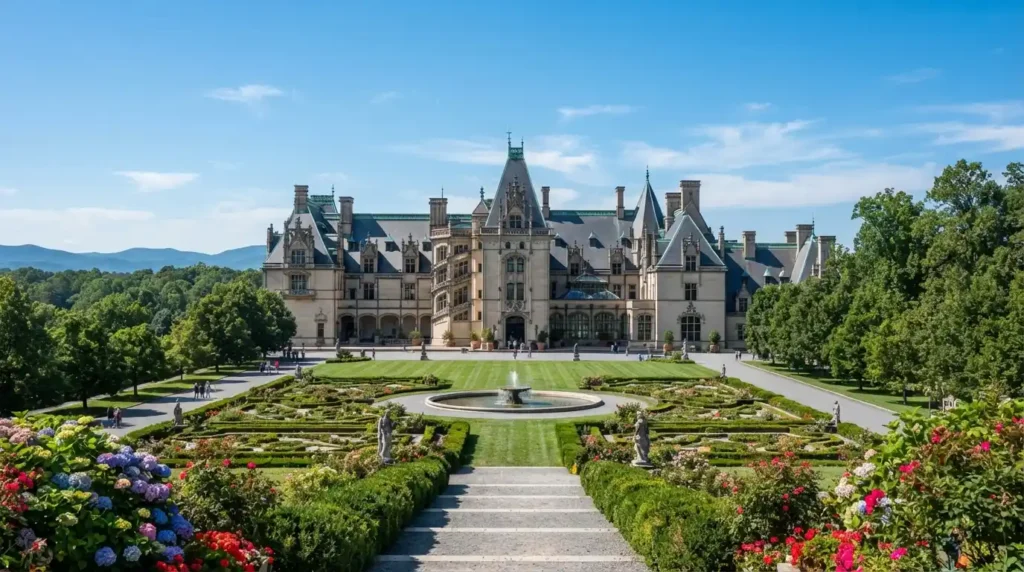
The Biltmore Estate near Asheville is America’s largest privately owned home, and it remains one of the state’s signature paid attractions. Expect to pay around 70 to 100 dollars per adult for basic estate access, depending on the season and how far ahead you book, with additional charges for winery tours and special seasonal events like the Christmas candlelight evenings. A common mistake first-timers make is underestimating how much time the estate actually takes. Between the house tour, gardens, and winery, a full visit realistically eats up most of a day.
Chimney Rock State Park and Grandfather Mountain both offer dramatic overlooks reachable without serious hiking experience, making them solid choices for travelers who want mountain views without a full-day trek. Linville Falls, accessible via a moderate trail off the Blue Ridge Parkway, delivers one of the most photographed waterfalls in the state.
For waterfall chasers specifically, DuPont State Recreational Forest deserves more attention than it usually gets. It’s free to enter, offers several accessible waterfall trails, and gained fame as a filming location, yet most competitor lists barely mention it next to more commercialized Pisgah attractions. Speaking of Pisgah, Sliding Rock and Looking Glass Falls both sit within the forest and make for an easy, low-cost afternoon, though Sliding Rock’s natural rock slide into cold mountain water surprises a lot of first-timers with how genuinely cold it is, even in July.
Cherokee, North Carolina, near the entrance to the Smokies, offers a meaningful stop for travelers interested in the living culture of the Eastern Band of Cherokee Indians, including the Museum of the Cherokee People and seasonal outdoor dramas depicting tribal history.
Blowing Rock rounds out the mountain towns worth a stop, smaller and quieter than Asheville, with its namesake rock formation and easy access to Tweetsie Railroad, a family-oriented old west theme park that’s been running since the 1950s.
What Are the Best North Carolina Beach Attractions?
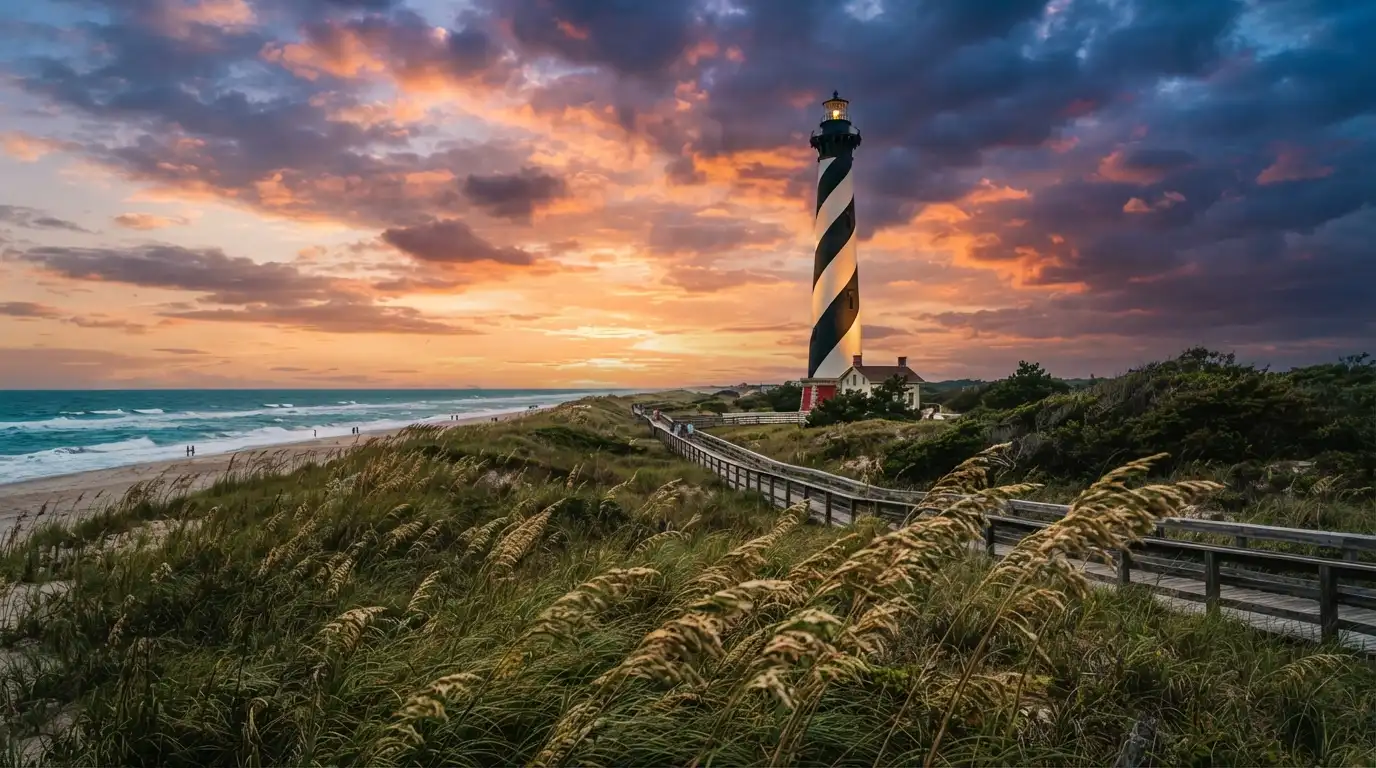
The best North Carolina beach attractions center on the Outer Banks, a string of barrier islands anchored by the Wright Brothers National Memorial, Cape Hatteras Lighthouse, and Jockey’s Ridge State Park, alongside Wilmington’s historic riverfront further south.
The Wright Brothers National Memorial in Kill Devil Hills marks the site of the first powered flight, with a visitor center and monument that most travelers pair with a stop at nearby Jockey’s Ridge State Park, home to the tallest natural sand dune system on the East Coast. Cape Hatteras Lighthouse, the tallest brick lighthouse in the country, remains climbable seasonally, typically from mid-April through Columbus Day weekend, though hours shift year to year so checking ahead avoids a wasted drive.
Ocracoke Island sits further south along the Outer Banks and requires a ferry to reach, either a free state-run ferry from Hatteras or a longer toll ferry from the mainland. That extra effort keeps Ocracoke noticeably quieter than the more accessible northern Outer Banks towns, and travelers consistently find it worth the detour for its slower pace and small-village feel.
Down toward the southern coast, Wilmington offers a different kind of coastal attraction entirely, with a walkable historic riverfront, the Battleship NORTH CAROLINA moored just across the river, and easy access to Carolina Beach and Fort Fisher State Historic Site. Bald Head Island, reachable only by passenger ferry from Southport, bans regular vehicles entirely in favor of golf carts and bicycles, which makes it one of the more distinctive North Carolina places to visit for anyone wanting a genuinely car-free island escape.
What Are the Best Things to Do in North Carolina’s Cities?
The best things to do in North Carolina’s cities split between the Research Triangle’s museum and food scene and Charlotte’s motorsports and family attractions. Raleigh, Durham, and Chapel Hill function almost as one connected destination for travelers interested in culture and dining.
Raleigh’s North Carolina Museum of Art offers free general admission, a rarity worth noting for budget-conscious travelers, while Durham has built a strong reputation around its food scene and the Duke University campus. Chapel Hill rounds out the triangle with a classic college town feel centered on the University of North Carolina.
Charlotte takes a different approach entirely, anchored by the NASCAR Hall of Fame, a genuinely unique attraction given the state’s deep motorsports heritage, alongside the US National Whitewater Center for outdoor adventure activities like rafting and zip-lining, and Carowinds theme park for families wanting a classic amusement park day.
When Is the Best Time to Visit North Carolina for Fall Foliage?
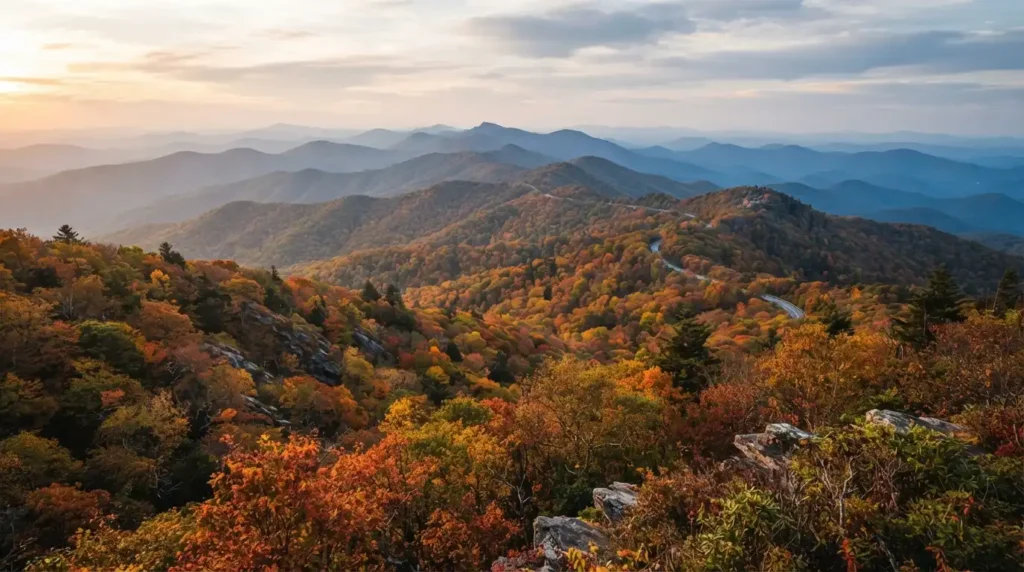
The best time to visit North Carolina for fall foliage depends on elevation, with higher mountain areas like Grandfather Mountain and Blue Ridge Parkway overlooks peaking in early to mid October, while lower elevations around Asheville and the foothills peak closer to late October into early November.
This elevation gap catches a lot of visitors off guard. Someone planning a trip around a single “leaf peeping” date often misses peak color entirely because North Carolina’s mountains don’t turn all at once. Locals recommend checking elevation-specific foliage reports rather than a single statewide prediction, and building some flexibility into travel dates if fall color is the main goal of the trip.
What Is There to Do in North Carolina in December?
North Carolina in December centers on the Biltmore Estate’s candlelight Christmas evenings, holiday markets in Asheville and Raleigh, and milder coastal weather that makes Wilmington and the Outer Banks pleasant for off-season walking, even though summer-only attractions and some seasonal businesses close for the month.
A common point of confusion is assuming mountain attractions run year-round the same way they do in summer. Sliding Rock, most waterfall swimming spots, and several seasonal shops close or scale back through winter, while the Blue Ridge Parkway itself can face temporary closures at higher elevations due to snow and ice, particularly above 3,000 feet. The Biltmore Estate, on the other hand, becomes one of its busiest and most popular times of year during its extended Christmas lighting and candlelight tour season, so booking well ahead is worth it if that’s the priority.
What Food Should You Try in North Carolina?
North Carolina food centers on its two competing barbecue traditions, eastern-style whole-hog barbecue with a thin vinegar and pepper sauce, and Lexington-style Piedmont barbecue using pork shoulder with a tomato-based vinegar sauce. The regional divide is a genuine point of local pride, not just a marketing angle.
Beyond barbecue, hush puppies show up as a near-universal side dish at seafood restaurants along the coast, while Cheerwine, a cherry-flavored soda invented in Salisbury, and Krispy Kreme doughnuts, which trace back to Winston-Salem, both count as homegrown North Carolina originals worth trying. Asheville in particular has built a strong reputation for craft breweries, often nicknamed one of the beer capitals of the South, with a walkable brewery district downtown that pairs naturally with a day exploring the Biltmore area.
Mountains vs Beach vs City: Which North Carolina Region Fits Your Trip?
Choosing between North Carolina’s mountains, beaches, and cities comes down to what kind of trip you want, since each region delivers a genuinely different pace and requires a different amount of driving to combine with the others.
[Comparison Table: North Carolina Regions]
| Region | Best For | Signature Attraction | Typical Trip Length |
| Blue Ridge Mountains | Hiking, scenery, fall foliage | Biltmore Estate, Blue Ridge Parkway | 3 to 5 days |
| Outer Banks Coast | Beaches, history, slower pace | Cape Hatteras Lighthouse, Wright Brothers Memorial | 3 to 5 days |
| Research Triangle | Museums, food, college culture | NC Museum of Art, Duke campus | 2 to 3 days |
| Charlotte | Motorsports, family activities | NASCAR Hall of Fame, Carowinds | 1 to 2 days |
Trying to combine the mountains and the Outer Banks in one trip means accepting a five to six hour drive between them, so most travelers either pick one region per trip or use the Research Triangle as a midpoint stop if driving the full width of the state.
How Do You Get to Ocracoke Island and Bald Head Island?
Ocracoke Island is reached by a free state ferry from Hatteras or a longer toll ferry from Cedar Island or Swan Quarter on the mainland, while Bald Head Island is reached only by a passenger ferry from Southport, with no regular vehicle access allowed on the island itself.
The Hatteras to Ocracoke ferry runs frequently and takes about an hour, making it the more practical option for most Outer Banks road trips, while the mainland ferries run less often and take considerably longer, so checking the schedule in advance matters if you’re working around a tight itinerary. Bald Head Island’s car-free policy means visitors get around by golf cart, bike, or on foot once they arrive, which is either a major selling point or a dealbreaker depending on how much you want a car nearby.
Conclusion
The best attractions North Carolina offers really come down to picking a region and committing to it rather than trying to cram mountains, beaches, and cities into one short trip. Base a mountain trip around Asheville and the Biltmore Estate, build a coastal trip around the Outer Banks lighthouses and Ocracoke’s slower pace, or center a city trip on the Research Triangle’s museums and food scene. Check elevation-specific fall foliage timing if that’s your main goal, and confirm seasonal hours before locking in a December visit. Pick one region, plan around its actual pace, and North Carolina delivers a genuinely memorable trip either way.
FAQs
What is North Carolina known for?
North Carolina is known for the Great Smoky Mountains, the Outer Banks coastline, the Biltmore Estate, and its distinct regional barbecue traditions.
What are the top attractions in North Carolina?
The top attractions include the Biltmore Estate, Blue Ridge Parkway, Cape Hatteras Lighthouse, Wright Brothers National Memorial, and the NASCAR Hall of Fame.
Is North Carolina a good vacation spot?
Yes, it offers mountains, beaches, and culturally rich cities within one state, making it flexible for many different types of trips.
What are the best things to do in North Carolina for adults?
Craft brewery tours in Asheville, Biltmore Estate wine tastings, hiking the Blue Ridge Parkway, and exploring Wilmington’s historic riverfront all suit adult travelers well.
Is the Biltmore Estate worth visiting?
Yes, most visitors find it worth the ticket price for the house tour and gardens alone, though it easily fills a full day when combined with the winery.
How many days do you need in Asheville?
Two to three days covers downtown Asheville, the Biltmore Estate, and a nearby waterfall hike without feeling rushed.
What is there to do in North Carolina in December?
The Biltmore Estate’s candlelight Christmas evenings, holiday markets in Asheville and Raleigh, and mild coastal walks along Wilmington and the Outer Banks.
Is Outer Banks or Wilmington better for a beach trip?
The Outer Banks suits travelers wanting lighthouses and a slower, more remote island feel, while Wilmington offers a more walkable historic riverfront with easier city access.
What is the best time to see fall foliage in North Carolina mountains?
Early to mid October for higher elevations, and late October into early November for lower elevations around Asheville and the foothills.
How do you get to Ocracoke Island?
By a free ferry from Hatteras taking about an hour, or a longer toll ferry from Cedar Island or Swan Quarter on the mainland.
Is the Blue Ridge Parkway open in winter?
Sections above roughly 3,000 feet can close temporarily during snow and ice, so checking current conditions before a winter drive is important.
What’s the difference between eastern and Lexington style barbecue?
Eastern-style uses whole-hog pork with a thin vinegar and pepper sauce, while Lexington-style uses pork shoulder with a tomato-based vinegar sauce.
Is Great Smoky Mountains National Park free to enter?
Yes, it remains one of the only national parks with no general entrance fee, though a parking tag is required for stays over 15 minutes.


