
What Are the Best Beaches in Bermuda? The Complete Guide
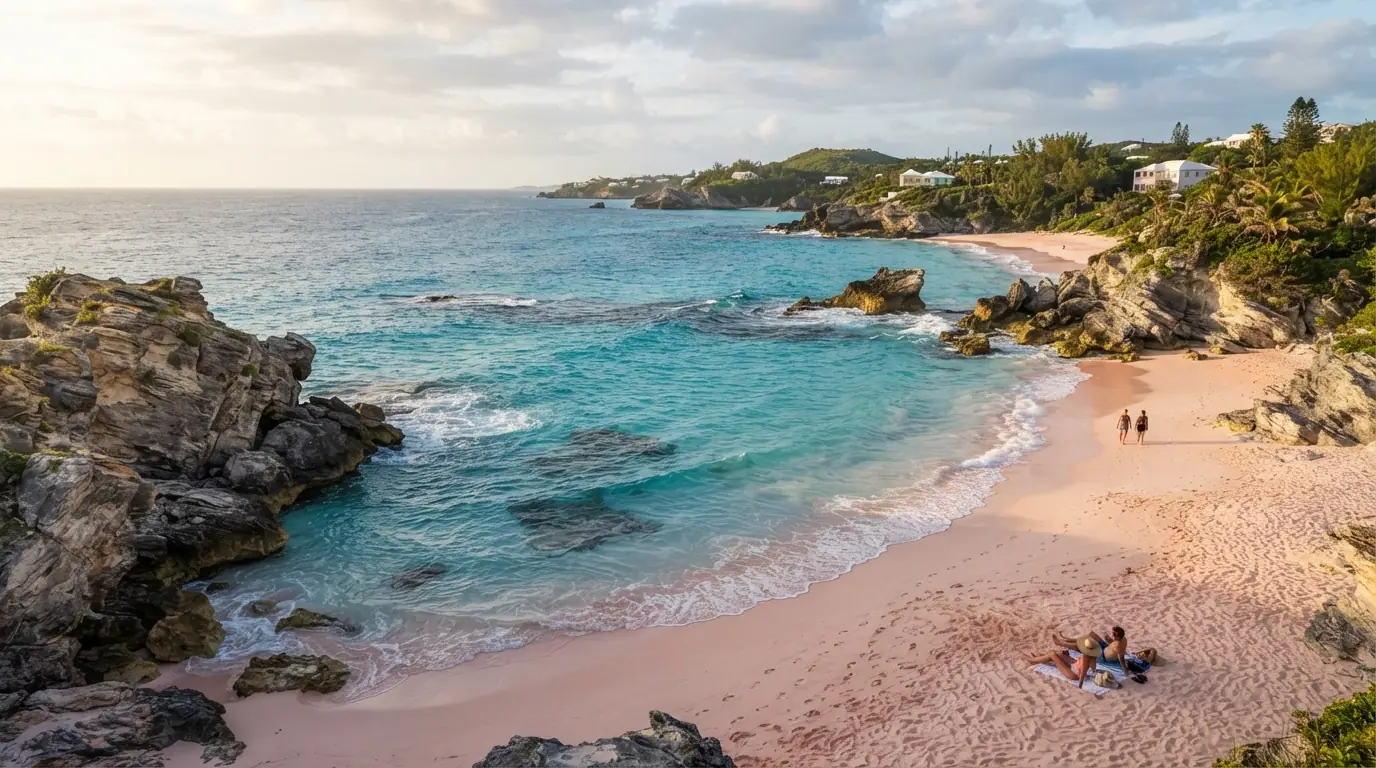
The best beaches in Bermuda include Horseshoe Bay, Jobson’s Cove, Church Bay, and Tobacco Bay, each known for pink sand, calm coral reefs, and sheltered swimming spots along the South Shore and beyond. Together they cover everything from postcard photo stops to quiet coves where you might have the sand to yourself.
If you are staring at a map trying to figure out which beach actually deserves your limited vacation time, or your few hours off a cruise ship, this guide breaks it down by what each beach is actually good for. No fluff, just the details that matter when you are standing at a bus stop trying to decide where to go.
What Makes Bermuda’s Beaches Pink?
Bermuda’s pink sand comes from red foram, a tiny sea creature known as foraminifera. Its reddish shells break down over time and mix into the white sand, creating the soft blush color the island is famous for. The pink shows up most clearly on wet sand right at the waterline, and it tends to look more subtle than photos suggest, more of a gentle tint than a bold pink.
What Is the Best Beach in Bermuda Overall?
Horseshoe Bay is widely considered the best beach in Bermuda, and it earns that reputation honestly. The beach stretches nearly a quarter mile along the South Shore, with soft pink sand, clear turquoise water, and enough space that most visitors can still find a decent spot even on a busy day.
It comes loaded with amenities most other Bermuda beaches skip. Free restrooms, changing rooms, and showers sit near the main entrance, along with a full service restaurant, a bar, and rentals for chairs, umbrellas, and snorkel gear. Lifeguards are on duty seasonally, typically May through September, which matters since Horseshoe Bay does see rip currents and occasional Portuguese man o’ war.
Getting there by bus costs around 3.50 to 5 dollars per person each way on Bus 7 or 8, taking roughly 30 to 35 minutes from the Royal Naval Dockyard. A minibus taxi runs faster but costs closer to 7 dollars per person and only departs once full, so factor that into your return timing if you are on a tight cruise schedule.
Is Horseshoe Bay Crowded?
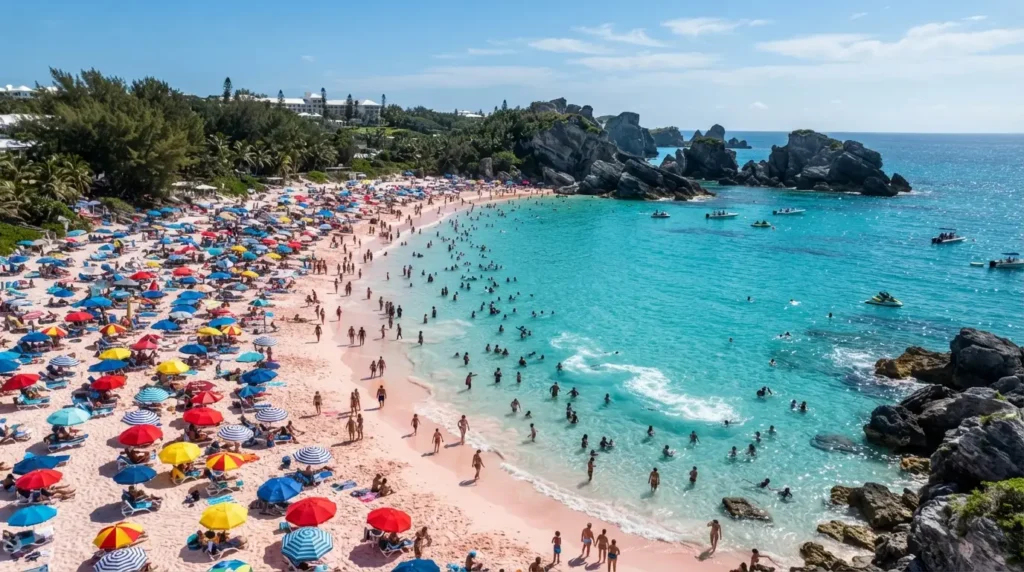
Yes, Horseshoe Bay gets busy fast, especially on days when cruise ships are docked. The crowd clusters heavily near the main entrance, so walking to the far eastern end of the beach opens up noticeably more space. Weekday mornings tend to be calmer than weekend afternoons, and there is a quieter cove tucked on the far west end that works well for families with young kids who want gentler water.
What Are the Best Bermuda Beaches for Snorkeling?
Church Bay and Tobacco Bay consistently rank as the best snorkeling beaches in Bermuda, and for good reason. Both sit close to shore reefs that are shallow enough for casual swimmers but rich enough to keep experienced snorkelers entertained.
Church Bay, tucked into Southampton Parish, has coral reefs ringing the bay that shelter it from rougher open water. Swimming along the left side toward the rock in the middle of the bay puts you right among parrotfish, angelfish, and other reef fish. There is no gear rental here, so bring your own mask and fins, and expect just basic public restrooms and a small parking area at the top of the hill.
Tobacco Bay, on the north side near St. George‘s, is smaller and busier, but the fish practically greet you at the rocks on the right side of the bay. An on site hut rents chairs, umbrellas, snorkel gear, and kayaks, plus a restaurant and bar, making it an easy choice if you forgot to pack gear. The tradeoff is crowding, since it is one of the most popular stops for cruise passengers heading out from St. George’s.
What Are the Best Bermuda Beaches for a Quiet, Secluded Experience?
Jobson’s Cove, Warwick Long Bay, Chaplin Bay, Stonehole Bay, and Astwood Cove all deliver a quieter alternative to the big name beaches, each with its own personality.
- Jobson’s Cove is the standout for seclusion. A ring of volcanic rock shelters the water almost completely, creating something close to a natural saltwater pool rarely deeper than six feet, ideal for cautious swimmers and snorkelers chasing schools of parrotfish.
- Warwick Long Bay is the longest beach on the island at nearly half a mile, backed by grassy cliffs rather than a tight cove. Waves run rougher here and there are no lifeguards, so this is not the spot for weak swimmers, but the open sand makes solitude easy to find.
- Chaplin Bay and Stonehole Bay sit between Jobson’s Cove and Horseshoe Bay, connected by sandy walking paths through South Shore Park. Both are small and rarely crowded, though Stonehole’s exposed position means the water can turn cloudy when waves pick up.
- Astwood Cove, reached down a steep winding road off South Road, attracts couples and solo travelers looking to skip the family crowds. Its cliffs are home to nesting Bermuda longtails, the island’s white tailed tropic bird, which arrive in spring and add local wildlife watching to the visit.
What Are the Best Bermuda Beaches Near the Royal Naval Dockyard for Cruise Passengers?
Snorkel Park Beach and Glass Beach sit closest to the Royal Naval Dockyard, both within easy walking distance of the cruise port, which makes them the practical pick if you only have a few hours ashore.
Snorkel Park Beach is a short five minute walk from the ship through an old limestone tunnel that opens onto a lively stretch of white sand. This is one of the only Bermuda beaches with an entry fee, currently around 15 dollars per person, covering access to a bar, restaurant, and water sport rentals. It has a livelier, more social atmosphere than most other beaches on this list, with evening events like bonfires when ships are in port.
Glass Beach sits about a mile and a half away and takes roughly 10 to 15 minutes by Bus 7 or 8. This one is more of a curiosity than a swimming destination, since the shoreline is covered in sea glass rather than soft sand, and it genuinely is not a great pick for swimming. It is free to visit and worth a quick stop if curious, but most travelers treat it as a photo op rather than a beach day.
What Are the Best Bermuda Beaches for Families?
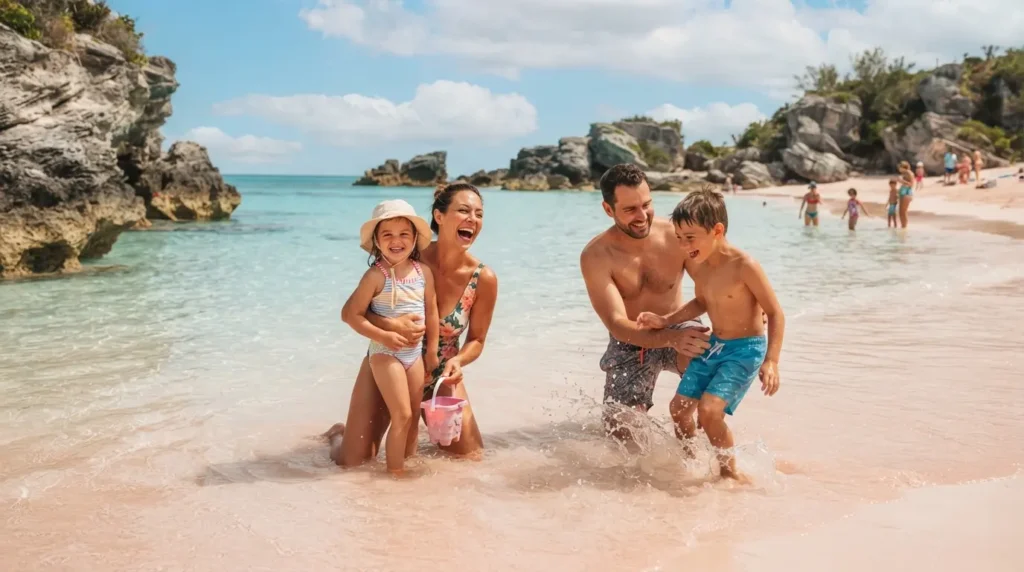
Shelly Bay, Jobson’s Cove, and Tobacco Bay work best for families. Shelly Bay sits on the calm north shore in Hamilton Parish, where waves are almost nonexistent and the shallow water stretches out for a good distance, plus there is a playground right next to the sand for when kids need a break from swimming. Jobson’s Cove offers similarly calm, shallow water thanks to its sheltering rocks. Tobacco Bay works too, though its smaller footprint means you should expect company.
Where Can You See Sea Turtles in Bermuda?
Clearwater Beach and Turtle Bay, along with the waters near Somerset Long Bay and Daniel’s Head Beach Park, give you the best chance to spot sea turtles while snorkeling. The shallow, grassy water at Clearwater Beach and Turtle Bay is genuinely one of the more reliable turtle spotting locations on the island, with patient snorkelers often seeing several turtles in a single visit. Daniel’s Head Beach Park has calm, shallow water for a long stretch out from shore, which is exactly the kind of habitat turtles favor.
How Do You Get to Bermuda’s Beaches?
Most of the best beaches in Bermuda are reachable by the island’s public bus system, which is easy to use once you get the hang of it. Buses 7 and 8 cover the South Shore beaches, while Bus 1, 3, 10, and 11 head toward St. George’s, and Bus 6 connects to St. David’s Island, though that route alternates so double check the schedule before relying on it.
Bus fares run roughly 3.50 to 5 dollars per person each way depending on route, and travel times range from 10 minutes for something close like Glass Beach up to 40 minutes for beaches further along the South Shore. Taxi minibuses are faster but pricier, typically 5 to 7 dollars per person, and wait until full before departing, which can eat into your time if you are watching a cruise departure clock. Renting a scooter or a Twizy microcar gives the most flexibility, especially for western beaches like West Whale Bay that bus routes do not directly serve.
When Is the Best Time to Visit Bermuda’s Beaches?
Peak season in Bermuda runs from May through October, when the water warms up and every beach amenity is fully operational. Most travelers find March and April the sweet spot, since the weather is comfortable, hotel deals are easier to find, and it is also whale migration season along with a chance to spot the Bermuda longtail birds arriving to nest.
July through September bring the hottest stretch, with highs around 86 degrees Fahrenheit and lows around 77. This same window overlaps with hurricane season, which technically runs from June through November, so it is worth keeping an eye on the forecast if you are traveling in late summer or fall. A common mistake first timers make is booking a trip purely around warm water without checking storm activity for those months.
Are Bermuda’s Beaches Safe?
Most Bermuda beaches are safe for typical swimming, but a few real risks are worth knowing. Rip currents show up most notably at Horseshoe Bay and Warwick Long Bay, and Portuguese man o’ war occasionally wash ashore, delivering a painful sting if touched. Horseshoe Bay is one of the few beaches with lifeguards on duty, generally from May through September, while quieter beaches like Warwick Long Bay and Jobson’s Cove have no lifeguard coverage at all, so swim within your ability and check conditions before heading past the shallows.
Which Bermuda Beaches Are Free and Which Charge Admission?
Nearly every beach in Bermuda is free to enter. Snorkel Park Beach is the main exception, charging around 15 dollars per person for access to its amenities. Beyond entry fees, renting gear adds up depending on where you go.
| Beach | Entry Fee | Rental Costs |
| Horseshoe Bay | Free | Chairs, umbrellas, snorkel gear available for rent |
| Snorkel Park Beach | Around $15 per person | Water sports rentals included in visit |
| Tobacco Bay | Free | Chair, umbrella, snorkel gear, kayak rentals available |
| Church Bay | Free | No rentals, bring your own gear |
| Elbow Beach | Free | Cabana with chaise lounges around $100 |
| Jobson’s Cove | Free | No facilities |
What Bermuda Beach Has Sea Glass?
Glass Beach, near the Royal Naval Dockyard, is Bermuda’s well known sea glass beach. Decades of glass washing up along the shore have created a shoreline dotted with smoothed, colorful fragments, which locals say makes a soft tinkling sound as waves pull back over it. Collecting the glass is strictly prohibited, so admire it and leave it in place. Water shoes are worth packing here since some of the glass can still be sharp.
Quick Comparison of Bermuda’s Top Beaches
| Beach | Best For | Crowd Level |
| Horseshoe Bay | Amenities, iconic pink sand | Very busy |
| Jobson’s Cove | Seclusion, families, snorkeling | Light to moderate |
| Church Bay | Best snorkeling on the island | Light |
| Tobacco Bay | Easy snorkeling, cruise access | Busy |
| Warwick Long Bay | Solitude, long walks | Light |
| Snorkel Park Beach | Cruise convenience, nightlife | Busy |
| Shelly Bay | Families with young kids | Light |
| Clearwater Beach | Sea turtle spotting | Light |
Final Thoughts
The best beaches in Bermuda cover a wide range of experiences, from the polished amenities of Horseshoe Bay to the quiet solitude of Jobson’s Cove and the reef life waiting at Church Bay. Pick based on what you actually want out of the day, whether that is a full service beach club or a stretch of pink sand with no one else around, and you will leave the island with exactly the trip you were hoping for.
FAQs
What is the best beach in Bermuda?
Horseshoe Bay is generally considered the best beach in Bermuda thanks to its pink sand, amenities, and easy access, though Jobson’s Cove is a favorite for a quieter alternative.
Is Bermuda sand really pink?
Yes, though it is a subtle blush rather than bold pink, caused by red foram shells mixing into the white sand.
Are Bermuda beaches free?
Yes, almost all Bermuda beaches are free to enter, with Snorkel Park Beach being the main exception at around 15 dollars per person.
Do you need a car to see Bermuda beaches?
No, the public bus system covers most South Shore and St. George’s beaches, though a rental scooter gives more flexibility for beaches further off the main routes.
What is the best Bermuda beach for snorkeling?
Church Bay and Tobacco Bay are considered the best snorkeling spots, both offering shallow reefs close to shore packed with reef fish.
Which Bermuda beach is best for cruise ship passengers?
Snorkel Park Beach and Glass Beach sit closest to the Royal Naval Dockyard, making them the easiest options with limited time ashore.
Is Horseshoe Bay crowded?
Yes, especially on cruise ship days, though walking to the eastern end of the beach usually finds more open space.
How do you get to Tobacco Bay?
Tobacco Bay is about a 15 minute walk from downtown St. George’s, or reachable by Bus 1, 3, 10, or 11.
Which Bermuda beach has the least crowds?
Warwick Long Bay, Stonehole Bay, and Astwood Cove tend to stay the quietest, especially on weekday mornings.
Are there rip currents at Bermuda beaches?
Yes, rip currents show up most notably at Horseshoe Bay and Warwick Long Bay, so check conditions and follow lifeguard guidance where available.
What is the best time of year to visit Bermuda beaches?
March and April offer comfortable weather and lighter crowds, while peak season runs May through October and hurricane season overlaps from June through November.
Can you see sea turtles in Bermuda?
Yes, Clearwater Beach, Turtle Bay, and the waters near Somerset Long Bay and Daniel’s Head Beach Park are the most reliable spots to see them while snorkeling.


