
Jersey Things to Do: What Should You See on This Channel Island?
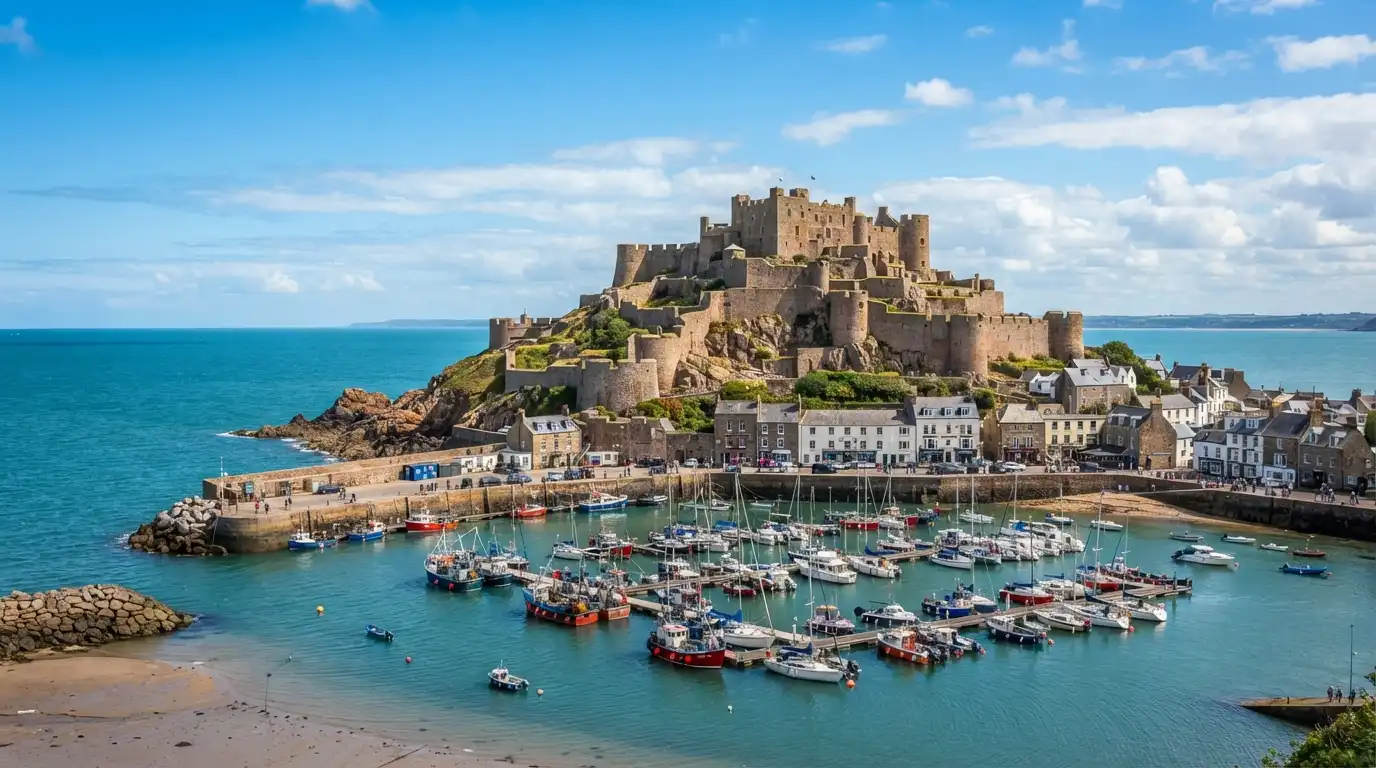
The best Jersey things to do include Mont Orgueil Castle, Elizabeth Castle, the Jersey War Tunnels, St Ouen’s Bay, and La Corbière Lighthouse. This tiny Channel Island, just 9 miles by 5 miles, somehow fits medieval fortresses, WWII history, and dramatic tidal coastline into a space you can drive across in half an hour.
If you have been scrolling through generic “top ten” lists wondering whether Jersey needs a passport, a car, or three days versus a week, you are asking the right questions. Most guides skip straight to the attractions without answering the practical stuff that actually decides whether your trip goes smoothly.
What Are the Best Jersey Things to Do?
Jersey rewards visitors who mix history with coastline rather than picking one or the other. Mont Orgueil Castle and Elizabeth Castle cover the medieval side. The Jersey War Tunnels cover the WWII occupation story, a genuinely dark and important chapter most visitors know nothing about beforehand. St Ouen’s Bay and St Brelade’s Bay cover the beach side, each with a different personality.
Travelers consistently find that Jersey’s compact size means you can realistically fit two or three of these into a single day without rushing, which is rare for an island this historically dense.
Do You Need a Passport to Visit Jersey?
British and Irish citizens do not need a passport to visit Jersey, since the island sits inside the Common Travel Area alongside the UK, Ireland, and the Isle of Man. You will still need photo ID at check-in, since airlines and ferry operators require it even when immigration does not.
A common mistake first-timers make is assuming this rule applies to everyone. From February 2026, non-British and non-Irish nationals traveling to Jersey via the United Kingdom need an Electronic Travel Authorisation, the same digital permission now required for UK entry generally. If you are flying into Jersey from outside the Common Travel Area entirely, a valid passport is required regardless of nationality, and EU or EEA nationals visiting for a holiday do not need a separate visa on top of that.
What Currency Does Jersey Use?
Jersey uses the Jersey pound, pegged 1:1 to British Pounds Sterling. British banknotes spend freely across the island, so you never need to exchange currency before arriving. The catch comes on the way out. Jersey pound notes and coins carry local designs and are not accepted in mainland UK shops, so spend them down or exchange them at a bank before you leave rather than discovering this at a till back home.
How Do You Get Around Jersey Without a Car?
Buses connect St Helier to most of the island’s twelve parishes, and the network is reliable enough for a relaxed, multi-day visit. The honest downside is speed. Travelers heading to spread-out sights like St Ouen’s Bay on the west coast or La Corbière Lighthouse on the southwest tip often find bus routes indirect and infrequent compared to a 20-minute drive.
A common mistake first-timers make is skipping car hire to save money, then discovering the bus schedule eats half a day getting to and from western attractions. If a rental feels excessive for a short trip, an all-day coach tour covering the island’s main sights in a single guided loop solves the same problem without the logistics of driving on the left on unfamiliar country lanes.
What Is There to Do in St Helier?
St Helier is Jersey’s capital and the likely starting point for anyone arriving by ferry. Basing yourself here makes sense if history and culture interest you more than lying on a beach all week.
Highlights in and around St Helier include:
- The Maritime Museum and Occupation Tapestry Gallery, covering seafaring history and a tapestry woven by islanders marking the liberation
- The Jersey Museum, Art Gallery and Victorian House, with historical exhibits and period rooms
- Liberation Square, home to a large sculpture commemorating the end of the German occupation
- St Helier Central Market, a Victorian-era market good for food shopping and browsing
- Elizabeth Castle, a tidal fortress just offshore in St Aubin’s Bay
Expect to spend a half day covering the St Helier highlights at a comfortable pace, longer if you linger at the market or museums.
How Do You Get to Elizabeth Castle at Low Tide?

Elizabeth Castle sits on a tidal island known as St Helier’s Rock, and it can only be reached on foot when the tide is out. Check tide tables before setting off, since arriving at high tide with no ferry booked means standing on the beach looking at a castle you cannot reach.
When the tide is in, a small amphibious ferry shuttles visitors across, which is a fun ride in its own right and removes any timing anxiety. Either way, the castle rewards the visit with a museum, the Governor’s House, old barracks, and WWII-era bunkers layered onto a defense originally built under King Henry VIII.
What Is Mont Orgueil Castle and Is It Worth Visiting?
Mont Orgueil Castle, also known as Gorey Castle, has guarded the fishing harbour of Gorey for more than 800 years. Built after King John lost Normandy to the French in 1204, it remains one of the best-preserved medieval fortresses anywhere in the British Isles.
Adult admission runs around £19.50 in 2026, with concessions for children, students, and seniors. Most visitors say the climb through the towers and the coastal views from the top are worth the ticket on their own, without even factoring in the guided tours and interactive exhibits inside.
[Cost Table]
| Ticket Type | 2026 Price |
| Adult (16+) | £19.50 |
| Senior (65+) | £18.50 |
| Child or student | £11.45 |
| Family (2 adults, 2 children) | £55.95 |
The castle sits right above Gorey, a genuinely pretty fishing village worth an hour of wandering on its own before or after your visit.
What Are the Jersey War Tunnels and What Do They Cost?
The Jersey War Tunnels, located in St Lawrence, are one of the island’s most sobering and important attractions. Built by German forces during their occupation of Jersey from 1940 to 1945, the tunnels were dug as an underground hospital and ammunition store, largely using forced labor.
Today the site works as a museum, walking visitors through daily life under occupation using personal stories and preserved rooms. Expect to spend around two hours moving through the full exhibition.
2026 adult admission runs around £21, with discounts for seniors, students, and children aged 7 to 15, and free entry for children under 7. Locals recommend visiting after 2pm, since the hours between 10am and 12:30pm see the heaviest crowds and longest waits.
Is the Jersey Heritage Pass Worth It?
The Jersey Heritage 7 Day Pass covers unlimited entry to Jersey Heritage sites, including Mont Orgueil Castle, La Hougue Bie, the Maritime Museum, and several smaller properties, for one flat price.
[Cost Table]
| Attraction | Standalone Adult Price | With Heritage Pass |
| Mont Orgueil Castle | £19.50 | Included |
| Maritime Museum & Occupation Tapestry Gallery | around £10.25 | Included |
| La Hougue Bie | varies | Included |
The math works in your favor once you plan to visit three or more Jersey Heritage properties during your stay. For a short trip focused only on the War Tunnels, which operates independently of Jersey Heritage, the pass makes less sense, so check which sites you actually want before buying.
What Are the Best Beaches in Jersey?
Jersey has dozens of bays scattered around its coastline, and each has a distinct personality worth knowing before you pick one.
- St Ouen’s Bay sits on the Atlantic-facing west coast, popular for surfing, kite-surfing, and paragliding thanks to consistent swell
- St Brelade’s Bay is one of the island’s most popular beaches, with calm, safe waters, yellow sand, and plenty of waterside cafes and shops
- Archirondel Bay is a sheltered pebble and sand beach on the east coast, known as a genuinely safe swimming spot
- Ouaisné Bay sits next to St Brelade’s, wilder and less developed, connecting to it at high tide or via a sea-wall walk behind a former German gun battery
A common mistake visitors make is picking a beach based on photos alone without checking which coast it faces, since the west coast catches Atlantic swell while the east and south coasts stay calmer.
What Historic Sites Should You Visit in Jersey?
Beyond the two main castles, Jersey holds several smaller but genuinely fascinating historic stops.
- La Hougue Bie, a Neolithic passage grave and burial mound dating back over 5,000 years, with a medieval chapel built on top centuries later
- Grosnez Castle, a free 14th-century ruin on the northwest tip with panoramic coastal views from the remaining tower
- Seymour Tower, a restored 18th-century coastal defence tower two miles offshore, now rentable as self-catering overnight accommodation surrounded by the sea twice a day
- Channel Islands Military Museum, a small, densely packed collection inside a former German bunker in St Ouen, open Easter through October
These sites rarely appear on generic top-ten lists, but they add real depth for visitors who already know the Space Needle equivalents and want something less obvious.
What Local Food Should You Try in Jersey?
Jersey’s food identity centers on a handful of genuinely distinct products. Jersey Royal potatoes, grown in the island’s mineral-rich soil, have their own protected status and show up on menus island-wide during the spring harvest season. Jersey black butter, despite the name, is actually a slow-cooked apple preserve traditionally made in a communal event each autumn.
Fresh Jersey oysters and lobster appear on seafood menus around the coast, while La Mare Wine Estate near St Mary offers tours and tastings of locally produced wines, spirits, and preserves at a genuinely affordable price point. For something lighter, St Helier Central Market houses cafes serving crepes and galettes alongside fresh produce stalls.
Is Jersey Worth Visiting in October?
October is a strong shoulder-season choice for Jersey things to do, and it directly answers one of the most searched questions about visiting. Average daytime temperatures sit around 14°C, dropping to roughly 10°C at night, with about 90mm of rainfall spread across the month.
That means you should expect some rain, but not a washout. Most visitors say the tradeoff is worth it: thinner crowds at Mont Orgueil and the War Tunnels, lower hotel rates, and coastal paths that stay scenic even under grey skies. Pack a proper waterproof layer rather than relying on an umbrella, since Jersey’s cliff paths get windy.
How Many Days Do You Need for Jersey Things to Do?
Three to four days cover the essential Jersey things to do without rushing.
[Itinerary Table]
| Day | Morning | Afternoon | Evening |
| Day 1 | Explore St Helier, Central Market | Elizabeth Castle (check tide times) | Dinner near Liberation Square |
| Day 2 | Mont Orgueil Castle, Gorey Harbour | La Hougue Bie | Seafood dinner in Gorey |
| Day 3 | Jersey War Tunnels | La Corbière Lighthouse (low tide) | St Brelade’s Bay sunset |
| Day 4 | St Ouen’s Bay, surfing or a walk | La Mare Wine Estate tasting | Free evening in St Helier |
A week allows room for a Sark day trip, slower coastal walking, and time to add smaller stops like Grosnez Castle or the Botanic Gardens at Samares Manor without feeling rushed.
Jersey vs Guernsey: Which Channel Island Should You Visit?
Jersey offers more historic sites, a livelier capital in St Helier, and generally easier transport links thanks to its larger size and more developed bus network. Guernsey feels smaller and quieter, with fewer major attractions but a strong small-island charm that some travelers prefer specifically because it feels less touristy.
If you want variety and a fuller schedule of things to do in Jersey, pick Jersey. If you want a slower, simpler week with less to plan around, Guernsey suits that better. Many visitors combine both on a single trip, since ferries connect the two islands in under an hour.
Conclusion
Jersey things to do span far more ground than its small size suggests, from 800-year-old castles to sobering WWII tunnels to genuinely excellent surfing beaches on the west coast. Getting the logistics right, passport rules, currency, tide times for Elizabeth Castle and La Corbière, and a realistic transport plan, matters just as much as picking which attractions to see. Three to four days gives you the essentials, while a week opens up day trips and a slower pace through the island’s twelve parishes. However long your visit, Jersey rewards travelers who plan around its tides and seasons rather than treating it like a scaled-down version of mainland Britain.
FAQs
Do you need a passport to go to Jersey?
British and Irish citizens do not need a passport, only photo ID, since Jersey sits within the Common Travel Area. Non-British and non-Irish nationals traveling via the UK need an Electronic Travel Authorisation from February 2026, and anyone arriving from outside the Common Travel Area needs a valid passport.
What currency does Jersey use?
Jersey uses the Jersey pound, pegged 1:1 to British Pounds Sterling. British pounds spend freely on the island, but Jersey notes are hard to exchange once you leave the Channel Islands.
Is Jersey part of the UK?
No. Jersey is a British Crown Dependency, not part of the United Kingdom, though it shares the pound sterling and has no formal immigration checks with the UK, Ireland, or the Isle of Man.
What is there to do in Jersey?
Top Jersey things to do include Mont Orgueil Castle, Elizabeth Castle, the Jersey War Tunnels, La Corbière Lighthouse, St Ouen’s Bay, and St Brelade’s Bay.
How many days do you need in Jersey?
Three to four days cover the main historic sites and beaches comfortably, while a week allows for a Sark day trip and slower exploration.
Is Jersey worth visiting?
Yes, particularly for travelers who want medieval castles, WWII history, and dramatic coastline packed into a small, easy-to-navigate island reachable within an hour’s flight from the UK.
Do I need a car in Jersey?
Not strictly, but it helps. Buses cover St Helier and nearby parishes reasonably well, but reaching spread-out sights like St Ouen’s Bay or La Corbière Lighthouse is far faster with a car or an organized coach tour.
What is the best time to visit Jersey?
Summer offers the warmest weather and busiest crowds, while spring and October provide a quieter, cheaper alternative with mild temperatures and manageable rainfall.
Things to do in Jersey in October: is it worth it?
Yes. October averages around 14°C with roughly 90mm of rainfall across the month, making it a genuine shoulder-season option with thinner crowds at major sites like Mont Orgueil Castle and the Jersey War Tunnels.
Jersey vs Guernsey, which is better?
Jersey offers more variety and easier transport, while Guernsey offers a smaller, quieter pace. Many visitors combine both islands on one trip via a short inter-island ferry.


