
Emerald Cut Florida: The Complete Kayaking and Paddleboarding Guide
The Emerald Cut in Florida is a narrow, tree covered mile of Rock Springs Run near Apopka, known for its clear green water and easy upstream paddle from King’s Landing. It sits between Wekiwa Springs State Park and Rock Springs Run State Preserve, making it one of Central Florida’s most popular spring paddling spots. If you want to know where to launch, what it costs, or whether alligators are a real concern, this guide covers it all.
Most first time visitors hit the same three problems. They cannot tell King’s Landing and Camp Joy apart, they find different prices on different websites, and they cannot find a straight answer to the alligator question anywhere. This guide fixes that.
What Is the Emerald Cut in Florida?
The Emerald Cut is a short, canopy covered stretch of Rock Springs Run where the water turns a striking shade of green while staying clear enough to see the sandy bottom below. Paddlers launch from King’s Landing, head upstream against a gentle current, and reach a natural barrier near the headspring after about a mile.
The name comes from the color, not any manmade feature. Sunlight filters through overhanging trees and reflects off the lush foliage on both banks, giving the water its signature green tint. It is spring fed, so it stays cool even in Florida’s summer heat.
Where Exactly Is the Emerald Cut Located?
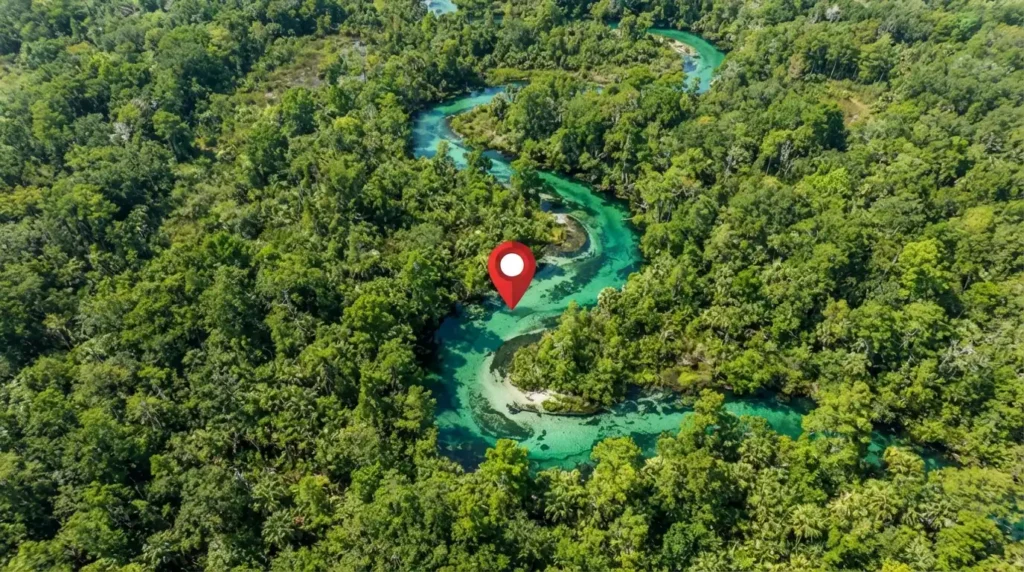
It sits on Rock Springs Run in Orange County, Florida, about 5 miles northeast of Apopka and 5 miles southeast of Sorrento, between Wekiwa Springs State Park and Rock Springs Run State Preserve. The launch point, King’s Landing, is at 5722 Baptist Camp Rd, Apopka, FL 32712, roughly 45 minutes from downtown Orlando.
What Makes the Emerald Cut’s Water So Clear and Green?
The water stays clear near the launch because it sits close to the headspring, where the flow moves fast enough to keep sediment from settling. Past mile 5 downstream, the water shifts to a tea colored tannic tint as the current slows. The first mile, the actual Emerald Cut, stays the clearest and most photogenic section of the run.
How Do You Get to and Launch at the Emerald Cut?
King’s Landing vs Camp Joy: Which Launch Point Should You Use?
King’s Landing is the closer, more convenient option. You park, unload, and you are basically at the water in a couple minutes. Expect a launch fee in the $10 to $20 range if you bring your own kayak or paddleboard, and this is also the only place to rent gear.
Camp Joy, accessed through Kelly Park, is the budget route. The launch fee runs closer to $5 for a group, but there is a real tradeoff. Visitors have to carry or drag their kayaks a long way from the parking lot to the launch area, sometimes described as feeling like several football fields. If you have your own gear and do not mind the walk, Camp Joy saves money. If you would rather skip hauling equipment across a grass lot, pay the extra fee at King’s Landing.
| Launch Point | Typical Fee | Best For |
| King’s Landing | $10 to $20 per person | Renting gear, minimal walking |
| Camp Joy (via Kelly Park) | Around $5 for a group | Own gear, budget minded groups |
How Do You Get the Gate Code for Camp Joy?
You cannot drive straight to Camp Joy. You stop at Kelly Park first, pay the launch fee, and register with a driver’s license and license plate number. Staff hand over a paper slip with the day’s gate code, which changes daily, so you punch it in at the Camp Joy entrance nearby.
What Time Does King’s Landing Open and Close?
King’s Landing operates from 8am to 5pm. Bring your own vessel guests need to be back by 4:30pm. Rentals run on a fixed 4 hour window that includes check in and check out, so plan your launch time accordingly.
What Are Your Rental and Tour Options at the Emerald Cut?
Should You Rent a Kayak, Canoe, or Paddleboard?
A single kayak is the easiest choice for anyone who has never paddled before. It tracks straight, stays stable, and forgives beginner mistakes. Canoes are the trickiest of the three, steering less predictably, and new paddlers commonly zig zag down the run before getting the hang of it. Paddleboarding is more approachable than people expect, but a few minutes of instruction helps, which is one reason a guided tour can be worth it for first time standup paddlers.
Guided Tour vs Self Guided Rental: Which Is Better?
A guided tour adds real value if you want context on the ecology and local history. Guides often share details about the Timucuan people who once inhabited the region and point out wildlife you might paddle right past on your own.
A guide is not necessary to avoid getting lost though. On Rock Springs Run you can only go left or right, and the route dead ends at a barrier before you turn around and float back with the current. Self guided rentals give more flexibility and usually more water time for a similar price.
Can You Bring Your Own Kayak or Paddleboard?
Yes. King’s Landing charges around $10 per adult and $5 per child age 12 and under to launch a personal vessel. Your kayak or paddleboard needs to meet size limits, generally no wider than 42 inches and no longer than 16 feet. You will also need a personal flotation device and whistle for each paddler, required by Florida law, or rent both for around $5 each at check in.
How Much Does It Cost to Kayak the Emerald Cut in 2026?
Pricing depends on the vendor and vessel, and this is where many guides get confusing because they mix old prices with new ones. As of 2026, here is a realistic breakdown:
- Single kayak rental: roughly $49 to $79 for 4 hours
- Double kayak or canoe rental: roughly $69 to $99
- Paddleboard rental: similar to a single kayak
- Guided clear kayak or eco tour: $60 to $99 per person for 2 hours
- Bring your own vessel launch fee: $10 to $20 at King’s Landing, or $5 at Camp Joy
- Rented PFD or whistle: around $5 each
Expect to pay $70 to $100 total for a solo self guided trip once you add the launch or rental fee, and $100 to $150 per person with a guided tour and gratuity. A common mistake first timers make is assuming the online rate includes everything, when launch fees, gear rentals, and guide tips are usually separate line items.
What Will You See and Experience Paddling the Emerald Cut?
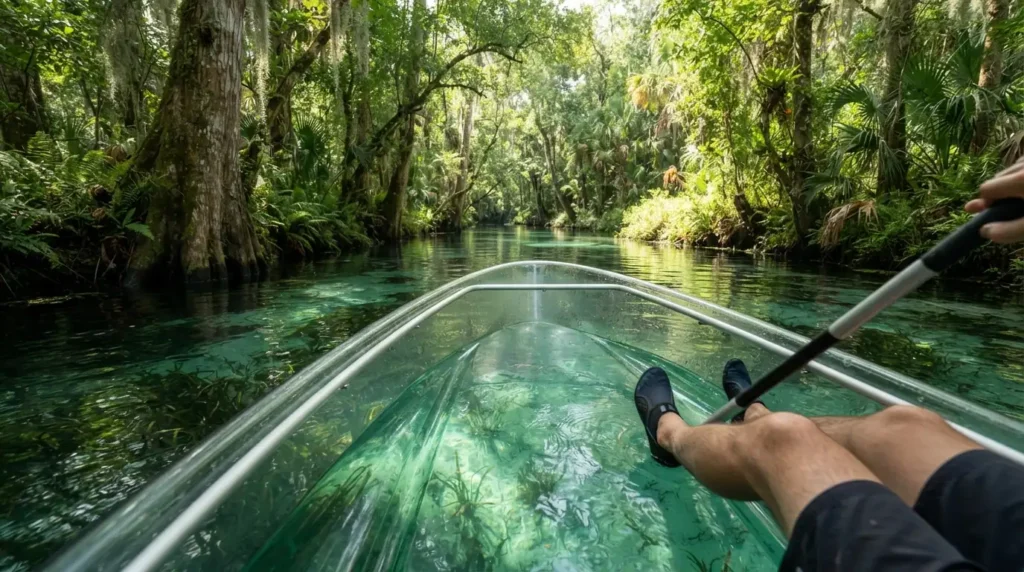
Paddlers regularly spot river otters, turtles sunning on logs, deer, and wading birds like herons, limpkins, and ibis. Alligators live in the area too, and the run flows through dense black bear habitat, though bear sightings from a kayak are rare. Keep distance from wildlife and never feed animals along the run.
Sabal palmettos, sword ferns, giant leather ferns, and red maples arch over the water and create the canopy this stretch is known for. Downstream, where the run widens, invasive plants like water hyacinth and water lettuce take over the shoreline.
About one mile upstream from King’s Landing, a bridge and barrier near the headspring stops all forward progress, and there is no way to reach the actual spring source by boat. Most paddlers treat this as the natural turnaround point, making this portion roughly a 2 mile round trip.
Is It Safe to Kayak With Alligators Here?
Yes, with normal precautions. Assume alligators are present even if you do not see one, and avoid letting hands or feet dangle over the side of your kayak or paddleboard. Serious incidents are uncommon given how many paddlers use the run daily, but staying alert and keeping distance is simply smart practice, not paranoia.
What Happens If the Weather Turns Bad?
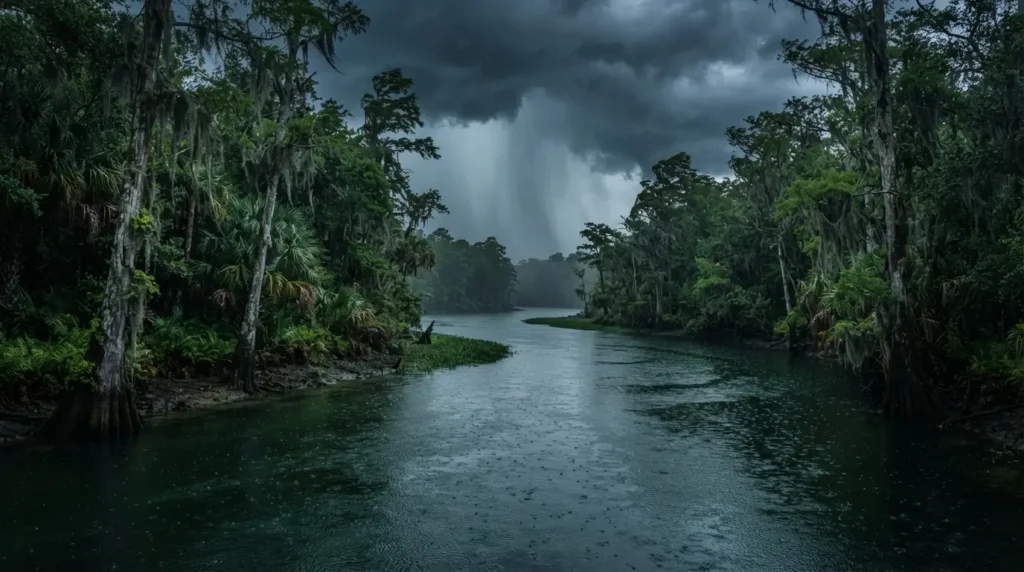
Most outfitters only refund tours for conditions the guides themselves cancel, not light rain or overcast skies. Florida is known for fast building afternoon thunderstorms, especially from June through September, so an early morning launch lowers your risk. Check the radar before you go and treat any lightning as a reason to get off the water immediately.
Do You Need Experience, and Is It Kid Friendly?
No prior kayaking experience is needed. The route is short, the current is manageable, and rental staff walk you through the basics before launch. Most outfitters welcome paddlers age 3 and up, with tandem kayaks holding up to 500 pounds combined and single kayaks up to around 350 pounds, so families can pair a child with an adult. Kids under a certain weight need child specific life jackets rather than adult sized ones.
When Is the Best Time to Visit the Emerald Cut?
Weekday mornings are consistently the quietest time to paddle, especially outside spring break and major holidays. Weekends sell out fast, sometimes days ahead during peak season, so book early if a weekend visit is your only option. Even a Friday tends to be noticeably calmer than a full weekend crowd.
Since King’s Landing operates within an 8am to 5pm window, a sunrise or sunset guided tour is really the only way to skip the midday crowd, and the lower angle light makes the green water even more striking in photos.
What Should You Pack for a Day on the Water?
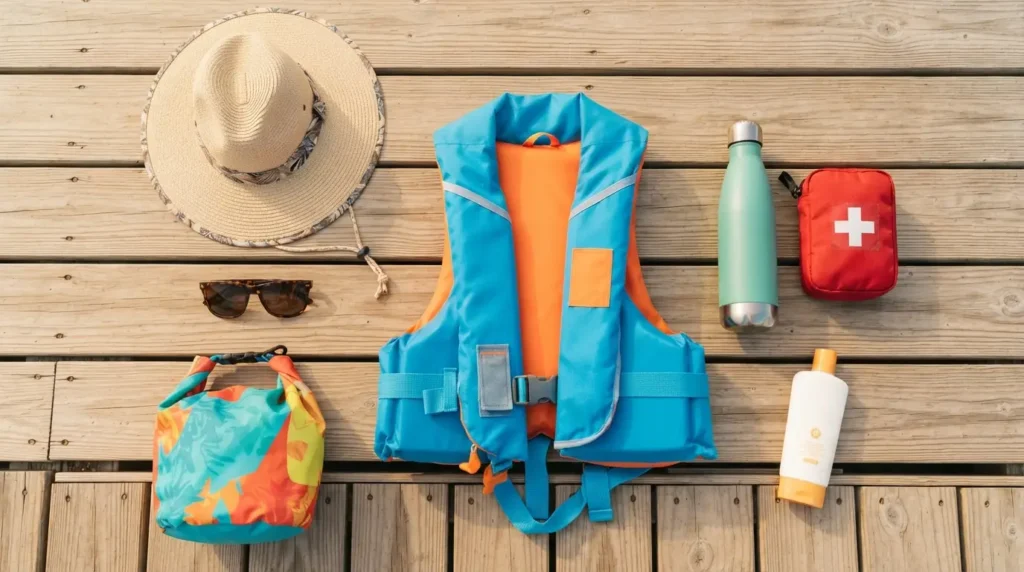
- Quick dry clothing and swimsuit
- Water shoes, sandals, or old sneakers with a strap
- Sunscreen, hat, and sunglasses
- Towel and change of clothes for the drive home
- Waterproof phone case or dry bag
- Cash for guide tips
- Snacks or a packed lunch, since there is shade along the run
How Does the Emerald Cut Compare to the Rest of Rock Springs Run?
What’s the Difference Between This Section and the Full Rock Springs Run Paddle?
The Emerald Cut is the short, clear, canopied section closest to King’s Landing. The full Rock Springs Run continues about 8.5 miles downstream to Wekiva Island, passing through wider, more tannic water and three primitive campsites. Most day visitors paddle only this first mile, while experienced paddlers combine it with the downstream route for roughly 10.8 miles total. King’s Landing offers a shuttle back from Wekiva Island, which makes the one way trip realistic in a single day.
Final Thoughts
The Emerald Cut earns its reputation the moment you paddle under the first arch of trees and see how green and clear the water is. Pick King’s Landing for convenience or gear rental, choose Camp Joy if you already own a kayak and want to save money, and go early on a weekday for a quieter paddle. However you plan it, it remains one of the most rewarding short paddles in Central Florida.
FAQs
Do you need to wear a life jacket?
Yes. A personal flotation device is required by Florida law and included with rentals, or available for around $5 if you bring your own boat.
Will you get wet kayaking here?
Likely, at least a little. Splashing, swimming breaks, and shallow spots to hop out and cool off mean quick dry clothing is worth packing.
Are there restroom facilities at King’s Landing?
Yes, at the King’s Landing launch and again at the Wekiva Island take out point for anyone doing the longer shuttle run.
Should you tip your guide?
It is customary, though not required. Bring cash, since gratuity is not included in the listed tour price.
Do you have to book tickets in advance?
Strongly recommended, especially on weekends. King’s Landing and third party tours regularly sell out during peak season, holidays, and spring break.


