
Beaches Big Island: The Honest 2026 Guide to Black, Green, and White Sand
The best beaches big island travelers rave about aren’t all the same kind of beach, and that’s actually the whole point. This is the only place in the United States where you can stand on jet black lava sand in the morning and sink your toes into soft white sand by afternoon. Add in one of the rarest green sand beaches on Earth, and Hawaii Island turns beach hopping into a geology lesson you didn’t know you needed.
That variety also causes real confusion. Some big island beaches are perfect for swimming, others are strictly look but don’t touch, and a few require a serious hike just to reach the sand. This guide sorts out exactly which beach fits which kind of day, with honest details on fees, safety, and access that most lists skip over.
Why Does the Big Island Have Different Colored Sand Beaches?
Hawaii Island’s beaches get their color from an active volcanic history that’s still unfolding today.
Black sand forms when molten lava reaches the ocean and shatters instantly on contact with cold seawater, creating small, glassy fragments of basalt. White sand comes from the slower process of coral and shell fragments breaking down over centuries. Green sand is the rarest of the three, formed from olivine crystals, a mineral common in Hawaiian lava that survives erosion better than the surrounding rock.
This is why the Big Island, still actively growing from ongoing volcanic activity, has more sand color variety than almost anywhere else on the planet. Knowing which type of beach you’re heading to actually tells you a lot about what kind of day to expect before you even arrive.
What Is the Best Black Sand Beach on the Big Island?
Punaluʻu Black Sand Beach near Pāhala is the best beach on the Big Island for experiencing black sand up close, largely because of its resident population of green sea turtles and the rarer hawksbill turtle.
Located just off Highway 11 between Pāhala and Nāʻālehu, Punaluʻu sits about 67 miles south of Kailua-Kona, roughly a two and a half hour drive, and about an hour south of Hilo. The beach makes a natural stop for anyone driving toward Hawaii Volcanoes National Park, sitting only about 20 minutes from the park entrance.
A grove of coconut palms lines the shore, and on most days at least a few turtles can be found resting on the warm black sand, especially in the afternoon as the sand heats up. Swimming here comes with real caveats though:
- The shoreline is rocky and uneven, making it uncomfortable and occasionally unsafe for casual swimming.
- Rip currents can be strong, and there’s no lifeguard on duty.
- Snorkeling is possible on calm days but should be approached cautiously.
- A small freshwater pool at one end offers a gentler alternative to the open ocean.
Facilities include restrooms, showers, picnic pavilions, and a boat ramp, and day camping is allowed with a county permit. Locals recommend visiting on a weekday morning to avoid the tour bus crowds that tend to arrive midday.
How Close Can You Get to Sea Turtles at Punaluʻu Beach?
Visitors must keep a respectful distance from sea turtles at Punaluʻu Beach, generally cited as 10 to 15 feet depending on the source, since both green sea turtles and hawksbill turtles are federally protected species.
Touching a turtle is illegal and genuinely harmful to the animal, since turtles lack immunity to bacteria carried on human skin. Most park signage and conservation groups recommend staying back at least 10 feet at minimum, with some sources citing 15 feet as the safer standard. Either way, the rule is simple: admire from a distance, never approach or feed them, and keep pets and drones away from resting turtles.
How Do You Get to Green Sand Beach on the Big Island?
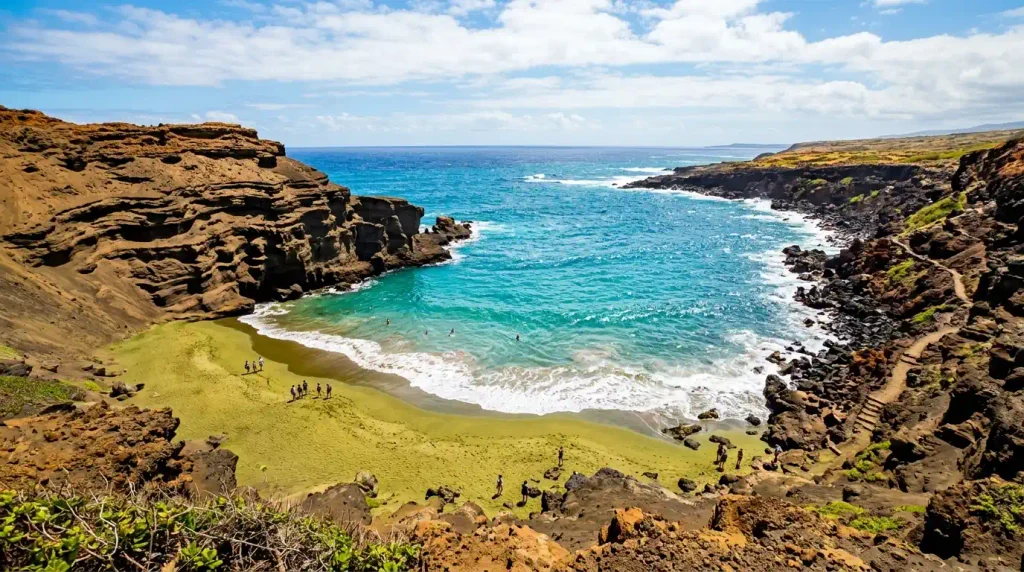
Reaching Papakōlea Green Sand Beach near South Point requires either a 2.5 mile hike each way across exposed, windy terrain, or a paid ride from a local shuttle driver, since regular vehicles cannot legally drive the access road.
South Point, or Ka Lae, marks the southernmost tip of the United States, and the parking area there serves as the starting point for the trek. The hike itself isn’t technically difficult, but there’s no shade anywhere along the route, and the heat combined with loose, rutted terrain catches a lot of first-time visitors off guard. A common mistake first-timers make is starting the hike in the middle of the day; locals recommend an early morning start, ideally before 9 a.m., to avoid the worst heat.
Once you arrive, the beach itself sits inside a cinder cone with dramatic cliffs on either side, and on a sunny day the olive green sand color is genuinely striking against the turquoise water. Swimming is possible on calmer days, but strong surf and no lifeguard mean it should only be attempted by confident swimmers who check conditions first.
Is It Safe to Take a Local Shuttle to Green Sand Beach?
The shuttle rides down to Papakōlea, typically costing somewhere around 20 dollars round trip, are operated by local drivers without official state authorization, since the road technically sits on Hawaiian Home Lands and is closed to vehicle traffic.
This is worth knowing before you go, not to scare travelers off, but to set expectations honestly. The rides themselves are bumpy but generally reliable, and many visitors who aren’t up for the full hike use them without issue. Still, since the operation is unregulated, there’s no formal safety oversight, no fixed pricing, and no guarantee of service on any given day. Renting your own 4×4 and attempting the drive is not recommended; abandoned rental vehicles along the route are a common sight, a clear sign the terrain is rougher than it looks in photos.
What Happened to Kaimū Black Sand Beach?
Kaimū Black Sand Beach near Hilo was completely buried under a lava flow in 1990, which is why it no longer exists in the form older travel articles still describe.
The eruption that destroyed Kaimū also covered the nearby town of Kalapana, and while a new black sand shoreline has slowly formed nearby from ongoing lava activity, it isn’t the same accessible swimming beach travelers picture from decades-old photos. This is a genuinely common point of confusion, since some outdated lists still recommend Kaimū as a top black sand beach. For a reliable, accessible black sand experience today, Punaluʻu remains the better destination.
What Is the Best Beach on the Big Island for Swimming and Snorkeling?
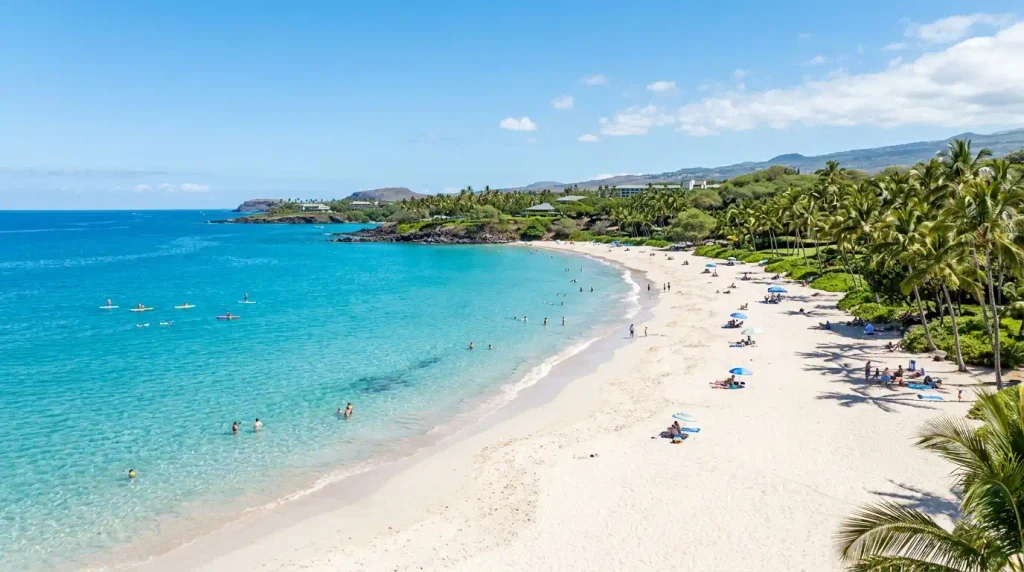
Hapuna Beach State Park on the Kohala Coast is the best beach on the Big Island for swimming and snorkeling, thanks to its wide stretch of soft white sand and generally calm water from May through October.
Hapuna sits about 30 minutes north of Kona International Airport off Highway 19, with the turnoff near Mile Marker 69. The southern end of the beach has a gentler slope, making it the safer spot for snorkeling and casual swimming, while the northern end near the Westin Hapuna Beach Resort tends to have more shade under scattered trees.
Winter months, roughly November through March, bring bigger swells that attract experienced bodyboarders, with the best conditions typically showing up between December and February. Summer visitors get calmer, clearer water better suited to relaxed swimming and snorkeling. The park has lifeguards on duty, along with restrooms, showers, and covered picnic pavilions, though there’s no food concession on site beyond what the adjacent resort offers.
[Comparison Table]
| Beach | Sand Type | Swim Safety | Entrance Fee | Best For |
| Punaluʻu Black Sand Beach | Black | Caution, rocky and rip currents | Free | Turtle viewing |
| Papakōlea Green Sand Beach | Green | Caution, strong surf | Free (hike or paid shuttle) | Scenery, adventure |
| Hapuna Beach State Park | White | Good, calm in summer | Paid, see below | Swimming, snorkeling |
| Kua Bay (Kekaha Kai) | White | Good on calm days | Free | Families, day trips |
Is Hapuna Beach Worth the Entrance Fee?
Most travelers find Hapuna Beach State Park’s fee worthwhile given the lifeguard coverage, facilities, and consistently pleasant swimming conditions during the calmer months.
Non-residents currently pay 5 dollars per person for entrance plus 10 dollars per vehicle for parking, both payable by credit card only at the gate, since neither fee can be booked in advance. Hawaii residents with valid state ID enter and park free. The park opens at 7 a.m. and gates close around 7:30 to 8 p.m. depending on the season, but the real insider tip is arriving before 9 a.m. on weekends, since the lot is limited and the gate closes entirely once it fills, turning away even fee-paying visitors.
Are There Free Beaches on the Big Island?
Yes, Kekaha Kai State Park, which includes both Kua Bay (Manini’ōwali) and Mahaiʻula Beach, charges no entrance fee and remains one of the most scenic free options near Kailua-Kona.
Kua Bay in particular offers striking white sand backed by black lava rock formations, with clear turquoise water that’s excellent for swimming when conditions are calm and occasionally rough with strong shore break during high surf. Mahaiʻula section adds a wider sandy dune area with picnic tables. Both sections have experienced periodic closures for flood cleanup or safety issues, so checking current DLNR status before heading out is worth the extra minute.
[Cost Table]
| Beach | Entrance Fee | Parking Fee | Reservation Required |
| Hapuna Beach State Park | $5/person, non-resident | $10/vehicle, non-resident | No |
| Kekaha Kai (Kua Bay, Mahaiʻula) | None | None | No |
| Punaluʻu Black Sand Beach | None | None (camping needs permit) | No, except camping |
| Papakōlea Green Sand Beach | None | None | No |
What Is the Best Beach on the Big Island for Families?
Hapuna Beach State Park and Kua Bay stand out as the best beaches on the big island for families, mainly because both combine manageable walking distance from parking with gentler entry points into the water.
Hapuna’s lifeguard presence adds real peace of mind for parents, and its size means there’s usually room to spread out even on busier days. Kua Bay works well for families who prefer a fee-free option, though its shore break can pick up quickly during high surf, so checking conditions before letting kids swim unsupervised matters more here than at Hapuna.
What Time of Year Has the Calmest Water on Big Island Beaches?
May through October generally brings the calmest swimming conditions across most big island beaches, while November through March delivers bigger swells better suited to bodyboarding and surfing rather than casual swimming.
This pattern holds especially true at Hapuna and Kua Bay, both of which see noticeably gentler wave action in summer months. Black sand and green sand beaches like Punaluʻu and Papakōlea are less season-dependent for viewing purposes, since turtles and scenery remain year round, but swimming at either should always be assessed on the day based on current surf rather than the calendar alone.
Can You Combine Punaluʻu and Green Sand Beach in One Day?
Yes, Punaluʻu Black Sand Beach and Papakōlea Green Sand Beach sit close enough within the Kaʻū district to comfortably combine into a single day trip, especially when paired with a stop at Hawaii Volcanoes National Park.
Starting from Kailua-Kona, the drive south along Highway 11 passes through the Kona coffee belt before reaching Punaluʻu, then continues on to the South Point turnoff for the Papakōlea hike or shuttle. Travelers based in Hilo have an even shorter drive to Punaluʻu, making it an easy loop.
[Itinerary Table]
| Stop Order | Beach or Stop | Approx Drive Time | Time Needed |
| 1 | Punaluʻu Black Sand Beach | From Kona: ~2.5 hrs | 1-2 hours |
| 2 | South Point / Papakōlea Green Sand Beach | ~30 min from Punaluʻu | 2-3 hours round trip |
| 3 | Hawaii Volcanoes National Park | ~1 hr from South Point | 2+ hours |
Budget a full day for this loop, start early to beat the heat at South Point, and bring plenty of water since none of these stops sell food or drinks on site.
Conclusion
Choosing among the beaches big island has to offer really comes down to matching the beach to what you actually want that day. Punaluʻu delivers turtles and black sand drama, Papakōlea delivers a rare green sand adventure worth the hike, and Hapuna delivers the calm, reliable swimming most travelers picture when they imagine a Hawaii beach day. Check current fees, respect turtle distance rules, and start early for anything involving a hike or exposed terrain. Do that, and any of these best beaches on the big island will earn its spot on your trip.
FAQs
What is the best beach on the big island overall?
There’s no single best beach for everyone. Hapuna Beach State Park wins for swimming and families, Punaluʻu wins for turtle viewing, and Papakōlea wins for rare scenery and adventure.
Are there black sand beaches on the big island?
Yes, Punaluʻu Black Sand Beach near Pāhala is the most accessible and popular black sand beach on the island, formed from lava that shattered on contact with the ocean.
Is Punaluʻu Beach good for swimming?
Swimming is possible but not ideal due to rocky terrain and occasional rip currents, with no lifeguard on duty. Most visitors come primarily to see the turtles rather than to swim.
How far is the hike to green sand beach?
The hike to Papakōlea Green Sand Beach is about 2.5 miles each way from the South Point parking area, fully exposed with no shade along the route.
Is Kekaha Kai State Park free?
Yes, Kekaha Kai State Park, including Kua Bay and Mahaiʻula Beach, charges no entrance or parking fee.
What is the best beach on the big island for snorkeling?
Hapuna Beach State Park, particularly its southern end, offers the calmest and clearest water for snorkeling, especially between May and October.
What happened to Kaimū Black Sand Beach?
It was buried by a lava flow in 1990 and no longer exists as the accessible swimming beach older articles describe. Punaluʻu is now the main black sand beach destination on the island.


