Banff National Park Fall: What You Need to Know for Larch Season and Quieter Trails
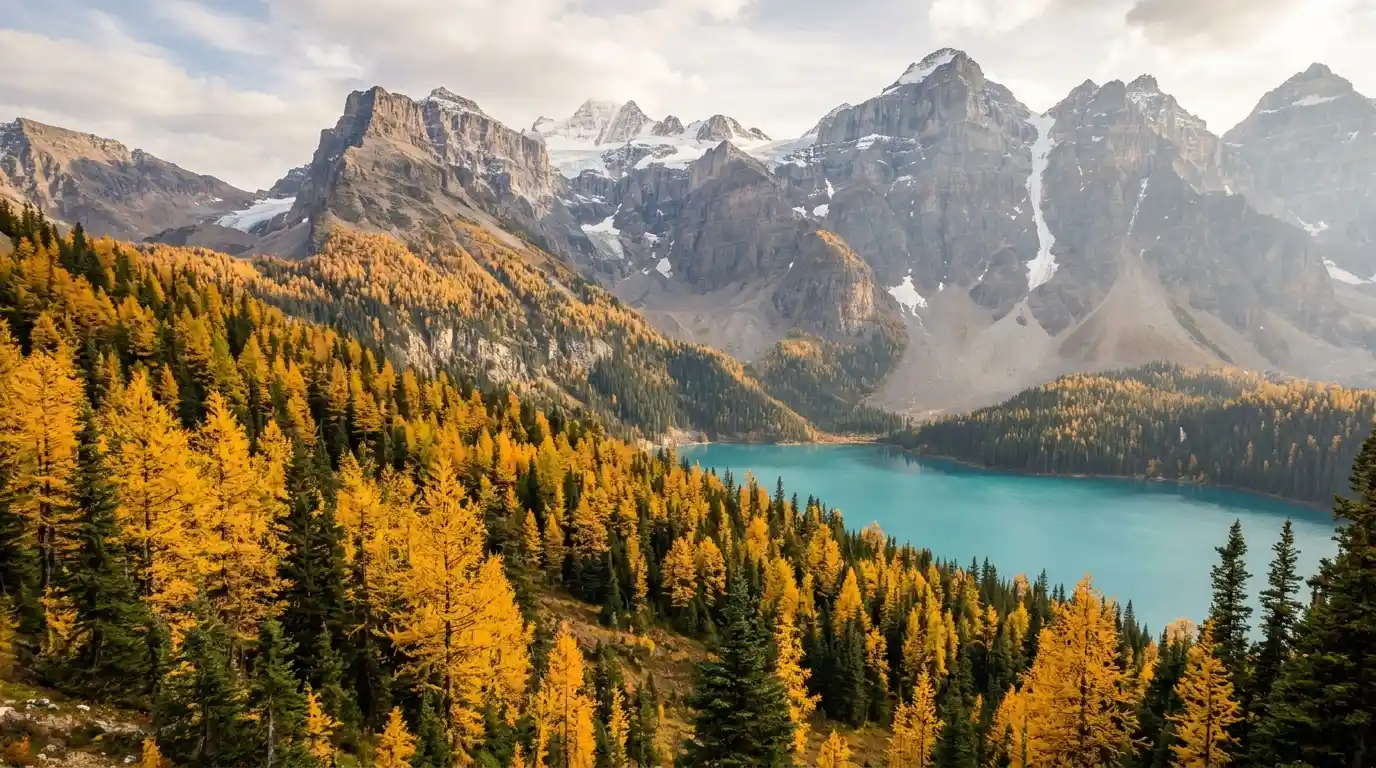
Banff National Park in fall delivers peak larch colour from mid to late September, fewer crowds after Labour Day, and lower hotel rates while most trails and lakes remain accessible through early October.
Visitors choose autumn for the golden subalpine larches that turn for roughly two weeks, crisp air that improves hiking conditions, and wildlife activity that peaks before winter. The park sits in Alberta, Canada, about 130 kilometres west of Calgary. Entry requires a Parks Canada Discovery Pass, currently around CAD 12.25 per adult per day or a seasonal pass for longer stays. Most people base in Banff town or Lake Louise for easy access to the main valleys and higher trails.
The shift from summer happens quickly. By mid-September daytime highs drop into the 10–15 °C range and nights cool further. Rain or early snow is possible, so layers and waterproof outer shells become essential. Roads stay open, but some high-elevation access like Moraine Lake Road typically closes after Canadian Thanksgiving in mid-October due to avalanche risk. Planning around the third and fourth weeks of September gives the best chance of seeing the larches at their brightest.
When Larch Season Peaks in Banff
Larch season is the short window when the subalpine larch trees turn bright gold. These conifers grow mainly between 1,800 and 2,400 metres elevation and shed their needles each winter. Peak colour usually falls between 18 and 30 September, though exact dates shift a few days with weather. Local tourism accounts and Parks Canada post colour updates in early September. The reliable core sits in the third and fourth weeks of the month.
Early September still feels like late summer with green slopes and higher crowds. By the second half of the month the valleys show more autumn colour in aspen and the higher trails light up. Early October can still deliver good colour if the weather holds, but the first significant snow often arrives by mid-month and starts closing higher trails. Checking recent reports before booking flights or hotels improves the odds of hitting the peak.
For comparison with other fall foliage destinations, the best places to see fall foliage page covers similar timing strategies across different regions. The same principle applies here: a narrow window rewards flexible dates.
Best Fall Hikes for Golden Larches
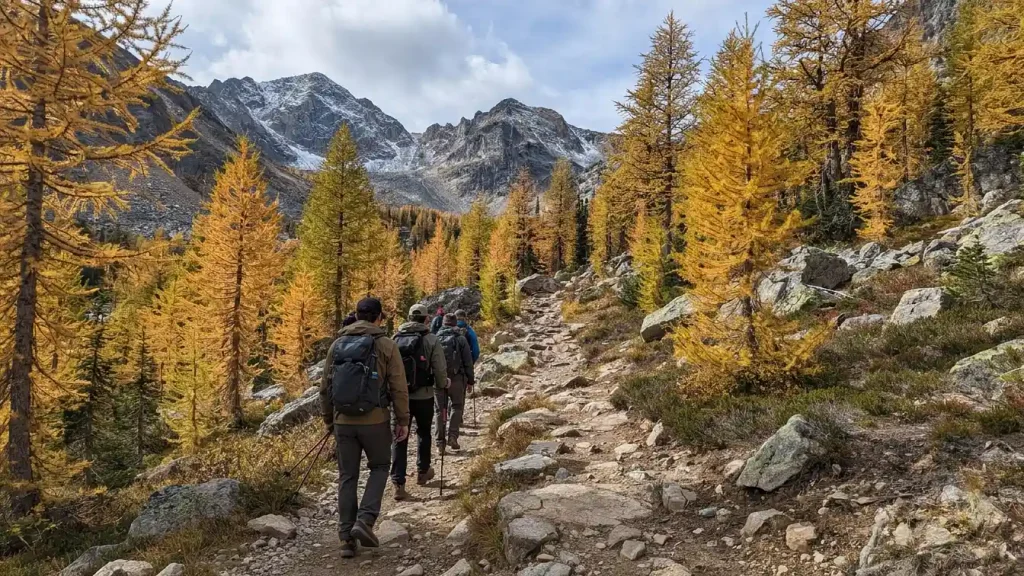
Larch Valley via Moraine Lake is the classic route. The trail runs about 4.5 kilometres one way with roughly 570 metres of elevation gain. It reaches a meadow filled with golden trees and offers views of the Valley of the Ten Peaks. An early start helps because the parking lot and shuttle fill quickly on clear September weekends. Healy Pass near Sunshine Village and Saddleback Pass above Lake Louise provide similar colour with fewer people on the trail.
Lower elevation walks such as the Johnston Canyon trail or the shoreline paths at Lake Louise stay open longer and require less preparation. They still show autumn colour in the undergrowth and give clear views of the turquoise water. For more hiking ideas across parks, the best hikes in Arches National Park guide shows how to match trail length to available daylight and weather windows.
Always carry bear spray. Grizzlies and black bears remain active in September and early October as they feed before hibernation. Stick to established trails, make noise in dense forest sections, and store food properly at campsites. Weather can change fast above treeline, so check the forecast and turn around if clouds build or wind picks up.
What Stays Open and What Closes
Most town services, restaurants, and shops remain open through October. The Banff Gondola on Sulphur Mountain continues running and provides wide views without a long hike. Hot springs stay available for soaking after a day on the trails. Some boat cruises and higher gondolas begin seasonal closures in late September or early October. The Lake Minnewanka cruise and Columbia Icefields tours typically stop by mid-October.
Moraine Lake Road is the main early closure. Parks Canada usually shuts it after Canadian Thanksgiving because of avalanche hazard. Lake Louise remains accessible by road longer. Checking the official Parks Canada site for current road and trail status avoids surprises. For a general overview of Banff highlights that remain relevant in fall, the Banff must-do page lists core attractions that work across seasons.
Accommodation prices drop after Labour Day. A mid-range hotel in Banff town that costs more in July often falls by 20–30 percent in late September. Booking a few weeks ahead still helps on weekends during peak larch colour. Many places offer free cancellation, which gives flexibility if colour reports shift the ideal dates.
Crowds, Costs, and Weather in Autumn
Crowds thin noticeably after the first week of September outside of the busiest larch weekends. Trails that feel packed in August become manageable. Parking is easier in town and at most trailheads except the most popular larch routes. This makes spontaneous stops more practical.
| Period | Typical Crowds | Hotel Rates | Trail Access |
|---|---|---|---|
| Early September | Moderate | High | Full |
| Mid-late September | Lower | Moderate | Full until first snow |
| Early October | Low | Lower | Some closures begin |
Daytime temperatures usually range from 8–15 °C in late September. Nights can drop below freezing. A light jacket, fleece, and rain shell cover most conditions. Waterproof hiking boots with good grip help on damp or icy sections. The shorter days mean starting hikes earlier to finish before dark.
Wildlife and Local Events
Elk rutting peaks from late August through mid-October. Bugling can be heard in the valleys, especially around Banff town and Lake Louise. Bears are active and visible while they feed. Keep a safe distance and never approach animals for photos. Park staff monitor high-use areas and sometimes close sections if wildlife is nearby.
Several events run in fall. The Banff Mountain Film and Book Festival typically takes place in late October or early November. Banff Pride Festival and food-focused gatherings also appear on the calendar. These add indoor options if weather turns. Checking the Banff and Lake Louise Tourism site for the current year schedule helps with timing.
Sample 4–6 Day Fall Itinerary
Day 1: Arrive in Banff, walk the town, and visit the Banff Gondola for orientation. Day 2: Lake Louise shoreline and a shorter hike such as Lake Agnes if conditions allow. Day 3: Larch Valley or Healy Pass if colour is peaking. Day 4: Johnston Canyon and a drive along the Icefields Parkway as far as conditions permit. Day 5: Optional second larch hike or a rest day with hot springs. Day 6: Depart.
This pacing leaves room for weather delays or colour reports that suggest shifting a hike day. Driving times are short between Banff and Lake Louise, about 55 kilometres. Public shuttles run to some trailheads in peak season and can reduce parking stress. For longer multi-park ideas, the Columbia River Gorge itinerary shows how to structure days around changing conditions.
Practical Tips for a Smooth Visit
Book lodging and popular tours a few weeks ahead for mid-to-late September weekends. Download offline maps because cell coverage drops in valleys and on trails. Carry cash or cards for the park pass at entry gates. Pack layers, bear spray, and a headlamp for shorter days. Confirm road status the morning of any high-elevation drive.
Restaurants in Banff town offer a range of options from casual to sit-down. Reservations help on weekend evenings. Grocery stores allow packing lunch for trail days, which saves time and money. The best restaurants Santa Fe guide illustrates similar planning for mountain towns where evening options can fill up.
Fall in Banff rewards people who watch the colour reports and stay flexible. The combination of golden larches, quieter trails, and lower prices makes it one of the better windows of the year for many visitors.
FAQs
Banff National Park Fall: What You Need to Know
Plan for mid to late September to catch peak larch colour, expect fewer crowds after Labour Day, and confirm road and trail openings because some high-elevation access closes by mid-October. Pack layers and bear spray for changing weather and active wildlife.
When do the larches turn gold in Banff?
Peak colour usually runs from about 18 to 30 September. The exact window shifts a few days with weather. Check local reports in early September for the current year.
Is Moraine Lake open in October?
The road typically closes after Canadian Thanksgiving in mid-October due to avalanche risk. Exact dates vary. Confirm with Parks Canada before visiting.
How much does park entry cost?
A daily Discovery Pass is around CAD 12.25 per adult. A seasonal pass is available for longer stays. Prices can change, so check the official Parks Canada site.
Are bears active in fall?
Yes. Grizzlies and black bears feed actively in September and early October. Carry bear spray, make noise on trails, and keep a safe distance.
Do hotel prices drop in fall?
Yes. Rates usually fall after Labour Day compared with July and August. Weekend dates during peak larch colour still fill faster.
What should I pack for fall hiking?
Layers, a waterproof shell, sturdy boots, bear spray, and a headlamp. Temperatures can drop quickly and trails may be damp or icy.
Can I visit without a car?
Shuttles and tours run to some major sites in season. Banff town is walkable. A car gives more flexibility for trailheads and spontaneous stops.
Is early October still good for larches?
Sometimes, if the first snow arrives late. Colour often peaks by the end of September. Early October is quieter but access starts to reduce.
Are there indoor options if it rains?
Yes. The Banff Gondola, hot springs, museums, and restaurants stay open. Several fall festivals also provide indoor programming.
How far is Banff from Calgary?
About 130 kilometres west. The drive takes roughly 90 minutes without traffic. Airport shuttles and rental cars are common options.
Should I book tours in advance?
Popular larch hikes and gondola tickets benefit from advance booking on weekends. Many tours offer free cancellation, which adds flexibility.