Why Pickleball Is a Great Sport for Staying Healthy
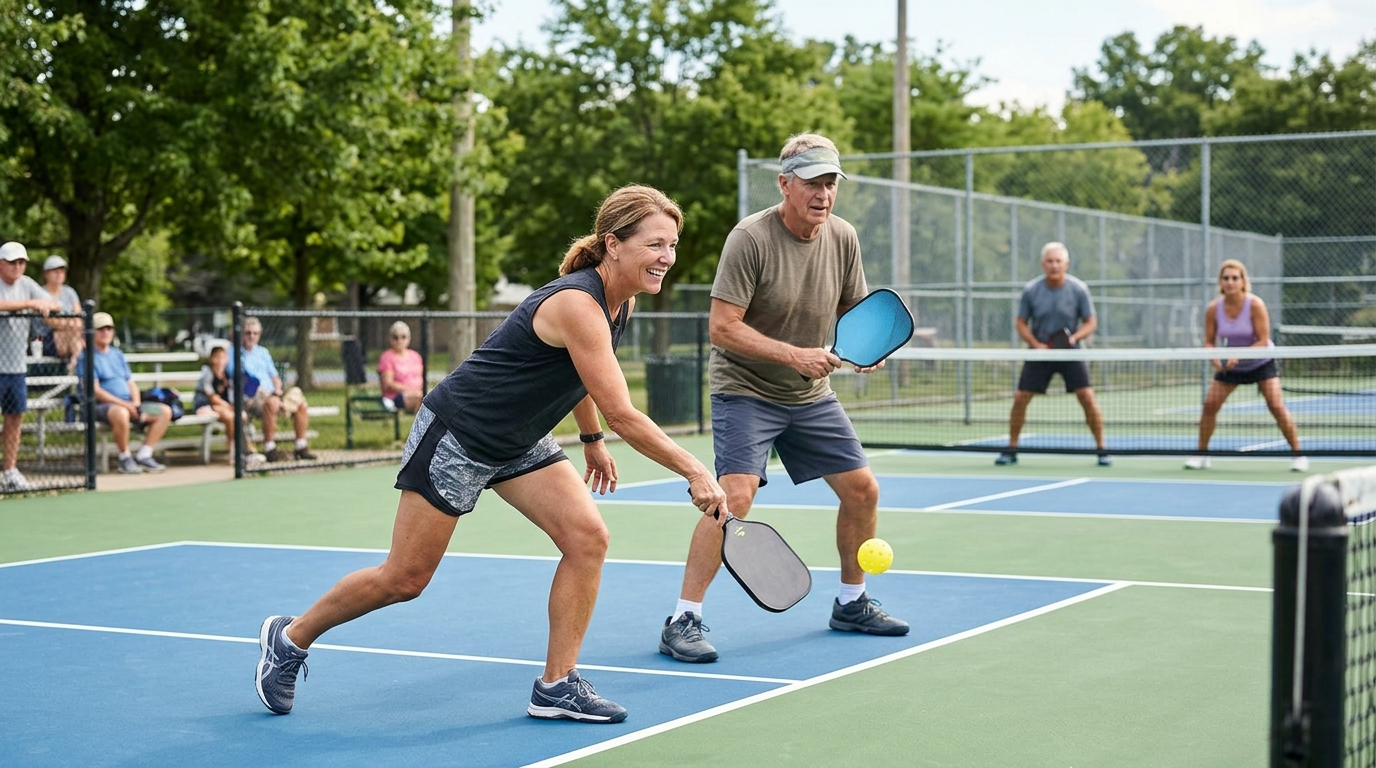
Pickleball looks casual. The research says it works your body harder than it appears. It raises your heart rate, trains balance, and keeps people playing for years. It also takes minutes to learn.
It Delivers Moderate-Intensity Cardio
Health guidelines call for 150 minutes of moderate activity each week. Pickleball can cover that quickly.
An American Council on Exercise study tracked middle-aged and older adults during matches. Participants reached moderate intensity in about one minute. Heart rates ranged from 79 to 158 beats per minute. Effort depends on how hard you play.
NC State researchers followed 33 adults aged 65 and older. Players averaged more than 68 minutes of moderate to vigorous activity per session. Three sessions a week meets the guideline.
A study in the Journal of Aging and Physical Activity compared singles and doubles. Players averaged 62 years old. Both formats averaged 111 beats per minute. Players spent over 70% of play time in the moderate zone. Singles produced more steps per hour. Doubles allows more recovery between points. Pick the format that fits your goal.
It Is Gentler on the Joints
The court measures 20 by 44 feet. That is smaller than a tennis court. The ball is light plastic. Rallies reward touch more than raw power.
Less sprinting means moderate joint loading. Injuries still happen. Ankle sprains and muscle strains are common. Warm up for three to five minutes before you play.
Gear matters too. Breathable pickleball jerseys wick sweat during long sessions and allow full shoulder rotation. Pair them with court shoes that give lateral support.
It Builds Strength and Balance
Pickleball is a stop-start sport. Every rally demands short, sharp movement.
Common movement demands include:
- Lateral shuffles that load the glutes and hip abductors
- Split steps that train fast reaction time
- Lunges at the kitchen line that work the quads and hamstrings
- Quick direction changes that sharpen balance and joint position sense
These patterns build stability around the knees and ankles. Better balance lowers fall risk, a serious concern after age 60. Repeated muscle contraction also supports bone health.
Hand-eye coordination gets work too. You track a fast ball and adjust your paddle angle in fractions of a second. That trains reaction speed, which tends to decline with age.
How It Compares With Tennis
Many people assume tennis is the better workout. The data is closer than you might expect.
The Apple Heart and Movement Study analyzed more than 94,000 pickleball workouts. Average peak heart rate was 143 beats per minute in pickleball and 152 in tennis. A tennis match lasts about an hour. A pickleball game lasts about 15 minutes. Even so, pickleball players stayed on court roughly 10% longer per session. Lower intensity may let people play longer.
A peak of 143 beats per minute is still real cardio work.
It Supports Mental Health
The same dataset included an optional depression screening. Pickleball players scored 60% below the threshold for depressed mood. Tennis players scored 51% below it. Other exercisers scored 47% below.
A screening is not a diagnosis. The participants also do not represent every population. The pattern is still useful.
Doubles adds social contact. Shot selection, dinking, and third-shot drops add mental load. You move, think, and talk in the same hour.
How to Start Safely
Use a simple plan:
- Play two to three sessions per week, 45 to 60 minutes each
- Warm up with leg swings, hip circles, and light jogging
- Wear court shoes, not running shoes
- Add strength training twice weekly
- Take a rest day between hard sessions
Pickleball should not be your only exercise. Resistance training fills gaps that play does not cover. Check with your doctor first if you have heart or joint conditions.
The Bottom Line
Pickleball combines cardio, strength work, balance training, and social contact in one low-cost activity. The evidence supports it for adults of most ages. Start with short sessions and build volume slowly. Keep strength training in your week. Consistency beats intensity here.