
4 Signs Your School District Needs Portable Classrooms
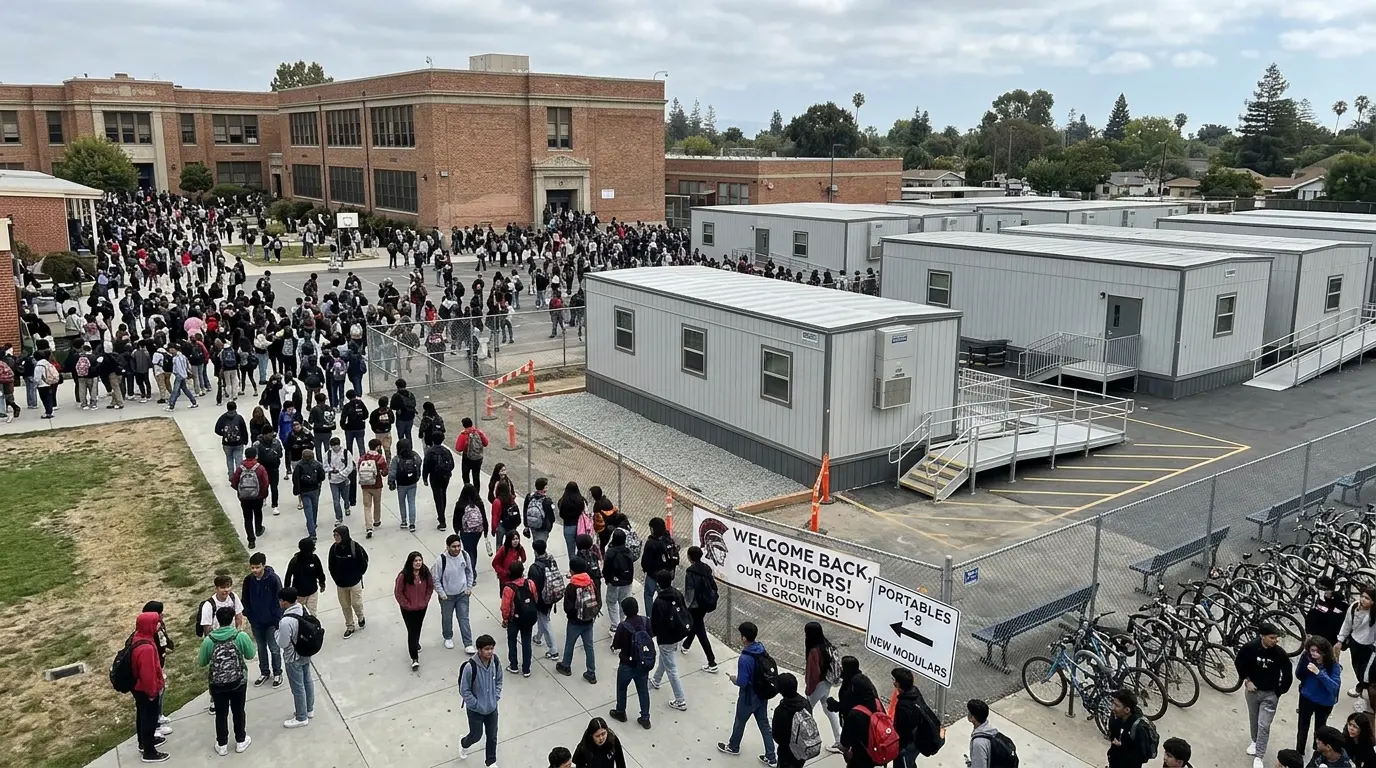
Portable classrooms offer school districts a rapid, adaptable solution to meet space needs without interrupting learning. Using prefabricated, modular structures helps schools adapt to growing student populations; it also lets administrators increase functional space while maintaining a suitable learning environment. Here are four indicators that a school district needs modular units:
1. Increased Student Enrollment
School districts experiencing rapid student enrollment that exceeds the physical capacity of schools’ infrastructure benefit from portable classrooms. A sudden influx of students disrupts the balance in student-to-teacher ratios; this may cause them to run out of desk space in their classrooms. These school districts are able to use modular units to expand usable space to accommodate the enrollment growth.
When there is an increase in residential developments near a school district, a sudden influx of families can occur. With an increased population, some schools experience an increase in enrollment. This raises the demand for space in schools because student populations grow faster than the available space in classrooms.
In some cases, school district policy changes create uneven student distribution, and this sometimes results in unbalanced classroom sizes across schools. By altering class ratios, student density, and space use without adequate time for infrastructure to adapt, policies can create structural deficits. For such situations, portable units allow districts to accommodate incoming students and hire new teachers, allowing them to keep class sizes manageable.
2. Scheduled Facility Renovations
Upcoming facility renovations are an indication that school districts need to seek temporary space solutions. If a school district has upcoming wing remodels, major construction projects, or system overhauls, it can use temporary portable units during construction. The need for short-term space justifies the need to install modular units, as they offer immediate learning environments to prevent school closures. School districts may need to implement projects in multiple phases, so they require the structural flexibility that portable units offer.
Because construction projects utilize heavy equipment, create dust, and cause vibrations, they are likely to disrupt classroom sessions. Portable units allow students to remain on a centralized campus away from the construction noise and hazards, facilitating uninterrupted learning. They allow administrators to isolate construction zones from student activities. Modular units also allow students to access facilities such as cafeterias and libraries during renovations, and they won’t need to spend additional time moving long distances across campus.
3. Reduced Specialized Centers
When rising enrollment causes schools to run out of space, some administrators use other rooms as makeshift classrooms. School districts might hold academic classes in areas such as the staff breakrooms, computer labs, or the library; this is a sign they have outgrown their footprint. Portable classrooms offer a solution to restore the availability of non-instructional spaces.
Some schools also repurpose specialized learning centers such as art studios, music rooms, or special education spaces to accommodate an overflow in students. This points to a strained school infrastructure, and it might require the installation of modular units. Portable units also offer a viable option to prevent dismantling of early learning and kindergarten facilities to fit more desks, including:
- Play centers
- Story and reading centers
- Block and construction centers
- Sensory centers
4. Increased Operational Constraints
Logistical constraints such as hallway gridlock and strained gyms or cafeterias indicate that a school’s infrastructure is out of alignment with its operational reality. This sometimes results in crowded cafeteria lunch blocks where servings start early and run past the allocated time slots. Portable classrooms offer a rapid solution to remedy such issues; a unit can be used as a:
- Second cafeteria
- Gym extension
- Library
If school districts experience increased hallway congestion during passing periods, it also indicates that there is a need for space. Having some classes outside the main building allows students to use alternate routes, so hallways don’t become too crowded. Some units have multiple classrooms, while others have a larger shared space, ideal for science labs or libraries. If crowded hallways persist, schools can connect another unit to the previous one, so fewer classes are in the main building.
Acquire Portable Classrooms
School districts need modular units when student populations outpace the available space and facilities. Some schools require rapid solutions to address overcrowded classrooms and reduce construction timelines significantly, and prefabricated units offer ideal solutions. Partner with professional prefabrication companies to develop modular units to address schools’ spatial needs.