Rhubarb and Ginger Jam: Classic Recipe, Ingredients, and How to Eat It
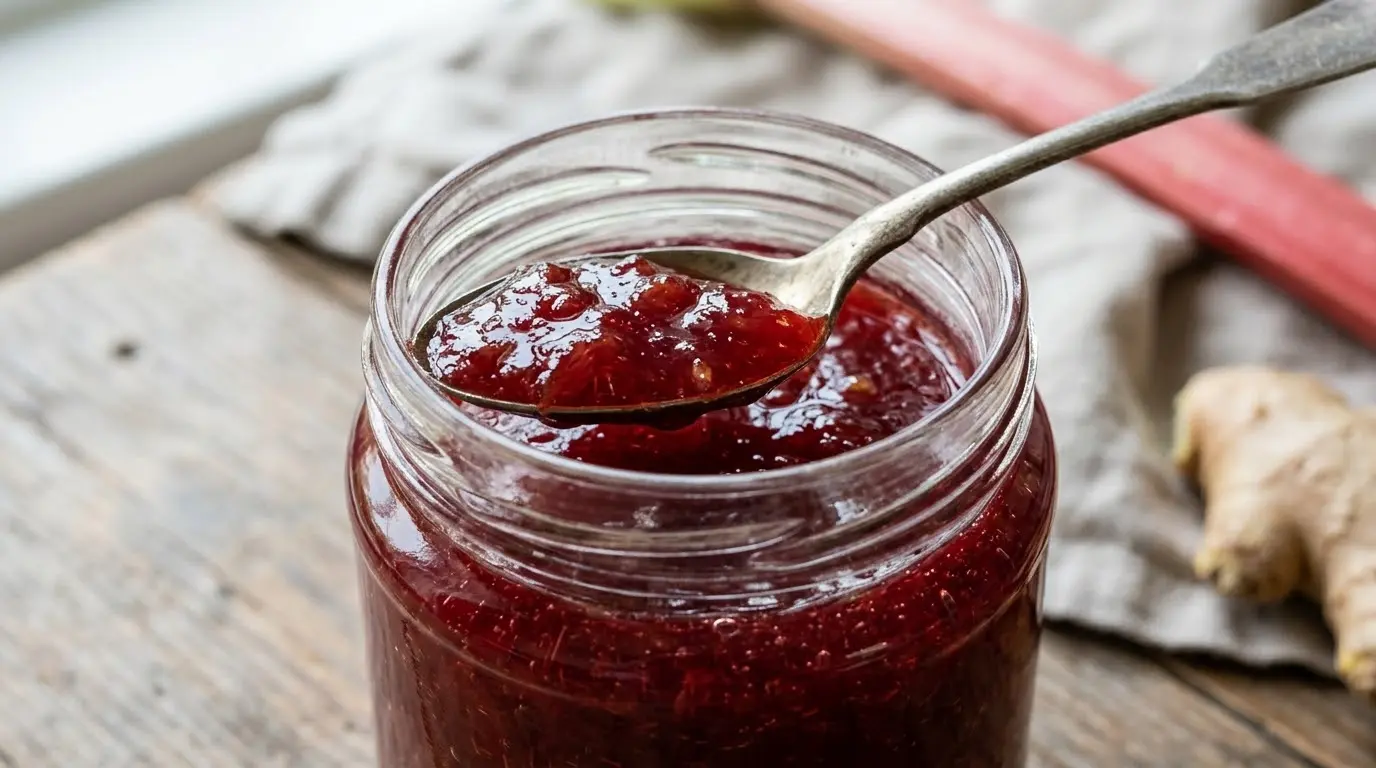
Rhubarb and ginger jam combines tart rhubarb stalks with fresh ginger and sugar into a bright preserve that sets well and pairs with toast, cheese, or savory dishes.
Origin and Flavor Profile of Rhubarb and Ginger Jam
Rhubarb and ginger jam is a traditional British preserve that appears in spring when outdoor rhubarb stalks are ready. The combination balances the sharp, acidic taste of rhubarb with the warm spice of ginger. Early forced rhubarb gives a milder pink color; later outdoor stalks bring deeper red and stronger tartness. Ginger can be fresh root, grated, or pieces of stem ginger in syrup.
The jam has enough natural pectin from the rhubarb and added lemon or orange juice to set without commercial pectin in many recipes. It keeps for months in sterilized jars and brightens both sweet and savory plates. Related preserves and British foods appear in British foods guides.
Key Ingredients and Their Roles
Rhubarb provides the main fruit base and tart flavor. Trim the leaves completely, as they are not edible, and cut the stalks into 2 to 3 cm pieces. Sugar sweetens and helps the jam set; many recipes use equal weight of sugar to prepared rhubarb or jam sugar with added pectin. Fresh ginger adds heat; bruise or grate it so the flavor releases fully.
Lemon or orange juice lowers the pH and brightens the taste while aiding the set. A pinch of salt enhances the other flavors. Some versions add stem ginger pieces at the end for visible chunks. The ingredient list stays short, which makes the jam reliable for home cooks. Compare with other fruit preserves such as those discussed in Egyptian food and dishes for regional variety.
Basic Method for Making the Jam
Place cut rhubarb, sugar, ginger, and citrus juice in a large bowl. Cover and leave overnight so the sugar draws out the juices. The next day, transfer everything to a heavy pan and bring to a boil. Cook, stirring often, until the mixture thickens and reaches setting point, usually 10 to 20 minutes after boiling.
Test for set by placing a small amount on a cold plate; it should wrinkle when pushed. Remove from heat, skim any foam, and pot into warm sterilized jars. Seal while hot. The overnight maceration step reduces cooking time and helps the rhubarb keep some texture. Most batches yield several jars from about 1 kg of rhubarb.
How to Eat Rhubarb and Ginger Jam
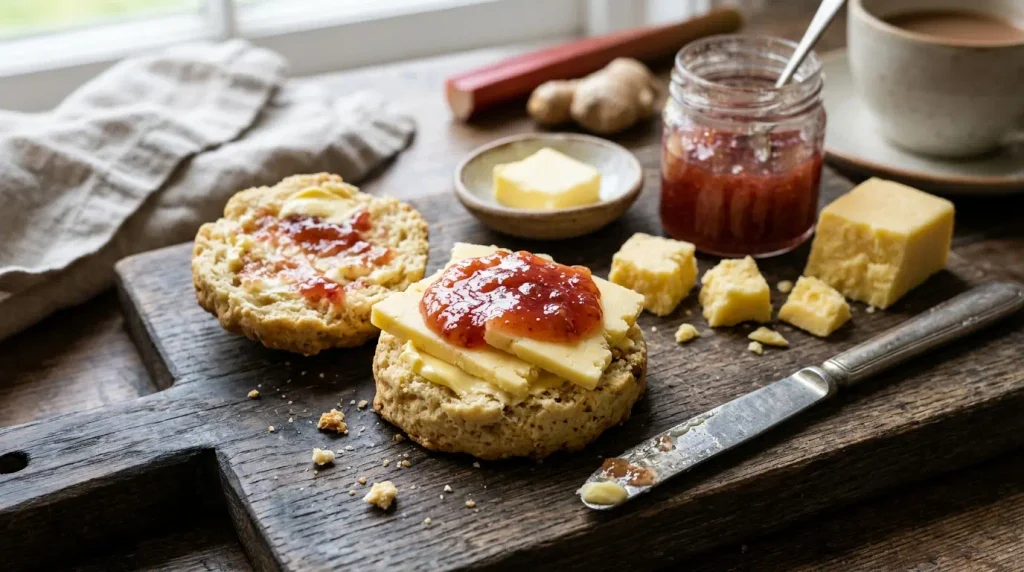
Spread the jam on toast, scones, or yogurt for a simple breakfast or snack. It pairs especially well with sharp cheddar or other firm cheeses on a board. Use it as a glaze for pork or duck by warming a spoonful with a little stock or vinegar. Stir a small amount into oatmeal or use it in thumbprint cookies.
The tart-sweet balance cuts through rich foods. Many people keep a jar in the refrigerator after opening and finish it within a few weeks. It also works in savory sauces or as a condiment beside roasted meats. Explore more serving ideas alongside Denmark food or other European preserves.
Tips for a Good Set and Storage
Use a heavy-bottomed pan to prevent scorching. Stir frequently once the jam boils. Sterilize jars by washing in hot soapy water and drying in a low oven, or run them through a dishwasher cycle. Fill jars to within 5 mm of the rim and seal immediately.
Store unopened jars in a cool, dark cupboard for up to a year. Once opened, refrigerate and use within a month. If the jam does not set firmly, it still tastes excellent as a softer conserve. Adjust sugar slightly next time based on the tartness of your rhubarb.
Variations on the Classic Recipe
Omit the ginger and add rosewater at the end for a floral version. Include a cinnamon stick or star anise during cooking for extra spice, then remove before potting. Use orange juice instead of lemon for a milder citrus note. Some cooks add a small amount of preserved ginger in syrup for sweeter chunks.
Smaller batches work well for testing flavors. Frozen rhubarb can substitute for fresh with only minor adjustments to cooking time. The core method stays the same across variations. Related jam and preserve techniques appear in broader food content on the site.
Common Questions About Ingredients and Results
Rhubarb leaves must be discarded. The stalks alone are safe and provide the classic flavor. Fresh ginger gives brighter heat than ground ginger. Jam sugar helps beginners achieve a firmer set, while regular sugar works with the natural pectin and added acid.
Color ranges from pink to deep red depending on the rhubarb variety and cooking time. The jam may separate slightly in the jar; stir before using. These details make the preserve approachable for seasonal cooks each spring.
FAQs
What is rhubarb and ginger jam?
Rhubarb and ginger jam is a British-style preserve made from rhubarb stalks, fresh ginger, sugar, and citrus juice. It has a tart-sweet flavor with warm spice and sets into a spreadable consistency for toast, cheese, or glazes.
What ingredients do I need for rhubarb and ginger jam?
The basic ingredients are rhubarb stalks, sugar, fresh ginger, and lemon or orange juice. Some recipes add stem ginger pieces or a pinch of salt. Equal weights of rhubarb and sugar are common starting points.
How long does rhubarb and ginger jam take to make?
Most recipes involve an overnight maceration followed by 15 to 30 minutes of active cooking. The total hands-on time stays under an hour once the fruit has sat with the sugar. Potting and cooling add more time.
Does rhubarb and ginger jam need pectin?
Many recipes rely on the natural pectin in rhubarb plus the acid from citrus juice. Jam sugar with added pectin makes the set more reliable for beginners. Test for set on a cold plate before potting.
How do you eat rhubarb and ginger jam?
Spread it on toast or scones, serve it with cheese, or use it as a glaze for pork and duck. It also works in yogurt, oatmeal, or savory sauces. The tartness pairs well with rich or creamy foods.
Can I use frozen rhubarb for the jam?
Yes. Thaw and drain excess liquid if needed, then proceed with the same method. Cooking time may shorten slightly because the fruit is already broken down. Flavor remains strong.
How long does homemade rhubarb and ginger jam last?
Unopened jars keep for up to a year in a cool, dark place. Once opened, refrigerate and use within a few weeks. Proper sterilization and sealing extend the shelf life.
Why is my rhubarb and ginger jam runny?
It may not have reached full setting point or the acid and sugar balance was off. Cook a little longer next time and confirm the plate test. Runny jam still tastes good and can be used as a sauce.
Is rhubarb and ginger jam suitable for savory dishes?
Yes. It makes an excellent glaze for roasted meats or a condiment on a cheese board. The ginger and tart rhubarb cut through richness. Warm a spoonful with a little liquid for an easy sauce.
What type of ginger works best?
Fresh root ginger, grated or bruised, gives the brightest flavor. Stem ginger in syrup adds sweeter chunks if stirred in at the end. Ground ginger is less ideal for this preserve.
Do I need to peel the rhubarb?
No. Trim the ends and any damaged spots, then cut the stalks. The skin softens during cooking and adds color. Only the leaves must be removed and discarded.
Can I make a small batch of rhubarb and ginger jam?
Yes. Scale the ingredients down while keeping the ratios similar. A smaller pan works fine. The overnight step and setting test remain the same regardless of batch size.