How Much Protein in a Chicken Breast: Raw, Cooked and Per Serving
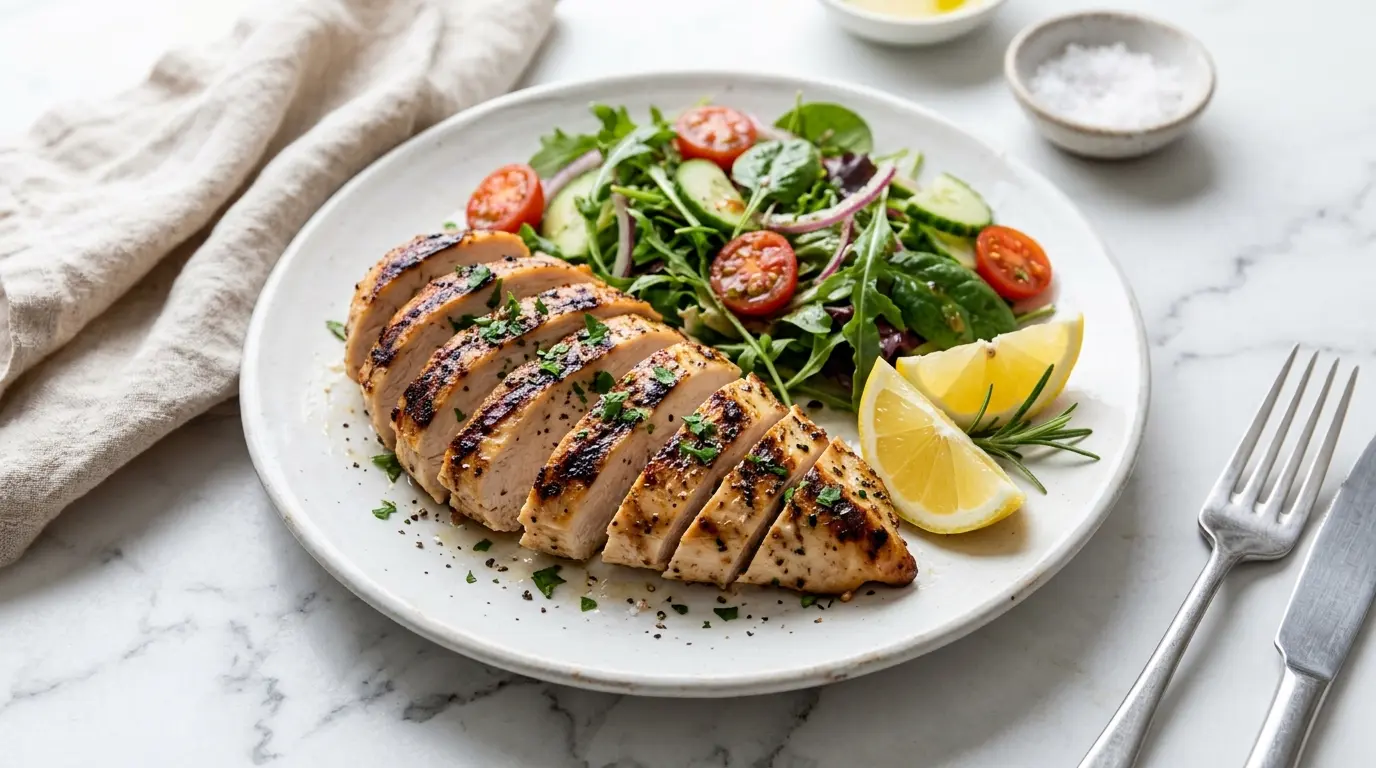
How much protein in a chicken breast depends on weight and cooking. Cooked skinless breast provides about 31 grams of protein per 100 grams. Raw is about 22.5 grams per 100 grams because of higher water content. A typical cooked breast yields 25 to 40 grams depending on size.
Protein per 100 Grams
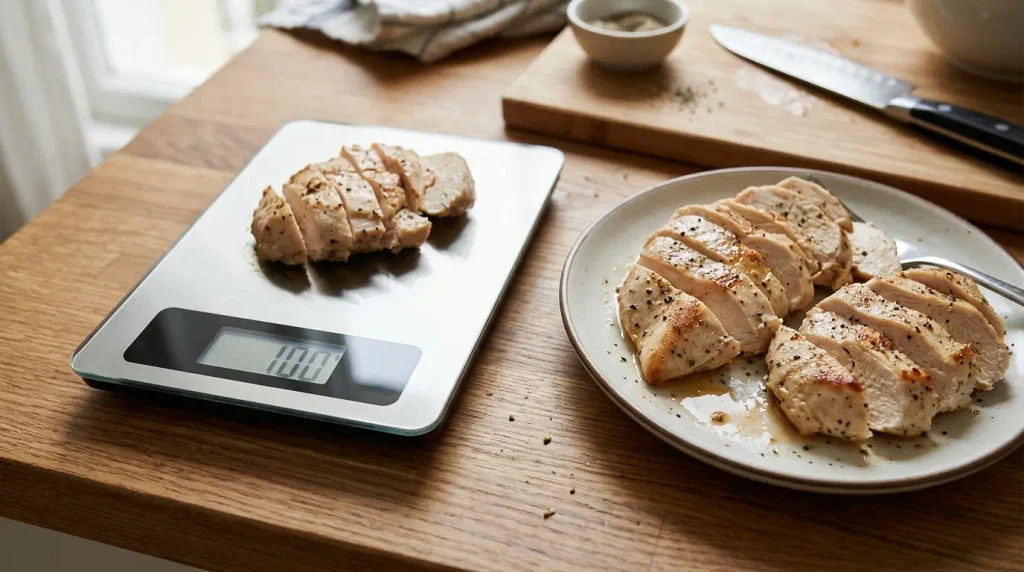
USDA data lists raw skinless boneless chicken breast at roughly 22.5 grams of protein per 100 grams. Roasted skinless breast reaches about 31 grams per 100 grams. Cooking removes water and concentrates the protein. Calories rise from about 120 to 165 per 100 grams for the same reason.
Always compare the same state. Logging raw weight against a cooked figure overstates protein. The reverse understates it. Best high protein fast food options ranked uses similar per-serving comparisons for other foods.
Protein in Common Serving Sizes
A 3-ounce (85 gram) cooked portion provides about 26 grams of protein. Four ounces cooked yields roughly 35 grams. Six ounces cooked reaches about 53 grams. These figures assume skinless meat. Skin lowers the protein percentage slightly while adding calories and fat.
Raw portions of the same starting weight contain less protein per gram because of the water. A 4-ounce raw piece holds about 26 grams. After cooking that same piece weighs less and the protein stays nearly the same in absolute terms. Weighing after cooking gives the most accurate intake number.
| Portion | Weight | Protein Raw | Protein Cooked |
|---|---|---|---|
| 100 g | 100 g | 22.5 g | 31 g |
| 3 oz | 85 g | about 19 g | about 26 g |
| 4 oz | 113 g | about 25 g | about 35 g |
| 6 oz | 170 g | about 38 g | about 53 g |
Protein in One Whole Chicken Breast
Breast size varies widely. A small raw breast of 120 grams yields about 27 grams of protein once cooked. An average 170-gram raw breast provides roughly 38 to 40 grams cooked. Large breasts of 200 grams or more can exceed 45 grams. There is no single number for “one chicken breast.”
USDA average raw boneless skinless breast is listed around 272 grams in some records, which would contain over 60 grams raw. Most grocery breasts are smaller. Weighing the piece you actually eat is the only reliable method. Keto recipes often feature chicken breast precisely because the protein density is high and carbs are near zero.
Raw Versus Cooked Differences
Raw chicken breast is about 75 percent water. Cooking drives off moisture, so 100 grams cooked represents more original meat than 100 grams raw. Protein and calories become more concentrated. The absolute amount of protein in a given piece changes very little; only the weight and density change.
People who track macros should weigh the cooked portion and use the cooked figure of about 31 grams per 100 grams. Using the raw figure on cooked meat underestimates intake. Restaurant portions are almost always listed as cooked weight.
Comparison With Other Chicken Cuts
Skinless breast is the highest-protein common cut per equal cooked weight. Thigh meat provides about 25 grams per 100 grams cooked. Drumstick is similar. Wings with skin fall lower on a percentage basis because of the skin and higher fat. Breast remains the leanest high-protein choice.
Rotisserie breast is often listed around 28 grams per 100 grams because of added solutions or different cooking. Check labels when available. Chicken dog food uses chicken as a protein source in a different context, but human nutrition data stay separate.
How Cooking Method Affects Numbers
Roasting, grilling and baking produce similar protein density once moisture loss is accounted for. Frying adds oil and therefore calories without changing protein much. Poaching retains slightly more moisture, so protein per 100 grams may be a gram or two lower. The differences are small for practical tracking.
Marinades and breading add weight and calories. Weigh the plain cooked meat when possible for accuracy. Added solutions in some packaged breasts increase weight with water or broth and slightly dilute protein percentage. Plain, unenhanced breast gives the most consistent numbers.
Using Chicken Breast for Daily Protein Goals
A 4-ounce cooked breast supplies about 35 grams, roughly half of many people’s daily target in one meal. Pairing it with vegetables and a carbohydrate source creates a balanced plate. It fits low-carb, high-protein and general healthy eating patterns equally well.
Athletes and people building muscle often include one or two servings daily. Older adults benefit from the high-quality protein for muscle maintenance. Best high protein fast food options ranked shows that chicken appears frequently in higher-protein menu choices.
Tips for Accurate Tracking
Weigh cooked chicken on a kitchen scale. Use 31 grams of protein per 100 grams as the reference for skinless breast. Note whether skin is included. Record the brand if using packaged products with nutrition labels. Labels override general USDA averages when present.
Batch-cook and portion in advance for easier logging. Freeze individual servings. Consistency in weighing reduces guesswork. Over time the habit becomes automatic and supports reliable macro tracking.
Common Questions About Variability
Organic, free-range and conventional breasts have nearly identical protein content. The main variables are size, skin and cooking loss. Added solutions are the largest commercial difference. Reading the ingredient list reveals whether water or broth has been added.
Ground chicken breast is similar per 100 grams once cooked. Whole cuts are easier to portion visually. Either works for protein goals. The key remains weighing the amount actually eaten.
FAQs
how much protein in a chicken breast
A typical cooked skinless chicken breast provides 25 to 40 grams of protein depending on size. Per 100 grams cooked the figure is about 31 grams. Raw is about 22.5 grams per 100 grams.
How much protein is in 100 grams of chicken breast?
Raw skinless breast has about 22.5 grams. Cooked skinless breast has about 31 grams. Always match the figure to the state you weighed.
How much protein is in a 4-ounce chicken breast?
Four ounces of cooked skinless breast contains roughly 35 grams of protein. The same weight raw contains about 25 to 26 grams.
Does cooking change the protein amount?
Cooking removes water and concentrates protein per gram. The total protein in one piece stays nearly the same. Weigh after cooking for accurate intake numbers.
Is chicken breast higher in protein than thigh?
Yes, per equal cooked weight. Breast provides about 31 grams per 100 grams while skinless thigh provides about 25 grams. Breast is also lower in fat.
How much protein is in one average chicken breast?
Most grocery breasts yield 30 to 40 grams of protein once cooked. Size varies, so weighing is more accurate than counting breasts.
Does skin affect the protein count?
Skin lowers the protein percentage slightly and adds fat and calories. Skinless figures are higher in protein per gram. Most tracking uses skinless values.
Can I use the raw protein figure for cooked chicken?
No. That underestimates protein. Use the cooked figure of about 31 grams per 100 grams when you weigh the cooked meat.
How many grams of protein do I need daily?
Needs vary by body weight, age and activity. Many adults aim for 1.2 to 2.0 grams per kilogram of body weight. Chicken breast helps meet that target easily.
Is rotisserie chicken the same?
Rotisserie breast is often listed near 28 grams per 100 grams. Added solutions or different cooking can change the number. Check the label when available.
Does the brand matter for protein content?
Plain chicken is consistent. Products with added water or broth dilute protein slightly. Read the nutrition label for the exact product.
How should I weigh chicken for tracking?
Weigh the cooked, skinless portion on a scale. Multiply the grams by 0.31 for an estimate. Use the product label when one is provided.