Dominican Republic Food: La Bandera, Mangú and Traditional Dishes
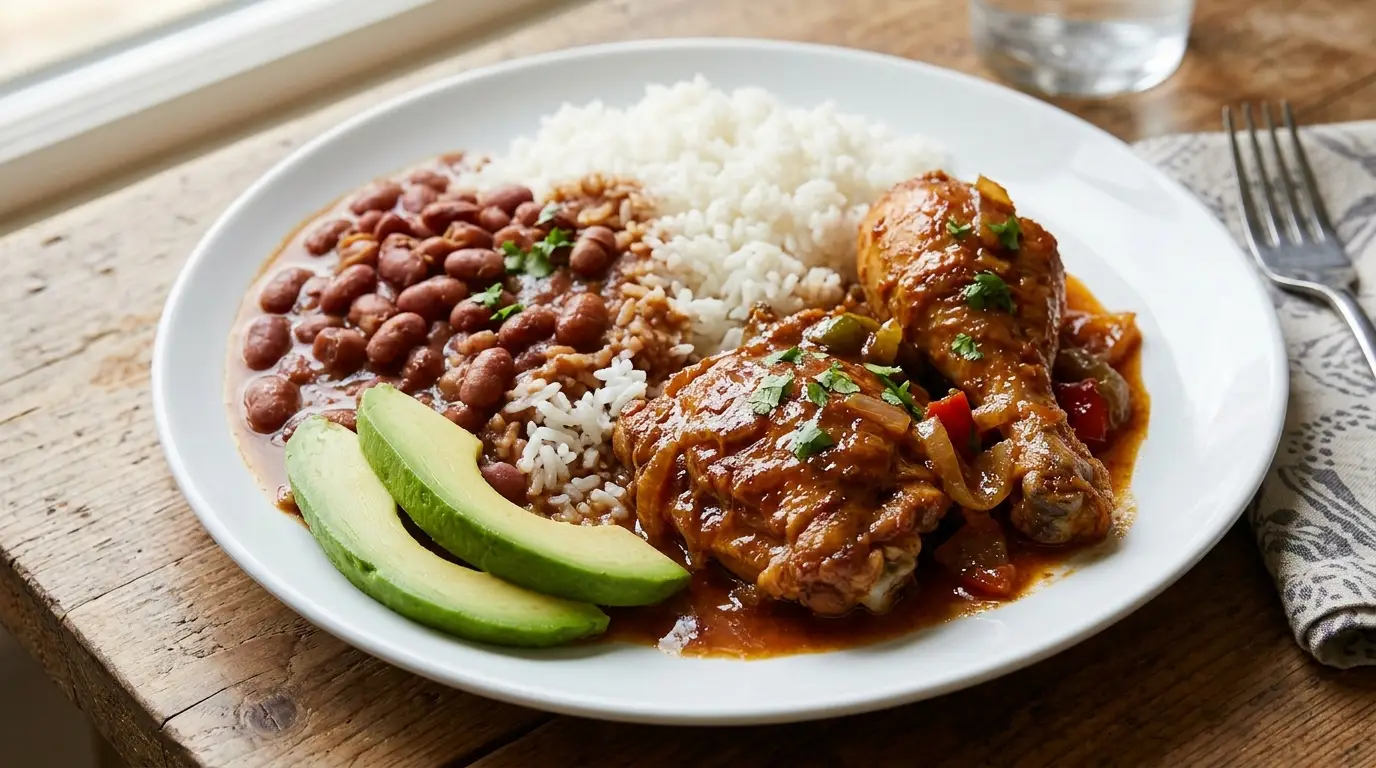
Dominican Republic food centers on la bandera, a midday plate of white rice, red beans and stewed meat. Breakfast brings mangú with fried salami, cheese and eggs. Sancocho stew appears at celebrations and plantains appear at nearly every meal. The cuisine blends Taíno, Spanish and African roots with later Middle Eastern and Chinese influences.
Daily cooking relies on garlic, oregano, cilantro, sweet peppers and sour orange rather than heavy chile heat. Bouillon cubes season many lunch dishes. Rice, beans and plantains form the base of most plates. Street food and home kitchens both emphasize these ingredients across the island.
La Bandera Dominicana
La bandera means the Dominican flag. The plate holds white rice, habichuelas guisadas (stewed red beans) and a braised meat, usually chicken or beef. Tostones or sliced avocado sit on the side. Families eat this combination almost every day at noon. The colors roughly match the flag of white, red and blue when avocado appears.
The beans simmer with onion, pepper, garlic and oregano. Meat cooks separately in a similar sofrito. The three parts stay separate on the plate rather than mixed. This remains the national dish and the standard lunch across homes and casual restaurants.
Mangú and Breakfast
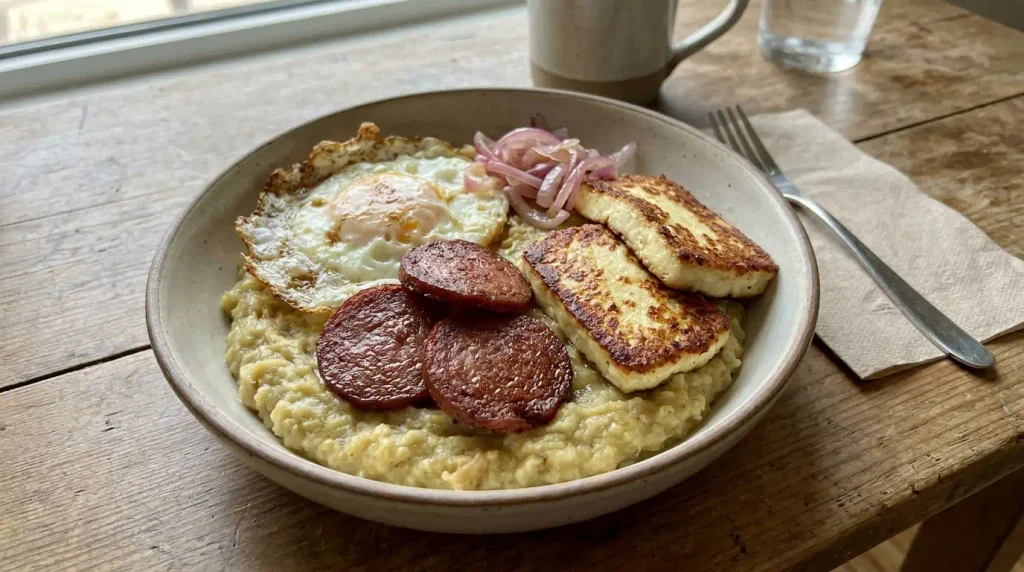
Mangú consists of green plantains boiled and mashed smooth with butter or oil and some of the cooking water. It serves as the base for los tres golpes: fried salami, fried cheese and fried eggs. Pickled red onions often top the mash. Dominicans treat this as the classic breakfast.
Plantains grow widely and appear in both green and ripe forms. Ripe plantains fry into maduros that taste sweet. Green plantains become tostones when twice-fried and flattened. Both versions accompany main meals.
Sancocho and Stews
Sancocho is a thick stew that uses multiple meats such as beef, pork, chicken and goat together with root vegetables, plantain, yam and pumpkin. It appears at Sunday gatherings and celebrations. The broth stays rich from long simmering. A side of white rice and avocado completes the plate.
Other stews include pollo guisado (chicken) and chivo guisado (goat), common in the northwest. Locrio mixes rice with chicken or other protein in one pot, similar to paella but seasoned with local herbs. These dishes travel well for family events.
Street Food and Snacks
Catibías use grated yuca flour dough filled with chicken or cheese and fried. The name and technique trace to Taíno roots. Pastelitos resemble small empanadas filled with meat or cheese. Chimichurris, the Dominican version of a sandwich, use soft bread filled with meat, cabbage and sauce.
Fried fish with tostones appears along the coast, especially in Samaná. Pescado con coco adds coconut milk to the sauce. These coastal plates use fresh catch and local coconut. Markets sell them hot throughout the day.
Regional and Historical Influences
Taíno contributions include casabe, a flat yuca cracker, and certain root preparations. Spanish settlers brought rice, beans, pork and frying methods. African enslaved people introduced plantain techniques and stew styles that still define the table. Later Lebanese and Syrian immigrants added influences visible in some meat preparations. Chinese immigrants contributed rice techniques in certain areas.
The result is comida criolla, the everyday cooking found from Santo Domingo to the countryside. Flavor stays savory and herbal rather than spicy. Lime and vinegar cut richness in many plates.
Where to Find Authentic Plates
Home-style restaurants called comedores serve la bandera at midday for low prices. Markets in Santo Domingo and Santiago offer mangú in the morning and stews later. Coastal towns serve fresh fish with plantains. Visitors who want traditional versions look for places filled with local diners rather than tourist menus.
Prices stay moderate. A full la bandera plate often costs the equivalent of a few US dollars at local spots. Street snacks cost less. Formal restaurants raise prices but still feature the same core dishes.
Drinks and Sweets
Dominican coffee is strong and often served black or with milk. Mabí, a drink from tree roots, tastes similar to root beer. Guarapo de piña uses fermented pineapple. For sweets, arroz con dulce is rice pudding spiced with cinnamon and star anise. Flan and quesillo de coco (coconut flan) finish many meals.
These drinks and desserts appear at both home tables and small stands. They complete the daily rhythm of savory meals.
Comparison of Core Dishes
| Dish | Main Ingredients | Typical Meal | Origin Notes |
|---|---|---|---|
| La Bandera | Rice, red beans, stewed meat | Lunch | National everyday plate |
| Mangú | Mashed green plantains, salami, cheese, eggs | Breakfast | Plantain staple |
| Sancocho | Multiple meats, roots, plantain | Celebrations | African-influenced stew |
| Locrio | Rice cooked with chicken or meat | Lunch or dinner | One-pot rice dish |
These four dishes cover most daily and festive eating on the island.
FAQs
Dominican Republic food
Dominican Republic food features la bandera of rice, beans and meat at lunch, mangú with fried sides at breakfast, and sancocho stew for gatherings. Plantains, garlic and oregano define the flavor across regions.
What is the national dish?
La bandera, white rice with stewed red beans and braised meat, usually chicken or beef, served with plantains or avocado. Families eat it daily at midday.
What do people eat for breakfast?
Mangú of mashed green plantains topped with fried salami, cheese and eggs, often with pickled onions. Coffee accompanies the plate.
Is the food spicy?
No. Seasoning relies on garlic, oregano, cilantro and sour orange. Heat stays mild compared with many other Caribbean cuisines.
Where can visitors try authentic plates?
Comedores and local markets serve the everyday versions. Coastal towns add fresh fish. Look for busy local spots rather than hotel restaurants.
What role do plantains play?
They appear green as mangú or tostones and ripe as sweet maduros. Almost every meal includes one form of plantain.
How does the cuisine reflect history?
Taíno yuca techniques, Spanish rice and pork, and African plantain and stew methods combine. Later immigrant groups added smaller layers.
What is sancocho?
A thick stew of several meats and root vegetables simmered together. It marks Sundays and special occasions and pairs with rice and avocado.
Are there vegetarian options?
Rice and beans form a base. Mangú can stand alone. Many stews center on meat, so options narrow outside home cooking.
What currency is used?
The Dominican peso. US dollars are widely accepted in tourist areas. Cards work in larger restaurants.
What sweets are common?
Arroz con dulce rice pudding and flan, including coconut versions. These appear after savory meals or at street stands.
How do coastal dishes differ?
Fresh fish appears fried or in coconut sauce with tostones. Inland plates emphasize stewed meats and plantains more heavily.