
Iceland Must Do: The Complete Guide to Reykjavik and Beyond
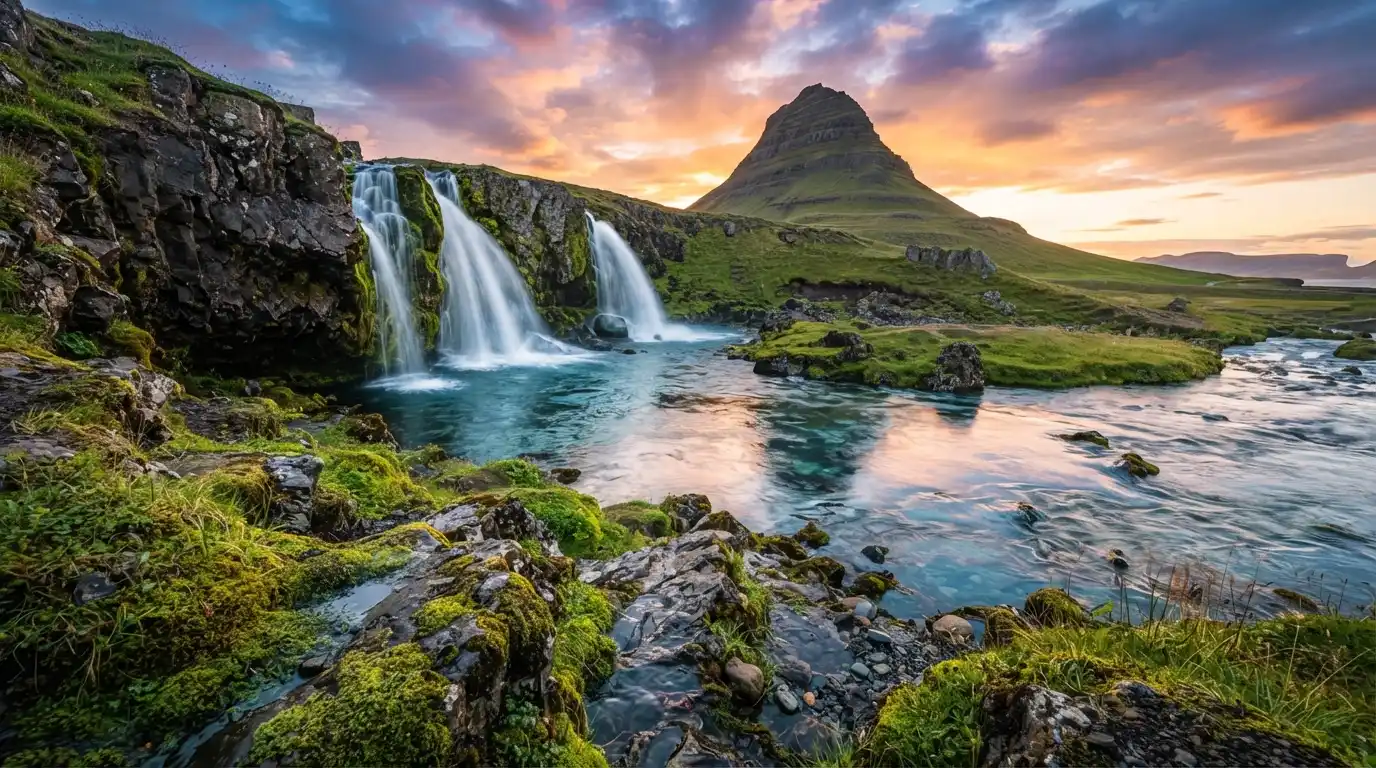
Iceland must do experiences include soaking in a geothermal spa, driving the Golden Circle, snorkeling Silfra between two tectonic plates, and exploring Reykjavik’s colorful streets before venturing further along the Ring Road. With so much packed into a country this small, the real challenge for most first timers is figuring out how to split time between the capital and everything waiting just outside it.
Is Iceland Worth Visiting?
Yes, and travelers who go in picturing nothing but wide open volcanic landscapes are often surprised by how much Reykjavik itself adds to the trip. The capital carries a population of roughly 133,000, closer to 233,000 including the surrounding suburbs, yet its cultural offerings feel far bigger than that number suggests, from thermal baths and striking architecture to genuinely strange niche museums. A common mistake first timers make is treating Reykjavik as a quick layover stop before rushing off to see waterfalls, when the city itself genuinely earns a full day or two of its own.
Sky Lagoon or Blue Lagoon: Which Should You Visit?
| Feature | Sky Lagoon | Blue Lagoon |
| Distance from Reykjavik | 15 minutes | 45 minutes |
| Signature experience | Seven-step ritual | Milky blue mineral water, in-water massage |
| Best for | Combining with a Reykjavik day | Combining with airport arrival or departure |
Both deliver a genuinely luxurious geothermal soak, but their logistics point toward different kinds of trips. Sky Lagoon sits just 15 minutes from downtown Reykjavik and centers around a seven-step ritual moving from the lagoon into a cold plunge, sauna, cold mist, salt scrub, steam bath, and shower before returning to the water, with the Pure Pass covering everything except access to the pricier private changing rooms, which most travelers find aren’t worth the extra cost. The Blue Lagoon sits 45 minutes away, conveniently close to Keflavík Airport, which makes it a natural stop right after landing or right before departing rather than a dedicated Reykjavik day trip. For a proper splurge at the Blue Lagoon, the Retreat Spa delivers the top tier experience, while an in-water massage offers something special at a somewhat lower price point.
What Is the Golden Circle?
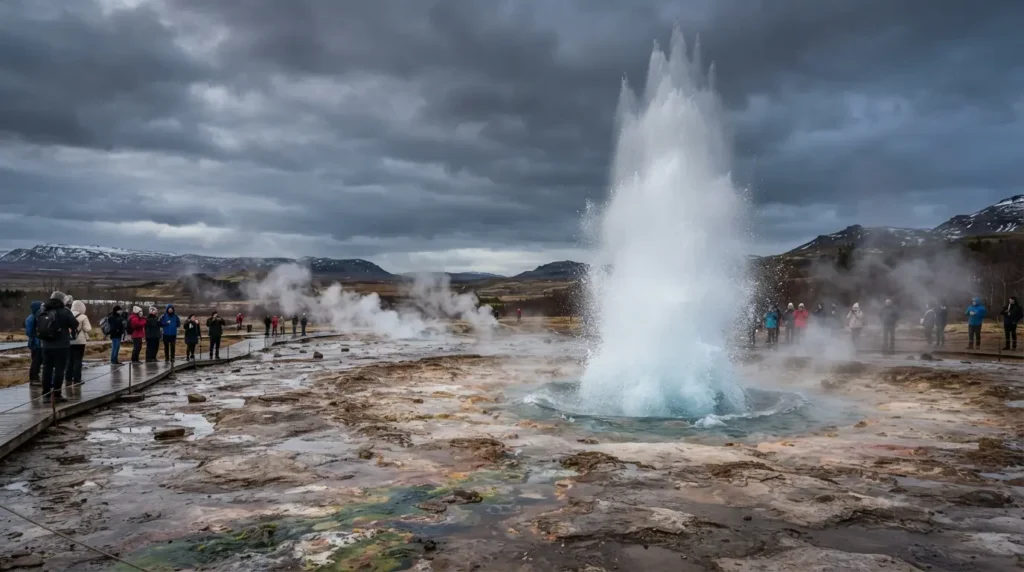
The Golden Circle is the classic day trip from Reykjavik, built around three main stops: Þingvellir National Park, Gulfoss waterfall, and Geysir, where you can watch a genuinely reliable geyser erupt at regular intervals. Some tours add Kerid Crater or a stop at one of Iceland’s many thermal baths to round out the day. It’s consistently the easiest way to hit major Icelandic highlights without a huge time commitment, and both self-drive and guided tour options work well depending on whether you’ve rented a car for your trip.
Golden Circle vs South Coast: Which Day Trip Should You Choose?
| Day Trip | Highlights | Best For |
| Golden Circle | Þingvellir, Gulfoss, Geysir | First-timers wanting classic highlights in a manageable day |
| South Coast | Seljalandsfoss, Skógafoss, Vík black sand beaches, glaciers | Travelers chasing the most dramatic scenery |
For travelers who can only fit in one day trip, the South Coast consistently earns the stronger recommendation for anyone specifically chasing dramatic scenery, combining Iceland’s most photogenic waterfalls with black sand beaches at Vík and the snout of a real glacier. A shorter 10-hour version covers Seljalandsfoss and Skógafoss waterfalls plus Vík and the Sólheimajökull glacier, while a longer 14-hour option pushes all the way to Jökulsárlón glacier lagoon and back. The Golden Circle, by contrast, suits travelers wanting a slightly gentler day with more universally recognized highlights and a somewhat shorter overall commitment.
Is Snorkeling Silfra Worth It?
Yes, and it’s a genuinely unique experience unavailable almost anywhere else on Earth. Silfra is the fissure where the North American and European tectonic plates pull apart, and snorkeling or diving through the gap means swimming literally between two continents through some of the clearest water in the world, fading from bright teal near the surface into dark indigo below. A dry suit keeps you comfortable throughout, and tours typically run around 5 hours including gear, briefing, and the swim itself. Divers need certification, while snorkeling remains open to most travelers regardless of experience level, making it accessible to a much wider range of visitors than the intensity of the experience might suggest.
Is Whale Watching in Reykjavik Worth It?
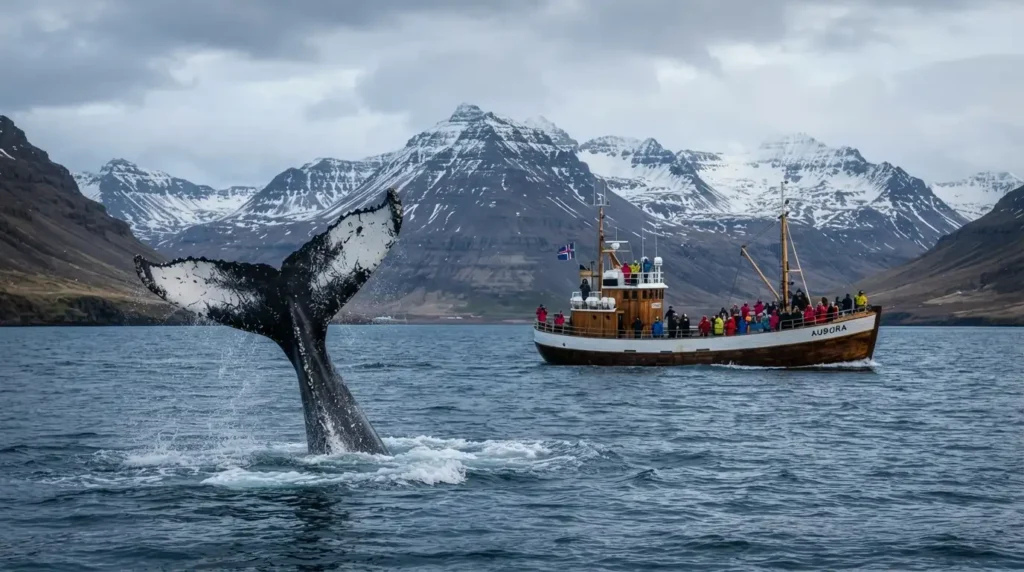
It can be, but honesty matters here: seeing whales is genuinely not guaranteed on a Reykjavik whale watching tour, and multiple travelers have come away disappointed after a whale-less trip, even though most tour companies offer a voucher for another attempt if that happens. Sightings typically include minke and humpback whales, with a blue whale sighting considered a rare stroke of luck. For a guaranteed encounter, Whales of Iceland in the Grandi Harbor District displays life-size models of different whale species, including a 25-meter blue whale replica, the largest mammal on Earth, and it works particularly well as an activity for kids, who get in free under age seven. Travelers genuinely set on the best odds of a real sighting should consider skipping Reykjavik whale watching entirely in favor of the northern town of Husavík, which offers a near-guaranteed chance of seeing whales, or Akureyri as a similarly strong alternative.
What Is There to Do in Reykjavik for Free or Cheap?
Reykjavik’s most famous hot dog, sold at a small stand for around 600 ISK, roughly $5, remains one of the cheapest proper meals in an otherwise expensive country, open until the early morning hours on weekends for a late night snack. Walking along the waterfront to see the Sun Voyager sculpture and Harpa Concert Hall costs nothing, and simply strolling the colorful streets up to Hallgrímskirkja, including the rainbow-painted Skólavörðustígur, makes for a free afternoon of photography. Hallgrímskirkja itself is free to enter, with only the bell tower climb, around 1000 ISK for adults, carrying a fee. Nauthólsvík Geothermal Beach offers free access between May 15 and August 15 each year, dropping to about 740 ISK the rest of the year, letting visitors mix hot geothermal water with cold seawater on a proper sandy beach even in a country better known for cold weather.
Where Should You Stay in Iceland?
Reykjavik works as a genuinely strong base for short trips, since staying in the same accommodation and doing day trips out and back, rather than constantly repacking, makes for a far less exhausting itinerary. Hotel options span every budget tier, from stylish mid-range to luxury spots blending Icelandic art and design touches into the rooms themselves, down to family-run guesthouses and hip hostels offering both dorms and private rooms for travelers watching costs. For longer Ring Road trips, one full day, or two if extra sightseeing time allows, is generally enough dedicated Reykjavik time before heading out to explore the rest of the country.
How Many Days Do You Need in Iceland?
For a shorter trip of five nights or less, basing entirely in Reykjavik and doing day trips like the Golden Circle, South Coast, or Snaefellsnes Peninsula genuinely delivers a diverse, well-rounded Iceland experience without ever needing to change hotels. Longer trips built around a full Ring Road drive should still carve out at least one full day for Reykjavik itself before setting off, since skipping the capital entirely means missing a meaningful part of what makes Iceland worth visiting beyond its natural landscapes.
What Is the Best Time to Visit Iceland? Summer vs Winter
Iceland’s tourism industry generally splits the year into just two seasons: summer, running roughly mid-May through mid-August or September, and winter, covering everything from October through April. Summer brings the warmest temperatures and the longest days of the year, with barely any darkness close to the solstice, along with the busiest crowds and highest prices as festivals and events fill the calendar. Winter trades warmth for the chance to see the Northern Lights, along with generally lower accommodation rates, though the extended darkness can genuinely test travelers unaccustomed to it. Anyone planning a winter trip who’d rather avoid driving in snowy conditions should lean toward basing in Reykjavik and booking organized day trips instead of self-driving.
Do You Need a Car in Iceland?
Not necessarily if you’re sticking to Reykjavik and its surrounding day trips, since most of the city center is genuinely walkable and every major nearby attraction is bookable as a guided tour with pickup included. A car becomes far more useful for a full Ring Road trip, where the flexibility to stop wherever the scenery demands it outweighs the hassle of navigating unfamiliar roads. Within central Reykjavik itself, parking is genuinely difficult enough that keeping a rental car parked except when actually leaving the city is the smarter approach, relying instead on walking, biking, or the local bus system for getting around day to day.
Final Thoughts
Checking off the real iceland must do list comes down to balancing Reykjavik’s own attractions against the day trips waiting just outside it. Pick Sky Lagoon if convenience matters more than the Blue Lagoon’s fame, choose the South Coast over the Golden Circle if dramatic scenery is your priority, and keep expectations realistic about whale sightings unless you’re heading to Husavík specifically. Whether it’s a geothermal soak, a snorkel between two continents, or a hot dog eaten standing next to a picnic table downtown, the best iceland must do experiences reward travelers who give the capital its fair share of time before chasing waterfalls further afield.
FAQs
Is the Reykjavík City Card worth it?
It depends on how many included museums you actually plan to visit, since the card bundles free entry to several attractions plus bus and pool access, but travelers only planning one or two stops often find it’s cheaper to pay individually.
Can you see the Northern Lights in Reykjavik?
Yes, though only during winter months and never with a guarantee, so booking a dedicated tour that heads into the countryside away from city lights improves your odds considerably compared to hoping to spot them from downtown.
What should you eat in Reykjavik?
The city’s most famous hot dog, loaded with fried onions, ketchup, sweet brown mustard, and remoulade, remains one of the most affordable and iconic meals in town, while the Grandi Harbor District offers everything from Icelandic chocolate to a food hall with cuisine from around the world.
How do you get from the airport to Reykjavik?
Reykjavik sits about a 45-minute drive from Keflavík Airport, and travelers without a rental car typically take the Flybus, which drops passengers at the central bus station or, for an extra fee, directly at their hotel.


