Best Meditation Apps in 2026: Free, Paid, and Guided Options Compared
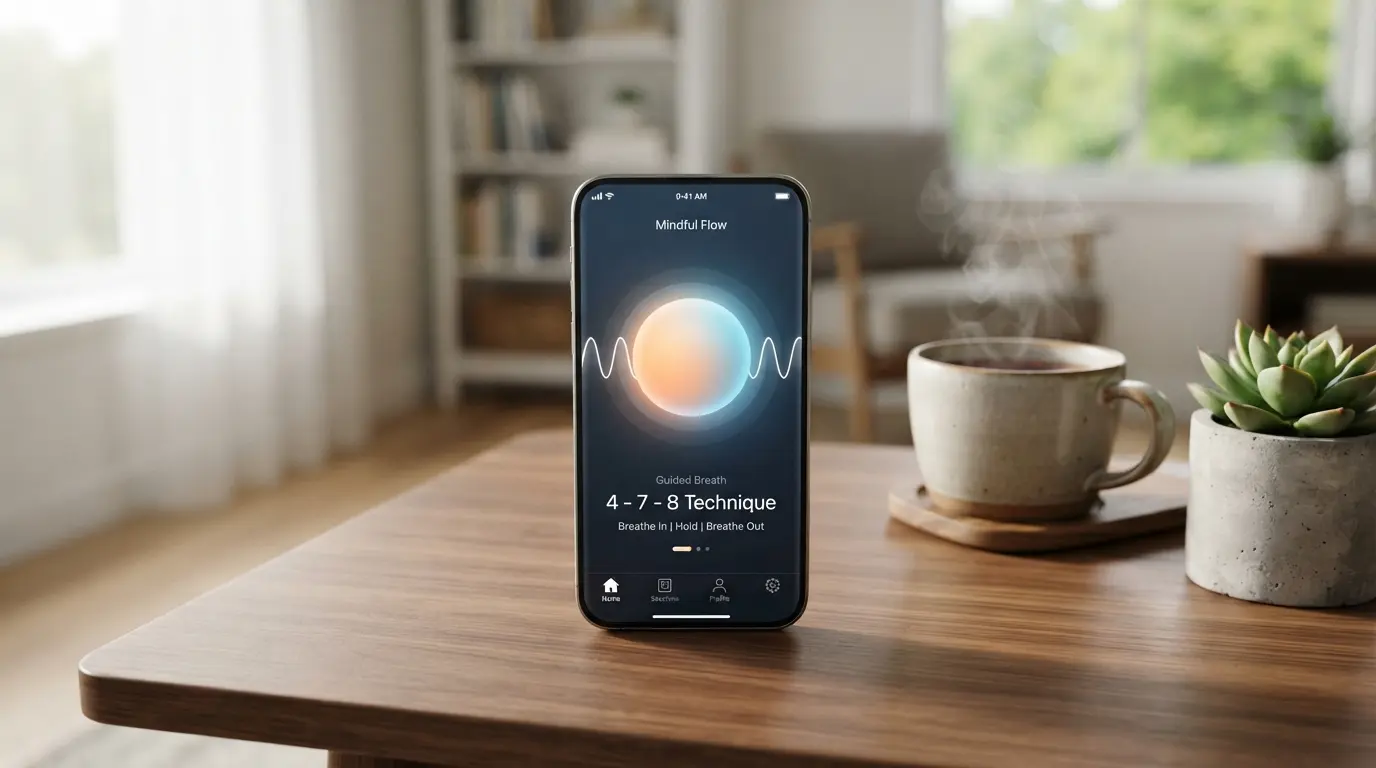
The best meditation apps in 2026 are Insight Timer for free content, Headspace for structured beginners, Calm for sleep and anxiety relief, and Waking Up for a deeper, philosophy driven practice. Picking the right one matters more than people expect, since the wrong fit is often why a meditation habit fizzles out after a week.
Most people download a meditation app after a stressful stretch, open it once or twice, then quietly forget it exists. That’s rarely because meditation doesn’t work. It’s usually because the app itself didn’t match how that person actually wants to practice. Some people want a calm voice walking them through every step. Others want silence and a bell. Getting that mismatch sorted out early saves both money and frustration.
What are the best meditation apps right now?
Four names come up again and again among people who actually stick with a meditation practice, and each one serves a different kind of user. Insight Timer wins on sheer free content, with a library that dwarfs every competitor. Headspace remains the go-to recommendation for total beginners because of how gradually it builds skills. Calm leans hardest into sleep and relaxation, with production values that feel more like a wellness spa than an app. Waking Up, built around Sam Harris’s teaching, skips the soothing tone entirely in favor of direct, intellectually rigorous instruction.
None of these are objectively the best apps for meditation across the board. The right pick depends entirely on what pulled someone toward meditation in the first place, whether that’s better sleep, lower anxiety, or genuine curiosity about the nature of the mind.
What is the best free meditation app?
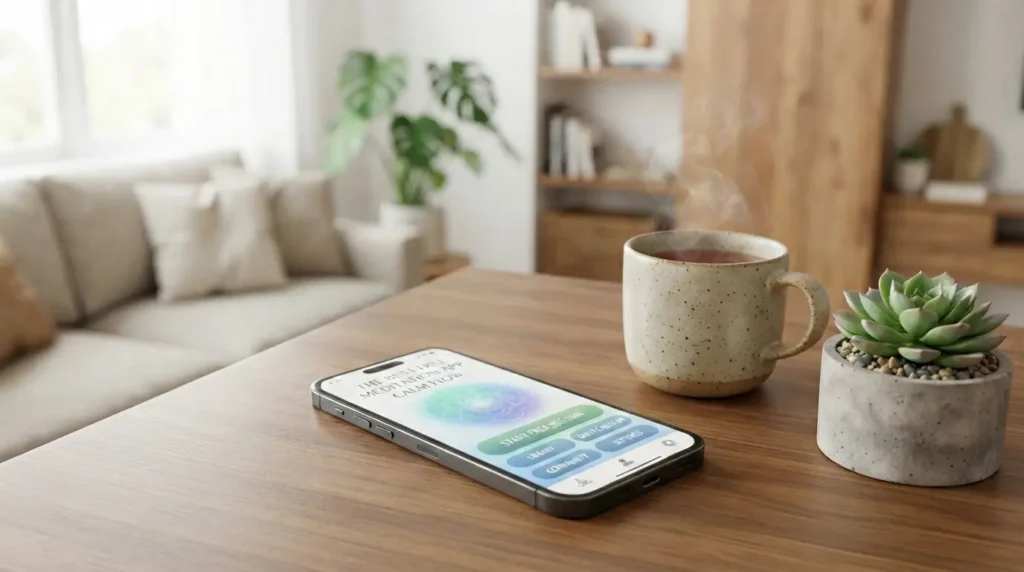
Insight Timer is the best free meditation app on the market, and it isn’t particularly close. The app offers well over 130,000 guided meditations at no cost, more free content than any other name in this category, spanning breath work, body scans, mantra practice, nature sounds, and singing bowls. Long-time users consistently report that they return to Insight Timer even after trying other paid apps, simply because the free library rarely runs dry.
A common mistake first-timers make is assuming a free app means a stripped-down experience. That’s not the case here. The premium tier, priced around $9.99 to $10 monthly, mainly unlocks offline downloads and structured multi-day courses. The core experience, including thousands of teachers and a genuinely active community feature where users can meditate together in real time, stays free indefinitely.
Are meditation apps free or do you have to pay?
Most meditation apps free version gives a limited daily selection, then nudges users toward a subscription once the trial period ends. That’s true of both Calm and Headspace, which restrict most of their content behind a paywall after the introductory window. Insight Timer breaks that pattern by keeping its full free library open permanently rather than time-limiting it.
Healthy Minds Program takes this even further, offering an entirely free, ad-free, neuroscience-backed program with hundreds of days of content and no subscription tier at all. For anyone specifically hunting the best free meditation apps without any intention of paying, these two names should top the list before anything else.
How much does Headspace cost compared to Calm?
Headspace runs about $12.99 per month or $69.99 billed annually, following a 14-day free trial. Calm sits at the same $69.99 annual price, though its monthly rate runs slightly higher than Headspace’s, and it also offers a one-time lifetime plan priced around $399.99. Calm’s free trial window is shorter, typically 7 days rather than Headspace’s 14.
| App | Monthly price | Annual price | Free trial |
| Headspace | About $12.99 | $69.99 | 14 days |
| Calm | Slightly higher | $69.99 | 7 days |
| Insight Timer premium | $9.99 to $10 | Roughly $60 | 7 days for premium |
Is Calm or Headspace better?
It genuinely depends on what kind of experience someone wants. Calm works best for travelers and shift workers chasing better sleep, since its sleep stories, narrated by a rotating cast of well-known voices, consistently rank as some of the most effective bedtime content across any wellness app. Its varied roster of instructors also means the tone shifts session to session rather than sticking with one voice.
Headspace, by contrast, wins on structure. Nearly every course builds on the one before it, and the entire library stays anchored around Andy Puddicombe’s calm, consistent narration. People who like predictability and gradual skill building tend to prefer Headspace. People who want variety and don’t mind switching instructors tend to lean Calm.
What is the best meditation app for beginners?
Headspace remains the most commonly recommended entry point for total beginners, largely because of how deliberately its courses avoid overwhelming new users. Short lessons introduce one concept at a time, and progress unlocks gradually rather than dumping the entire library on someone in week one.
Healthy Minds Program deserves equal consideration here, since it delivers similarly structured, research-backed beginner content without ever charging a cent. For anyone hesitant to commit financially before knowing whether meditation will stick, starting with a genuinely free, well-designed program removes that risk entirely.
What is the best guided meditation app for sleep?
Calm holds the strongest reputation among guided meditation apps built specifically for sleep. Its sleep stories run the gamut from soothing bedtime narratives to atmospheric journeys, and users consistently report that the variety of narrators helps prevent the content from feeling repetitive over months of nightly use. Breathing exercises and sleep-specific music round out the offering.
Insight Timer holds its own here too, with a genuinely large free collection of yoga nidra sessions and sleep-focused content that costs nothing to access, worth trying before paying for Calm’s premium sleep library specifically.
What makes Waking Up different from other meditation apps?
Waking Up, developed by author and neuroscientist Sam Harris, deliberately avoids the soft, reassuring language most meditation apps lean on. Instead, it centers on non-dual mindfulness, walking users through questions about the nature of consciousness and the illusory sense of a fixed self, alongside guest teachers like Adyashanti.
This approach suits a specific kind of user: analytical, skeptical people who tend to disengage from apps that lean heavily on gentle affirmations. Waking Up respects that intelligence instead of talking around it, which is precisely why users who bounce off Calm or Headspace’s tone often land here and stay.
Is Insight Timer really free?
Yes, genuinely. Unlike apps that time-limit their free tier, Insight Timer’s core library, spanning tens of thousands of teachers and meditation styles, remains permanently accessible without payment. The premium subscription mainly adds offline downloading, useful for anyone without reliable data access, and unlocks structured 10 and 30-day courses.
Long-term users often describe eventually subscribing not because the free version stopped working, but as a way of supporting the platform after years of free use, which says something about how genuinely non-restrictive the free tier actually is.
What other meditation apps are worth knowing about?
Beyond the four major names, several good meditation apps fill more specific niches. Ten Percent Happier offers a practical, skeptic-friendly approach for people who like plain, everyday language over spiritual framing. Smiling Mind, designed by psychologists and educators, stays refreshingly free of upselling and delivers age and situation-specific programs, including dedicated tracks for work stress and mindful eating. Declutter the Mind offers a genuinely useful free emergency playlist for acute stress moments, alongside longer structured courses for those who subscribe. Plum Village, built around the teachings of the late Thich Nhat Hanh, offers free guided meditations and dharma talks for anyone drawn to a specifically Buddhist framing of practice.
How do you choose the top meditation app for your needs?
The right choice comes down to matching the app to the actual goal rather than defaulting to whichever name is most recognizable.
- Want the largest free library available: Insight Timer
- Want a completely free, structured beginner program: Healthy Minds Program
- Want sleep-focused content with celebrity narrators: Calm
- Want gradual, structured beginner courses: Headspace
- Want philosophical depth and non-dual teaching: Waking Up
- Want plainspoken, no-fluff guidance: Ten Percent Happier or Smiling Mind
Most people who successfully build a lasting habit end up trying two or three apps before settling on one, and that’s a normal part of the process rather than a sign something’s wrong.
Conclusion
The best meditation apps in 2026 aren’t ranked by popularity alone, they’re matched to what actually gets someone to open the app again tomorrow. Start free with Insight Timer or Healthy Minds Program before paying for anything, then upgrade only once a specific gap shows up, whether that’s sleep support, structured beginner courses, or a deeper non-dual approach. The app that works is simply the one you’ll actually use.
FAQs
What is the best meditation app for beginners?
Headspace for structured paid courses, or Healthy Minds Program for a completely free beginner path.
Are meditation apps free?
Some genuinely are, like Insight Timer and Healthy Minds Program, while Calm and Headspace limit free content after their trial periods.
What is the best free meditation app?
Insight Timer, with over 130,000 free guided meditations and no permanent paywall on its core library.
Do meditation apps actually work?
Yes, for most consistent users, though results depend heavily on finding an app and teaching style that actually resonates with you.
Is Calm or Headspace better?
Calm suits sleep and variety, Headspace suits structured, gradual beginner learning under one consistent voice.
What is the best meditation app for sleep?
Calm, thanks to its extensive sleep stories library and varied celebrity narrators.
What is the best meditation app for anxiety?
Calm and Headspace both offer dedicated anxiety-focused meditation modules and courses.
How much does Headspace cost?
About $12.99 monthly or $69.99 annually after a 14-day free trial.
Is Insight Timer really free?
Yes, its core library and community features stay free permanently, with premium adding offline downloads and extended courses.
What is the best meditation app for advanced meditators?
Insight Timer for practice flexibility, or Waking Up for deeper philosophical exploration.
Is Waking Up worth the subscription?
Yes for analytical users seeking non-dual, intellectually rigorous teaching rather than soothing, beginner-focused content.
Can you use meditation apps offline?
Most premium tiers, including Insight Timer, Calm, and Headspace, support offline downloads for their paid subscribers.