Luxury Travel Machu Picchu: The Complete 2026 Planning Guide
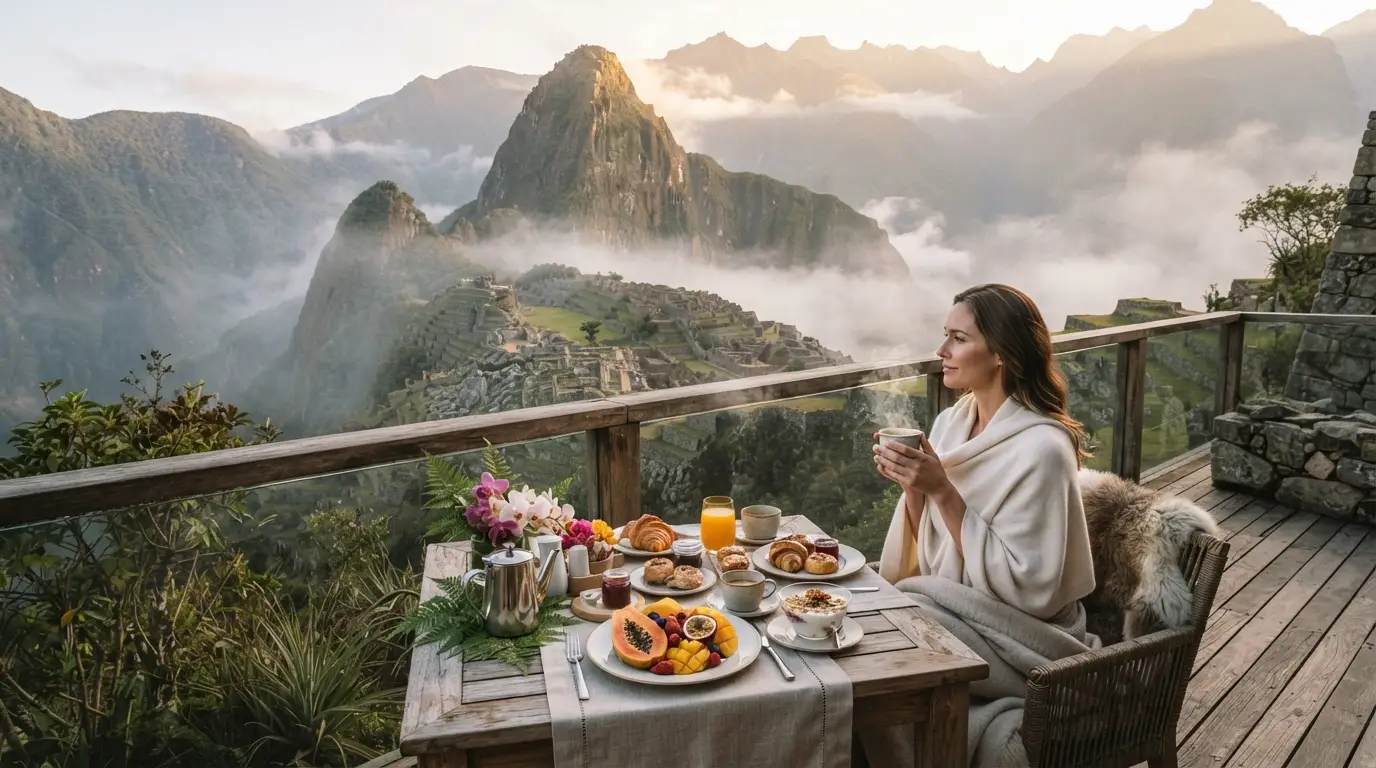
Luxury travel to Machu Picchu means combining private guides, upgraded trains, and boutique lodges with entry to one of the world’s most famous archaeological sites, all planned around Peru’s Sacred Valley. It sounds simple until you start pricing tours and see numbers ranging from under a thousand dollars to well over ten thousand per person for what every operator calls “luxury.” That gap alone is enough to make anyone second guess their plan before they have even booked a flight to Lima.
Part of the confusion comes from how different companies define the word. A boutique hotel and a private guide is a real upgrade over a group bus tour, but it is a very different trip from a fully bespoke journey with a dedicated logistics team on call around the clock. Knowing which tier actually matches your goals, and what each one buys you at Machu Picchu specifically, makes the rest of the planning far easier.
What does luxury travel to Machu Picchu actually include?
At its core, a luxury Machu Picchu trip means skipping the crowded public buses and standard group tours in favor of private transfers, a dedicated English speaking guide, and a scenic train ride on either the Vistadome or the more elevated Hiram Bingham service. Hotels shift from basic guesthouses to properties like Belmond Sanctuary Lodge, positioned steps from the ruins themselves, or Inkaterra Machu Picchu Pueblo, an eco lodge tucked into the cloud forest just outside Aguas Calientes.
Most packages also build in curated add ons that a standard tour skips entirely. Think a private visit to an animal rescue center to see rescued llamas, alpacas, and even the occasional Andean condor, a hands on Peruvian cooking class using ingredients sourced that morning from Cusco’s San Pedro Market, or a Pachamama ceremony led by a local priest in the Sacred Valley town of Moray. None of these change the destination, but they change how much of the surrounding culture you actually get to touch.
How much does luxury Machu Picchu travel cost?
Prices vary more than almost any other luxury travel category, and understanding why matters before you commit. Structured multi-day packages from established operators typically run from around $1,650 per person for a compact two day Inca Trail alternative up to roughly $3,965 per person for a fuller six day Cusco and Sacred Valley circuit that includes Rainbow Mountain and multiple luxury hotel stays.
At the very top end, fully bespoke, privately guided journeys built around a small family or couple can run from $11,000 to $15,000 per person for a seven day trip, dropping to around $11,000 per person when traveling in a larger group of six that shares fixed costs like private guides and vehicles. On the more accessible end, some Cusco based specialists quote luxury packages starting closer to $500 to $1,000 per person, though these tend to bundle fewer private exclusives and shorter guide access.
The honest takeaway: price differences usually track three things.
- Whether your guide and vehicle are shared with other travelers or fully private for your party alone
- How many nights you spend at the very top tier hotels like Palacio Nazarenas in Cusco versus a solid four star option
- Whether the Hiram Bingham train is included versus the more affordable Vistadome
| Trip tier | Typical price per person | What changes |
| Structured luxury package (4 to 6 days) | $1,650 to $3,965 | Shared small group logistics, set itinerary, Vistadome train |
| Cusco based luxury operator | $500 to $1,000+ | Shorter guide access, fewer private exclusives |
| Fully bespoke private journey (7 days) | $11,000 to $15,000 | Dedicated guide throughout, top tier hotels, Hiram Bingham option |
What is the best time to visit Machu Picchu?
The dry season, running from May through October, gives the clearest skies and the most reliable conditions for both sightseeing and any hiking add ons. Daytime temperatures at Machu Picchu itself hover in the high 50s to low 60s Fahrenheit even in the driest months, so warm layers still matter for early mornings when mist clings to the ruins.
July and August are the driest months but also the busiest, since they align with Northern Hemisphere summer holidays. Travelers who want the dry season’s clear visibility without peak crowds tend to target May, June, or September instead. The Inca Trail itself closes every February for essential maintenance, though Machu Picchu remains open to visitors arriving by train throughout that month. The wet season, November through March, brings regular afternoon showers rather than constant rain, and Machu Picchu’s own microclimate means precipitation totals here run noticeably higher than in Cusco or Lima during the same months, so packing a proper rain layer matters even for a supposedly dry season visit.
How do you get to Machu Picchu from Cusco?
Nearly every route to Machu Picchu starts in Cusco, roughly 70km northwest of the ruins as the crow flies, reachable by frequent flights from Lima on carriers like LATAM. From Cusco, most travelers board a train from either Poroy, just outside the city, or from a station in the Sacred Valley such as Ollantaytambo, which shaves meaningful travel time off the journey. Trains terminate at Aguas Calientes, the small town at the base of the mountain, from which a shuttle bus climbs roughly half an hour up a series of switchbacks to the entrance gate.
A common mistake first-timers make is assuming they can walk up instead to save money. The uphill hike from Aguas Calientes is steep, exposed, and genuinely unpleasant in the heat, and virtually no luxury itinerary includes it for good reason. For travelers combining the trip with Sacred Valley sightseeing, some top hotels including Belmond Rio Sagrado and Tambo del Inka run limited direct train departures from their own properties, pausing briefly in Ollantaytambo before continuing on to Aguas Calientes.
What is the difference between the Vistadome and Hiram Bingham trains?
The Vistadome train is the standard choice for most tours, recognizable by its oversized windows built for scenery rather than speed, and it represents the more budget conscious of the two premium options. The Hiram Bingham train, run by Belmond, sits a clear step above it: think multi-course gourmet dining, a fully stocked bar car, live Andean musicians, and a dedicated observation carriage, all included in the fare rather than sold separately.
For a genuinely luxury itinerary, most specialists reserve the Hiram Bingham for the return journey after a full day exploring the ruins, treating it as a celebratory bookend rather than the primary transport. Both trains run on the same track and reach the same destination in Aguas Calientes, so the choice comes down entirely to how much of the journey itself you want to be part of the experience.
Should you take the Inca Trail or the train to Machu Picchu?
The classic Inca Trail is a 43km, four day trek that climbs over Dead Woman’s Pass at 4,200 meters before descending toward Machu Picchu through cloud forest and smaller ruin sites like Wiñay Wayna. It remains the only route that enters the citadel through the Sun Gate, arriving at the same vantage point Inca travelers once used, and luxury versions of the trek add porter crews, trekking chefs, and even massage sessions at premium campsites.
The train, by contrast, gets you to the same destination in a fraction of the time without the physical demands of multi-day high altitude hiking. Travelers with limited time, mobility concerns, or simply no interest in camping tend to favor the train and reserve their energy for shorter hikes once inside the site itself, such as the Sun Gate approach from the opposite direction or the Inca Bridge.
Do you need a permit to hike the Inca Trail?
Yes. Inca Trail permits are strictly limited by the Peruvian government to protect the trail, and the popular high season dates can sell out months in advance, particularly for July and August departures. Specialist operators who run their own trekking crews, rather than reselling third party permits, tend to have more reliable access to remaining slots. Anyone set on hiking the classic four day route should lock in permits as early as possible, ideally four to six months ahead for peak season, rather than waiting until a few weeks before travel.
Should you climb Huayna Picchu or Machu Picchu Mountain?
Both require a separate, advance booked ticket on top of the standard Machu Picchu entrance fee, and both must be started in the morning on a fixed schedule. Huayna Picchu, the sharp peak rising behind the citadel in nearly every postcard photo, takes roughly 2.5 hours round trip, or 3.5 hours if you extend to the Temple of the Moon, and involves some genuine scrambling on steep, narrow stone steps, so it suits travelers comfortable with heights and moderate exertion.
Machu Picchu Mountain climbs higher, to around 3,050 meters, and takes 3 to 4 hours round trip on a steadier, less exposed trail, rewarding hikers with a wider panoramic view of the entire site and surrounding valley rather than the closer, more dramatic angle Huayna Picchu offers. Travelers who want the classic postcard shot generally pick Huayna Picchu, while those prioritizing a broader view and a slightly gentler physical challenge tend to choose Machu Picchu Mountain.
Is it worth staying overnight in Aguas Calientes?
For anyone not racing through Peru in three or four days, yes. Day trippers departing Cusco before dawn arrive at Machu Picchu around the same mid morning window as everyone else, right as the site fills up between the first wave of trains in and the last wave out, typically a busy four hour stretch through the middle of the day. Staying overnight in Aguas Calientes lets you enter right at opening, before that surge builds, with noticeably thinner crowds and softer early light that photographers consistently rate as the better time of day to be there.
An overnight stay also builds in flexibility. If weather rolls in on your first morning, a second day gives you a real chance to return rather than losing the moment entirely to cloud cover.
Where should you stay for a luxury Machu Picchu trip?
Belmond Sanctuary Lodge holds a genuine advantage that no other hotel can claim: it sits directly beside the entrance gate, the only property actually inside the archaeological zone. That location comes at a real cost though, both in price and in room size, since space here is limited and standard rooms run noticeably smaller than comparable luxury hotels elsewhere, a tradeoff worth knowing before booking rather than discovering at check in.
Inkaterra Machu Picchu Pueblo and Sumaq Hotel both sit in or near Aguas Calientes, trading direct proximity for larger rooms, spa facilities, and in Inkaterra’s case, a genuine eco lodge feel with nature trails through the surrounding cloud forest. Back in Cusco, Palacio Nazarenas, a former 16th century palace and convent, and Hotel Monasterio, a monastery dating to 1592, represent the top tier for travelers spending extra nights in the city before or after Machu Picchu itself.
| Hotel | Location | Best for |
| Belmond Sanctuary Lodge | Inside Machu Picchu grounds | Closest possible proximity, smaller rooms |
| Inkaterra Machu Picchu Pueblo | Aguas Calientes | Cloud forest setting, spa, larger rooms |
| Sumaq Hotel | Aguas Calientes | River views, strong on site restaurant |
| Palacio Nazarenas / Hotel Monasterio | Cusco | Historic luxury, extra Cusco nights |
What else can you combine with a Machu Picchu trip in the Sacred Valley?
The Sacred Valley stretches between Cusco and Machu Picchu and holds enough on its own to fill several days. Maras, a pre-Incan site still actively harvested today across more than 3,000 individual salt pools, sits near Moray, where concentric circular terraces once functioned as an Incan agricultural laboratory testing crops at different microclimates within a single site. Ollantaytambo functions as a living Inca town rather than a ruin, with massive stone terraces rising above cobbled streets still inhabited today, while Pisaq offers sweeping valley views alongside its own archaeological complex and a well known Sunday market.
Most luxury itineraries thread these stops together as a scenic buildup on the way from Cusco toward the train station, rather than a separate excursion, which keeps the overall trip efficient without sacrificing depth.
How many days do you need for a luxury Machu Picchu trip?
At an absolute minimum, budget two days and one night to see Machu Picchu properly without rushing, accounting for train times and the value of an early entry the following morning. For a fuller luxury Peru itinerary that includes Cusco’s historic center, a couple of Sacred Valley stops, and Machu Picchu itself, six to seven days hits a comfortable pace without feeling compressed. Travelers wanting to add Rainbow Mountain or extend into Lake Titicaca or the Amazon should plan for 9 to 11 days to avoid stacking too much into consecutive early mornings at altitude.
| Trip length | What it covers |
| 2 days / 1 night | Machu Picchu only, train based |
| 4 to 6 days | Cusco, Sacred Valley highlights, Machu Picchu overnight |
| 7 days | Full Sacred Valley, Rainbow Mountain, Machu Picchu overnight, Cusco culture |
| 9 to 11 days | Above plus Lake Titicaca, Amazon, or Colca Canyon extension |
Conclusion
Luxury travel to Machu Picchu rewards travelers who look past the marketing and match their trip to what actually matters to them, whether that’s a private guide throughout the journey, a hotel inside the archaeological zone, or simply avoiding the mid-day crowd surge with an overnight stay in Aguas Calientes. Book Inca Trail permits early if that route matters to you, confirm current entry rules close to your travel dates since Peru revises them periodically, and treat the price range you see online as a menu of genuinely different experiences rather than one standard trip with different markups. Do that, and luxury travel Machu Picchu becomes less about spending more and more about spending well.
FAQs
Is Machu Picchu worth visiting?
Yes, its combination of Incan engineering, mountain scenery, and historical significance consistently ranks it among the most rewarding archaeological sites in the world.
How much does it cost to visit Machu Picchu?
Structured luxury packages run roughly $1,650 to $3,965 per person, while fully bespoke private journeys can reach $11,000 to $15,000 per person.
Do I need a permit to visit Machu Picchu?
The main site requires a timed entrance ticket, and the Inca Trail specifically requires a separate, limited permit that can sell out months ahead.
Is Machu Picchu safe?
Generally yes, with the main practical risks being altitude related discomfort and the physical demands of high altitude hiking rather than crime.
What is the best time to visit Machu Picchu?
The dry season from May to October, with June and September offering a good balance of clear weather and lighter crowds than July or August.
How do you get to Machu Picchu from Cusco?
By train from Poroy or the Sacred Valley to Aguas Calientes, followed by a shuttle bus, or by hiking the Inca Trail directly into the site.
How many days do I need for Machu Picchu?
A minimum of two days and one night, with six to seven days recommended for a fuller Cusco and Sacred Valley circuit.
What is the Hiram Bingham train?
Belmond’s premium train service to Machu Picchu, including gourmet dining, live music, and a bar car, priced above the standard Vistadome option.
Is Huayna Picchu or Machu Picchu Mountain better to climb?
Huayna Picchu offers the iconic close up view in a shorter, steeper hike, while Machu Picchu Mountain gives a broader panorama on a longer, steadier trail.
How far in advance do I need to book Inca Trail permits?
Ideally four to six months ahead for peak season dates in July and August, since permits are limited and sell out.
Is it worth staying overnight in Aguas Calientes?
Yes, it allows early entry before the mid-day crowd surge and gives flexibility for a second visit if weather interferes.
What is the difference between Vistadome and Hiram Bingham trains?
Vistadome offers panoramic windows at a lower price, while Hiram Bingham adds full gourmet dining and entertainment for a premium fare.