
Hidden Gems in Sedona: 15 Spots Locals Actually Recommend
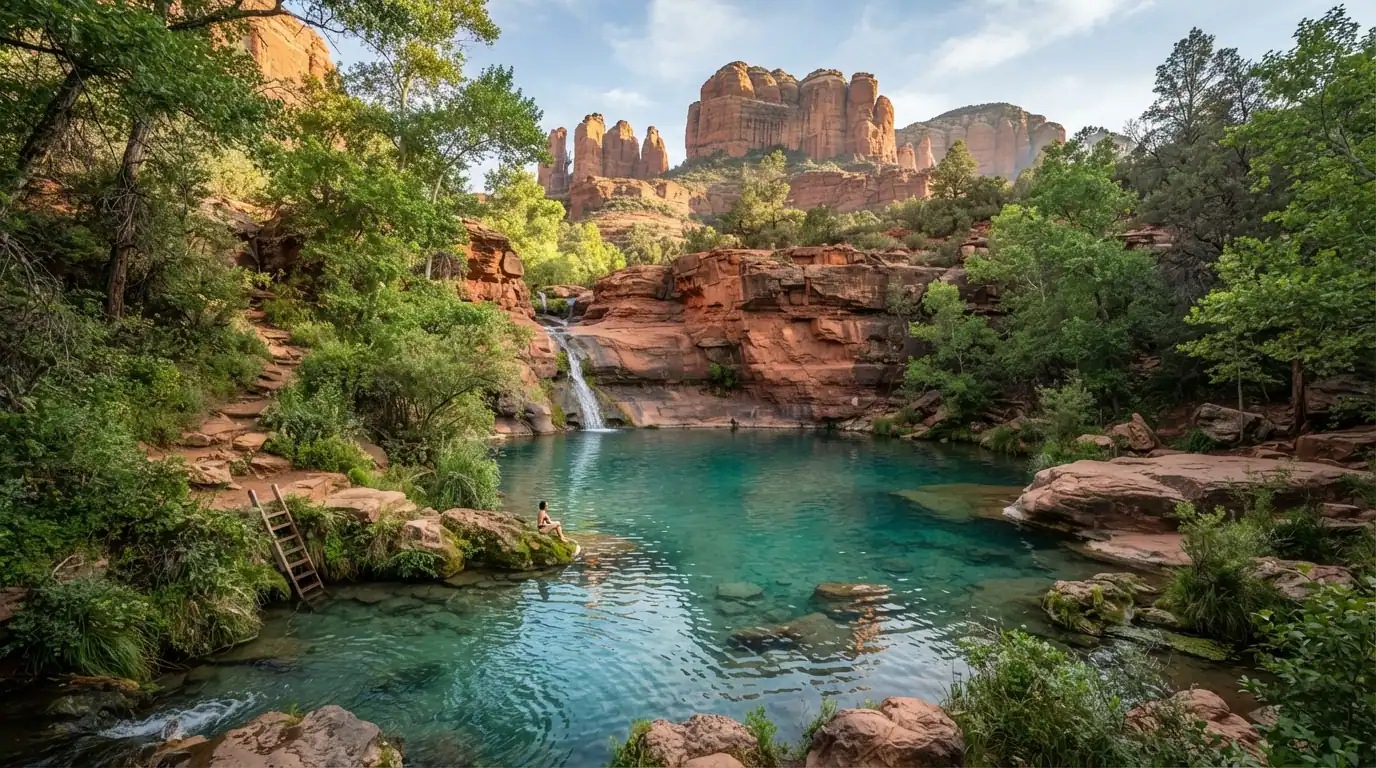
The best hidden gems in Sedona include Secret Slickrock Trail, Merry Go Round Rock, Fay Canyon Arch, and Robber’s Roost, spots that stay quiet even during peak season. Most of Sedona’s famous red rock trails, like Devil’s Bridge and Cathedral Rock, are stunning but far too crowded to count as true secrets anymore.
That mislabeling is a real problem for travelers. Search for hidden gems in Sedona and most lists just repeat the same five trails everyone already knows. This guide separates the genuinely quiet spots from the ones that only sound hidden.
What Counts as a Hidden Gem in Sedona?
A real hidden gem stays quiet even on a busy Saturday morning. Devil’s Bridge and Cathedral Rock draw long parking lines by 9am most weekends, so calling them hidden gems in Sedona is a stretch. Genuine examples include Secret Slickrock Trail, Merry Go Round Rock, Fay Canyon Arch, and Robber’s Roost, none of which show up on the typical top ten list.
Secret Slickrock Trail delivers open views of Cathedral Rock and the surrounding valley without the foot traffic that trail sees from its own base. It is a short, flat walk across bare sandstone, which makes it an easy add on before or after a bigger hike.
How Far Is Sedona From Phoenix and Flagstaff?
Sedona sits about 2 hours north of Phoenix, 30 minutes from Flagstaff, and 90 minutes from the Grand Canyon. That makes it a natural stop on any Arizona road trip, whether travelers are heading up from Phoenix or looping down from the Grand Canyon and Flagstaff.
How Many Days Do You Need in Sedona?
One day covers a single hike, a walk through Uptown Sedona, and sunset at Airport Mesa. Two to three days give enough time to add a hidden gem trail, a jeep tour through the vortex sites, and a stop in Oak Creek Canyon.
- One day: one hike plus Uptown Sedona and a sunset stop
- Two days: add a jeep tour or a vortex site visit
- Three days: add a hidden gem trail like Fay Canyon Arch and a slower morning in Oak Creek Canyon
Travelers consistently find that two to three days works best, especially with an overnight stay that allows for both sunrise and sunset without rushing.
What Is the Best Time to Visit Sedona?
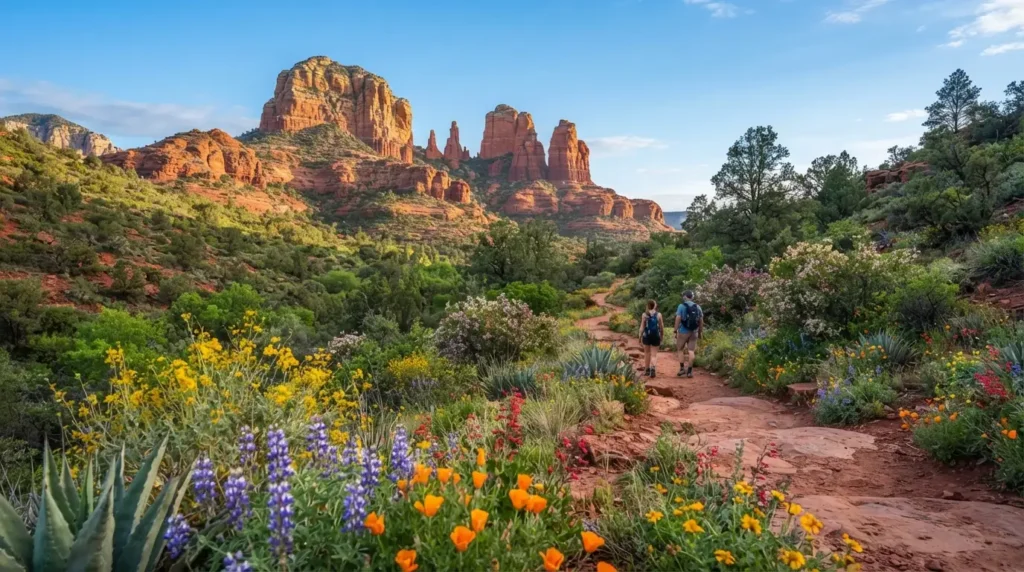
Spring, from March through May, and fall, from September through mid October, bring the mildest weather, with daytime temperatures in the mid 60s to low 80s. Both seasons also bring the biggest crowds, since the hiking conditions are close to ideal and wildflowers often bloom in spring depending on winter rainfall.
Summer runs hot, often climbing past 100 degrees Fahrenheit, with monsoon season bringing sudden afternoon thunderstorms from July through September. Early morning hikes are the move here, since evenings and mornings stay noticeably cooler than midday. Winter, from December through February, is the quietest season, with daytime temperatures in the 50s and 60s and the occasional dusting of snow on the red rocks, which is a striking sight against the color of the stone.
A common mistake first timers make is assuming any season works fine for a midday hike. Locals recommend starting red rock trails by 7 or 8am from May through September to avoid both the heat and the worst of the crowds.
Do You Need a Permit to Park at Sedona Trailheads?
Most Sedona trailheads sit inside U.S. Fee Areas, which means a Red Rock Pass or an America the Beautiful Pass needs to be visible in the vehicle. A day pass generally runs a small fee, while the annual America the Beautiful Pass covers entry to national parks and forests nationwide, so it is worth the cost for anyone visiting multiple sites on a Southwest trip.
Not every hidden gem requires a paid lot though. Some, like the roadside pull off near Birthing Cave, allow free parking directly along the shoulder, though spots there fill up just as fast once word gets around.
What Are Sedona’s True Hidden Gem Hikes?
The hidden gems in Sedona that still fly under the radar share one thing in common. They sit just far enough off the main tourist path that most visitors never hear about them.
- Secret Slickrock Trail: quiet views of Cathedral Rock without the crowd at its main trailhead
- Merry Go Round Rock: located along Schnebly Hill Road, offering one of the most dramatic overlooks in town with almost no foot traffic
- Fay Canyon Arch: a short side trail off the main Fay Canyon path leads to a natural arch that many hikers walk right past
- Robber’s Roost: a longer, roughly 9.8 mile drive off Highway 89A leads to the secluded Hideout Cave, and most 2WD vehicles can handle the gravel road in dry conditions
- Crescent Moon Ranch: peaceful creekside scenery with a classic view of Cathedral Rock reflected in the water
Cibola Pass is another one locals mention when asked for a trail off the beaten path. It rarely shows up on major lists, yet it offers views that rival the famous names without the parking headache.
What Are Sedona’s Vortex Sites and Are They Worth Visiting?
Vortex sites, including Airport Mesa, Bell Rock, Boynton Canyon, and Cathedral Rock, are believed by many to hold concentrated earth energy connected to healing, meditation, and self discovery. Even travelers who are skeptical of the spiritual claims tend to agree these are some of the most scenic and peaceful spots in town, worth a visit for the views and quiet alone.
Locals recommend hiking to a vortex site at sunrise for the best mix of peace and quiet, since these locations get significantly busier as the day goes on. Bell Rock in particular draws yoga groups and meditation circles by mid morning.
Is Cathedral Rock a Hard Hike?
The Cathedral Rock Trail runs roughly 1.1 to 1.2 miles round trip with somewhere between 669 and 741 feet of elevation gain, depending on which trailhead is used to measure it. The trail involves one steep scrambling section about halfway up, where hikers need to use their hands to continue.
This puts Cathedral Rock in the moderate to hard range, not a casual stroll despite its short distance. Sunset is widely considered the best time to go, since the red rock lights up in the evening light, though that also means the small trailhead parking lot fills fast. A local tip worth knowing: hike either before or after the Sedona Shuttle’s operating hours if driving in, since the lot empties out once shuttle riders take over the limited spaces.
What Is Slide Rock State Park Known For?
Slide Rock State Park in Oak Creek Canyon is a natural rock waterslide and swimming hole, carved out over time by the creek running through what was once a homestead apple farm. It is a favorite summer spot for families, with smooth sandstone chutes that create a genuine natural water slide.
Parking runs around 30 dollars per vehicle, which some travelers find steep for a state park, so arriving early on weekends matters since the lot fills fast. Even outside swimming season, it is worth a stop just to see the rock formations and the creek.
What Is the Sedona Shuttle and When Does It Run?
The Sedona Shuttle connects several of the busiest trailheads, including the one near Cathedral Rock, but it mainly runs Thursday through Sunday. The Verde Shuttle, by contrast, operates seven days a week, which matters for anyone planning a weekday visit to a trailhead that only the Sedona Shuttle serves.
Checking the specific schedule before heading out saves a wasted trip, since some trailheads restrict private vehicle parking entirely during shuttle operating hours.
What Should You Eat in Sedona Besides the Touristy Spots?
Local favorites go well beyond the main strip of tourist restaurants. Tamaliza in West Sedona serves chicken enchiladas and horchata in a modest, heartfelt space filled with Latin American decor. Gerardo’s Italian Kitchen, a family run spot, is known for its Bolognese and a crispy layered dessert called Sfogliatelle.
Elote Cafe is the reservation to make months ahead, known for its fire roasted corn appetizer with spicy mayo, lime, and cotija cheese. For something more casual, Coffee Pot Restaurant has built its reputation on more than 100 different omelette combinations, a genuine only in Sedona experience.
What Is There to Do in Uptown Sedona?
Uptown Sedona is the town’s shopping and dining hub, packed with art galleries, crystal shops, and local coffee spots like Freeform Coffee Roasters and Indian Gardens Cafe and Market. It sits within walking distance of several trailheads, making it an easy stop before or after a hike.
Sedona is home to more than 80 art galleries citywide, so Uptown alone can easily fill a slow afternoon of browsing and souvenir hunting.
Is a Jeep Tour in Sedona Worth It?
A jeep tour through Coconino National Forest typically runs about 2.5 hours and covers multiple vortex sites and rugged backcountry terrain that would take much longer to reach on foot. Prices generally range from 89 to over 300 dollars depending on the outfitter and route length.
For travelers short on time or less interested in a full day hike, a jeep tour is worth it purely for the ground it covers. Guides also tend to share local history and geology that most hikers would otherwise miss entirely.
What Are the Best Day Trips From Sedona?
Antelope Canyon and Horseshoe Bend near Page sit about a 3 hour drive north, making them a long but doable day trip for travelers with an early start. Petrified Forest National Park is a quieter, often overlooked stop worth adding to a longer Arizona itinerary.
Montezuma Castle National Monument, a Sinagua cliff dwelling built into a limestone cliff above Beaver Creek, sits just off Highway 260 on the drive between Phoenix and Sedona, making it an easy stop to fold into arrival or departure day.
Where Should You Stay in Sedona?
Luxury travelers often choose resorts near Boynton Canyon for direct red rock views and spa access. Mid range visitors tend to favor hotels closer to Uptown Sedona, since walkability to shops, restaurants, and trailheads matters more on a shorter trip.
Final Thoughts
The real hidden gems in Sedona are not the trails showing up on every list. They are the ones locals mention almost as an afterthought, like Cibola Pass or Merry Go Round Rock, that reward travelers willing to skip the crowded parking lot at Devil’s Bridge. Pair one quiet trail with a sunrise vortex visit and a meal away from the main strip, and Sedona starts to feel like the town it was before everyone else found it too.
FAQs
Is Sedona safe to hike alone?
Yes, though solo hikers should carry plenty of water, tell someone their route, and avoid pushing into scrambling sections like the one on Cathedral Rock without proper footwear.
Can you visit Sedona’s hidden gems without a car?
Some, yes, especially those near Uptown Sedona or reachable by the Sedona Shuttle, but trails like Robber’s Roost require a vehicle capable of handling gravel roads.
Are Sedona’s vortex sites free to visit?
Yes, though most sit inside fee areas that require a parking pass, so the vortex itself is free but parking generally is not.
What should you pack for a Sedona hike in summer?
Pack more water than feels necessary, a sun shirt with a hood, high SPF sunscreen, and start early to avoid peak afternoon heat and monsoon storms.
Is Devil’s Bridge really a hidden gem or is it overrated?
It is genuinely beautiful, but calling it a hidden gem is misleading. It ranks among Sedona’s most visited trails, so travelers wanting a quieter experience should look toward Fay Canyon Arch or Secret Slickrock Trail instead.


