
Luang Prabang Old Town: The Complete 2026 Guide to Laos’s UNESCO Gem
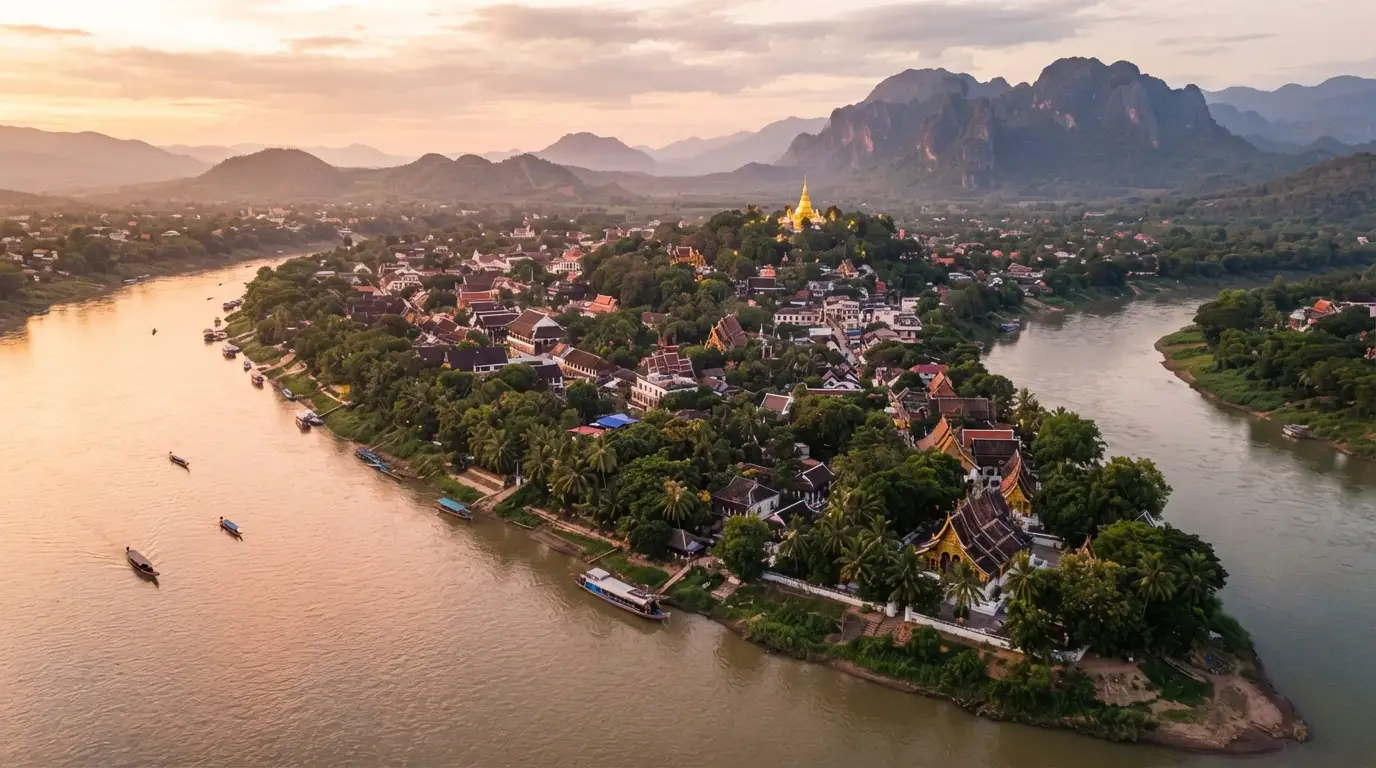
Luang Prabang Old Town is a UNESCO World Heritage site in northern Laos, built on a peninsula where the Mekong River meets the Nam Khan River. It blends traditional Lao architecture with French colonial buildings, filled with golden temples, riverside cafes, and daily markets.
Tourist numbers here have grown fast since the new railway opened, and travelers wonder if the old town still feels the way it used to. It mostly does, if you know when and where to go.
What Is Luang Prabang Old Town
This is not a single street so much as the historic heart of the city. Wooden shophouses sit beside colonial villas with wooden shutters, and you cannot walk a block without passing a temple. There are 34 active temples on this small peninsula, and the tallest structures are golden stupas, not office towers. That low, unhurried skyline is a big part of why UNESCO listed the town in 1995.
Where Is Luang Prabang Located
Luang Prabang sits in northern Laos, in the province of the same name, roughly six to six and a half hours by road from the capital Vientiane. Luang Prabang Old Town itself occupies a narrow peninsula ringed by limestone mountains, with the Mekong River running along one side and the Nam Khan River along the other.
Why Is Luang Prabang a UNESCO World Heritage Site
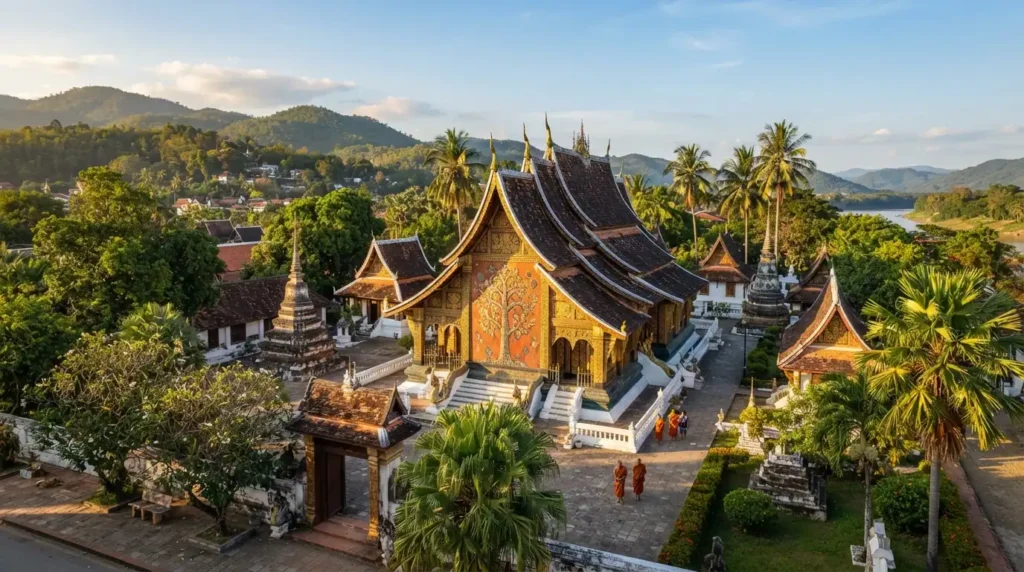
Luang Prabang earned UNESCO status in 1995 for its well preserved mix of traditional Lao architecture and French colonial buildings. That fusion happened because Laos spent decades under French rule, and the two styles ended up layered together rather than one replacing the other. The result is a town where 19th century French shopfronts sit next to centuries old wooden temples.
How Do You Get to Luang Prabang
Is the New High Speed Train the Best Option
For most travelers, yes. The Laos China high speed railway connects Vientiane to Luang Prabang in about two hours, versus a six to six and a half hour drive on winding, pothole heavy roads. Trains depart daily, passing through Vang Vieng. Tickets can only be bought directly up to three days ahead, so booking through 12Go is more reliable, especially during festival season when seats sell out fast. A minivan from the train station into town costs around 80,000 kip including luggage.
What Are the Other Ways to Get There
Flying into Luang Prabang International Airport, five kilometers north of town, remains fastest from Bangkok, Chiang Mai, Hanoi, or several Chinese cities. Tuk tuks from the airport run about 40,000 kip per person, minivans about 80,000 kip. The two day slow boat from Huay Xai down the Mekong includes an overnight stop in Pakbeng. Buses connect Luang Prabang to Vientiane, Vang Vieng, and Hanoi, though expect a bumpy ride with no guaranteed comfortable seat.
Do You Need a Visa for Luang Prabang
Yes. Most nationalities get a visa on arrival at the airport or major land borders, typically around 35 dollars, with a small admin fee on weekends. Paying in dollars works out cheaper than kip. Bring a passport photo and the immigration form, usually handed out on the plane, to save time in the arrivals line.
Is Luang Prabang Overcrowded in 2026
Visitor numbers have climbed sharply since the Laos China high speed railway opened. Luang Prabang Old Town recorded more than 824,000 visitors between January and April 2026 alone, and hotel supply across the province has more than tripled since the railway’s early years. That growth naturally changes the feel of a place that built its reputation on being quiet and unhurried.
Despite the surge, Luang Prabang picked up 21 ASEAN Tourism Awards in 2026 for sustainable tourism, and authorities have invested in upgrades at Kuang Si Waterfall, Wat Xieng Thong, Mount Phousi, the National Museum, and Tham Ting Cave to handle the extra footfall. Travelers consistently find early mornings and weekdays still deliver the calm Luang Prabang everyone talks about, while afternoons at the biggest sights feel noticeably busier.
What Is the Alms Giving Ceremony and How Do You Watch It Respectfully
The alms giving ceremony is a daily sunrise ritual where hundreds of saffron robed monks walk barefoot through town collecting sticky rice from locals and visitors kneeling along the street. It starts around 5.30 to 6.20am by season, and ranks among the most memorable sights in Southeast Asia when done right.
A common mistake first timers make is joining the crowd on the main street, where tour buses and camera flashes turn the ritual into something closer to a photo op than a spiritual practice. Locals recommend a quieter side street instead, closer to what the ceremony was meant to be. A few etiquette basics matter wherever you stand:
- Keep a respectful distance and never touch a monk
- Dress modestly, covering shoulders and knees
- Stay silent and avoid flash photography
- Only participate if you plan to kneel and give respectfully, not just photograph
What Are the Best Temples to Visit in Luang Prabang
Wat Xieng Thong is the single most important temple in the city, built in the 16th century under King Setthathirath and known for its Tree of Life mosaic and gilded funeral carriage hall. Entry runs roughly 20,000 to 30,000 kip. Wat Mai Suwannaphumaham, the largest temple in town, sits next to the morning market with a five tiered roof and gilded bas reliefs. Wat Visounnarath, home to the watermelon shaped stupa called That Makmo, rounds out the essential list.
What Is at the Top of Mount Phousi
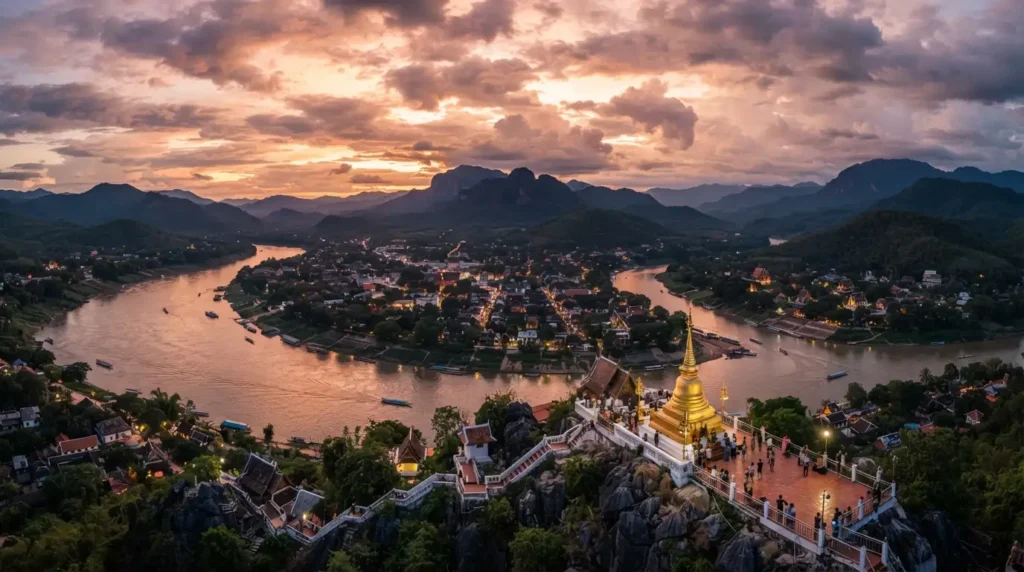
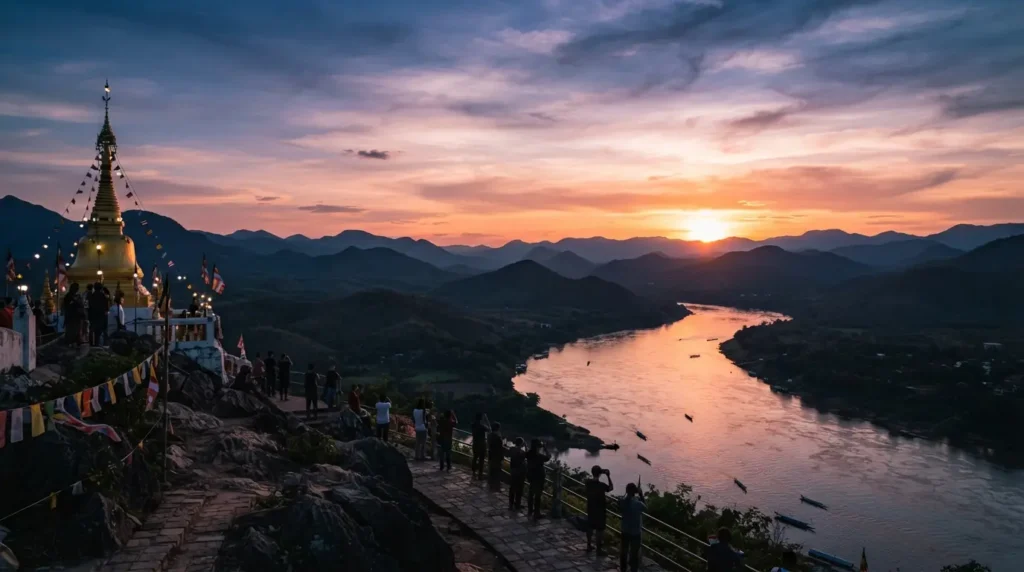
Mount Phousi rises from the center of the peninsula, and the climb to its golden stupa, That Chomsi, takes around 300 to 330 steps depending on which entrance you use. Entry costs about 20,000 kip and the site is open daily from roughly 6am to 8pm.
Sunset is the most popular time to climb, which also means the summit gets crowded in peak season. A quieter alternative most guides skip is climbing mid morning, around 8 or 9am, after the sunrise crowd clears but before the day heats up. The nearby Buddha Footprint Temple, a small cave shrine on the same hill, offers a calmer spot without fighting for a viewpoint.
What Should You Know Before Visiting the Royal Palace
The former Royal Palace, now the National Museum, displays royal artifacts and houses the sacred Phra Bang Buddha statue in the adjoining temple Wat Ho Pha Bang. Entry costs around 30,000 kip, hours run roughly 8am to 11.30am and 1.30pm to 4pm, so plan around the midday closure. Photography and footwear are prohibited inside, and bags must go in a locker room first, a rule that catches visitors off guard.
Is Kuang Si Waterfall Worth the Trip
Yes, and by most accounts it is worth prioritizing over other waterfalls nearby. Kuang Si sits about 30 kilometers from town, roughly an hour’s drive, and its turquoise limestone pools cascading through jungle rank among the most photographed waterfalls in Southeast Asia. Arriving early, before the tour groups, makes a real difference since the lower pools fill fast by midmorning.
What Will You See at Pak Ou Caves
The Pak Ou Caves, reached by boat up the Mekong, hold thousands of Buddha statues tucked into limestone cliffs, split between the lower Tham Ting cave and the higher Tham Theung cave. Many day tours pair the caves with a stop at Ban Xang Hai, the Whiskey Village, for a taste of local rice whiskey.
[Comparison Table]
| Day Trip | Distance from Old Town | Best For |
| Kuang Si Waterfall | About 30 km, 1 hour drive | Swimming and photography |
| Pak Ou Caves | Boat trip up the Mekong | Buddha statues and river views |
| Tat Sae Waterfall | Similar distance, less visited | Quieter alternative to Kuang Si |
| Chomphet district | Short boat ride across the Mekong | Off the beaten path villages |
What Local Food Should You Try in Luang Prabang
Signature dishes worth seeking out include sai oua, a lemongrass spiced Lao sausage, larb, the minced meat salad often called the national dish, mok pa, fish steamed in banana leaf, and khao poon, a spicy noodle soup. Khao piak sen, a rice noodle soup, is a popular breakfast, often paired with a warm baguette, a trace of French influence. Sticky rice accompanies nearly every meal, eaten with your fingers.
Riverfront restaurants often serve set menus letting you sample several dishes at once, an easy way to try more without over ordering.
What Is the Difference Between the Morning Market and Night Market
The Morning Market runs roughly 5am to 10am near Wat Mai Suwannaphumaham, catering mostly to locals buying produce, herbs, and snacks like coconut pancakes and grilled honeycomb. The Night Market runs about 5pm to 10pm along Sisavangvong Road, closing the street to traffic for stalls selling textiles, handicrafts, and street food aimed at visitors. Expect the food here to be decent rather than exceptional next to bigger food scenes like Bangkok, but it’s a fun, low pressure evening.
[Cost Table]
| Item | Typical Cost |
| Visa on arrival | Around 35 USD |
| Wat Xieng Thong entry | 20,000 to 30,000 kip |
| Royal Palace entry | 30,000 kip |
| Mount Phousi entry | 20,000 kip |
| Nam Khan Bamboo Bridge toll | 10,000 kip |
| Mekong sunset cruise | Around 195,000 kip per person |
When Is the Best Time to Visit Luang Prabang
The dry season, roughly October through March, brings the most reliable weather and is the only time the Nam Khan Bamboo Bridge is open, since it gets replaced by a boat shuttle once the rainy season floods the river between April and September. Most visitors say the best months are November through February, when temperatures are milder and the Mekong looks scenic rather than swollen and brown.
What Festivals Happen in Luang Prabang
Lao New Year, known locally as Pi Mai Lao, hits mid April and turns the town into a citywide water fight. The Boat Racing Festival usually lands in September, with locals racing longtail boats down the Nam Khan River. The Festival of Light closes out Buddhist Lent in October, filling temples with candles and sending lit boats down the Mekong at night. Book ahead if your trip lines up with any of these, since rooms sell out fast.
How Do You Get Around Luang Prabang
The Old Town is compact and walkable, with most accommodation within about a 30 minute walk of the center. Electric tuk tuks offer a cheap, eco friendly way to cover longer distances.
Final Thoughts
Luang Prabang Old Town earns its reputation honestly, even with visitor numbers climbing fast in 2026. The temples, rivers, and daily rhythm of monks collecting alms still deliver something genuinely different from the rest of Southeast Asia. Time your temple visits for early morning, book train tickets ahead during festival season, and pick a side street over the main strip for the alms ceremony. Do that and Luang Prabang still feels like the quiet town that earned its UNESCO status.
FAQs
Is Luang Prabang worth visiting?
Yes. Its UNESCO listed architecture, temple culture, and river setting make it one of the most distinctive towns in Southeast Asia.
How many days do you need in Luang Prabang?
Most travelers spend two to four days, though the mix of temples, markets, and nearby waterfalls rewards a longer stay.
Is Luang Prabang overcrowded in 2026?
Visitor numbers have grown sharply since the high speed railway opened, but early mornings and weekdays still offer the quieter experience the town is known for.
What is proper etiquette for the alms giving ceremony?
Keep a respectful distance, dress modestly, stay quiet, and skip the flash photography, or better yet, only join if you plan to give alms respectfully.
Is the Nam Khan Bamboo Bridge open year round?
No. It operates only during the dry season from October to March and is replaced by a boat shuttle during the rainy season.


