
Sosoactive: A Middle Ground Wellness Routine That Actually Sticks
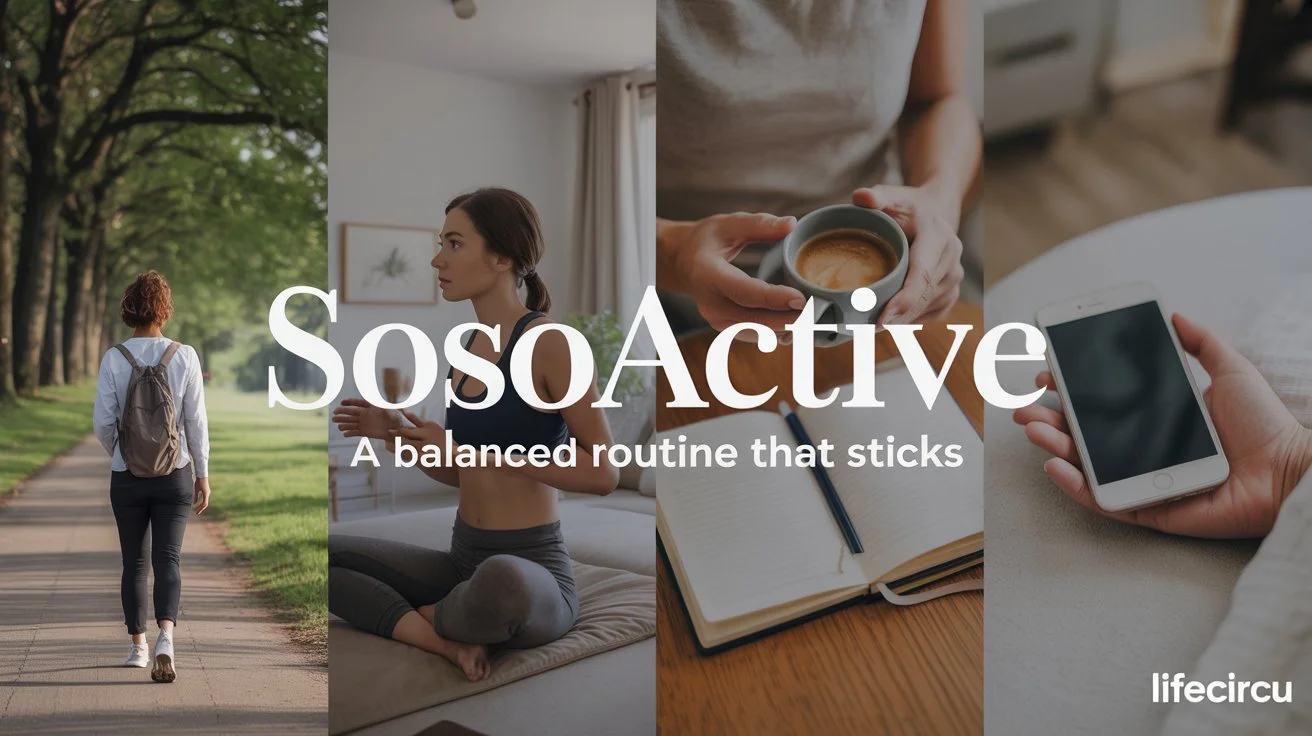
A lot of people feel stuck between two bad options. One side is extreme fitness. The other side is doing nothing. Both can fail fast. Sosoactive sits in the middle. It focuses on steady effort you can repeat. Think small moves, calm habits, and better choices with your screen time.
This topic also gets messy online. Some pages treat it like a lifestyle framework. Others talk like it is a platform or brand. You can still use the core idea either way. The goal stays the same. Build a routine that fits real life.
What people mean when they say Sosoactive
Most searches point to one of three meanings.
First, some mean a wellness approach. It blends light movement, mental balance, social time, and digital control. It avoids the all or nothing trap.
Second, some mean a fitness style community. They expect features like groups, content, and progress tracking. That version often talks about data, habits, and engagement.
Third, some confuse it with SoSoActive Media, which is a different brand identity. That is more about media and culture, not a health routine.
If you came for better health habits, stay with the first meaning. It fits the user intent best.
The real problem people face with wellness routines
Most people do not fail because they lack discipline. They fail because the plan feels too big.
The common pain points look like this.
You start strong on Monday. By Thursday, life hits. Work runs late. Sleep drops. Stress climbs. Then the routine breaks. After that, guilt shows up. Many people quit at that point.
Another issue is energy. When you feel tired, you pick easy comfort. That often means sitting more and scrolling more. It feels like rest, but it can drain you.
A third issue is social. If you feel alone, habits feel harder. Motivation drops when nobody checks in.
A middle-ground routine fixes these problems in a simple way. It lowers the cost of starting. It also gives you fallback options.
The core idea: moderate engagement beats big motivation
Motivation comes and goes. A routine survives when it feels normal.
Moderate engagement means you do enough to help your body and mind. You stop before you crash. You keep the pace that lets you show up tomorrow.
This approach values consistency over intensity. It also respects your limits. That matters on busy weeks.
The four pillars that make this approach work
A strong routine needs more than workouts. It needs a full life setup. These four pillars cover the big gaps that break habits.
Body pillar: simple movement you can repeat
You do not need a gym. You need repeatable movement.
Start with walking. Add short mobility work. Use light strength if you want. Keep the sessions short enough to finish them.
Try these options.
- 10 to 25 minute walk after a meal
- 5 minute mobility routine in the morning
- 8 to 12 minutes of light strength twice a week
- Two short active breaks during work hours
Pick one or two. Do not pick all of them on day one.
Mind pillar: reduce stress and steady your attention
Many routines fail because stress runs the day. When you feel tense, you skip habits.
Focus on small actions that calm your system.
A simple breath cycle helps. A short journal note helps too. Some people prefer a quiet walk without headphones. Others do better with light music.
Keep it short. Keep it daily. That matters more than the method.
People pillar: social connection that supports habits
Social support makes routines easier. Even small contact helps.
A quick walk with a friend counts. A weekly class counts. A simple check-in text counts too.
Do not wait for a perfect community. Start with one person. Make it simple.
Digital pillar: cut passive scrolling and add intentional use
A lot of people think they rest when they scroll. That often backfires. It can raise stress and steal sleep.
A better goal is control, not perfection.
Set one rule you can follow. For example, stop scrolling after dinner. Or keep the phone out of bed. Or take a short screen break every hour.
Replace the habit, not just remove it. Swap in reading, stretching, or a short walk.
A quick self-check: are you extreme, sedentary, or balanced
Use this fast test.
If you train hard for two weeks, then crash for two weeks, you live in extremes.
If you sit most of the day, feel stiff, and scroll a lot at night, you lean sedentary.
If you move most days, keep it manageable, and recover well, you lean balanced.
The goal is not perfection. The goal is a pattern you can repeat.
The 7-day starter plan you can actually follow
This is a simple weekly plan. It fits most schedules. Keep sessions short. Finish them even when you feel low energy.
Day 1
Take a 15 minute walk.
Do 3 minutes of light stretching.
Day 2
Do 8 minutes of mobility.
Take two short active breaks during work.
Day 3
Walk 20 minutes at an easy pace.
Text a friend and plan one shared activity.
Day 4
Do 10 minutes of light strength.
Stop scrolling 30 minutes before bed.
Day 5
Walk 15 minutes after a meal.
Write three lines in a journal.
Day 6
Do something social that includes movement.
A park walk works. A market stroll works too.
Day 7
Take a calm walk.
Plan your next week in five minutes.
The fallback plan for missed days
Missed days happen. Do not restart from zero.
Use a reset rule. Do the smallest version the next day. A 10 minute walk counts. A 5 minute mobility set counts. Keep the chain alive.
This stops the guilt spiral. It also keeps identity steady. You become the person who returns.
How to scale this routine without burning out
Scaling works best in a simple order.
First, add frequency. Then add time. Add intensity last.
For example, if you walk twice a week, move to three days first. After that, add five minutes. Later, add hills or faster pace if you want.
This protects your joints and your motivation.
If you meant the “platform” version, here’s how to evaluate it
Some pages describe Sosoactive like a platform with community and tracking. If you want that style, focus on practical checks.
Look for tools that build habits, not hype. Community features should feel safe and useful. Tracking should help you act, not obsess.
Here are smart checks before you commit.
- Does it protect data privacy clearly?
- Can you export your data?
- Does it push daily streak pressure, or flexible progress?
- Does it support real goals like sleep, steps, or stress control?
- Does it help you connect with people in your area?
Wearables can help, but they stay optional. If a tool makes you anxious, drop it.
“Near me” ideas that make this routine easier
A balanced routine works best when it fits your environment.
If you live in a city, use sidewalks, stairs, and short walks between tasks. Parks help, but you can start with a safe loop near home.
If you live in a car-heavy area, you can still win. Park farther away. Walk during breaks. Use a nearby school track after hours if it feels safe.
Try these local options.
- A nearby park loop after dinner
- A community center class once a week
- A walking group that meets on weekends
- A safe indoor walk at a mall in bad weather
Your location shapes the plan. That is normal. The habit stays the same.
FAQs
What does Sosoactive mean in wellness?
It usually means a middle-ground routine. You do moderate activity most days. You also protect mental health and screen habits. The key is consistency, not extremes.
How many minutes a day should I start with?
Start with 10 to 20 minutes. Keep it easy. Add time after two steady weeks.
Do I need a gym or equipment?
No. Walking and mobility cover a lot. Light strength helps, but it stays optional.
What if I keep quitting after a few days?
Use a fallback plan. Do the smallest version the next day. Keep the chain alive.
How do I control screen time without failing?
Pick one rule you can keep. Stop scrolling after dinner works for many people. Replace that time with a short walk or stretching.