
2 Day Itinerary Jaipur: The Complete Guide to the Pink City
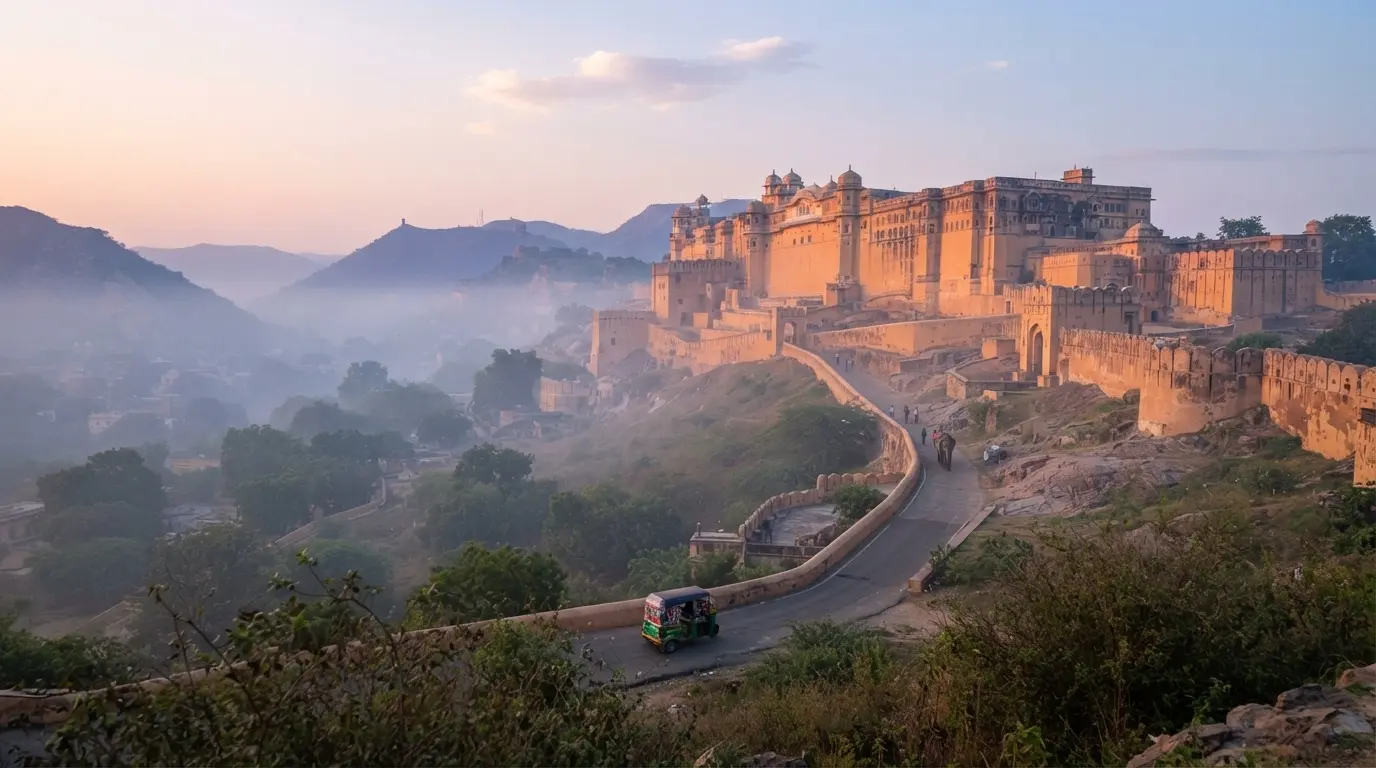
The best 2 day itinerary for Jaipur splits day one between the historic center, covering Hawa Mahal and City Palace, and day two among the Aravalli hills forts, including Amber Fort and Nahargarh Fort. Jaipur genuinely overwhelms first-time visitors who try to cram everything into one rushed day, and the real secret to actually enjoying this city is spreading things out enough to explore at your own pace rather than racing a tour bus from stop to stop.
What Should You Do on Day 1 of a Jaipur Itinerary?
| Time | Stop |
| Early morning | City Palace |
| Mid-morning | Jantar Mantar |
| Midday to afternoon | Hawa Mahal and lunch |
| Afternoon | Bazaar shopping |
| Evening | Rajasthani dinner at Chokhi Dhani |
Day one of a Jaipur itinerary for 2 days works best built around the historic center. Start at City Palace, and genuinely arrive early, since this remains one of Jaipur’s top attractions and gets considerably more crowded once tour groups descend mid-morning. Inside, the Chandra Mahal and Mubarak Mahal stand out as highlights, and part of the complex still functions as a private residence for the former royal family, who continue hosting special events here during festivals. Jantar Mantar sits directly behind the City Palace, and this UNESCO World Heritage astronomical observatory, built by Maharaja Jai Singh, holds a genuinely impressive collection of instruments, with a guide worth hiring specifically if astronomy interests you. Hawa Mahal makes a natural midday stop, and a common mistake first-timers make is paying to go inside when the real photo opportunity comes from one of the cafes directly opposite the pink facade, offering the best angled view of its hundreds of small latticed windows. Spend the afternoon wandering the bazaars, and close the day with a Rajasthani thali and folk performances at Chokhi Dhani, a cultural village resort on the city’s outskirts.
What Should You Do on Day 2 of a Jaipur Itinerary?
| Time | Stop |
| Early morning | Amber Fort |
| Mid-morning | Panna Meena ka Kund, Jaigarh Fort |
| Midday | Jal Mahal, Gaitore cenotaphs |
| Afternoon | Birla Mandir or Albert Hall Museum |
| Evening | Nahargarh Fort for sunset |
Day two of a Jaipur itinerary for 2 days shifts focus to the rocky Aravalli hills surrounding the city. Start early at Amber Fort, again beating the tour groups, to explore this 16th-century complex blending Mughal and Rajput architectural styles, with the Sheesh Mahal, Ganesh Pol, and Sila Devi temple ranking among its strongest highlights. Just a 15-minute walk away sits Panna Meena ka Kund, a geometric stepwell that receives only a fraction of Amber Fort’s visitors despite sitting so close, making it a genuinely peaceful photo stop. Jaigarh Fort connects to Amber Fort via a secret underground tunnel, a genuinely memorable way to travel between the two if you’re up for the walk, otherwise a quick tuk tuk ride covers the short distance instead, and its main draw is the sweeping view over Amer village below rather than elaborate architecture. On the way back toward the city, stop for photos at Jal Mahal, the yellowish sandstone “water palace” that appears to float on its lake, though you can’t actually enter, before continuing to the quiet, richly decorated Gaitore cenotaphs, the royal burial grounds of the Rajput kings. Round out the afternoon with either Birla Mandir’s white marble serenity or the Albert Hall Museum’s historical artifacts, then finish the day at Nahargarh Fort, where the rooftop terrace delivers one of the best sunset views over all of Jaipur.
Should You Ride an Elephant at Amber Fort?
No, and this is genuinely worth knowing before you arrive. Elephant rides remain popular at Amber Fort, but the abuse of elephants used for this purpose in Jaipur is well documented, alongside broader ethical concerns around elephant tourism generally. A common mistake first-timers make is assuming a short, scenic ride up to the fort is harmless fun, when the reality behind these rides is genuinely troubling. Travelers who still want a meaningful elephant encounter should instead consider Elefantastic, an ethical elephant village near Jaipur offering rescued elephants a genuine safe haven focused on their wellbeing rather than tourist entertainment. A scenic jeep ride up to Amber Fort delivers the same convenience without the ethical baggage.
Tour or Tuk Tuk: How Should You Explore Jaipur’s Hilltop Forts?
A rented tuk tuk genuinely delivers a better day two experience than a packaged tour for most travelers. Organized tours move efficiently between stops but tend to rush through things, leaving little time to linger at quieter spots like the Gaitore cenotaphs or Panna Meena ka Kund. Renting a tuk tuk for the day, by contrast, lets you set your own pace and, genuinely usefully, local drivers often know off-the-beaten-path gems that standard tours skip entirely, since many drivers have grown up navigating these hills and have real local knowledge worth tapping into. Travelers specifically wanting to meet other people during their visit, rather than prioritizing flexibility, might still prefer a group tour for the social element, but those wanting to actually absorb each site at their own speed should choose the tuk tuk.
Galtaji or Galwar Bagh: Which Monkey Temple Should You Visit?
Jaipur actually has two monkey temples, and choosing between them genuinely matters depending on what kind of experience you’re after. Galtaji, set in a hidden corner of the Aravalli hills, is the cleaner and more peaceful of the two, featuring several palaces and temples with stunning architecture and beautiful interior paintings, alongside natural water springs and pools, and it draws relatively few foreign visitors despite its genuine beauty. Galwar Bagh, by contrast, is more famous but noticeably dirtier, with stairs leading up to the temple crowded with beggars, animals, and genuine mess, though the chaotic interaction between monkeys, goats, pigs, and locals who call this temple home makes for one of the more unforgettable, if slightly overwhelming, Indian experiences, and the views from the top are genuinely beautiful despite the mess below. Travelers wanting a calmer, more contemplative stop should choose Galtaji, while those curious about a rawer, more chaotic slice of local life should head to Galwar Bagh instead.
What Should You Eat in Jaipur?
Jaipur’s bazaar area genuinely rewards travelers willing to eat where the locals eat, and a handful of specialist stalls have perfected single dishes over the years. The Golcha Cinema samosa stall serves some of the best samosas in town, the Lassiwala on MI Road (shop 321) is widely considered the city’s top spot for lassi, and Jagannath Sharma Pakodi Walla and Radhe Kachori Wala both specialize in crispy, flaky fried snacks worth seeking out, with Pandit Kulfi rounding things out with traditional Indian kulfi ice cream. For a proper sit-down meal, Al Umar Restaurant consistently earns strong recommendations for its kebabs, particularly the hariyali kebab in green gravy and the white malai kebab. A rooftop restaurant overlooking an illuminated Amber Fort, such as The Stag or Once Upon a Time, makes a genuinely memorable way to close out the second evening, and don’t leave Jaipur without trying bazaar sweets like ghewar and rabri, or a proper pyaaz kachori from a street stall.
How Do You Get Around Jaipur?
Ola and Uber both work well in Jaipur, and both typically run cheaper than negotiating directly with a tuk tuk driver on the street, with the added benefit of not needing to haggle over price or explain your destination. Ola also offers a tuk tuk option specifically, which remains one of the most affordable ways to cover shorter distances within the city. For day trips outside Jaipur or a full day exploring the Aravalli hills forts, hiring a tuk tuk or taxi for the day gives you genuine flexibility, and women travelers specifically should consider Sakha Cabs, a social enterprise providing safe transport driven by women, as part of a broader push for gender equality in the local transport sector.
Final Thoughts
Building the right 2 day itinerary jaipur comes down to resisting the urge to cram everything into a single rushed day the way organized tours often do. Spend day one in the historic center around City Palace and Hawa Mahal, dedicate day two to the Aravalli hills forts starting early at Amber Fort, and rent a tuk tuk rather than joining a packaged tour if you want time to properly explore quieter gems like the Gaitore cenotaphs. Whether it’s sunset from Nahargarh Fort or a kebab dinner at Al Umar, a well-paced 2 day jaipur itinerary consistently rewards travelers who slow down enough to let the Pink City’s history and chaos genuinely sink in.
FAQ
Is 2 days enough for Jaipur?
Yes, two days genuinely covers the essential highlights, splitting the historic center on day one from the Aravalli hills forts on day two, though travelers with a third day available can add Chand Baori’s ancient stepwells or a block printing workshop in Sanganer or Bagru.
What is the best time to visit Jaipur?
October through March delivers the most comfortable temperatures, with October specifically offering the added bonus of possibly catching Dussehra or Diwali celebrations, while April and May turn extremely hot and June through September brings monsoon rains.
Where should you stay in Jaipur?
Budget travelers do well at hostels offering clean rooms and good value, mid-range travelers can find comfortable guesthouses with rooftop restaurants and reliable Wi-Fi, and travelers wanting a genuine splurge should consider Rambagh Palace, the former royal residence now operating as a luxury hotel.
Is street food in Jaipur safe to eat?
Generally yes if you’re careful, and the most reliable rule of thumb is seeking out stalls genuinely busy with local customers rather than empty tourist-facing ones, since specialist vendors who’ve perfected a single dish over years tend to maintain the cleanest, safest preparation standards.


