
Why Flies Gather in the Attic in Autumn and Winter
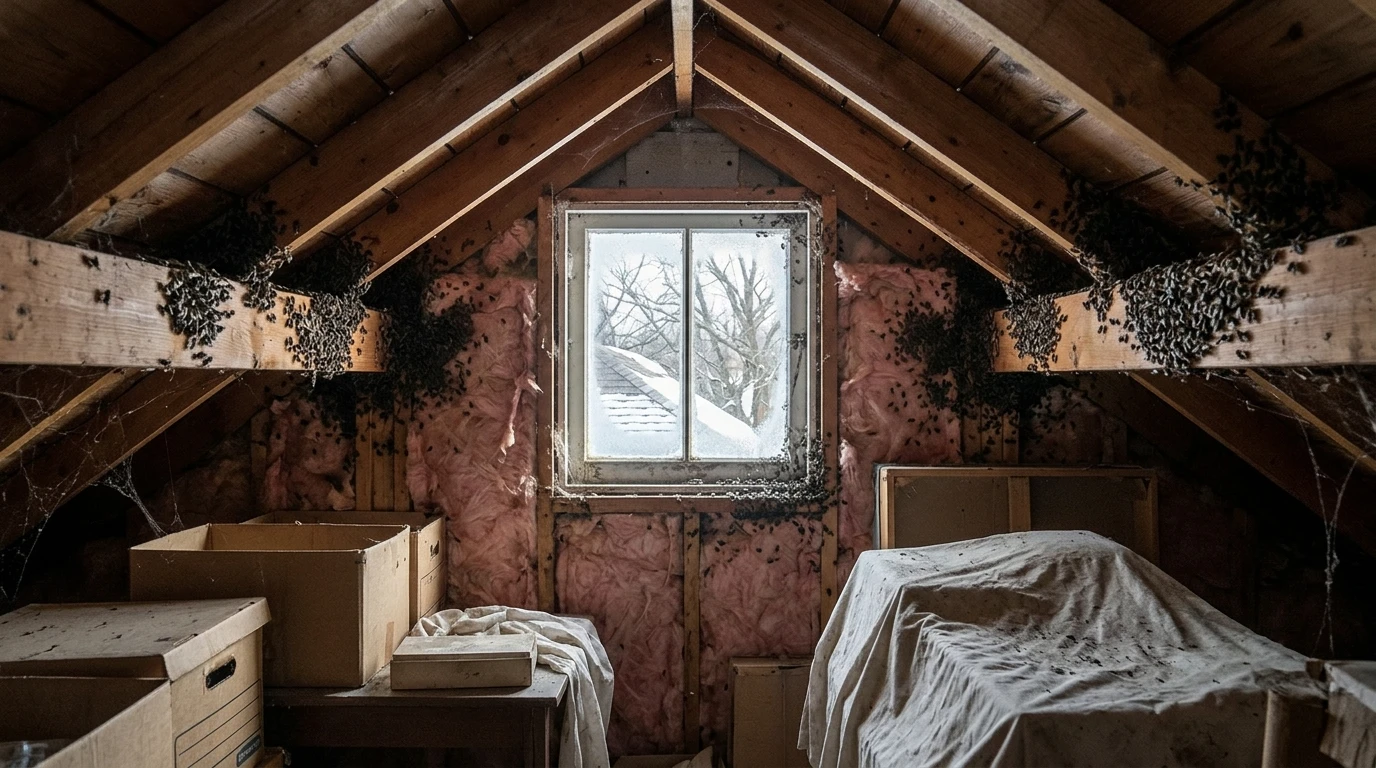
Many homeowners notice it on the first sunny day of late winter: slow, sluggish flies crawling on the windows of an attic or upstairs bedroom, even though no windows have been opened for weeks. These insects are not breeding indoors. In most cases they are overwintering flies looking for a sheltered place to wait out the cold.
Meet the cluster fly
The flies most often found in attics are cluster flies. They are slightly larger than a common house fly, with a dull, greyish body and golden hairs on the thorax. They move slowly and tend to gather in groups, which is how they got their name.
Their life cycle is unusual. During summer, cluster fly larvae develop in the soil, where they feed on earthworms. In autumn the adults look for a warm hiding place and often find one in the upper parts of houses, especially walls that face the sun.
How they get inside
Cluster flies do not need open doors. They crawl in through:
- Gaps around roof tiles and fascia boards
- Ventilation openings without fine mesh
- Cracks around window frames and sills
- Openings where cables or pipes enter the wall
Once inside, they settle in roof spaces, wall cavities and unused rooms. On warm days the heat wakes them, and they move towards the light, which is why they appear on windows.
Are they harmful?
Cluster flies do not breed in food and are not usually linked to hygiene problems in the same way as house flies. The main issues are nuisance and staining. Large numbers can leave marks on windows and walls, and dead flies in the attic can attract other insects such as carpet beetles.
What you can do yourself
Vacuuming is the simplest way to remove flies that appear indoors. Avoid crushing them, as this can leave stains. To reduce the problem next year, seal gaps on the outside of the house before late summer, when the flies start looking for shelter. Fit fine mesh over vents, repair damaged sealant around windows and check the roof edge for openings.
Keep the attic tidy and clear out dead insects during the spring, so you do not create food for other pests.
It also helps to think about timing. Cluster flies start looking for winter shelter as the nights get colder in early autumn. Repairs done in summer are far more effective than anything done once the flies are already inside the walls, where they are difficult to reach.
When professional help makes sense
If flies return in large numbers every year, the house probably offers easy access points that are hard to find from the ground. A trained technician can inspect the roof area and walls, identify the entry points and suggest a suitable treatment. For homes in southern Norway, Skadedyrvakta can help assess the situation and recommend the right approach.
Dealing with entry points in good time is far easier than removing hundreds of flies from the attic each spring.