
Lyon Must See: The Complete Guide to Lyon’s Top Attractions in 2026
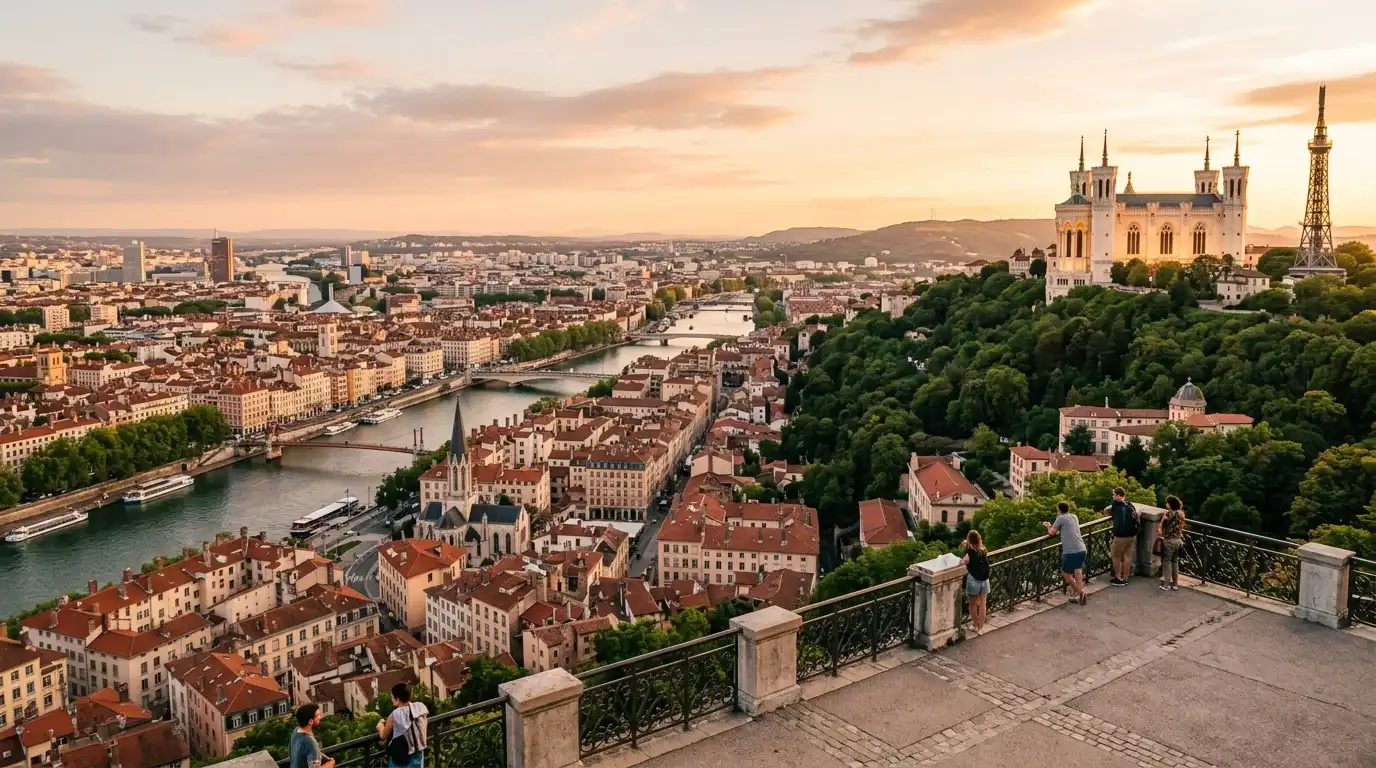
The Lyon must see list starts with five places: Vieux Lyon’s traboules, Fourvière Hill’s basilica, the elegant Presqu’île squares, Croix-Rousse’s silk history, and Les Halles de Lyon Paul Bocuse for food. Together they cover Lyon’s UNESCO-listed old town and its reputation as France’s food capital. If you’re wondering where to even begin, that answer sits at the heart of this guide.
Most first-time visitors feel a bit overwhelmed by Lyon. It’s not Paris, so there’s less hand-holding online, and it’s not a beach town, so nobody tells you how many days you actually need. Add in the confusion over pricey bouchon menus, steep hills, and passageways that may or may not be open, and it’s easy to see why travelers show up with more questions than answers. This guide clears that up, section by section.
Why Is Lyon Considered a Must-See Destination in France?
Lyon sits at the meeting point of the Rhône and Saône rivers, and that geography shaped everything about the city. It grew wealthy from silk, then became known as France’s gastronomic capital, then quietly built one of the best-preserved Renaissance quarters in Europe. Travelers who put off a Lyon visit in favor of Paris or Provence often say the same thing afterward: they wish they’d come sooner. Lyon delivers UNESCO-level history, world-class food, and genuine local character without Paris-sized crowds or Paris-sized prices.
How Many Days Do You Need to See Lyon’s Top Attractions?
Two full days is the honest minimum for a satisfying trip. A rushed one day in Lyon works if you focus only on Vieux Lyon and Fourvière, but you’ll miss Croix-Rousse, a proper bouchon dinner, and Les Halles de Lyon Paul Bocuse. Travelers with three or four days can add a Beaujolais wine day trip or a slower food-market morning. A common mistake first-timers make is treating Lyon as a half-day stopover between Paris and the south of France; the city rewards a longer stay far more than its reputation suggests.
What Is the Best Time of Year to Visit Lyon’s Must-See Attractions?
Expect the mildest weather and thinner crowds in April, May, September, and October, though spring carries a higher chance of rain. June through August brings the warmest days but also the busiest streets and pricier hotel rates near Place Bellecour. December is a special case: the Fête des Lumières lights up the entire city for several nights at the start of the month, but hotels and restaurants book out weeks in advance, so travelers consistently find that waiting until the last minute backfires here. Winter outside festival week is quiet, cold, and genuinely pleasant if you don’t mind fewer daylight hours.
What Are the Best Things to Do in Vieux Lyon?
Vieux Lyon is where most visitors start, and for good reason. It’s the largest Renaissance quarter in Europe after Venice, and its cobblestone lanes, hidden courtyards, and Gothic cathedral make it the most photogenic of Lyon’s top attractions. The neighborhood splits into three historic sections, Saint Jean, Saint Paul, and Saint Georges, each with a slightly different architectural character. Saint Jean feels the most medieval, Saint Paul carries Italian banking-era influence, and Saint Georges was once home to the silk weavers before they moved uphill to Croix-Rousse. Expect to spend at least two unhurried hours here, more if you stop for a crepe.
What Are the Traboules and How Do You Actually Find Them?
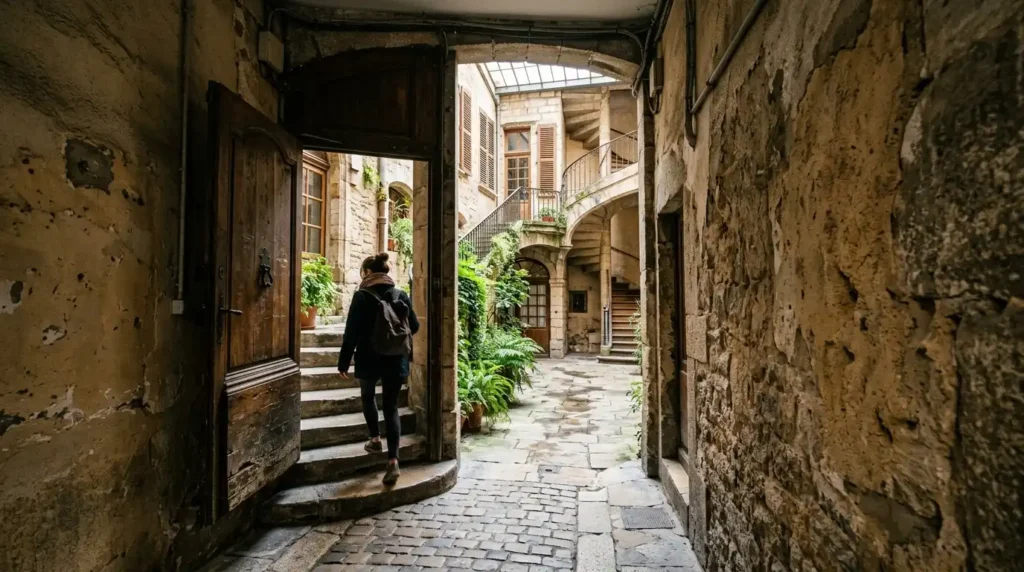
Traboules are covered passageways that cut through buildings and courtyards, originally built so silk workers could move fabric across the city without exposing it to rain. During the Second World War, French Resistance fighters used the same passages to slip past German patrols. Around 40 traboules are open to the public today, mostly concentrated in Vieux Lyon and Croix-Rousse, though the exact number shifts as some close temporarily for renovation or private-owner reasons. Look for a wooden door marked with a small plaque or triangular sign, often along Rue Saint Jean. If there’s a doorbell, ring it, and if the door unlatches, you’re welcome to walk through. A common mistake is forgetting these lead through someone’s private courtyard: push the door gently, keep your voice down, and close it behind you. Most are only accessible during daylight hours, and wandering them after 10pm is neither polite nor practical since many will already be locked.
What Should You See on Fourvière Hill?
Fourvière Hill is where the Romans first settled Lyon in 43 BC, back when the city was called Lugdunum. Two sites anchor a visit here. The Basilica of Notre-Dame de Fourvière is free to enter and worth every minute inside, with mosaic walls, stained glass, and a mix of gold, turquoise, and deep red that surprises people who expect a plainer French church. Just downhill sit the Lugdunum Roman Theatres, a genuinely well-preserved dual amphitheatre that’s also free to wander.
Getting up the hill is where travelers have real choices to make. Walking takes about 20 minutes and involves a steep, sustained climb that catches out anyone who underestimates it. The funicular, one of the oldest funicular lines still running anywhere in the world, covers the same distance in roughly three minutes for the price of a standard metro ticket, usually a couple of euros, and it departs from the Vieux-Lyon metro station every 5 to 10 minutes. Travelers who’d rather save their energy for exploring, or who are visiting with kids or limited mobility, should default to the funicular. Behind the basilica, a viewing terrace gives one of the best panoramas in the city, and on a clear day you can pick out Mont Blanc in the distance.
What Are the Best Things to Do on the Presqu’île?
The Presqu’île, meaning “almost an island,” is the peninsula wedged between the Saône and Rhône as they converge in central Lyon. Place Bellecour anchors the district as one of the largest pedestrian squares in Europe, dominated by an equestrian statue of Louis XIV. From there, elegant 18th and 19th-century streets lead to Place des Terreaux, home to the ornate Hôtel de Ville and the Bartholdi Fountain, designed by the same sculptor behind the Statue of Liberty. Place des Jacobins, with its own central fountain, sits nearby and makes a pleasant stop for photos. Locals recommend picking a café table near the Bartholdi Fountain in late afternoon and simply watching the square for half an hour; it’s one of the most underrated things to do in Lyon precisely because it asks nothing of you.
What Makes Croix-Rousse Worth Visiting for Lyon’s Silk History?
Croix-Rousse, nicknamed “the hill that works” in contrast to Fourvière’s “hill that prays,” was once home to more than 30,000 canuts, the silk workers whose labor built Lyon’s fortune for over 300 years. La Maison des Canuts, a former silk workshop turned small museum, runs guided tours that include a live demonstration of a 19th-century Jacquard Loom. The first half of the tour usually runs in both French and English, with a discounted English-language ticket typically available; the second half continues in French only, and non-French speakers are free to leave at that point. Afterward, walk through Cour des Voraces, one of the district’s most dramatic traboules, then descend to the Presqu’île along Montée de la Grande-Côte, a steep pedestrian street once used to haul silk downhill. On Tuesday, Friday, or Sunday mornings, the market along Boulevard de la Croix-Rousse is worth timing your visit around.
What Are the Best Things to Do in Lyon for Food Lovers?
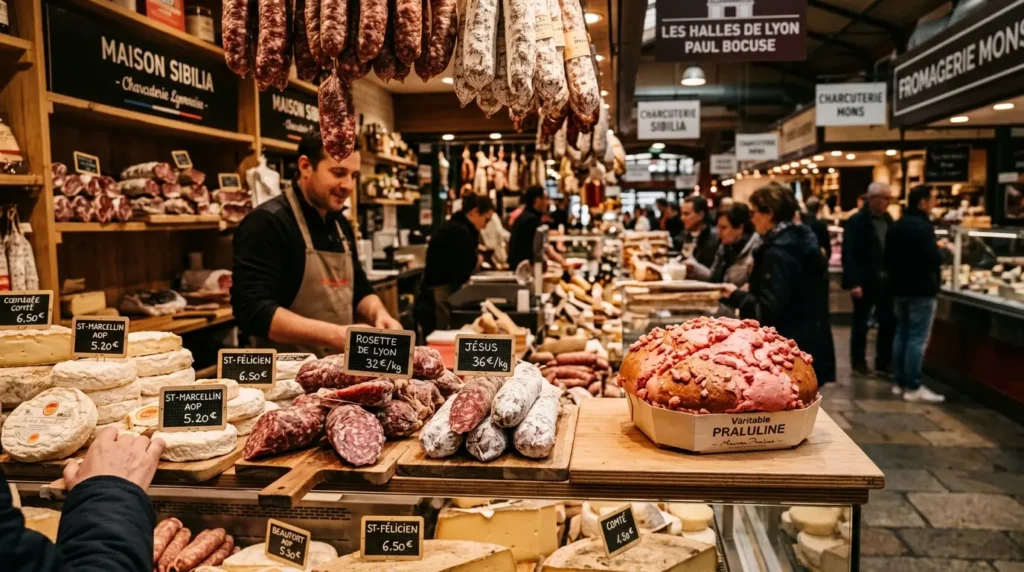
Lyon is widely considered France’s gastronomic capital, and arguably the world’s, thanks to its local produce, culinary schools, and dense cluster of Michelin-starred kitchens. Eating at a certified Bouchon Lyonnais tops most lists, though it’s worth knowing what you’re signing up for. Bouchons serve rustic, hearty dishes like quenelle de brochet, tablier de sapeur, cervelle de canut, and andouillette, several of which lean heavily on offal. Only around 20 restaurants carry the official Bouchons Lyonnais Authentiques certification, so it’s worth checking for the plaque before you sit down. If offal isn’t for you, quenelle and pâté en croûte are safer, widely available choices, and you can find them in plenty of non-bouchon restaurants too.
Les Halles de Lyon Paul Bocuse, named for Lyon’s most famous chef, is the city’s premier covered food market and a genuine local shopping spot, not just a tourist stop. Go hungry, order a plate of oysters at a standing bar, and try cervelle de canut, a herby cheese spread. For dessert, Lyon’s pink praline obsession runs deep: Pralus, the family bakery that invented the Praluline brioche in 1955, remains the benchmark, and its Quai Saint-Antoine and Rue de Brest locations both get busy by mid-morning.
[Cost Table] Typical Lyon Food and Attraction Prices (2026)
| Experience | Typical Price |
| Basilica of Notre-Dame de Fourvière | Free |
| Lugdunum Roman Theatres | Free |
| Funicular ride | Around €2 (standard metro fare) |
| La Maison des Canuts guided tour (English ticket) | Around €7–8 |
| Three-course lunch, standard restaurant | Around €25–30 |
| Bouchon dinner, per person | Around €30–45 |
| Praluline brioche (whole loaf) | Around €15–20 |
| Musée des Confluences entry | Around €10–12 |
| Wine cellar tasting (Le Petit Musée du Vin) | Around €30–35 |
Prices vary by season and venue, so treat these as realistic ranges rather than fixed numbers.
What Other Museums and Landmarks Round Out Lyon’s Top Attractions?
Beyond the historic core, the Musée des Confluences at the southern tip of the Presqu’île houses natural history and anthropology collections inside a striking glass-and-steel building that’s worth seeing even from the outside. The Institut Lumière honors Louis and Auguste Lumière, inventors of the cinematograph, in the Monplaisir district. For a heavier but essential stop, the Resistance & Deportation History Center occupies the former Gestapo headquarters in Lyon and documents the city’s central role in the French Resistance during WWII, giving real weight to the traboules you’ve already walked through.
Where Should You Stay in Lyon for Easy Access to the Must-See Sights?
For where to stay in Lyon, the Presqu’île is the most convenient base, particularly around Place Bellecour, which sits roughly ten minutes on foot from Vieux Lyon, the bouchons, and the riverbanks. Vieux Lyon itself is charming but noisier and more tourist-dense at night. Travelers prioritizing a quieter, more local feel sometimes choose Croix-Rousse instead, trading a short uphill walk for lower rates and a neighborhood locals actually live in.
How Do You Get Around Lyon Between the Top Attractions?
Lyon’s historic center is compact enough to walk most of it, but the TCL network of metro, tram, bus, and funicular lines covers longer stretches efficiently. Tickets work by tapping a bank card or phone directly at most stations, and multi-day passes are available at ticket machines with an English-language option.
[Comparison Table] Walking vs Funicular vs Uber to Fourvière
| Method | Time | Cost | Best For |
| Walking | ~20 minutes, steep | Free | Fit travelers who want the exercise |
| Funicular | ~3 minutes | ~€2 | Most travelers, families, limited mobility |
| Uber/Taxi | ~10 minutes | Often pricier than expected for short distance | Late arrivals, heavy luggage |
What Is a Good Lyon Itinerary for One Day vs a Weekend?
[Itinerary Table] One Day vs Two Day Lyon Plan
| Day | Focus |
| One Day | Vieux Lyon and traboules (morning), funicular to Fourvière (midday), bouchon dinner on the Presqu’île (evening) |
| Day 2 (Weekend add-on) | Les Halles de Lyon Paul Bocuse (morning), Croix-Rousse and La Maison des Canuts (afternoon), Musée des Confluences or riverside walk (evening) |
Conclusion
Lyon rewards travelers who give it more than a rushed afternoon. The Lyon must see list isn’t long, but each stop, from a Fourvière sunset to a plate of quenelle in a checkered-tablecloth bouchon, asks to be experienced slowly rather than checked off. Give it two days if you can, book your bouchon table ahead, and let the traboules surprise you. That’s really all Lyon asks in return.
FAQs
Is Lyon worth visiting?
Yes. It combines UNESCO-listed architecture, Roman ruins, and France’s strongest food scene in a city that’s easier to navigate than Paris.
Is Lyon safe for tourists?
Generally yes, with the usual big-city precautions around pickpocketing in crowded spots like Les Halles or Place Bellecour.
Is Lyon better than Paris?
They’re different trips. Lyon is smaller, more walkable, and food-focused; Paris offers more sheer volume of landmarks.
How many traboules in Lyon are open to the public?
Roughly 40 are accessible, mostly in Vieux Lyon and Croix-Rousse, though the number shifts with renovations and private access changes.
Is the Lyon City Card worth buying?
It pays off if you plan to visit three or more paid attractions and use public transport heavily in a short window; casual sightseers may not break even.
Do you need to book a bouchon in advance?
Yes, especially on weekends, since certified bouchons are limited in number and fill quickly.
What should I avoid at a bouchon if I don’t like offal?
Stick to quenelle de brochet or pâté en croûte, both widely available and offal-free.


