
Must Do Paris: The Complete Guide to Landmarks, Food, and Day Trips

Must do Paris experiences include the Eiffel Tower, the Louvre, a Seine River cruise, and a day trip to Versailles, spanning centuries of history packed into a city built for walking between one iconic landmark and the next. Paris carries so much hype that first timers often go in bracing for disappointment, only to find the city genuinely lives up to it once they’re standing under the Eiffel Tower at dusk.
Is the Eiffel Tower Worth Visiting?
Yes, and it remains the single most essential must do Paris experience despite the crowds. Built for the 1889 World’s Fair as the tallest structure in the world at the time, the tower wasn’t universally loved by Parisians at first, originally designed to stand for just 20 years before it eventually won over its critics. Visitors can buy tickets to the second floor or go all the way to the top, and the honest truth is opinion genuinely splits here. Many travelers say the second floor actually offers the better view since you’re still close enough to make out details on the ground, while others prefer the higher vantage point for the full skyline sweep. A top ticket includes second floor access anyway, so springing for the higher tier means you don’t have to choose. Locals recommend timing a visit for evening, when the tower’s light show runs every hour for five minutes, and packing a simple picnic in the surrounding park turns a quick photo stop into a genuinely memorable evening.
Is the Louvre Worth Visiting?

Yes, even for travelers who don’t consider themselves museum people. Home to more than 70,000 pieces of art, the Louvre holds the title of the world’s most visited museum, and the Mona Lisa draws the biggest crowd by far despite being a surprisingly small 30 by 20 inch painting. A common mistake first timers make is spending all their time in the crush around the Mona Lisa’s room, when several other Da Vinci works often hang just steps away with barely anyone looking at them. Using a free audio guide, rather than wandering without context, helps make sense of which pieces are actually worth seeking out beyond the single most famous one. Comfortable walking shoes matter more here than almost anywhere else in Paris, since the museum’s scale means even a focused visit covers serious ground.
What Is the Difference Between Notre Dame and Sainte-Chapelle?
Both sit on the Ile de la Cite, a small island in the middle of the Seine River, but they deliver very different experiences. Notre Dame, whose construction began in 1163 and took nearly 200 years to complete, remains one of the most famous cathedrals in the world and helped define early Gothic architecture across Europe. A major fire in 2019 caused the spire and much of the roof to collapse, and while the interior reopened in 2024, travelers planning a 2026 visit should confirm current access and any ongoing restoration work before arriving, since large-scale reconstruction projects on a building this historic often continue in phases even after a headline reopening. Sainte-Chapelle, just down the street, was built in a remarkably fast seven years specifically to house relics King Louis IX believed included Jesus’s crown of thorns, and its 1,113 stained glass windows create one of the most striking interiors in the city. It’s a smaller stop than Notre Dame, but worth the short walk if you’re already exploring the island.
Is the Arc de Triomphe Worth Visiting?
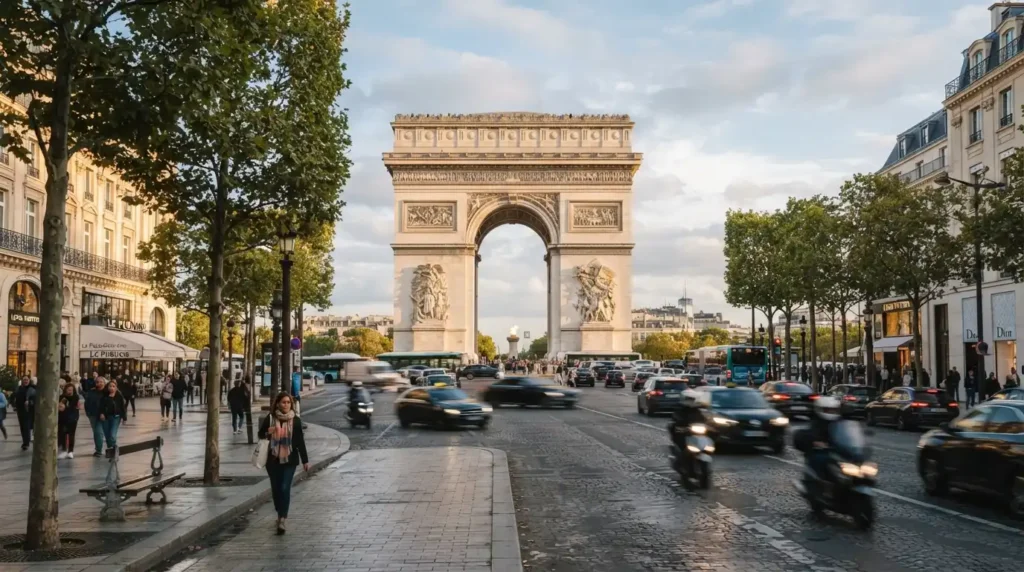
Yes, both for the history and the view, though it’s worth checking current access before building your day around it. Napoleon commissioned the arch in 1806 to commemorate his military victories, and it took more than 30 years to complete, standing 148 feet tall and 72 feet wide at the center of a roundabout where 12 roads converge. The best view from the top looks straight down the Champs-Élysées, one of the most famous shopping streets in the world, lined with luxury boutiques and cafes that have inspired similar streets in cities around the globe. The arch occasionally closes to visitors for construction or special events, sometimes requiring advance appointment booking instead of walk-up access, so confirming its status shortly before your visit avoids a wasted trip.
Is Versailles Worth a Day Trip from Paris?
Yes, and it’s one of the most rewarding day trips available from the city.
| Site | Travel Time from Paris | Best For |
| Palace of Versailles | About 30 minutes by train | History lovers, manageable day trip |
| Mont Saint-Michel | About 4 hours by coach or car | Bucket list scenery, full day commitment |
The Palace of Versailles began as a hunting lodge before growing into one of the most opulent palaces ever built, with 2,300 rooms holding more than 6,000 paintings and 3,000 sculptures. The Hall of Mirrors, a 240 foot corridor lined with mirrors at a time when owning even one was extraordinarily rare, remains the single most talked-about room in the palace. Versailles draws roughly 15 million visitors a year, and the line at the entrance can stretch impressively long, so booking a skip-the-line ticket or guided tour saves real time on what would otherwise eat into your visit. The gardens alone span more than 600 hectares and genuinely deserve their own dedicated wander if time allows.
Is Mont Saint-Michel Worth the Drive from Paris?
For travelers with a full day to spare, yes, though it genuinely stretches the definition of a quick day trip given the roughly 4 hour drive each way from Paris. This tidal island in Normandy has served as a place of worship since 708 AD and looks so much like a fairytale castle that it directly inspired the fictional kingdom in Disney’s Tangled. The abbey sits at the top of the island, following a medieval layout where the working class occupied the lower streets, knights lived in the middle tiers, and the church crowned the summit. Given the distance, booking a coach tour that includes transportation and a guide takes the logistics off your plate entirely, letting you focus on wandering the narrow streets and walking the tidal ground surrounding the island rather than navigating an unfamiliar route.
What Is There to Do in Montmartre and Sacre Coeur?
Sacre Coeur sits atop the highest point in the Montmartre neighborhood, and though construction began in 1875 alongside the Eiffel Tower with hopes of being the highest view in Paris, it never quite claimed that title. A short climb into the church’s dome still delivers a genuinely impressive sweep of the city below. Montmartre itself rewards slow wandering, with picturesque streets and the smell of fresh bread and pastries drifting from local bakeries at nearly every turn. Planning your route so Sacre Coeur sits at the top of your walk, rather than climbing the neighborhood’s hills twice, saves real effort given how steep some of the streets get.
Are the Paris Catacombs Worth Visiting?
Yes, for travelers drawn to the stranger side of a city’s history. Built at the end of the 18th century to relieve overflowing burial grounds above ground, the Catacombs became the final resting place for more than 6 million people and grew into the largest ossuary in the world. Touring the underground tunnels directly beneath the city’s streets offers a genuinely different perspective on Paris than any of its above-ground landmarks, and booking a skip-the-line ticket is worth doing given how popular the site has become with travelers seeking something beyond the standard postcard attractions.
Should You Book Skip the Line Tickets in Paris?
Yes, for nearly every major paid attraction on this list. Versailles alone draws 15 million visitors a year, and the Louvre and Catacombs both see similarly long queues during peak travel months. Booking ahead through a reputable tour operator not only skips the wait but often includes a knowledgeable guide who adds real context you’d otherwise miss wandering through on your own. The one tradeoff worth knowing is that guided time slots lock you into a specific schedule, so building some flexibility into the rest of your day around a booked tour time matters more than it would for a fully self-guided visit.
How Many Days Do You Need in Paris?
Three to four days covers the major must do Paris landmarks, including the Eiffel Tower, the Louvre, Notre Dame and Sainte-Chapelle, and either a Seine River cruise or a food tour through Montmartre. Adding a day trip to Versailles pushes that closer to five days, and Mont Saint-Michel, given its roughly 4 hour drive each way, is realistically only worth attempting if you have a full extra day to dedicate to it alone. Paris genuinely rewards travelers who pace themselves, since even a focused, highlights-only visit can easily mean covering more than 20 miles on foot by the time a trip wraps up.
Final Thoughts
Checking off the real must do Paris list comes down to pacing big landmarks against genuine downtime rather than rushing through everything in one exhausting stretch. Book skip-the-line tickets for Versailles, the Louvre, and the Catacombs well ahead of your trip, decide between the Eiffel Tower’s second floor and the top based on how much detail you want to see below, and save Mont Saint-Michel for a day you can dedicate entirely to the drive. Whether it’s champagne on a Seine River cruise or macarons on a Montmartre food tour, the best must do Paris experiences consistently reward travelers who slow down enough to actually enjoy the city between landmarks.
FAQs
Is Notre Dame open in 2026?
The interior reopened in 2024 following the 2019 fire, though travelers should confirm current access and any ongoing restoration details before their visit, since work on a building this historic often continues in phases.
Should I take a Seine River cruise?
Yes, it’s one of the most relaxing ways to see several major landmarks at once, floating past sights like the Louvre, Notre Dame, and Place de la Concorde without needing to walk between them.
What is the best food tour in Paris?
A guided food tour through Montmartre consistently earns strong recommendations, walking travelers through local bakeries and cheese shops while sampling meats, wine, chocolate, and macarons along the way.
How much walking should I expect in Paris?
A lot. Travelers covering the major must do Paris landmarks over a few days regularly log well over 20 miles on foot, so comfortable walking shoes matter more than almost any other packing decision.


