
Best Beach in Aruba: The Complete 2026 Guide
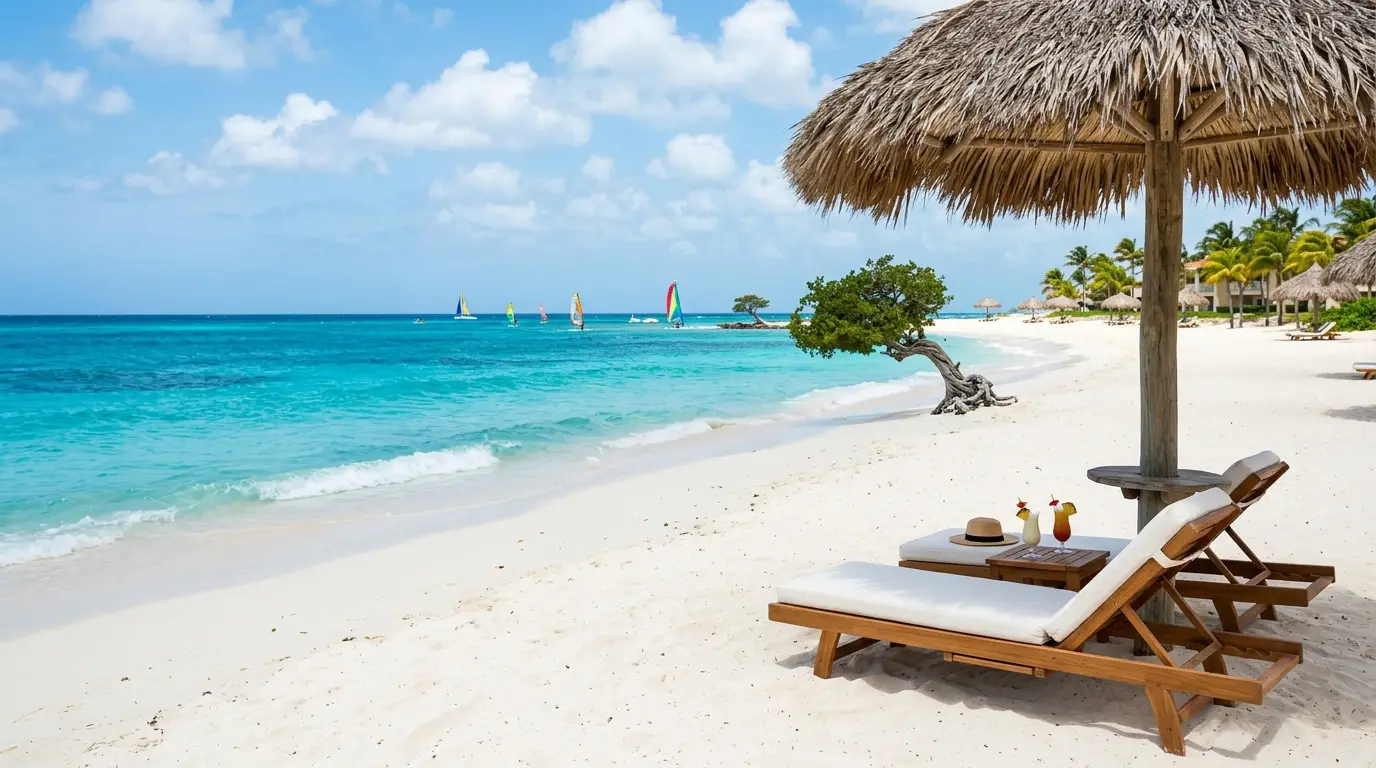
Eagle Beach is widely considered the best beach in Aruba, prized for its wide stretch of powdery white sand, calm turquoise water, and the iconic Fofoti trees. Baby Beach and Palm Beach both rank as strong contenders too, so the real question is not which beach wins on paper, but which one actually fits your trip.
Is Eagle Beach or Palm Beach Better?
Both beaches sit on Aruba‘s west coast just minutes apart, but they deliver completely different experiences.
| Feature | Eagle Beach | Palm Beach |
| Vibe | Quiet, spacious, laid back | Lively, social, resort scene |
| Length | 1.2 miles | Nearly 2 miles |
| Crowds | Rarely feels crowded | Busy, especially at sunset |
| Amenities | Nearby resorts, minimal beach vendors | Bars, restaurants, jet skis, parasailing right on the sand |
| Best for | Long walks, sunset photos, quieter swimming | Nightlife, water sports, people watching |
Eagle Beach wins for travelers who want to actually relax without stepping over sunbeds and vendors every few feet. Palm Beach wins if the whole point of the trip is beach bars, water sports, and being in the middle of the action after dark. A common mistake first timers make is booking a Palm Beach hotel expecting quiet mornings, when the area genuinely stays busy from sunrise walkers straight through to late night parties.
What Is the Best Beach in Aruba for Families?
Baby Beach is the best beach in Aruba for families, thanks to a shallow, protected lagoon that stays calm and safe for young children. The cove is enclosed by reefs, which keeps the water gentle nearly all year, and two restaurants sit right on the sand for an easy full day out without needing to leave. Getting there from the Palm Beach or Noord area takes around 45 minutes by car, so plan for a half day trip rather than a quick stop. Travelers consistently find that arriving by mid morning, ideally before 9am, means beating the crowds that build up fast once the day gets going.
What Is the Best Beach in Aruba for Snorkeling?
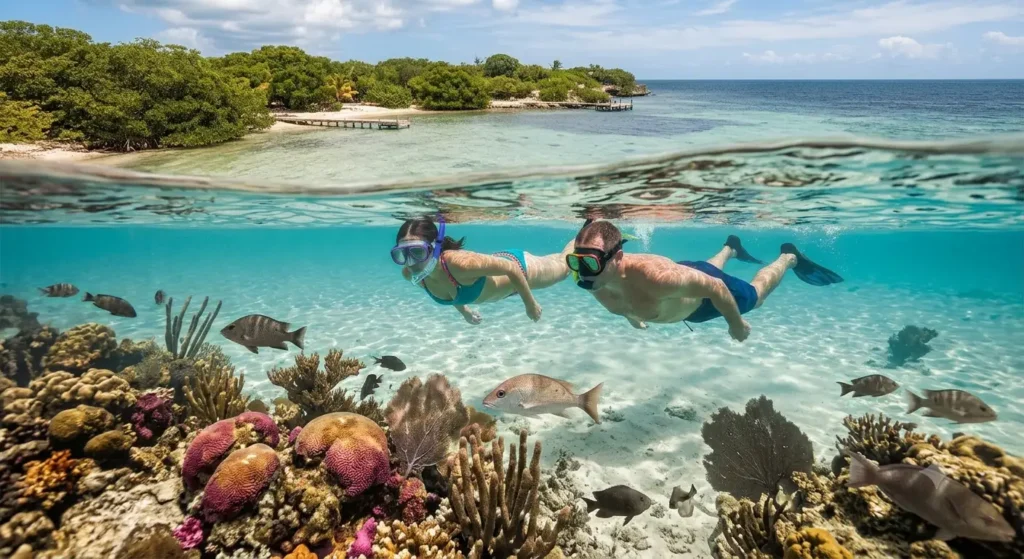
Several beaches compete for this title, and the right pick depends on what you want to see. Mangel Halto stands out for its mangrove lined shallows, wooden staircases leading straight into the water, and a strong current that makes solar powered sea scooters a popular add on for exploring further out. Baby Beach offers easier, waist deep snorkeling near the reef buoys where colorful fish gather, though the coral here is less impressive than at other spots. Malmok and Boca Catalina both draw regular snorkeling tour boats thanks to visibility and pockets of rocky coastline that create a private, sheltered feel. Tres Trapi rounds out the list as one of the more reliable places to spot sea turtles, though it requires swimming just beyond the roped off swimming area to actually find them.
What Is the Best Beach in Aruba for Kitesurfing and Windsurfing?
Fisherman Huts Beach, just past Palm Beach, is the go to spot for both windsurfing and kitesurfing, with rental huts right on the sand for anyone wanting lessons. Grapefield Beach and Boca Grandi on the island’s windier east side offer stronger, more consistent gusts favored by experienced kitesurfers, though swimming in the deeper sections there isn’t advised. Bachelor’s Beach, also known locally as Boca Tabla, sees constant waves that make it unsuitable for casual swimming but ideal for kitesurfing, surfing, and boogie boarding. None of these beaches offer much in the way of amenities, so packing your own shade, snacks, and water is essential before heading out.
What Is the Quietest Beach in Aruba?
Rodgers Beach, tucked just around the corner from the far busier Baby Beach, is one of the quietest spots on the island, largely because a nearby oil refinery view keeps it off most tourists’ radar. Arashi Beach, at the island’s northern tip, offers a similarly undeveloped, pristine feel with only one restaurant nearby and true tranquility toward its north end. Mangel Halto also stays relatively peaceful even during peak season, since its mangrove surroundings and rocky entry point naturally filter out casual beachgoers looking for an easy, sandy walk into the water.
How Do I Get to Renaissance Island to See the Flamingos?
Renaissance Island is a private island reachable only by boat transfer from the Renaissance Wind Creek Aruba Resort in Oranjestad, and it’s home to Aruba’s only two private beaches, the adults only Flamingo Beach and the family friendly Iguana Beach. Transfer boats typically run every 15 minutes starting around 7am, with the last boat back leaving in the early evening, and the crossing itself takes just a few minutes. Package pricing varies by what’s included, but a lunch package with boat transfers, beach access, and a meal typically runs a few hundred dollars for two people, so it’s worth confirming exact inclusions before booking. Flamingo feeding is allowed using pellets from an on site vending machine, though petting is not, and the birds tend to wander into the shade once temperatures climb past midday, so morning visits consistently offer the best photos before the light gets too harsh and the flamingos get too hot to stick around.
Is There a Beach in Aruba I Should Avoid?
Rodgers Beach earns a mixed recommendation here for the same reason it makes the quiet beach list. The sand is soft, the water is calm, and the crowds are minimal, but the view of the nearby San Nicolas oil refinery is a genuine eyesore that turns some visitors off entirely. If an industrial backdrop doesn’t bother you, Rodgers is a legitimately peaceful alternative to the crowded beaches nearby. If postcard views matter more than solitude, skip it in favor of Baby Beach just a few minutes away.
Do I Need a 4×4 to Reach Aruba’s Off the Beaten Path Beaches?
Yes, for beaches like Dos Playa, Boca Prins, and the Conchi Natural Pool inside Arikok National Park, a 4×4 or rented UTV is strongly recommended, since the roads leading there are unpaved and rough. Standard rental sedans generally aren’t built for these routes, and driving off marked roads or onto the sand dunes carries hefty fines. Travelers without a 4×4 can still reach the Conchi Natural Pool by parking at the national park entrance and taking a roughly 20 minute walk in, which is a reasonable workaround if renting an off road vehicle isn’t in the budget.
Do I Need Water Shoes in Aruba?
It depends entirely on which beach you’re visiting. Soft sand beaches like Eagle Beach, Palm Beach, and Divi Beach don’t require water shoes at all. Rockier entry points, including Mangel Halto, Grapefield Beach, Boca Grandi, and Bachelor’s Beach, benefit from water shoes since the walk into the water crosses uneven rock or coral rubble that can be uncomfortable or sharp underfoot. A good rule of thumb is that any beach described as a cove, mangrove area, or snorkeling spot with a rocky shoreline is a safer bet for water shoes than the wide, sandy resort beaches.
Are Aruba’s Beaches Free to Visit?
Most of Aruba’s beaches are completely free to access, since Aruban law guarantees public beach access even in front of resorts.
| Beach or Experience | Typical Cost |
| Public beach access (most beaches) | Free |
| Manchebo Beach day pass | Around $10 |
| Renaissance Island lunch package (2 people) | A few hundred dollars |
| Flamingo feed pellets | 50 cents per handful |
| Private cabana rental | Pricier, book well in advance |
The exceptions are private experiences like Renaissance Island, where flamingo access requires a hotel guest stay or a paid day package, and certain beach clubs that charge for a day pass covering loungers and facilities. Cabana rentals at popular beaches like Baby Beach add a cost on top of otherwise free beach access, and these tend to sell out fast during peak season.
What Is the Best Time of Year to Visit Aruba’s Beaches?
Aruba sits outside the Caribbean hurricane belt, so the weather stays warm and mostly dry nearly year round, which is a real advantage over destinations further north. December through April is the most popular window, with slightly cooler temperatures and minimal rainfall drawing the biggest crowds and highest hotel prices. May through November offers a genuinely great alternative for travelers who prioritize fewer crowds and better hotel rates over the marginal temperature difference, since Aruba’s trade winds keep things comfortable even in the warmer months.
Final Thoughts
There’s no single best beach in Aruba that works for everyone, which is honestly part of the appeal. Eagle Beach delivers the postcard calm, Baby Beach wins for families, and the island’s rockier coves reward anyone willing to pack water shoes and go snorkeling. Rent a car, plan around the December to April crowds if quiet matters more to you, and give yourself at least a few days to actually beach hop, since Aruba’s beaches genuinely change character as you move around the island.
FAQs
Is Aruba safe from hurricanes?
Yes, Aruba sits below the main hurricane belt, which is why the island rarely experiences direct hurricane impacts and can generally be visited safely any time of year.
What is Aruba’s iconic tree called?
The Divi Divi tree, also called the Fofoti tree at Eagle Beach specifically, is Aruba’s iconic symbol, known for its trunk bending in a southwesterly direction shaped by constant trade winds.
Can I feed the flamingos on Renaissance Island?
Yes, feeding is allowed using pellets purchased from an on site vending machine, though visitors are asked not to pet the birds.
What are the ABC Islands?
The ABC Islands refers to Aruba, Bonaire, and Curacao, three Dutch Caribbean islands that share Dutch nationality and a similar culture while each offering distinct beaches and landscapes.


