
OpenSkyNews Explained: What It Is, What It Covers, and How to Judge It Wisely
Why the Search Results for This Topic Feel Confusing
This topic has mixed intent. Some pages talk about an entertainment focused news site. Other pages talk about an aviation research network called OpenSky. A third group includes unrelated websites using “Open Sky News” as a tag or archive label. That mix creates confusion for readers and weak articles from publishers who do not separate the meanings.
This is the main problem users face. They want one answer, but they land on a page about flights, wilderness therapy, or a generic blog post. The best fix is simple. First identify the domain. Then check the page topic. Then confirm whether the page is about media coverage, aviation data, or a category archive.
What OpenSkyNews Appears to Be
Based on the Muck Rack listing, Open Sky News is presented as an Online/Digital media outlet and marked Verified there. The listing also shows article entries, dates, and bylines, which helps users understand the site as a publishing outlet rather than a random one page website.
The same listing describes coverage around trending topics such as tech, gadgets, entertainment, events, sports, and education. It also shows recent article examples and author names, including Megha Singh Chauhan and Rahis Saifi, which signals an active publication pattern.
That matters because many people search this term to answer one question first. Is this a real content site or just a name floating around the web. The available listing data supports the idea that it functions as a publishing site, but readers should still verify individual claims inside each article.
What Kind of Content Readers Can Expect
The strongest visible pattern is entertainment heavy content. The Muck Rack page surfaces stories tied to celebrities, movies, and franchises. It also shows release date style articles and trend driven topics that attract fast clicks.
You may also see tech or gadget related coverage in descriptions tied to the outlet. That wider topic spread can help casual readers who want quick updates across categories. It can also create a trust challenge because broad sites often mix light content with higher stakes claims.
This creates another user problem. People read all categories with the same trust level. They should not. A movie rumor and a health or legal claim need different standards. The practical solution is to judge the article by topic risk. The higher the risk, the stronger your verification should be.
The Biggest Mistake Readers Make With This Topic
Many peoples assume every “Open Sky” result is the same brand. It is not. This mistake leads to wrong assumptions and poor source choices.
One search result may point to OpenSky Network, which is an aviation project. Its homepage clearly describes Open Air Traffic Data for Research and lists technologies like ADS B, Mode S, ADS C, FLARM, and VHF data. That is a very different topic and audience.
Another result may point to Open Sky Wilderness, where “Open Sky News” appears as a tag page inside a wilderness therapy website. The page shows Tag: Open Sky News, category lists, and archive links. It is not the same thing as a news publisher named OpenSkyNews.
How to Tell Which “Open Sky” Result You Actually Need
If the page domain is about aviation or flight maps, you are likely on the OpenSky Network side. If the page sits inside a wilderness therapy site and shows a tag archive, you are on a category page. If the page is a media listing or a news article page, you are likely in the publisher track.
Next, scan the page language. Aviation pages mention aircraft data and tracking terms. Wilderness pages mention programs, admissions, or therapy. Entertainment news pages mention celebrities, movies, game releases, or trending topics.
Then check the page structure. Archive pages look like collections. News articles have headlines, dates, and bylines. Research platforms have product or data sections, tools, or APIs.
Is OpenSkyNews Legit or Trustworthy
Check the basics first
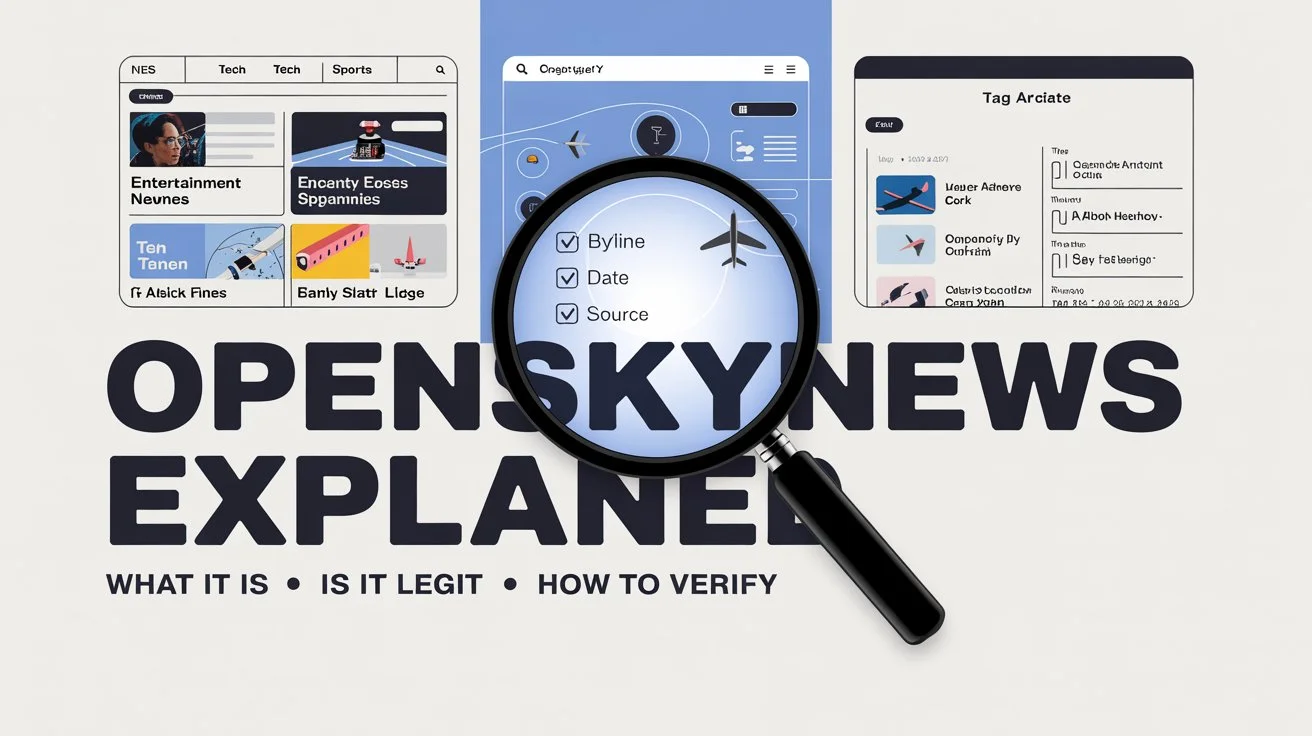
Look for an author name, a publication date, and a clear topic focus. The Muck Rack listing shows bylines and dates for many entries, which is a useful starting signal. It is not final proof of accuracy, but it is better than anonymous content with no dates.
Check source quality inside the article
Ask one question. Does the article cite a primary source, a known publication, or an official statement. If a piece makes a strong claim without naming a source, slow down.
This step solves a common user problem. People trust headline confidence. They should trust evidence instead.
Check if the claim is time sensitive
Trending topics move fast. A post can be accurate on day one and outdated later. Always check the date before sharing. This matters even more for release dates, celebrity news, and breaking updates.
Cross check in two minutes
You do not need a full audit. Use a quick routine.
- Read the headline and first paragraph
- Find the source named in the article
- Search the same claim on one established outlet
- Compare dates and wording
- Share only after the claim matches
This small habit protects your credibility too.
How to Use OpenSkyNews Smartly Without Wasting Time
Use it as a discovery layer. It can help you spot what people are talking about now. This is useful for entertainment fans, pop culture readers, and casual trend watchers.
Then switch modes when the topic matters more. For health, money, legal, or safety topics, move to primary sources and established reporting. This protects you from common web noise.
Also separate content types in your mind. A release update, a rumor post, and a sourced report are not the same thing. Many readers treat them the same and then blame the entire site. A better habit is to rate each article by evidence, not just by website name.
OpenSkyNews vs OpenSky Network vs Open Sky Wilderness Tag Pages
These names look similar, but they serve different readers.
OpenSkyNews refers to a media publishing context around news and trend content. The Muck Rack listing supports that view with outlet labeling, bylines, and article examples.
OpenSky Network is an aviation data platform for research. Its homepage highlights flight data, maps, datasets, and research tools.
Open Sky Wilderness is a separate organization. Its “Open Sky News” page is a tag archive inside that site, not the same brand as a news publisher.
FAQs
What is OpenSkyNews
It appears to be a digital media publishing site with trend focused coverage across entertainment and other topics. Third party listings show outlet style signals such as bylines and dates.
Is OpenSkyNews a real website
Search results and third party pages indicate that it is a real website people can access, and Muck Rack lists it as a media outlet. That does not remove the need to verify individual articles.
Is OpenSkyNews the same as OpenSky Network
No. OpenSky Network is an aviation data and research platform focused on air traffic data. It is a different entity and use case.
Why do I see “Open Sky News” on other websites
Some sites use that phrase as a tag or archive label. One example is the Open Sky Wilderness tag page. That does not mean all pages with that phrase are the same source.
Can I trust every article on the site
No source deserves blind trust. Check the byline, date, and evidence in each article. Cross check important claims before sharing.
What is the fastest way to verify a story
Check the date, find the original source named in the article, and compare the claim with one established outlet.