The Complete Guide to Protein Shake Recipes
Build Muscle, Lose Weight, and Actually Enjoy Every Sip
Most people searching for protein shake recipes want two things: something that tastes good and something that actually works. The problem is most recipe articles hand you a list of shakes with no context on when to drink them, which protein type fits your goal, or how to fix a bad-tasting shake. This guide covers the full picture so you can build the right shake for your specific goal, whether that is weight loss, muscle gain, a quick high-protein breakfast, or a solid post-workout recovery drink.
What Makes a Great Protein Shake Recipe
A well-built protein shake has four core components: a strong protein source, a creamy liquid base, a natural flavor, and at least one ingredient that promotes fullness. Without all four, you end up with something that either tastes chalky or leaves you hungry within 30 minutes.
The protein source carries most of the nutritional load. Whey protein digests quickly and performs well after a workout. Casein protein digests slowly, making it a better choice for meal replacements or overnight use. Pea protein and other plant-based protein options work well for anyone avoiding dairy. Beyond powder, whole foods like Greek yogurt, cottage cheese, pasteurized egg whites, and nut butters all deliver meaningful protein without any powder at all.
The liquid base affects texture and calories more than most people expect. Unsweetened almond milk keeps calories low with a light, neutral taste. Oat milk adds natural sweetness and a creamier body. Coconut milk works well in tropical blends. Plain water is functional but produces a noticeably thin shake. Soy milk has the highest protein content of all plant milks, at around 8 grams per cup, which is worth noting if you want protein from every ingredient.
Pick Your Shake by Goal
The shake that helps someone lose weight is very different from the one that supports someone building muscle or trying to replace a full meal. Start with your goal, then build from there.
| Goal | Best Shake Type | Key Protein Source | Target Protein | Approx. Calories |
| Weight Loss | Strawberry cheesecake shake | Greek yogurt + whey protein | 25 to 30g | 250 to 350 |
| Muscle Gain | Chocolate peanut butter shake | Whey protein + cottage cheese | 35 to 40g | 400 to 500 |
| Meal Replacement | Oat and berry shake | Casein protein + oats | 30 to 35g | 350 to 450 |
| Post-Workout | Triple berry recovery shake | Whey protein + chia seeds | 25 to 30g | 280 to 350 |
| Morning Energy | Protein coffee (proffee) | Collagen + vanilla protein | 20 to 25g | 200 to 300 |
| Dairy-Free | Tropical coconut shake | Pea protein + coconut milk | 22 to 28g | 280 to 360 |
Protein Shakes for Weight Loss
For weight loss, you want high protein, moderate fiber, and low added sugar. Protein reduces hunger by slowing digestion and keeping blood sugar stable after a meal. The best options use Greek yogurt or whey protein as the base, frozen berries for natural sweetness, and chia seeds or flaxseed for extra fiber. Aim for 25 to 30 grams of protein and keep total calories between 250 and 350.
A strawberry cheesecake shake works particularly well here. Blend one cup of frozen strawberries, half a cup of plain Greek yogurt, one scoop of vanilla whey protein, and three-quarters of a cup of unsweetened almond milk. That combination delivers roughly 27 grams of protein, natural sweetness from the berries, and a thick, satisfying texture without loading up on calories.
Protein Shakes for Muscle Gain
For muscle gain, you need more total calories and a higher amino acid load to support muscle protein synthesis after resistance training. Whey protein remains the most studied and effective option here. Pairing it with frozen banana adds fast carbohydrates that replenish glycogen stores and improve nutrient delivery to working muscles.
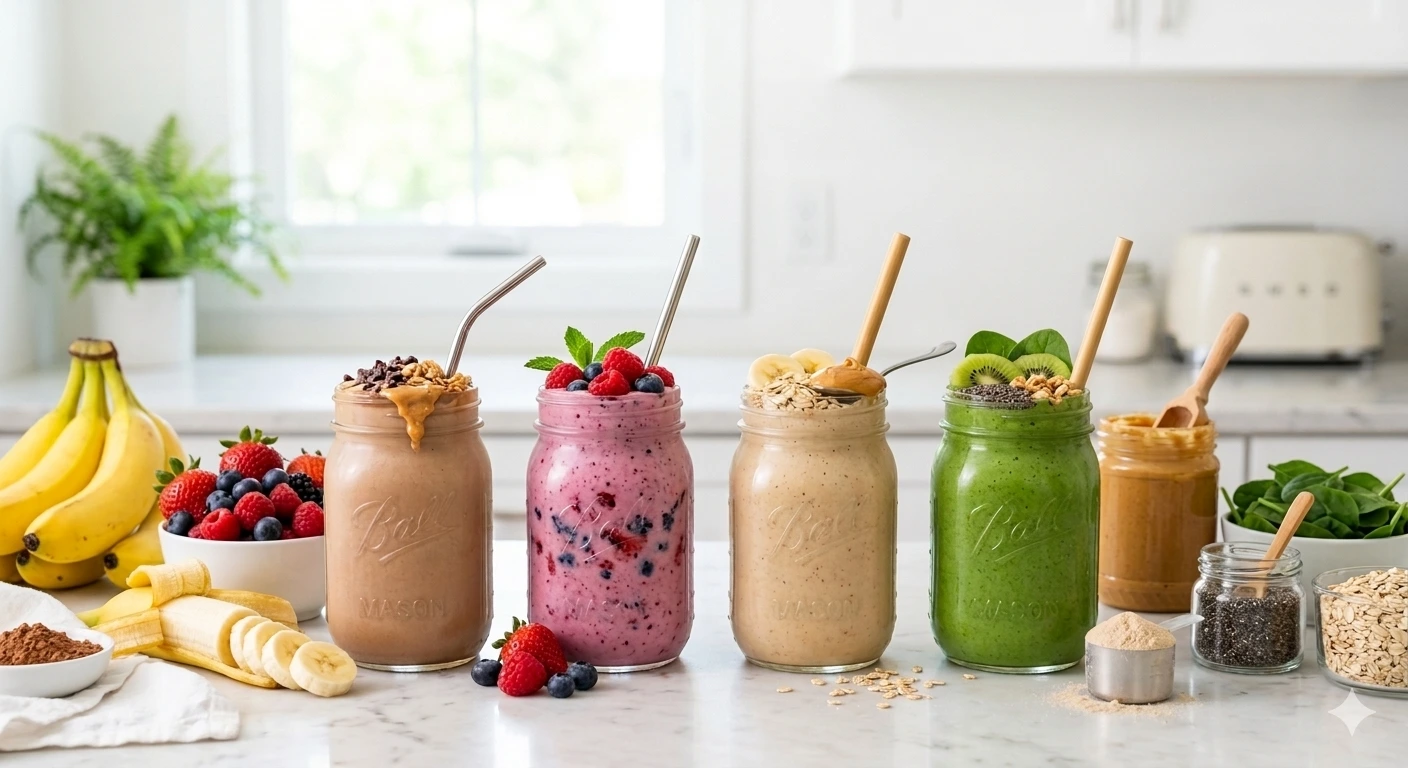
A chocolate peanut butter muscle shake is one of the most practical combinations available. Blend one scoop chocolate protein powder, one tablespoon peanut butter, one frozen banana, half a cup of Greek yogurt, and one cup of oat milk. You get approximately 38 grams of protein and enough carbohydrates to fuel a solid muscle repair and recovery window after training.
Protein Shakes as a Meal Replacement
A meal replacement shake needs more than just protein. It needs fiber, healthy fats, and enough calories to hold you until your next meal. Rolled oats add slow-digesting carbohydrates. Avocado or almond butter contribute healthy fats that slow digestion. Casein protein or cottage cheese provides a longer-lasting protein release that keeps hunger at bay for several hours.
One cup of oat milk, half a cup of low-fat cottage cheese, one scoop of vanilla protein, two tablespoons of rolled oats, and a handful of frozen blueberries creates a balanced shake that delivers around 32 grams of protein with solid macronutrient coverage across protein, carbohydrates, and fat.
Post-Workout Recovery Shakes
The goal after training is to deliver amino acids quickly and replenish glycogen stores. Whey protein absorbs faster than other types, making it the best choice in this window. Pair it with a fast-digesting carbohydrate like banana or pineapple to speed up nutrient delivery to muscle tissue.
Adding chia seeds or hemp seeds provides omega-3 fatty acids with natural anti-inflammatory properties. These support recovery from training-related inflammation and may reduce DOMS (delayed onset muscle soreness) after hard sessions. The addition also boosts the shake’s fiber content, which improves gut health over time.
Protein Coffee Shakes
Protein coffee, also called proffee, is one of the most practical trends in nutrition right now. It saves time by combining your morning coffee and protein intake in one glass. Blend cold brew or chilled espresso with one scoop of vanilla protein powder or collagen protein, a frozen banana, and one cup of almond milk. The result tastes like a creamy iced latte and delivers around 22 grams of protein with a natural caffeine boost.
Collagen protein dissolves completely in cold liquid without changing the texture, which makes it especially suited for coffee-based shakes. It also supports skin health, hair health, and joint health, though it should be paired with another complete protein source if muscle building is the goal.
Protein Shake Recipes Without Protein Powder
Many people want a high-protein shake without using powder. This is completely achievable using whole food ingredients, and the results often taste better than powder-based versions.
- Greek yogurt gives 15 to 17 grams of protein per cup and creates a thick, creamy texture.
- Low-fat cottage cheese adds 13 grams per half cup and blends smoothly when combined with frozen fruit.
- Hemp seeds contribute 10 grams of complete protein per three tablespoons with a mild, neutral flavor.
- Pasteurized egg whites add about 11 grams of protein per half cup with no noticeable taste impact.
- Nut butters deliver 7 to 8 grams of protein per two tablespoons along with healthy fats that slow digestion.
A powder-free peanut butter banana shake is one of the most reliable combinations. Blend one cup unsweetened almond milk, three-quarters of a cup plain Greek yogurt, two tablespoons peanut butter, one frozen banana, and three tablespoons hemp seeds. You get about 28 grams of protein from real, whole ingredients with zero powder.
Protein Shake Recipes for Special Diets
Vegan and Dairy-Free Protein Shakes
Plant-based protein shakes have improved significantly in quality and variety. Pea protein is now the most widely used vegan protein powder because it carries a complete amino acid profile and blends well without grittiness. Pair it with oat milk or coconut milk as the base, frozen mango or berries for natural sweetness, and chia seeds or flaxseed for fiber and omega-3s.
One practical challenge with pea protein is its slightly earthy flavor. Frozen banana or pineapple masks it very effectively. A pinch of cinnamon or a splash of vanilla extract also helps lift the flavor profile considerably.
Keto and Low-Carb Protein Shakes
A keto protein shake keeps carbohydrates low by using unsweetened almond milk or coconut milk as the base, avoiding high-sugar fruits, and adding fat from avocado, almond butter, or coconut oil. Whey protein or collagen protein works well here. Unsweetened cocoa powder adds a rich chocolate flavor without adding meaningful carbohydrates.
Frozen zucchini is an underrated addition to low-carb shakes. It adds volume and a naturally creamy texture with almost no carbohydrates or flavor impact, making it a useful tool for anyone trying to thicken a shake without adding sugar.
Protein Shakes Without Banana
Banana shows up in nearly every shake recipe, but not everyone wants it. You can achieve the same creamy texture using frozen avocado, silken tofu, Greek yogurt, or cottage cheese. These create thick, smooth results without the sweetness or additional carbohydrate load of banana.
For natural sweetness without banana, frozen mango, pineapple chunks, or a small amount of medjool dates work very well as flavor substitutes.
Choosing the Right Protein Powder
Not all protein powders perform the same way in shakes. Understanding the differences helps you pick the right one for your goal and avoid common texture or taste problems.
| Protein Type | Best Use | Texture in Shake | Dietary Note |
| Whey Protein | Post-workout, general use | Smooth and creamy | Contains lactose |
| Casein Protein | Meal replacement, overnight | Very thick, dense | Contains dairy |
| Pea Protein | Vegan, dairy-free diets | Medium, slightly gritty | Earthy flavor, complete amino profile |
| Collagen Protein | Coffee shakes, thin blends | Very thin, dissolves cleanly | Not a complete protein |
| Plant Protein Blend | General vegan use | Medium, varies by brand | Check for added sugars |
When checking labels, look for powders with minimal ingredients. A short ingredients list usually signals better quality and less artificial sweetener content, which is one of the biggest contributors to the chalky aftertaste that many people find off-putting.
Nutrition-Boosting Add-Ins Worth Using
These are the ingredients that turn a basic protein shake into something genuinely useful beyond its protein count.
Chia Seeds
Three tablespoons of chia seeds add about 5 grams of protein, 10 grams of fiber, and a solid dose of omega-3 fatty acids. They also absorb liquid and thicken the shake naturally over a few minutes, which is helpful if you prefer a denser texture.
Hemp Seeds
Hemp seeds have a mild, slightly nutty flavor and contribute 10 grams of protein per three tablespoons. Unlike most plant-based protein sources, they contain all nine essential amino acids, qualifying them as a complete protein. They blend invisibly into most shake combinations.
Flaxseed
Ground flaxseed adds fiber and omega-3 fatty acids and blends undetected into any shake. It works particularly well in chocolate or peanut butter combinations where the stronger flavors completely mask its mild, earthy taste.
Rolled Oats
Rolled oats thicken a shake and add slow-digesting carbohydrates that stabilize energy levels. They work best in breakfast protein shakes where staying full for several hours is the priority. Use two to four tablespoons rather than a full cup to keep the consistency drinkable.
Greens and Superfoods
A handful of fresh spinach or kale blends invisibly into chocolate or berry shakes and adds vitamins, minerals, and antioxidants. Greens powder is a convenient alternative that packs a broad nutrient profile into one scoop. Turmeric, ginger, and cinnamon each add flavor and carry natural anti-inflammatory properties worth including regularly.
Common Protein Shake Problems and How to Fix Them
Most shake problems come down to ingredient choice or blending technique. Here is a practical reference for the issues that come up most often.
| Common Problem | Practical Fix |
| Chalky or powdery taste | Add Greek yogurt or cottage cheese. Switch to a cleaner powder with fewer ingredients. |
| Shake is too thin | Use frozen fruit instead of fresh. Add rolled oats, casein protein, or half an avocado. |
| Not filling enough | Add chia seeds, almond butter, or rolled oats to increase fiber and healthy fat content. |
| Shake separates | Blend on high for 45 to 60 seconds. Add a tablespoon of Greek yogurt or chia seeds. |
| Powder flavor is unpleasant | Switch to unflavored protein. Use Greek yogurt, hemp seeds, or nut butters as alternatives. |
| Shake causes bloating | Switch from whey to pea or collagen protein if you have lactose sensitivity. |
When to Drink a Protein Shake
Timing depends on your goal, and it matters more than most recipe articles acknowledge.
For post-workout recovery, drink your shake within one to two hours after training. This is when your muscles are most receptive to amino acids and when replenishing glycogen stores has the strongest impact on muscle repair and growth.
For weight loss, using a protein shake as a high-protein breakfast or mid-afternoon snack reduces hunger before meals and lowers the chance of overeating later. Protein triggers satiety hormones that keep appetite in check for several hours.
For muscle gain, total daily protein intake matters more than exact timing. Distributing protein across three to four meals or shakes throughout the day produces the most consistent results over time.
For general health, one protein shake a day is safe and practical for most adults, provided it supports your overall nutrition plan and does not replace whole meals as a regular habit.
Choosing the Right Blender
A good blender makes a real difference. A poor one leaves protein powder in clumps and frozen fruit in chunks, which ruins texture even when the ingredients are excellent.
High-end blenders in the $400 to $500 range produce consistently smooth results and handle dense ingredients like frozen fruit, rolled oats, and ice with ease. They are worth the investment if you make shakes daily. Mid-range options in the $100 to $150 range handle daily use well and often include personal blending cups that speed up clean-up. Budget blenders around $50 to $80 work fine for simple shakes. They struggle with dense add-ins like whole oats, hard frozen chunks, or large ice cubes.
Regardless of budget, always add the liquid to the blender first, then soft ingredients, then frozen items and ice on top. This order protects the motor and helps everything blend evenly from the start.
Frequently Asked Questions
What is the best protein shake recipe for weight loss?
The most effective option combines Greek yogurt or whey protein with frozen berries and unsweetened almond milk. This delivers 25 to 30 grams of protein with low added sugar, and keeps total calories between 250 and 350 to support a calorie deficit without sacrificing nutrition.
Can I make a protein shake without protein powder?
Yes. Greek yogurt, cottage cheese, hemp seeds, pasteurized egg whites, and nut butters all deliver 7 to 17 grams of protein per serving. Combine two or three of these whole food sources to hit 25 to 30 grams total without any powder.
Is it healthy to drink a protein shake every day?
For most people, yes. One protein shake daily is safe and beneficial as long as it supports your daily protein intake goals, fits within your overall calorie plan, and you are still eating whole foods regularly.
What liquid is best to use in a protein shake?
Unsweetened almond milk keeps calories lowest. Oat milk adds creaminess and natural sweetness. Soy milk contributes the most protein of any plant-based option at around 8 grams per cup. Choose based on your calorie target and flavor preference.
Should I drink a protein shake before or after a workout?
Both options have value. Drinking a shake before training supports energy levels and reduces muscle breakdown during exercise. Drinking one after supports muscle repair and glycogen replenishment. For most people, the post-workout window produces the most noticeable recovery benefit.
Why does my protein shake taste chalky?
This almost always comes down to the quality of the protein powder. Adding frozen fruit, Greek yogurt, or cottage cheese improves both texture and taste. Switching to a cleaner powder with fewer artificial ingredients usually solves the problem quickly.
What can I add to a protein shake to make it thicker?
Frozen banana, rolled oats, casein protein powder, cottage cheese, avocado, or chia seeds all add meaningful thickness. Choose one or two depending on your calorie budget and the flavor direction of your shake.
What is the best protein shake for weight gain?
For weight gain, increase caloric density by adding whole milk or oat milk, a full banana, two tablespoons of nut butter, and half an avocado alongside your whey protein or casein protein. This type of shake can reach 500 to 600 calories while still delivering 35 to 40 grams of protein.
Conclusion
A well-built protein shake can support weight loss, muscle gain, post-workout recovery, or a fast high-protein breakfast depending on how you construct it. The key is matching your ingredients to your goal, choosing a protein source that works for your digestive system, and keeping the recipe simple enough to make consistently. Use the goal table and problem-solving guide in this article to find your ideal combination. Fix any texture or taste issues with whole food add-ins rather than more powder, and build the habit of drinking one good shake each day before worrying about timing it perfectly.