
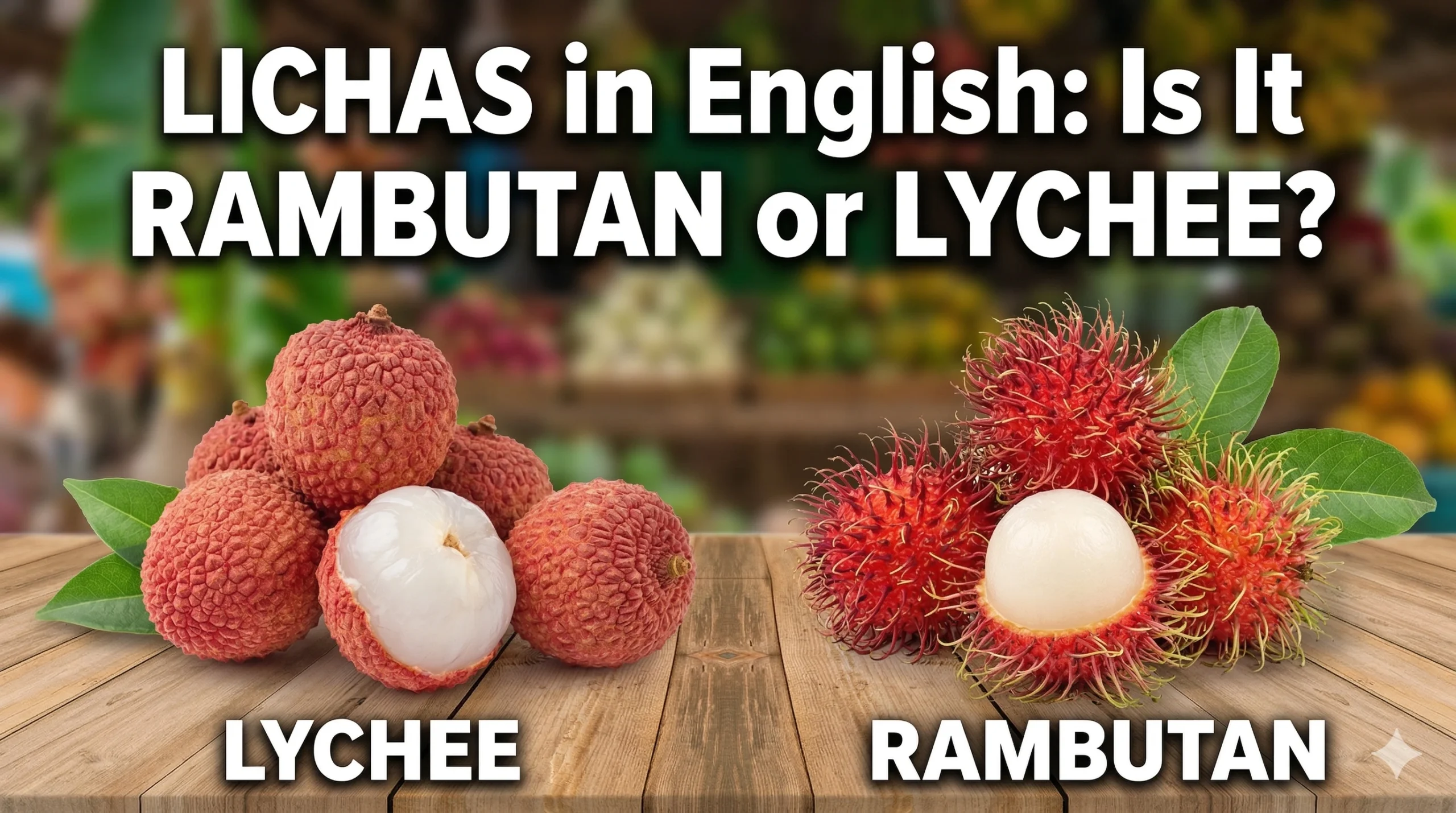
Lichas in English: Is It Rambutan or Lychee?
If you searched lichas in english, you were probably hoping for one clear answer. Instead, you likely found two different fruits. That is where most people get stuck. In much of Central America, lichas usually means rambutan in English. People often confuse it with lychee because the fruits are related, look somewhat alike, and belong to the same plant family.
That confusion is not your fault. The word changes by region, and many search results mix local names with standard English names. Some pages talk about lychee, others talk about rambutan, and a few do not explain the regional difference at all, which is common with food words that shift by language and place, much like terms discussed in basil in spanish food . The clean answer is this: when people in places like Guatemala or Honduras say lichas, they are usually talking about rambutan.
What does lichas mean in English?
The best English match for lichas is rambutan. That is the practical answer most readers need. It is the name you can use in English when talking about the fruit at a market, in a store, or in a recipe. A Spanish dictionary source also translates licha and lichas as rambutan, which makes this the strongest direct answer for the query.
The confusion starts because some people hear licha and think of litchi or lychee. The names sound close, and the fruits are part of the same broader fruit group. Still, they are not the same fruit. Lychee is a separate fruit with its own English name. So if your goal is to translate the common regional word lichas, the better answer is rambutan, not lychee.
Why people mix up rambutan and lychee
At first glance, the mix-up makes sense. Both fruits are round, both have pale flesh inside, and both hold a single seed in the center. They also belong to the soapberry family, which helps explain why they seem related. When someone sees the fruit once and hears a local name later, it is easy to match it to the wrong English word.
The outer skin is the easiest clue. Rambutan has a red or pink shell covered with soft hair-like spines. Lychee has a rough shell, but it does not have those soft spines. That one detail clears up most of the confusion. If the fruit looks hairy or spiny on the outside, it is much more likely to be rambutan.
This is where many articles go wrong. They treat the fruits as if they are interchangeable. They are not. hey are related, but they are still different fruits with different names, different shells, and slightly different eating experiences, which is the same kind of confusion readers often have when asking simple classification questions like are tomatoes a fruit.
A good article should make that clear early, because that is what the user actually wants to know.
What rambutan looks like
Once you know what to look for, rambutan is easy to spot. The fruit is usually bright red, deep pink, or red-orange. The outside is covered in soft spines that look a bit like hair. That is why it stands out so much in markets. People often describe it as one of the strangest-looking tropical fruits the first time they see it.
Inside the shell, the flesh is usually white or slightly translucent. It is juicy, soft, and wrapped around a seed. The flesh is the part you eat. The seed stays in the center and should not be eaten casually like the fruit itself. This simple structure is another reason people compare it with lychee, but the shell is still the fastest way to tell them apart.
If you are standing in a market and trying to identify the fruit quickly, use this rule. Hairy shell means rambutan. Rough shell without hairs means lychee. Smooth brown shell means you may be looking at longan, which is another related fruit that often gets pulled into the same conversation.
What rambutan tastes like
People usually describe rambutan as sweet, juicy, and lightly floral. Some fruit tastes a little richer, while some has a mild tart note. The flavor can change based on ripeness and freshness, but it is usually mild enough for most people to enjoy right away. It is not a harsh fruit. It is refreshing and easy to eat when ripe.
This matters because many people search lichas in english after tasting the fruit, not just after seeing it. They remember the look, the soft white flesh, and the sweet juice, but they do not know the English name. That is why your article should not only translate the word. It should also help the reader confirm they are thinking of the right fruit. Taste, shell, and texture all help with that.
Where the word lichas is commonly used
The word lichas is tied to regional use, especially in parts of Central America. Travel and language sources connect it with places like Guatemala and Honduras, where local speakers may use lichas for the fruit that English speakers usually call rambutan. That regional detail is important because it explains why some people get different answers online.
This is one of the biggest user problems with the topic. Search engines often show mixed results because the query is not only about fruit. It is also about language, place, and local naming. The same fruit may appear under one name in a local market, another in a recipe, and another in a grocery store written in English. That is why a clean translation article does better than a vague fruit post.
If you are writing for search intent, do not skip this section. It is the part that helps the reader understand why the word they heard from family, travel, or a local vendor does not match every English search result they see. That is the real gap most competitor pages leave open.
Rambutan vs lychee: what is the real difference?
The first difference is the shell. Rambutan has soft spines. Lychee does not. That is the fastest answer. If your goal is visual identification, stop there and you will already be ahead of most search results.
The second difference is the name. Lychee is the English name for one fruit. Rambutan is the English name for another. They are related, but they are not translation swaps for each other. So when someone asks what lichas means in English, the better answer is not “lychee” unless the speaker clearly means a different local fruit in a different context. For the Central American usage tied to your competitor set, rambutan is the stronger and more accurate answer.
The third difference is the way people describe them in everyday talk. Many people use lychee as a familiar comparison because it is better known in English-language food content. That can help readers get a quick picture, but it can also create confusion. A better approach is to say that rambutan is a related fruit that looks more dramatic because of its spiny shell. That gives clarity without mixing up the names.
If your readers are trying to compare the two at a store, tell them this. Rambutan looks wilder on the outside. Lychee looks rough but cleaner. Both have pale flesh inside, both are tropical, and both have a seed, but the shells give the answer away.
How to eat lichas or rambutan
Once the fruit is ripe, eating it is simple. Press or cut the shell, open it, and pull out the white flesh. Eat the flesh and avoid biting hard into the seed. Some people chill the fruit first, which makes it even better in warm weather.
This section matters because users often search the translation only after buying the fruit. They want to confirm the name, but they also want to know what to do next. A good article should not stop at the dictionary answer. It should help with the next step too. That is how you make the piece more useful than competitors that only define the word and move on.
If you want to make the article stronger, explain what not to do as well. Do not confuse the seed with the edible part. Do not judge the fruit only by the strange shell. Once opened, it is simple, sweet, and easy to enjoy. Those small details help nervous first-time buyers.
How to ask for lichas in English at a market
This is a small section, but it solves a real problem. If you walk into an English-speaking store or talk to a seller who labels fruit in English, ask for rambutan. That is the name most likely to get you the right fruit. If needed, describe it as the red tropical fruit with soft spines and white flesh inside.
This is useful because many readers do not need a long botany lesson. They just need the right word. They may have heard lichas from family, from a street market, or while traveling, and now they want the English term they can actually use. That is why this article should stay practical. Translation without real-life use is only half the job.
Is licha ever used for lychee?
This is where you need careful wording. Some people do connect the word with lychee, especially because litchi and licha sound close and because search engines often mix related fruits together. That explains the confusion, but it does not make the translation cleaner. For the regional use tied to Central America, rambutan is still the better English answer.
So the best way to handle the topic is not to pretend there is zero confusion. There is confusion. The smart move is to explain it clearly. Tell readers that lychee is a related fruit, not the best direct English match for lichas in this regional context. That gives them both accuracy and context.
Quick answers readers usually need
Here are the questions that usually sit behind this search:
- Is lichas the same as rambutan
- Is lichas the same as lychee
- What does the fruit look like
- How do I say it in English at a store
- How do I tell rambutan from lychee
- What does rambutan taste like
A strong article should answer all of these inside the flow, not just in a short FAQ. That is how you match both search intent and reader need.
Final answer
The clearest answer is simple. Lichas in English usually means rambutan, especially in Central American use. People often confuse it with lychee, but they are not the same fruit. If the fruit has a red shell with soft spines and white flesh inside, you are almost certainly looking at rambutan.
That is the answer most users want first. Everything else helps explain why the confusion exists. Once your article makes that clear, the rest becomes much easier. The reader can identify the fruit, use the right English name, compare it with lychee, and feel sure they have the right answer.