

How to Tell if an Egg Is Still Good
People ask how to tell if an egg is still good because “old” and “unsafe” are not the same thing. An egg can be older and still okay. Another egg can be risky if it was stored wrong. The key is to check safety first, then freshness.
Freshness affects texture and cooking results. Safety is about spoilage signs and foodborne illness risk. Use a quick order of checks and you will waste fewer eggs.
60 Second Egg Check
Start here when you are in a rush.
1) Check the shell
Look for cracks, leaks, or dried egg on the shell. If you see any, toss it. Cracks let bacteria enter easier.
Touch the shell lightly. A slimy shell is a bad sign. A powdery film can mean mold. Throw it away.
2) Crack into a separate small bowl
Never crack eggs straight into batter. One bad egg can ruin the whole bowl.
Crack it into a small bowl first. Smell right away. A strong sulfur or rotten smell means it is spoiled. Discard it.
3) Look at the egg inside
Watery whites can mean the egg is older. That alone is not danger.
Discard the egg if you see odd colors. Pink, green, or a strange shimmer are warning signs. Toss it if anything looks unusual.
If the egg smells normal and looks normal, it is usually fine to cook. If you still feel unsure, do the water test.
Freshness vs Safety
Freshness is quality. It affects how eggs perform in recipes.
Safety is about spoilage and contamination risk. Storage and handling decide this more than age.
If you feel sick later and cannot tell what caused it, read Food poisoning vs stomach bug to spot the difference fast.
Carton Dates Without Confusion
Egg cartons use different date labels. You might see sell by, best by, or expiration. These dates guide quality and store rotation. They do not act like an on off switch.
If eggs stayed cold in your fridge, they often stay usable after the printed date. If eggs sat warm for hours, the date is less helpful.
Use dates as a clue. Then confirm with your senses.
The Water Test and What It Means
This test is helpful when you do not know the egg’s age. It is also useful for mixed cartons.
How to do it
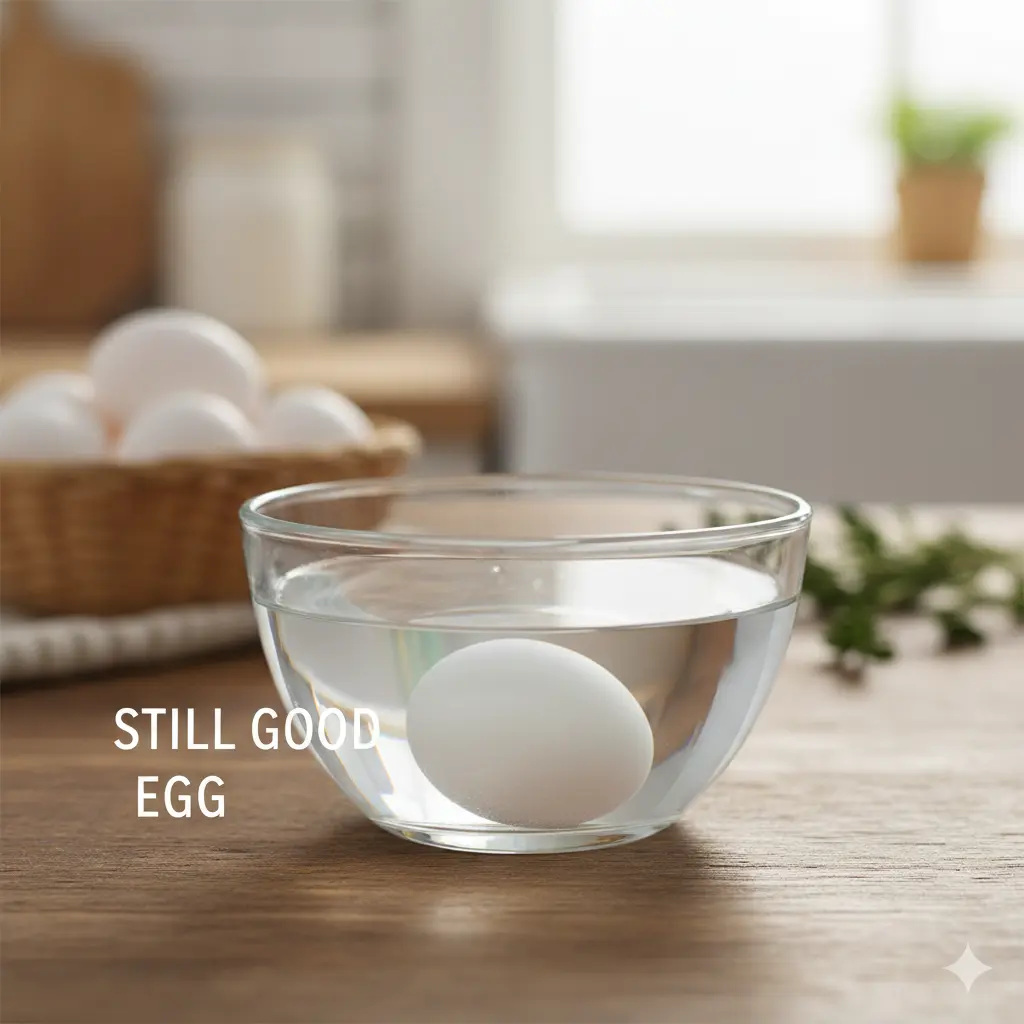
Fill a bowl with cold water. Gently place the egg in the water.
How to read the result
- Sinks and lies flat means very fresh.
- Sinks but stands upright means older but often usable.
- Floats means old and poor quality.
Why eggs float
Eggshells are porous. Over time, air moves in and moisture moves out. The air pocket inside grows. That extra air makes the egg float.
If it floats, should you toss it
Treat floaters with caution. Crack it into a bowl and smell it. Look closely for strange colors or odd texture.
If it smells off or looks off, discard it. If it smells normal and looks normal, only use it in fully cooked dishes. Skip it for runny yolks or raw egg recipes.
After Cracking: What to Look For
This is the part that protects your recipe and your stomach. Baking is where one bad egg can wreck the whole bowl, so I crack into a small bowl first, then I prep the rest like How to soften brown sugar fast without ruining it if I am short on time.
Egg white texture
Fresh whites look thick and hold together more. Older whites spread and look thinner. That is normal aging.
What matters more is abnormal signs. Cloudy whites are not a problem. Strange colors are a problem.
Yolk shape
A fresh yolk sits higher and looks round. An older yolk spreads faster. That is expected.
Discard the egg if the yolk looks oddly discolored. Toss it if you see anything that seems wrong.
The separate bowl habit
This habit saves time and food. Crack one egg at a time into a small bowl. Then pour it into the main bowl. You will never ruin a whole batch again.
The Smell Test: The Fastest Answer
A truly bad egg smells obvious. The smell hits fast after cracking. It is sharp and unpleasant.
If you smell rotten or sulfur odor, discard it. Wash the bowl and your hands.
Sometimes eggs pick up mild fridge odors. That can smell faint and “cold.” Rotten smell is stronger and unmistakable. Trust your nose when it is clear.
When you feel uncertain, do not gamble. Eggs cost less than a ruined meal.
Shell Clues Before You Crack
Shell checks help you avoid mess and risk.
Discard eggs with:
- Cracks or leaks
- Slimy shells
- Powdery shells
- Shells with dried egg stuck on
If the shell is dirty, avoid washing it right before storage. Water can push bacteria through pores. If you must rinse, do it right before cooking. Dry it fully.
Extra Tests That Can Help
These are optional. They help when you want more confidence.
Flashlight test
Hold the egg up to a bright light in a dim room. The wide end shows the air pocket. A small air pocket suggests a fresher egg. A larger one suggests an older egg.
This helps with age, not guaranteed safety.
Shake test
Hold the egg near your ear and shake gently. If you hear sloshing, it is older. The inside thins over time.
Use this to sort eggs, not to decide safety alone.
Storage Rules That Keep Eggs Safer Longer
Most egg problems start with storage.
Store eggs in the right place
Keep eggs on a middle shelf. Use the original carton. The carton protects eggs from odors and moisture loss.
Avoid the fridge door. The door warms and cools often. That shortens quality and can raise risk over time.
Keep the fridge cold
Aim for 40°F (4°C) or colder. Cold slows bacterial growth and keeps eggs stable.
Do not leave eggs out too long
If eggs sit at room temperature for hours, risk rises. If you are not sure how long they were out, toss them.
Can you freeze eggs
Yes, but never freeze them in the shell. Crack them first.
Beat whole eggs lightly, or separate yolks and whites. Freeze in a sealed container. Label with the date. Use thawed eggs for baking or scrambles.
Special Situations
Boiled eggs
A bad boiled egg can smell off after peeling. It can also feel slimy.
Hard boiled eggs keep well in the fridge for about a week. Store them cold and covered.
If a boiled egg sat out too long, do not eat it. Warm time matters more than smell in that case.
Pregnancy and higher risk households
If you are pregnant, use stricter rules. Cook eggs until whites and yolks are firm. Avoid raw egg foods unless the eggs are pasteurized.
For kids, older adults, and anyone with weak immunity, do the same. Fully cooked eggs are the safer choice.
If an egg seems questionable, discard it. Peace of mind matters.
Common Problems and Fixes
You have eggs past the carton date
Do the shell check, then crack and smell. If all looks normal, cook fully.
You only trust the water test
Use the water test to estimate age. Use smell and visuals to judge spoilage.
You ruined batter with one bad egg
Crack into a separate bowl every time. It takes seconds.
You hate wasting eggs
Store them in the carton on a middle shelf. Keep the fridge cold. Rotate eggs so older ones get used first.
A Clear Decision Rule
Use this order when you feel unsure.
Check the shell. Crack into a small bowl. Smell it. Look for odd colors. Use the water test if you still doubt.
If anything seems off, discard it. If it only seems older, use it in fully cooked dishes.
That is the most reliable way to judge eggs at home.