
How to Soften Cream Cheese Fast Without Melting It
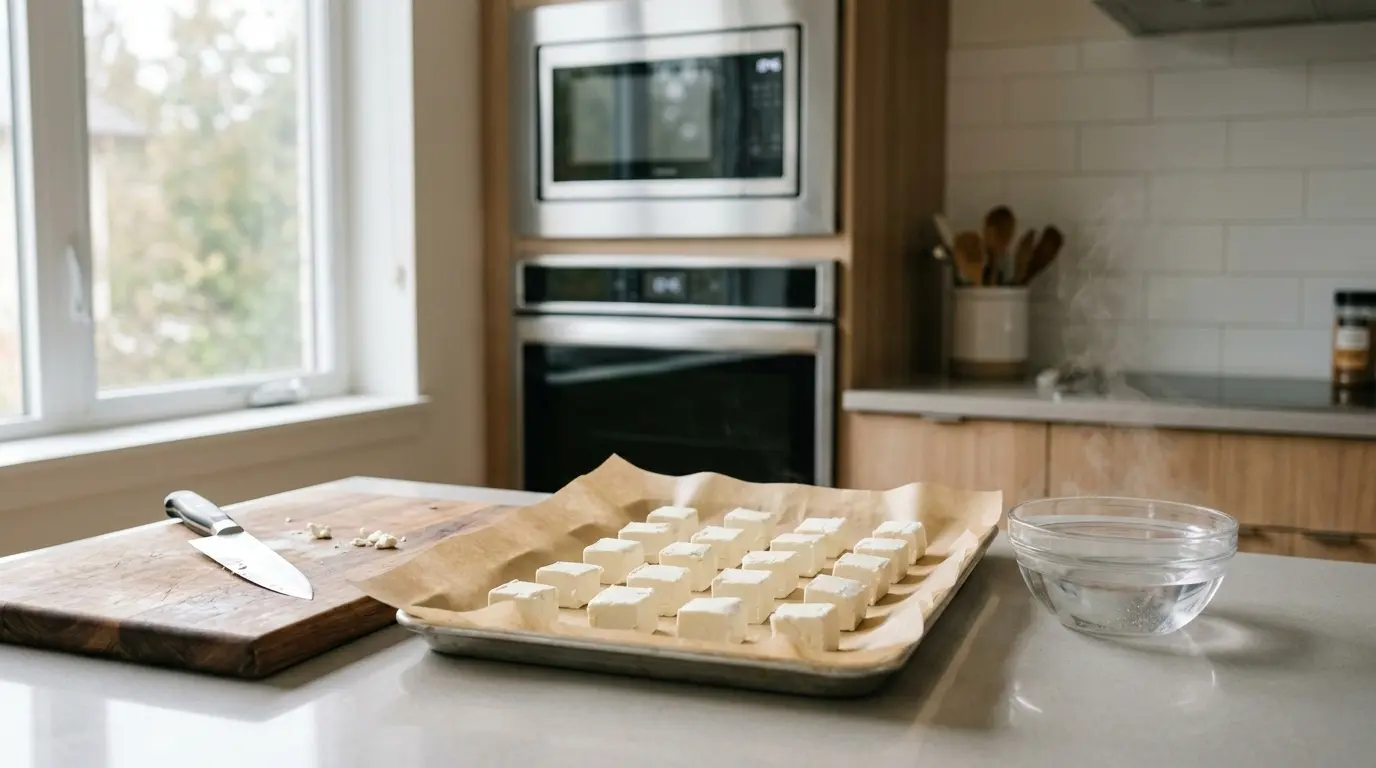
For the most even results, cut the block into small cubes and let it sit on a plate for about 25 to 30 minutes. Press the center with your finger. It should feel soft and smooth, not slick or runny. If you are in a rush, use a warm water bath for 10 to 15 minutes. Use the microwave only in tiny bursts.
Pick the best method in 10 seconds
| Time you have | Best method | Best for | Main risk |
|---|---|---|---|
| 25 to 30 minutes | Cubes on a plate or sheet pan | Frosting, cheesecake | Forgetting it and over-softening |
| 10 to 15 minutes | Warm water bath | Most baking | Water sneaking in |
| Under 1 minute | Microwave in short bursts | Emergencies | Melted edges and runny spots |
| 2 to 5 minutes | Mixer method | Dips, spreads | Cold center stays firm |
What “softened” really means
Softened cream cheese is not warm. It is not melted. It holds its shape, but it yields to pressure.
Try this:
- Press the center with a clean finger.
- It should dent with little effort.
- The surface should feel smooth, not greasy.
- A knife should glide through with light resistance.
If it still feels hard in the middle, mixing will not save you. You will chase lumps for ten minutes. Start with a better texture and the rest gets easy.
Before you start, avoid these common mistakes
Block, tub, and whipped are not the same
A block works best for baking. It gives structure. Tub styles spread easier, but they can behave differently in frosting and cheesecake. Whipped versions soften fast, but they also loosen recipes.
If your recipe matters, start with a block.
Remove the wrapper fully
Foil can trap cold spots. It also blocks even warming in some methods. Unwrap it before you begin.
Cut size changes everything
A whole block warms slowly in the center. Small pieces warm evenly. That is why the cube method wins for most people.
Best method for even softening: the cube method
This is the method I trust for frosting and cheesecake. It gives the smoothest mix. It also avoids hot spots.
When to use it
Use it when you care about texture. It works well for:
- Cream cheese frosting
- Cheesecake batter
- No bake cheesecake filling
- Cookie dough with cream cheese
Steps
- Unwrap the block and place it on a cutting board.
- Cut it into small cubes, about 1 inch each.
- Spread the cubes on a plate or sheet pan in one layer.
- Leave them at room temperature for 25 to 30 minutes.
- Press one cube in the center. Mix when it dents easily.
What you will see as it softens
At 10 minutes, edges feel softer, centers still resist.
At 20 minutes, cubes bend slightly when pressed.
At 30 minutes, the center feels soft and smooth.
Why this works
Small cubes expose more surface area. Air warms them from every side. The center catches up fast. That is the whole trick.
Faster method: warm water bath in 10 to 15 minutes
This method helps when you forgot to plan. It softens evenly if you keep water out.
When to use it
Use it when you need speed but want control. It is great for:
- Cheesecake batter
- Frosting
- Dips
Two safe setups
Option A: Keep it sealed
Keep the block in its sealed wrapper if it is tight and intact.
Option B: Use a zip top bag
Put the unwrapped block in a sealed bag. Press out extra air. Seal it well.
Steps
- Fill a bowl with warm water, not hot.
- Submerge the sealed block or sealed bag.
- Leave it for 5 minutes, then flip it.
- Wait another 5 to 10 minutes.
- Dry the outside, unwrap, then test the center.
Mistakes that ruin this method
Water that feels hot can push it too far.
A weak seal lets water leak in.
Leaving it too long can turn the outer layer slick.
If the outside feels greasy, chill it for five minutes. Then mix on low speed.
Fastest method: microwave without melting it
Microwaves can work, but they punish mistakes. Edges heat first. Centers stay cold. You end up with soft puddles and firm chunks.
Still, if you need it now, do it carefully.
When it is okay
Use it when time matters more than perfection. It works best for:
- Dips
- Quick spreads
- Last minute frosting fixes
Steps that keep it under control
- Unwrap the block and place it on a microwave safe plate.
- If your microwave has power levels, choose medium or lower.
- Heat for 5 seconds. Stop and check.
- Flip the block. Rotate the plate.
- Heat another 5 seconds.
- Repeat until the center dents easily.
Most blocks need 15 to 25 seconds total. Your microwave may differ. Stop early and test often.
If you overheat it
Do not panic. Do this:
- Move it to the fridge for 5 to 10 minutes.
- Stir gently with a spatula.
- Mix on low speed only.
High speed mixing can make it looser. Slow mixing keeps the texture tighter.
Mixer method: soften by beating, not heating
This method helps when you want less waiting. It also avoids heat. It works best for dips and spreads.
When it works well
Use it for:
- Savory dips
- Sweet spreads
- Cheesecake filling only if the block is already somewhat soft
Steps
- Cut the block into chunks.
- Add chunks to a mixing bowl.
- Beat on low speed for 30 seconds.
- Scrape the bowl and beat again.
- Keep going until it looks smooth.
What this method cannot fix
A rock hard center will stay stubborn. You will still see grains. If that happens, stop. Let it sit for 10 minutes. Then beat again.
Best method for your recipe
Different recipes punish texture in different ways. Pick the method that matches what you are making.
For cream cheese frosting
Go for the cube method. It gives the cleanest texture. It also prevents tiny lumps that show up on a cake.
Avoid heavy microwave heating here. Warm edges can make frosting loose. You may end up adding more sugar to “fix” it.
For cheesecake
Even softening matters most. Cold cream cheese leads to lumps. Over soft cream cheese adds extra air when you mix.
Mix on low speed. Scrape the bowl often. A smooth batter starts with a soft center.
For no bake cheesecake
This one is less forgiving. You need a smooth base, or the lumps stay forever. Use cubes or warm water bath. Skip the microwave if you can.
For dips
You have more freedom here. Mixer method can work fine. A few extra minutes of beating often solves it.
Troubleshooting: Fix the problems people actually face
“My mixture is lumpy”
This usually means the center stayed cold. Try this:
- Let the bowl sit for 10 minutes.
- Beat on low speed again.
- Scrape the sides and bottom well.
If you see hard bits, stop mixing. More mixing can make it grainy.
“It turned runny”
This often comes from overheated edges. Do this:
- Chill it for 10 minutes.
- Stir slowly with a spatula.
- Resume mixing on low.
If you are making frosting, chill the bowl too. Cold tools help.
“It looks grainy”
Grainy texture can come from heat or aggressive mixing. Fix it like this:
- Stop mixing for a few minutes.
- Resume on low speed.
- Add a spoon of liquid only if your recipe allows it.
For frosting, avoid extra liquid unless the recipe calls for it. Liquid can make it slide.
“I already mixed it into batter and see lumps”
Pause and assess your batter. Thick batters hide lumps less. Try:
- Let the batter rest for 10 minutes.
- Mix gently, not fast.
- Use a spatula to press lumps against the bowl.
If you whip hard, you add air. Cheesecake can crack from extra air.
Food safety without fear
Cream cheese is perishable. Keep it out only as long as needed. Use a simple rule.
Do not leave it out for more than two hours. In hot rooms, cut that time down. If your kitchen feels very warm, use the warm water bath instead of long counter time.
If it smells sour, toss it. If you see mold, toss it. When in doubt, play it safe.
Brand communication strategy for recipes and kitchens
If you publish recipes or run a bakery, small details build trust. Consistency matters. That is where a simple brand communication strategy helps.
Make your instructions repeatable
Pick one “default” method and use it everywhere. The cube method works well for most baking. Write it the same way each time. Readers learn your rhythm.
Use clear cues, not vague words
Instead of “leave it out until soft,” use cues people can test. Mention the finger press test. Mention what “too soft” looks like.
Add a short warning line in every recipe card
One line can prevent failures:
“Stop when it dents easily. Do not melt it.”
Keep the tone steady
Speak like a calm coach. Use short steps. Use simple words. Readers trust what feels steady.
A copy ready script you can paste into recipes
“Let the cream cheese soften until a finger press leaves an easy dent. If you are short on time, cut it into cubes first. Avoid melting it, or your frosting may turn loose.”
FAQs
How can I soften cream cheese quickly without melting it?
Use the warm water bath. Keep it sealed and use warm water, not hot. Test the center after 10 minutes.
How long does it take at room temperature?
A full block often needs 30 to 60 minutes. Cubes take much less time. Kitchen temperature changes the timing.
Can I microwave it?
Yes, but do it in very short bursts. Flip and rotate between bursts. Stop as soon as the center dents.
Why is my cream cheese frosting lumpy?
Cold cream cheese causes lumps. The center stays firm and resists mixing. Soften it more evenly, then beat on low.
What is the best way for cheesecake?
Use cubes or a warm water bath. Then mix on low speed. Scrape the bowl often for a smooth batter.
Can I leave it out overnight?
No, that is risky. Use a faster method instead. Warm water bath gives speed without long counter time.
Can I soften it in hot water?
Avoid hot water. Hot water can make the outside slick fast. Use warm water and check often.
Does tub cream cheese work the same way?
Tub styles already spread easier. They can also make baking mixes softer. For baking, a block gives better structure.
How do I soften multiple blocks fast?
Cube each block. Spread cubes across two trays. Do not stack them. Test one cube from each tray.
Can I soften it by mixing longer?
Mixing helps only if it is already somewhat soft. If the center stays cold, you will still see lumps. Time or gentle warmth works better.
What if I partially melted it?
Chill it for 10 minutes. Then stir slowly. Avoid high speed mixing until it thickens again.
How do I know it is ready?
Press the center. It should dent easily and feel smooth. A knife should cut through with light resistance.