
How to Stay Fit at Home with Simple Routines
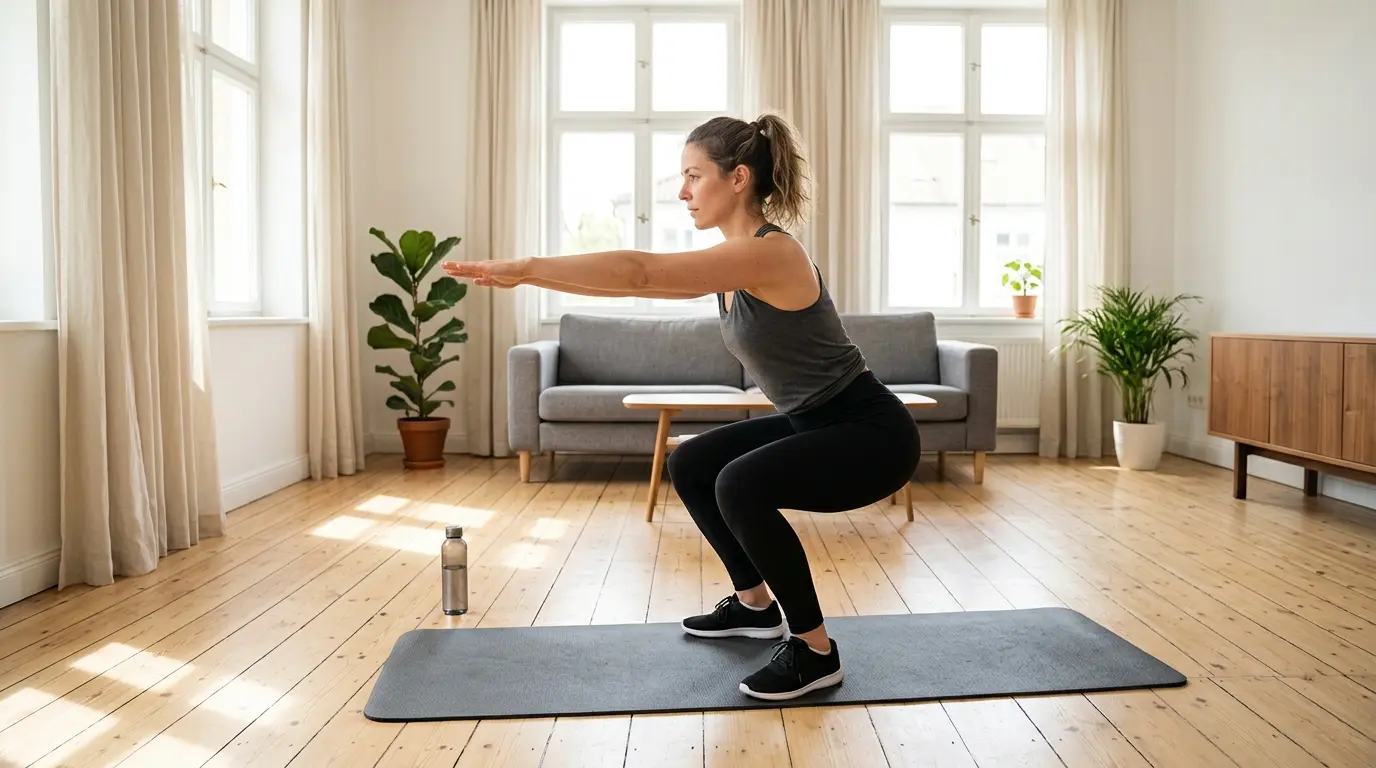
Stay fit at home by combining daily walks, bodyweight strength moves, and consistent nutrition. Three 30-minute sessions per week of squats, push-ups, and planks plus short walks improve strength and energy without equipment or a gym membership.
Build a Foundation with Daily Movement
Fitness begins with more movement throughout the day rather than one intense workout. Short walks around the neighborhood or even pacing during phone calls raise the heart rate and support joint health. Experts suggest two or three short walks daily as an easy starting point. Adding elevation or a faster pace increases the benefit. Gardening, dancing in the living room, or climbing stairs all count as effective activity. Consistency matters more than intensity at the beginning. People who track steps or set a daily movement goal tend to stick with the habit longer. Checking related wellness content such as what is a sedentary lifestyle helps readers understand why small breaks from sitting make a measurable difference.
Bodyweight Strength Training That Works
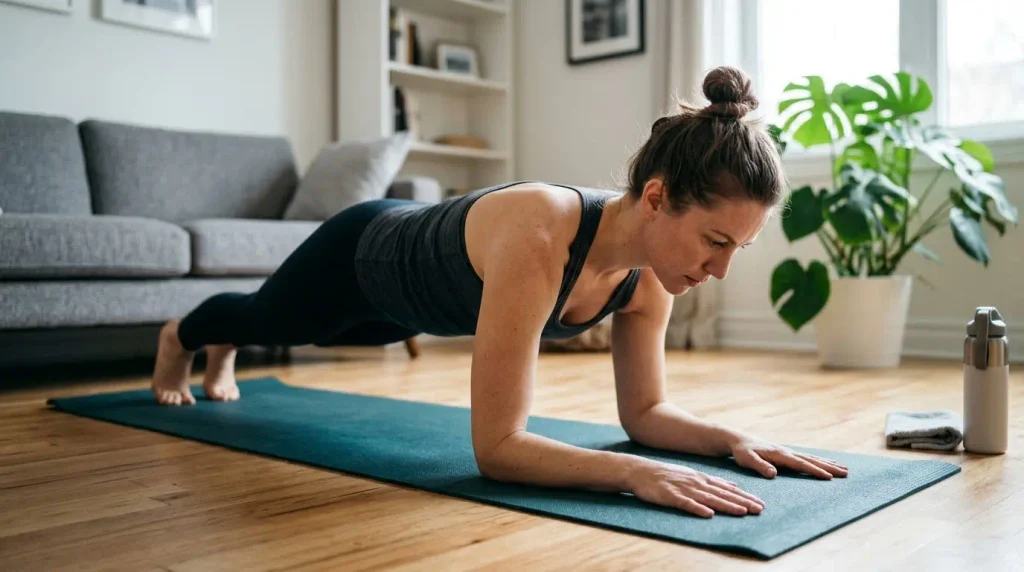
No weights are required to build muscle at home. Squats, lunges, push-ups, planks, and glute bridges engage major muscle groups. A simple circuit of three sets of 10 repetitions for each move, followed by a 30-second plank, takes about 20 minutes. Beginners can modify push-ups by doing them against a wall or on the knees. Progress by adding repetitions or slowing the tempo. Suspension trainers or a pair of dumbbells expand options later, but bodyweight alone produces results when performed regularly. Recovery between sessions allows muscles to adapt. Readers interested in complementary routines may explore art of fitness with a balance ball for additional core ideas.
Cardio Options Without Leaving the House
Jumping jacks, high knees, and mountain climbers raise the heart rate quickly in a small space. A 10- to 15-minute interval session three times a week supports cardiovascular health. Marching in place or using a portable pedaler while watching television also works. The goal is 150 minutes of moderate activity per week, which can be split into shorter blocks. Music helps maintain pace. Outdoor walks remain valuable when weather allows, but indoor options keep the routine going year-round. Combining cardio with strength on alternate days prevents burnout and supports balanced fitness.
Nutrition Habits That Support Home Fitness
Exercise alone does not produce lasting results without attention to food. Portion control and regular meals help maintain energy for workouts. Focus on vegetables, lean protein, and whole grains rather than restrictive plans. Drinking water throughout the day supports recovery and reduces unnecessary snacking. Planning meals ahead of time reduces the chance of choosing convenience foods when energy is low. Tracking intake for a few days reveals patterns that can be adjusted. Small changes such as adding a vegetable to each meal compound over weeks. Exploring food-related topics like is imitation crab healthy can inform smarter grocery choices that align with fitness goals.
Create a Realistic Weekly Schedule
Start with three workout sessions of 30 to 40 minutes. Write the plan in a calendar so it becomes a fixed appointment. Alternate strength and cardio days, and include at least one full rest day. Morning sessions often face fewer interruptions. Evening workouts work well for people who prefer later activity. Review the plan weekly and adjust based on energy levels. Progress tracking, whether through photos, measurements, or simply noting how clothes fit, maintains motivation. Consistency over several months produces visible changes more reliably than short intense efforts.
Stretching and Mobility for Injury Prevention
Tight muscles from sitting or incomplete recovery increase injury risk. A five-minute stretch routine each morning loosens the neck, shoulders, and hips. Cat-cow movements, doorway chest stretches, and hip flexor stretches address common tight spots. Yoga or tai chi videos provide guided options that require only a mat. Holding each stretch for 20 to 30 seconds improves range of motion over time. Mobility work can be done on rest days or after workouts. People who include stretching report less stiffness and better performance in strength moves. Pairing this with other recovery practices supports long-term adherence.
Equipment-Free Progression Ideas
Once basic moves feel easy, increase challenge without buying gear. Slow the lowering phase of squats and push-ups to add time under tension. Add a pause at the bottom of each repetition. Elevate the feet for push-ups or perform single-leg variations of squats and glute bridges. Interval training with shorter rest periods raises intensity. A kitchen chair can serve as a step for step-ups. These adjustments keep workouts effective for months. Tracking repetitions and form quality prevents plateaus better than simply adding more volume.
Common Barriers and How to Overcome Them
Limited space, family interruptions, and low motivation appear frequently. Clear a small floor area and communicate workout times to household members. Short 10-minute sessions still count and can be completed between tasks. Setting the workout clothes out the night before reduces friction in the morning. Accountability partners or online communities provide external support. When energy is low, a walk often feels more achievable than a full circuit and still moves the needle. Readers facing broader lifestyle challenges can review minimalist home lifestyle for ideas on reducing distractions that compete with fitness time.
FAQs
How to stay fit at home?
Combine daily walks or movement breaks with three weekly bodyweight strength sessions of squats, push-ups, and planks. Pair the activity with consistent meals focused on vegetables and protein. Consistency over weeks produces steady progress.
Can you build muscle without weights at home?
Yes. Bodyweight moves such as squats, lunges, push-ups, and planks challenge muscles when performed for multiple sets. Slowing the tempo or adding pauses increases difficulty over time.
How many days a week should you work out at home?
Three sessions of 30 to 40 minutes work well for most people starting out. Include rest or light activity days so muscles recover. Adjust based on energy and schedule.
What is the best cardio to do at home?
Jumping jacks, high knees, marching in place, and stair climbing raise the heart rate effectively. Ten- to fifteen-minute intervals three times a week support cardiovascular health.
Do you need equipment to stay fit at home?
No. Bodyweight exercises and walking require nothing beyond space and comfortable clothes. Optional items like resistance bands expand options later but are not necessary to begin.
How long until you see results from home workouts?
Most people notice improved energy and strength within three to four weeks of consistent sessions. Visible changes in muscle tone or endurance often appear after six to eight weeks.
What should you eat to support home fitness?
Prioritize vegetables, lean protein sources, and whole grains in regular meals. Drinking enough water and controlling portions helps maintain energy for workouts without complicated plans.
How do you stay motivated to exercise at home?
Schedule sessions in a calendar, set out clothes the night before, and track simple progress such as repetitions or how clothes fit. Short sessions reduce the barrier on low-energy days.
Is walking enough to stay fit?
Daily walks improve heart health and support weight management when paired with some strength work. Adding pace or hills increases the benefit. Walking alone is a strong foundation.
How can beginners modify home exercises?
Perform push-ups against a wall or on the knees. Reduce squat depth or hold a chair for balance. Start with fewer repetitions and build gradually as form improves.
Should you stretch before or after home workouts?
Light movement before workouts prepares the body. Hold stretches for 20 to 30 seconds after sessions or on rest days to improve flexibility and reduce stiffness.
What if you have very little space at home?
Most bodyweight moves require only the length of a yoga mat. Marching, jumping jacks, and chair exercises fit in even smaller areas. Consistency still delivers results.