
What to Look for in an Accredited Nail Technician Course: A Beginner’s Checklist
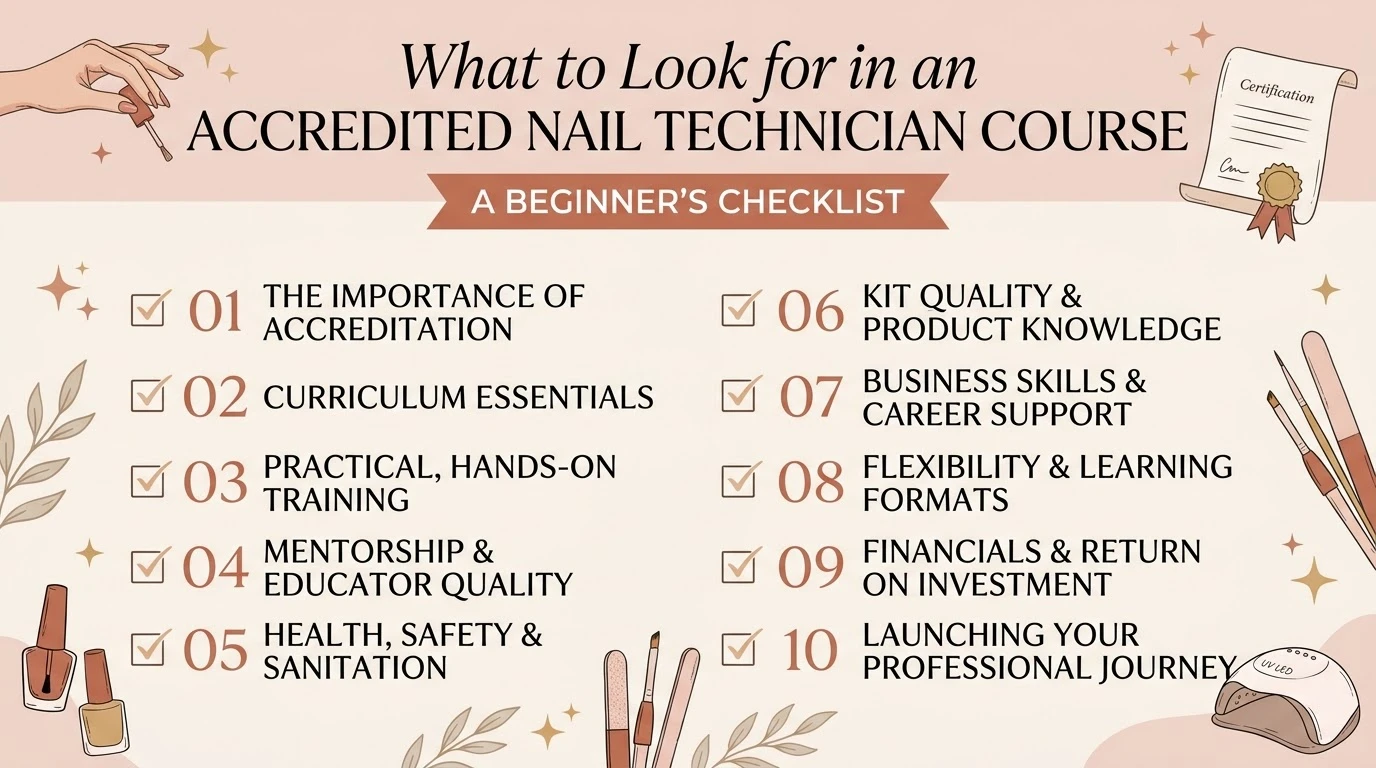
Table of Contents
The Importance of Formal Accreditation in the Nail Industry
Entering the world of professional nail technology requires more than just a passion for aesthetics and a steady hand. The foundation of a successful career begins with choosing the right educational path. Accreditation serves as the gold standard in the beauty industry, acting as a seal of approval from recognized governing bodies. When a course is accredited, it means the curriculum has been vetted for quality, safety, and relevance to current industry standards.
For a beginner, the sea of online tutorials and unverified workshops can be overwhelming. While these resources might offer quick tips, they lack the structural integrity required to gain professional insurance or state licensure. An accredited nail technician course ensures that you are not just learning how to paint nails, but how to operate as a healthcare adjacent professional who understands the anatomy of the hand and the chemistry of the products being used.
Choosing a reputable provider like Training Beauty & Beyond ensures that your certification carries weight with potential employers and insurance providers. Without this formal recognition, you may find yourself unable to purchase professional grade products from industry distributors or, worse, legally prohibited from charging for your services in many jurisdictions.
Why Accreditation Matters for Insurance
Professional liability insurance is a non negotiable aspect of running a nail business. Insurance companies require proof of completion from an accredited program before they will issue a policy. This coverage protects you in the event of accidental injury or infections. By selecting a high quality accredited nail technician course, you are effectively protecting your future assets and professional reputation from the very first day of your training.
Understanding the Curriculum Essentials
A comprehensive curriculum should be the primary focus of your checklist. The nail industry is constantly evolving, with new techniques and products emerging every season. However, the fundamentals remain the same. A high quality course will balance timeless techniques with modern innovations.
1. Anatomy and Physiology of the Nail: You must understand the structure of the nail plate, the matrix, and the surrounding skin to prevent long term damage to clients.
2. Nail Diseases and Disorders: Identifying when to refer a client to a medical professional is a critical skill that separates amateurs from professionals.
3. Chemistry of Products: Understanding how polymers, monomers, and UV gels interact at a molecular level allows you to troubleshoot lifting or peeling issues.
4. Manicure and Pedicure Techniques: The basics of shaping, cuticle care, and massage form the core of your service menu.
5. Enhancement Systems: A robust course will cover acrylics, hard gels, and acrygel systems to give you a versatile skill set.
When reviewing a syllabus, look for depth rather than just a long list of topics. A course that spends significant time on nail health and preparation will ultimately produce a more competent technician than one that rushes straight into nail art.
Practical Training and Hands on Experience
Theory is vital, but nail technology is a tactile trade. You cannot learn the precise pressure required for an e file or the perfect consistency of an acrylic bead solely through a screen or a textbook. The best courses provide ample opportunities for supervised practical work.
The Value of Live Models
Working on practice hands is a great way to start, but nothing replaces the experience of working on a living person. Human skin has different textures, and every client has a different nail shape and sensitivity level. An accredited program should facilitate or require a specific number of hours dedicated to working on live models. This experience builds the muscle memory and confidence needed to transition into a salon environment.
Feedback Loops and Assessments
During your practical sessions, the presence of an instructor is paramount. They should provide real time corrections on your grip, posture, and product application. Look for courses that include rigorous practical assessments where you must demonstrate your skills under the watchful eye of an expert to ensure you meet the required competency levels before graduation.
The Role of Professional Mentorship and Educator Quality
The quality of your education is directly linked to the experience of your instructors. A beginner should look for a course led by educators who have spent years in the trenches of the salon industry. These mentors offer insights that go beyond the textbook, such as how to handle difficult clients or how to speed up your service time without sacrificing quality.
Training Beauty & Beyond prides itself on providing students with access to seasoned professionals who understand the nuances of the modern beauty market. When researching a course, ask about the credentials of the tutors. Have they won awards? Do they stay updated with continuing professional development? A teacher who is still active in the industry will be better equipped to teach you the latest trends and efficient workflows.
Health Safety and Sanitation Standards
In a post pandemic world, the importance of hygiene in the beauty industry has never been more prominent. A professional nail technician is, in many ways, a guardian of public health. Your checklist must include a deep dive into the sanitation protocols taught in the course.
1. Sterilization vs Disinfection: Understanding the difference between these two processes and knowing when to use each is crucial for client safety.
2. Personal Protective Equipment: Learning how to protect yourself from dust inhalation and chemical exposure ensures your own long term health in the industry.
3. Salon Ergonomics: Proper seating and hand positioning prevent repetitive strain injuries which can end a career prematurely.
4. Cross Contamination Prevention: Mastering the workflow that prevents the transfer of bacteria between clients is a fundamental requirement of any accredited program.
If a course skimps on these topics, it is a major red flag. High standards of cleanliness are what build trust with clients and keep your business compliant with local health regulations.
Kit Quality and Product Knowledge
Many accredited courses include a starter kit in their tuition fees. While it might be tempting to choose the cheapest option, the quality of the tools you start with will dictate your early success. A beginner’s checklist should evaluate what is included in the student kit.
High quality nippers, pushers, and brushes are investments that last. Furthermore, a course should teach you how to work with multiple brands rather than locking you into one specific product line. This brand neutral approach allows you to understand the underlying technology of nail products, making you a more versatile technician.
Understanding UV and LED Technology
With the rise of gel polish and builder gels, understanding the science of light curing is essential. An accredited course will explain why specific lamps must be calibrated to specific gel formulas to ensure a full cure. This knowledge prevents the development of allergies in both the technician and the client, a growing concern in the industry today.
Business Skills and Career Support
Being a great nail technician is only half the battle; being a successful business owner or employee is the other half. The transition from student to professional can be daunting, which is why career support is a vital component of a top tier program.
Many students find that Training Beauty & Beyond offers excellent guidance on how to navigate the early stages of a career. Look for modules that cover:
1. Pricing Strategies: How to calculate your overhead and set prices that ensure profitability.
2. Social Media Marketing: Techniques for building a portfolio and attracting your first fifty clients.
3. Client Consultation and Retention: The art of communication and how to turn a one time visitor into a loyal regular.
4. Insurance and Legalities: A checklist of the permits and protections you need to operate legally.
Evaluating Flexibility and Learning Formats
Every student has different needs when it comes to their learning schedule. Some prefer the immersive experience of a full time classroom, while others need the flexibility of a hybrid model that combines online theory with in person practicals.
Hybrid Learning Models
The modern approach to nail education often involves a digital portal for theory lessons, allowing you to study at your own pace. This is followed by intensive practical blocks. This format is often more accessible for those who are changing careers while still working another job. However, ensure the online component is interactive and provides access to tutors for questions, rather than just being a series of static videos.
Financial Considerations and Return on Investment
A professional qualification is an investment in your future. When looking for an accredited nail technician course, compare the costs against the value provided. A cheaper course might save you money upfront but could cost you more in the long run if you have to pay for additional workshops to fill in the gaps in your knowledge.
Consider the total cost of ownership, including the kit, examination fees, and any travel required for practical days. Many reputable institutions offer payment plans to make the education more accessible. Remember that the goal is to gain a qualification that allows you to start earning a professional wage immediately upon completion.
Launching Your Professional Journey
The final step in your checklist is looking at the community and ongoing support offered by the training provider. The beauty industry thrives on networking and continuous improvement. A course that offers a lifetime community or alumni discounts on advanced workshops shows that they are invested in your long term success.
By choosing a comprehensive program through Training Beauty & Beyond, you are setting yourself up with the tools, knowledge, and professional backing needed to excel. The journey from a beginner to a master technician is a marathon, not a sprint. Starting with a solid, accredited foundation ensures that every step you take is on firm ground, leading toward a creative, profitable, and fulfilling career in nail technology.
Take the time to interview potential schools, read reviews from past students, and verify their accreditation status. Your future self will thank you for the diligence you show today in selecting the best possible start for your new profession.