
Lima Peru Attractions: A Guide to What Is Worth Your Time
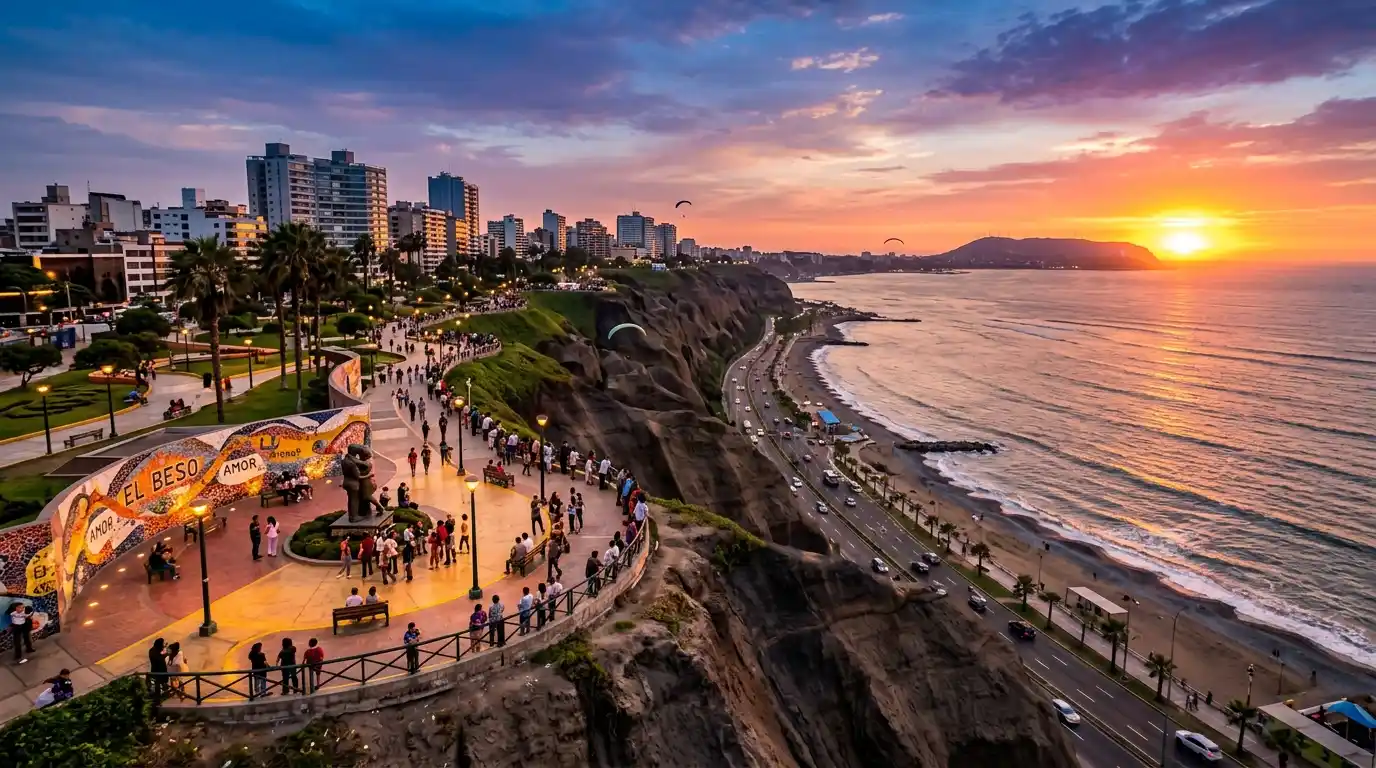
The best Lima Peru attractions sit in three districts. The UNESCO-listed Historic Centre offers colonial plazas and catacombs, Miraflores brings ocean cliffs and a pre-Inca pyramid, and Barranco adds street art and live music. Add Museo Larco and a ceviche lunch for a strong two-day plan.
Most first-timers worry about traffic, petty theft and wasting days in a city they planned to rush through. This guide answers all three with 2026 prices, real timings and honest warnings.
What are the best Lima Peru attractions for first-time visitors?
Pick districts before you pick sights. Lima holds roughly ten million people, and a short hop can swallow an hour in traffic. Travelers who group stops by neighborhood see more and sit in taxis less.
- Historic Centre: plazas, churches, catacombs and pedestrian streets.
- Miraflores: the Malecón cliffs, Parque Kennedy, Love Park and Huaca Pucllana.
- Barranco: the Bridge of Sighs, galleries, cafés and live music bars.
Two days cover all three zones. A third day adds Museo Larco, a cooking class or Pachacamac. Among the top things to do in Lima Peru, food deserves its own block of time instead of a squeezed lunch between sights. Among Lima Peru places to visit, one district per half day feels calm instead of rushed.
What should you see in Lima’s Historic Centre?
Take the Metropolitano from Miraflores. The ride takes about 30 minutes, while a taxi in traffic often takes an hour or more. You need a rechargeable card for the bus, so buy one at the station and keep small bills handy.
You step out near Plaza Mayor, where Lima was founded in 1535. The Government Palace, the Cathedral of Lima and the Archbishop’s Palace frame the square, and carved wooden balconies glow in late light. Among the things to see in Lima Peru, this square sets the tone for everything else.
Stand at the palace gates around 11:45 am for the changing of the guard at noon. Crowds form early. Expect brass music, marching and rifle spinning. Confirm timing locally.
Next comes the Basilica and Convent of San Francisco, two blocks northeast. Its catacombs cost roughly S/15 to S/25 depending on the season and source, and the 45 minute guided tour is mandatory. Skulls and thigh bones sit arranged in circles. Estimates of the remains range from 25,000 to over 70,000. The passages are narrow and low, so claustrophobic visitors may want to skip them.
Three more stops fit nearby:
- Santo Domingo Convent has a bell tower with views to the cathedral, but the tower has closed around 4:30 pm, so arrive earlier.
- Jirón de la Unión is a pedestrian street that ends at Plaza San Martín and the Gran Hotel Bolívar, a classic spot for a pisco sour.
- Barrio Chino, east of the square, serves chifa, the Chinese Peruvian cooking that shapes local lunch.
Watch your phone here, because pickpockets work the crowds.
What are the best things to do in Miraflores?
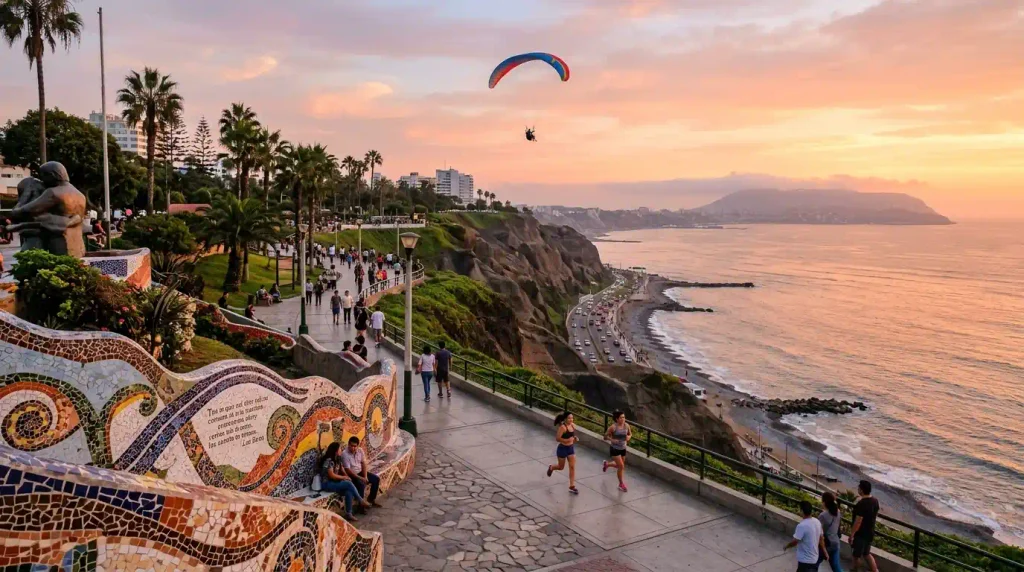
Miraflores is where most visitors sleep, and the cliffs explain why. The Malecón stretches roughly 6 to 10 kilometers above the Pacific, and locals jog, cycle and skate along it. Walk it just before sunset when the wind softens and paragliders drift over Parque Antonio Raimondi near the lighthouse. Among the best things to do in Lima Peru, this sunset walk costs nothing.
Tandem paragliding has been quoted around S/250 to S/300 with photos, but wind can cancel afternoon flights.
Love Park sits a short stroll along the path. Mosaic walls recall Gaudí’s Park Güell, and Víctor Delfín’s sculpture El Beso anchors the view. Larcomar, an open-air mall carved into the cliff, sits close by, with a Paddington Bear statue in the gardens above. Parque Kennedy, a few blocks inland, is famous for its stray cats, fed by local groups.
Then visit Huaca Pucllana. This adobe pyramid, built between roughly 450 and 650 AD by the Lima culture, uses millions of handmade bricks and stands between apartment blocks. Day visits cost about S/15 and night visits about S/17, both with a guided circuit in English. Night visits skip the climb but add floodlights. Book a table at the on-site restaurant for dinner with a view of the stones. Few Lima Peru attractions mix ancient history and modern life this sharply.
Why is Barranco worth a half day?
Barranco was once the summer retreat of Lima’s elite, and the old mansions still line its lanes. Begin at the Puente de los Suspiros, where legend says you hold your breath crossing and make a wish. Continue down Bajada de Baños, a slope of murals and galleries leading toward the beach.
Art stops include MATE, the Mario Testino museum, plus the Museo de Arte Contemporáneo and the Pedro de Osma Museum. For coffee, Ciclos Café serves espresso flights, and Crem Dela Crem handles ice cream.
After dark, head to a peña such as Don Porfirio or La Oficina for criollo music and dancing. Doors fill after 10 pm. Stay in the busy blocks and call an Uber afterward. If you have time for only one of the places to visit in Lima Peru outside the center, most travelers choose Barranco.
Is Museo Larco worth the detour?
Yes, especially for pre-Inca history. The museum sits in Pueblo Libre, about 20 minutes from Miraflores by car. General admission has been reported near S/35 in 2026, and galleries stay open late, reportedly until 10 pm. Budget two to three hours. A separate gallery of erotic ceramics suits adults only.
The garden, draped in bougainvillea, pairs well with dinner at the museum café. Follow it with one of the fun things to do in Lima Peru after dark: the Magic Water Circuit in Parque de la Reserva. Giant fountains and a laser show on a water screen draw big crowds. Shows have started around 7 pm and repeat hourly, and the park has closed on Mondays. Entry costs only a few soles. Arrive early on weekends. Afterward, Corredor Azul bus 301 runs back toward Miraflores.
What should you eat and drink in Lima?
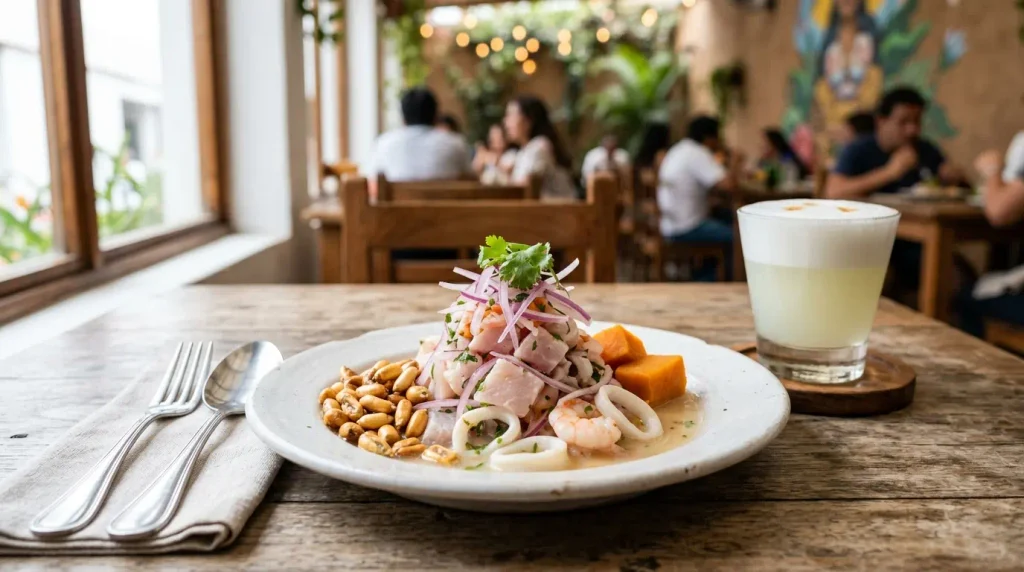
Every list of things to do Lima Peru visitors trust puts food first, and timing matters. Ceviche is a lunch dish here because the fish is freshest at midday. Order a ceviche mixto at Canta Rana in Barranco, La Mar or Punto Azul. Add tiradito and conchas a la parmesana.
Budget meals are just as good, since a menú del día with lomo saltado often costs a few dollars. Chifa plates of arroz chaufa and Nikkei sushi at Aka Sushi Barranco show how Chinese and Japanese migrants shaped Peruvian cooking.
A pisco sour blends pisco brandy, lime, syrup, bitters and egg white. Try the Gran Hotel Bolívar, La Posada del Mirador or the Ayahuasca bar.
Splurges need planning. Central, Maido, Astrid y Gastón and Kjolle fill weeks ahead, and tasting menus commonly run above US$100 per person. A guided food tour costs about US$105 to US$145 and covers several stops in one evening. A cooking class starts around US$49 to US$72 and often includes a market visit.
Is Pachacamac or the Ballestas Islands the better day trip?
Some attractions in Lima Peru sit outside the city. Pick Pachacamac when you have three days and love archaeology. This pilgrimage center south of Lima is about 1,500 years old, with temples, plazas and a site museum. Entry runs around S/15 plus a little extra for a guide, and a half day is enough.
Pick the Ballestas Islands when Lima is your only chance to see the south coast. Tours pair the islands with Huacachina and run about 16 hours, usually from US$85 to US$99. Boats pass sea lions, Humboldt penguins and thick bird colonies. The long bus ride is the downside.
Short on time? Among the activities in Lima Peru that need only half a day, swimming with sea lions near Callao costs about US$75. Travelers searching for things to do in Peru Lima often overlook this coast.
When should you visit and how do you stay safe getting around?
Season changes how Lima Peru attractions feel. December to April brings warm sunny weather. From May to November skies turn grey with garúa, the coastal mist, and evenings cool down. Travelers often call September to November the sweet spot because crowds thin and temperatures stay mild. Lima sits at about 154 meters, so altitude sickness is not a concern here, unlike Cusco.
For lima peru things to do after dark, Uber and Cabify beat street taxis. Taxis rarely use meters, so agree the fare first. At the airport, use the official taxi counter and expect roughly US$25 to US$50 into Miraflores or Barranco. The Metropolitano is cheap but crowded, so wear your bag in front.
Petty theft is the main risk. Phone snatching happens in crowds, and solo night walks are a common mistake. Miraflores, Barranco and San Isidro are the easiest zones. Drink bottled water, including for brushing teeth. A free walking tour gives a quick orientation, but pick one with a fixed length of 2 to 3.5 hours. One traveler report describes a tour that ran so late that lunch happened at 4 pm.
How much do Lima attractions cost in 2026?
Most Lima Peru attractions charge modest fees, but prices shift by season and source, so confirm before you go.
| Attraction | Typical price | Time needed |
| Huaca Pucllana | S/15 day, S/17 night | 1 hour |
| San Francisco catacombs | S/15 to S/25 | 45 minutes |
| Museo Larco | About S/35 | 2 to 3 hours |
| Pachacamac | About S/15 plus guide | 2 to 3 hours |
| Magic Water Circuit | A few soles | 1 to 1.5 hours |
| Food tour | US$105 to US$145 | 4 to 5 hours |
| Tandem paragliding | About S/250 to S/300 | 10 to 15 minutes |
Entry fees plus tours usually land between US$20 and US$40 a day for most visitors.
Final Thoughts
Start with a two-day plan that pairs the Historic Centre with Miraflores and Barranco, then add Museo Larco if time allows. Book catacomb or fine dining slots early and carry small soles for entries and buses. The best Lima Peru attractions reward travelers who move slowly and eat well. Pick your district for tomorrow, check current ticket prices and leave room for one long ceviche lunch.
FAQs
Is Lima worth visiting?
Yes. Food, museums and the Pacific setting make it a destination, not just a stopover before Cusco.
How many days do you need in Lima?
Two days cover the main districts. Three days add Museo Larco or a day trip.
Is Lima safe for tourists?
Mostly in Miraflores, Barranco and San Isidro by day. Petty theft and taxi overcharging are the usual problems.
Is Lima expensive?
More than many South American cities but less than the US or Western Europe. Fine dining stretches budgets most.
Should you stay in Miraflores or Barranco?
Miraflores suits first-timers who want transport links. Barranco suits travelers who want cafés and nightlife close by.
Can you drink the tap water in Lima?
No. Use bottled water, including for brushing your teeth.
Can you see Lima in one day?
Yes, with focus. Combine the Historic Centre, Huaca Pucllana and a Barranco sunset, and skip Museo Larco.
How far is Machu Picchu from Lima?
About 500 kilometers. Fly to Cusco, take the train to Aguas Calientes, then a short bus.
What is Lima best known for?
Ceviche, colonial architecture and world-class dining on the Pacific coast.
Is the Metropolitano worth using?
Yes for the Historic Centre. It beats traffic but gets crowded.


