
Madeira Must See: The Complete Guide to Top Attractions and Where to Stay
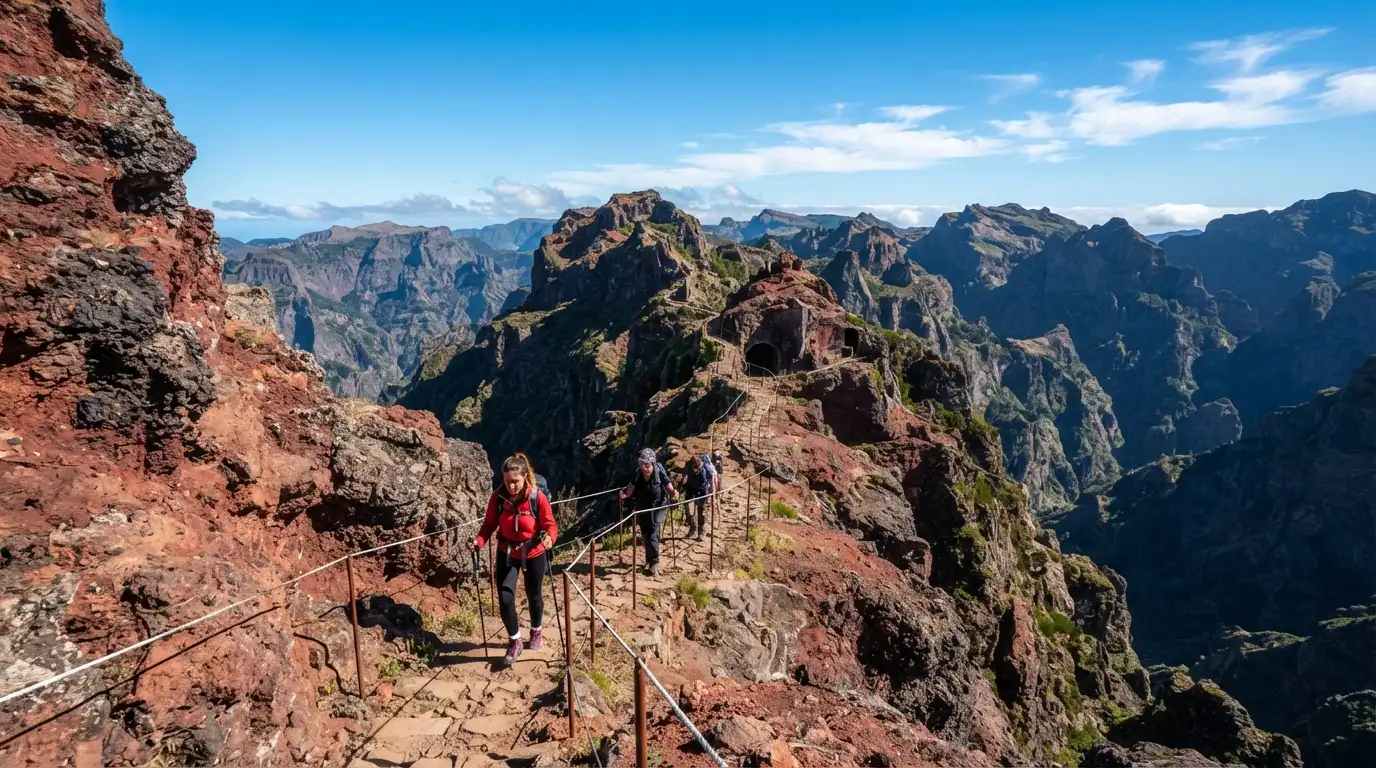
The Madeira must see list centers on Pico do Arieiro, Pico Ruivo, the Porto Moniz sea pools, Cabo Girão, Funchal’s Mercado dos Lavradores, and a levada walk through Fanal Forest. Together these cover the island’s mountains, coastline, and culture in one trip. If you’re staring at a map of this small Atlantic island wondering where to even start, that’s normal, Madeira packs an unusual amount into a compact space.
Most first-time visitors feel two things at once: excitement about the scenery and a bit of anxiety about logistics. The roads look intimidating on a map. Hiking trails now need online booking. Nobody quite agrees on where to stay. This guide sorts through all of it with current 2026 details, not recycled advice from five years ago.
Why Is Madeira Considered a Must-See Destination?
Madeira sits in the Atlantic at roughly the same latitude as Morocco, which explains its unusually stable sub-tropical climate. Temperatures on the coast rarely dip below 20°C or climb past 30°C, making it a genuine year-round destination. The island is volcanic, so its landscape swings between black sand beaches, jagged sea cliffs, and misty laurel forests within a short drive. It’s also the birthplace of Cristiano Ronaldo, and the island’s main airport carries his name, a detail that surprises plenty of first-time visitors. Between the hiking, the coastline, and the food, Madeira earns its reputation as one of Portugal’s most rewarding regions to explore.
How Many Days Do You Need to See Madeira’s Top Attractions?
A minimum of five days is realistic, and anything shorter will feel rushed given how much ground there is to cover. A week works well for a first visit, giving you time to explore Funchal, do a couple of hikes, and see the north and west coasts without racing the clock. Travelers with ten days get the fuller experience: proper time on levada trails, mountain viewpoints, and a slower pace overall. A common mistake first-timers make is underestimating drive times. The island isn’t large on paper, but the roads are steep and winding, so a 30km drive can easily take longer than the same distance would at home.
What Is the Best Time of Year to Visit Madeira?
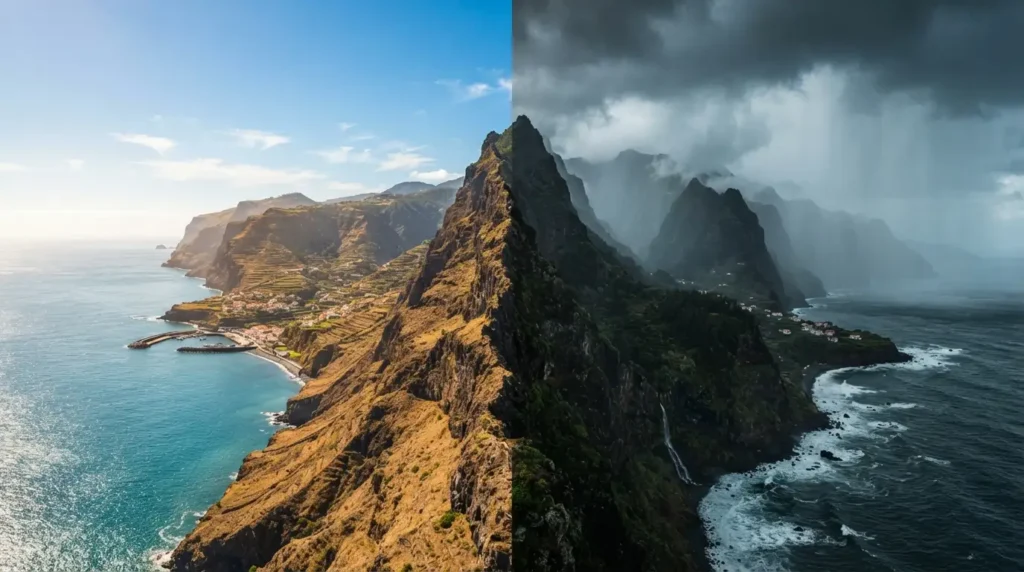
Travelers consistently find March through May and September through October to be the sweet spot, combining mild, pleasant weather with noticeably fewer crowds than peak summer. Spring brings blooming flowers and fuller waterfalls; autumn offers warm, dry days, though some waterfalls thin to a trickle by then. Summer is popular but carries real wildfire risk, which has led to trail closures on some of the island’s most famous routes in recent years. Winter, running roughly November through February, is the wettest period, particularly on the island’s north coast, though it rarely gets genuinely cold. A common mistake is assuming Madeira’s weather behaves the same everywhere at once. The north tends to be wetter, the south sunnier and drier, and mountain conditions can shift entirely within the same day, sometimes within the same hour.
What Are the Best Things to Do in Funchal?
Funchal, Madeira’s capital, makes a natural starting point even if you plan to spend most of your trip elsewhere. The Mercado dos Lavradores, the city’s farmers market, is worth a slow wander through its fruit and flower stalls, where local specialties like passion fruit and dragon fruit are sold alongside fresh fish. A cable car climbs from the city center up to Monte, home to the Monte Palace Tropical Garden, and from there the classic wicker toboggan ride carries visitors back downhill, steered by two men known locally as carreiros along roughly 3km of winding streets. Tickets run around €27.50 for one person, scaling up to about €52.50 for three sharing a basket. The Madeira Wine Museum, housed in an old wine lodge, rounds out a Funchal visit with cellar tours and tastings of the island’s famous fortified wine. Football fans can also detour to the CR7 Museum dedicated to Cristiano Ronaldo, though a photo with his statue outside satisfies most casual visitors.
What Are the Best Hikes and Viewpoints in Madeira’s Mountains?
Pico do Arieiro, the island’s third-highest peak at 1,818 metres, is one of the most accessible viewpoints in Madeira, since parking sits right near the summit alongside a café. Sunset here tends to be quieter and more dramatic than sunrise, with the light spilling across the surrounding ridgelines. From Pico do Arieiro, the famous PR1 trail normally leads to Pico Ruivo, Madeira’s highest point at 1,862 metres, but as of 2026 this route remains closed due to wildfire damage, though the first stretch to the “Stairway to Heaven” viewpoint is still open and worth the walk. Pico Ruivo itself is still reachable via a separate, moderate 6.5km out-and-back trail starting from Achada do Teixeira, a hike most visitors find manageable with a short, punchy climb near the summit.
For a quieter alternative while PR1 stays closed, Pico Grande offers a harder but genuinely rewarding 10km route with real solitude, a payoff locals recommend for travelers willing to handle a steep, loose final stretch. Bica da Cana, sitting around 1,560 metres, gives sweeping views of both Pico Ruivo and Pico do Arieiro for a fraction of the effort, just a short uphill stroll from the car park.
Do You Need to Book Hiking Trails in Madeira in 2026?
Yes, and this is one of the biggest changes visitors following older guides will miss. Madeira’s official PR walking trails now require an online reservation through the SIMplifica portal before you set out. The standard access fee sits at €4.50 per person per trail, while PR1 costs more at €10.50 due to its popularity and controlled gate access. Booking involves creating an account, selecting your trail and a 30-minute entry window, and paying online, after which you receive a digital QR code confirmation worth saving to your phone. PR1 is the only trail where tickets are consistently checked at a locked gate, though enforcement on other routes appears less consistent for now. Even so, paying the fee where required helps fund trail maintenance and safety work, and skipping it risks a fine. Multi-day passes exist but rarely save money unless you’re planning five or more paid PR hikes.
What Are the Best Coastal Spots and Beaches in Madeira?
Madeira isn’t a classic beach destination, since its coastline leans toward cliffs, coves, and volcanic rock rather than long stretches of sand. Seixal, on the north coast, has a striking black sand beach backed by lush cliffs, along with free natural sea pools carved into the volcanic rock. Porto Moniz is Madeira’s most famous swimming spot, with two sets of natural pools: a rugged, free eastern set and a more developed western set with changing facilities that typically costs a few euros to enter. Calheta and Machico offer the island’s few genuinely sandy beaches, both using imported golden sand, and Calheta in particular makes a pleasant, sheltered swimming stop with cafés and a small harbour nearby.
What Should You Know About Driving in Madeira?
Most visitors technically don’t need a car, but practically, one makes the trip far easier. Public buses exist but run infrequently and rarely reach trailheads, viewpoints, or the more remote villages that make Madeira special. The roads themselves are steep, narrow, and winding, threaded with an impressively extensive tunnel network that connects once-isolated towns. A common mistake first-timers make is renting a car that’s too big or underpowered; a small, punchy vehicle handles the terrain far better, and travelers not confident with clutch control should default to an automatic rather than fight steep hill starts the whole trip. Booking through a comparison service like Discover Cars tends to turn up better rates than booking directly with a single company.
Where Should You Stay in Madeira?
[Comparison Table] Where to Stay in Madeira by Travel Style
| Base | Best For | Trade-off |
| Funchal | First visit, no car, nightlife and restaurants | Busiest, touristy, further from wild north coast |
| Calheta | Beach access, sunny south coast, honeymoons | Longer drives to the east side of the island |
| Caniço | Balanced access to east and central interior | Fewer nightlife options than Funchal |
| Santana | North coast hikes, Pico Ruivo access | Furthest from Funchal’s restaurants and shops |
Funchal makes sense if you’re short on time or not renting a car, thanks to its transport links and dining options. But travelers chasing dramatic coastline, quieter villages, and easier mountain access often find more of what makes Madeira special by basing themselves outside the capital instead.
What Should You Eat and Drink in Madeira?
Poncha, Madeira’s signature drink, combines sugar cane spirit, honey, and citrus juice into something deceptively easy to drink and worth sipping slowly. Madeira wine, the island’s famous fortified export, pairs naturally with a cellar tour in Funchal. For food, espetada, chunks of garlic-marinated beef grilled on a skewer, is a hearty local staple, usually served alongside bolo do caco, warm garlic bread that’s hard to stop eating. Scabbardfish, an unusual deep-sea catch often served with banana, counts as a genuine Madeiran classic despite sounding unlikely on paper.
[Cost Table] Typical Madeira Food, Drink, and Attraction Prices (2026)
| Item | Typical Price |
| Small beer (Coral) at a café | €1 to €2 |
| Coffee | €1 to €3 |
| Restaurant main meal | €12 to €25 |
| Snack bar sandwich or light bite | €2 to €8 |
| Standard PR hiking trail (SIMplifica) | €4.50 per person |
| PR1 hiking trail | €10.50 per person |
| Achadas da Cruz cable car (return) | €6 per person |
| Wicker toboggan ride (per person, shared) | €27.50 to €52.50 total |
| Porto Moniz western pools entry | A few euros |
Prices vary by season and venue, so treat these as realistic working ranges.
What Is the Difference Between a Levada and a Vereda?
A levada follows Madeira’s centuries-old irrigation channel system, offering relatively flat, gentle walking paths through forest and valley, ideal for beginners. A vereda is a traditional mountain trail connecting villages, ridges, and summits, generally steeper, more exposed, and physically demanding. Knowing which type of trail you’re booking through SIMplifica helps set realistic expectations before you commit to a route.
Is Madeira Safe and Good for a First-Time Visit?
Madeira generally feels very safe, with low crime rates and a relaxed, welcoming atmosphere that suits solo travelers, couples, and families alike. The main safety considerations relate to the mountains rather than crime: hikers should check weather and trail status, carry enough water, and let someone know their planned route before heading out on exposed trails.
Conclusion
Madeira rewards travelers who plan a little before they land. The Madeira must see list isn’t complicated, mountain hikes, coastal pools, a Funchal market morning, and a proper plate of espetada, but the details around trail bookings, road conditions, and where to base yourself genuinely change how smooth the trip feels. Book your SIMplifica permits early, pick a small automatic car, and choose your base by what you actually want to see rather than habit. Do that, and Madeira delivers exactly what its reputation promises.
FAQs
Is Madeira worth visiting?
Yes, for its combination of dramatic hiking, mild year-round climate, and genuinely varied coastal scenery packed into a small island.
Is Madeira expensive?
Not particularly. Food, drink, and activities stay comparable to mainland Portugal, with the main costs being accommodation, car hire, and hiking fees.
Do you need a car in Madeira?
Practically yes, since public transport is limited and doesn’t reach most trailheads or remote viewpoints.
Where is the best place to stay in Madeira?
Funchal suits short trips without a car; Calheta, Caniço, or Santana work better for travelers exploring the wider island.
Is PR1 open in 2026?
No, PR1 remains closed past the first stretch due to wildfire damage, though Pico Ruivo is still reachable via a separate trail from Achada do Teixeira.
Do you need to book every levada trail?
Only official PR-numbered trails require SIMplifica booking; check the route number before assuming a walk is exempt.
Is Madeira safe for solo travelers?
Yes, generally very safe, with standard mountain safety precautions recommended for solo hikers on exposed routes.


