
What Are the Best Things to Do in Jakarta, Indonesia? A First-Timer’s Guide (2026)
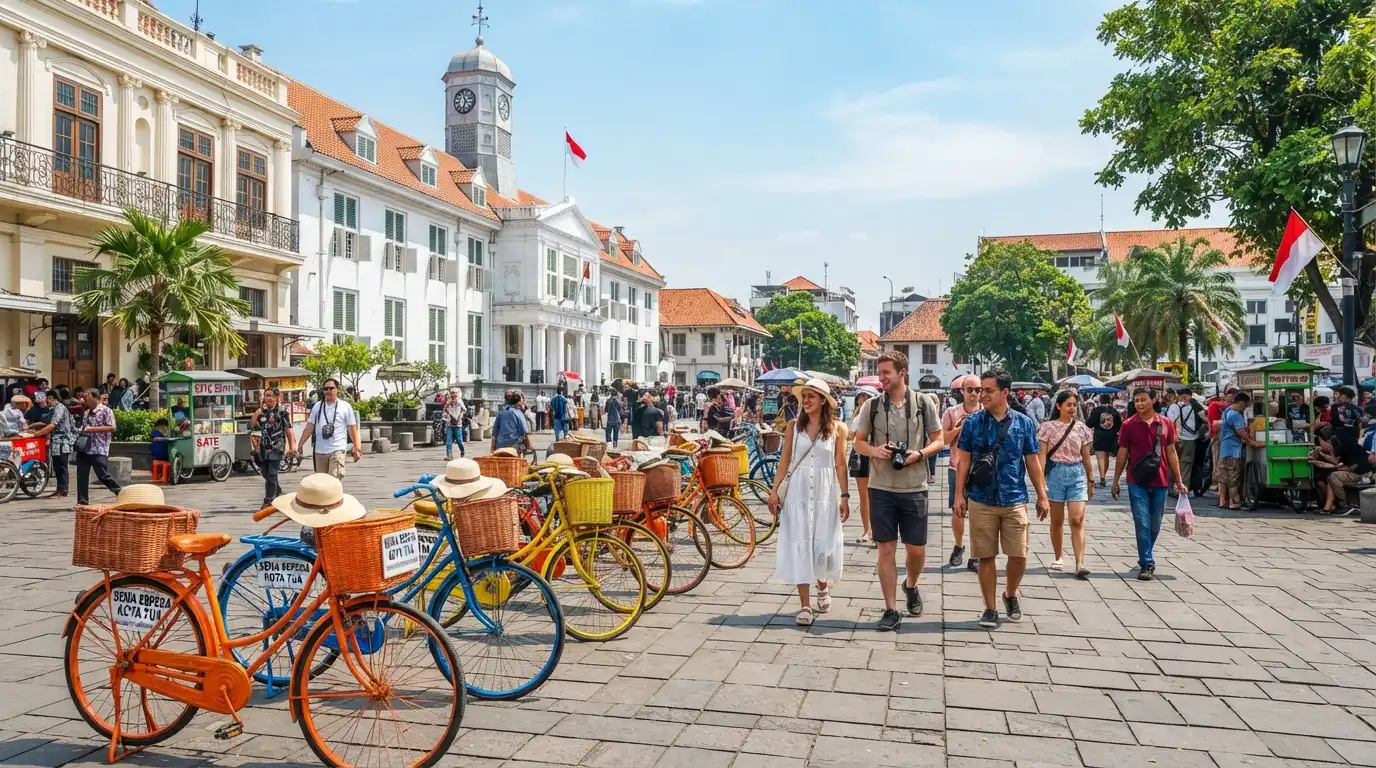
The best things to do in Jakarta, Indonesia mix history, food, and culture across a handful of walkable pockets in an otherwise sprawling city. Start with the National Monument and Old Town, add a boat trip to the Thousand Islands, and you have covered the highlights most travelers actually want. Jakarta rarely gets the warm welcome that Bali does, and that reputation is not entirely fair.
Most people flying into Indonesia treat Jakarta as a layover to survive rather than a destination to enjoy. That reaction usually comes from one thing: traffic. It is real, it is constant, and it shapes how you should plan every single day here. But once you stop expecting Jakarta to behave like a small, walkable city and start treating it like a collection of distinct neighborhoods, it opens up fast.
Is Jakarta worth visiting?
Jakarta is worth visiting if you want a genuine look at modern Indonesian life rather than a resort version of the country. It rewards travelers who give it two to four focused days, pick one area per day, and accept that getting between sights takes longer than a map suggests. Skip it entirely and you miss colonial architecture, some of the best street food in Southeast Asia, and a mosque that can hold 200,000 worshippers.
The traffic complaint is legitimate. Locals joke that commuting is basically a second job here, and that culture of waiting shapes everything from how people plan their day to how businesses schedule deliveries. Visitors who arrive expecting Bangkok-style efficiency get frustrated fast. Visitors who arrive expecting a big, chaotic, endlessly interesting city tend to leave surprised by how much they liked it.
What is the best time to visit Jakarta?
The dry season, running roughly from May through September, is the best time to visit Jakarta. Skies are clearer, which matters directly for the Monas observation deck since haze regularly ruins the view during other months. Rain during the wet season, from November through March, tends to arrive as short, heavy afternoon downpours rather than all-day drizzle, so it is manageable if you build flexibility into your plans. July and August are the driest, most reliable months for a Thousand Islands day trip specifically, since choppy seas during the wet season can delay or cancel boat crossings.
Do you need a visa to visit Jakarta, Indonesia?
Most travelers need a visa on arrival, known as the e-VOA, to enter Indonesia through Jakarta. As of 2026, this costs around IDR 500,000, roughly 32 to 35 US dollars depending on the exchange rate, and covers a 30 day stay with a one-time 60 day extension available through a local immigration office. You can apply online before your flight through the official e-VOA portal, which lets you skip the arrival queue and simply scan a QR code, or pay in cash or by card at a counter after landing at Soekarno-Hatta Airport. Rules and fees do shift periodically, so confirm the current requirement for your nationality on the official immigration site before booking flights.
How do you get from the airport to Jakarta?
Soekarno-Hatta Airport sits roughly 20 kilometers from central Jakarta, and how long that trip takes depends entirely on the hour. Grab and Gojek ride apps are the easiest option for most visitors, with fares that clear locally. Bluebird, the most trusted taxi company in the city, is a solid choice if you would rather flag a car than use an app. For a cheaper and more traffic-proof option, the Damri airport bus connects to the city center, and a Skytrain shuttle links the terminals to the airport rail line running into central Jakarta. Budget at least 45 minutes outside rush hour and up to two hours during peak traffic windows in the late afternoon.
What is the National Monument and is it worth visiting?
Monas, the 132 meter obelisk topped with a gold covered flame, was built to honor Indonesia’s independence struggle and remains the city’s defining landmark. It sits in the middle of Merdeka Square, and the base houses the National History Museum, where dozens of dioramas walk through the country’s path to independence in both Bahasa and English.
A common mistake first-timers make is showing up expecting to pay cash. Monas has gone cashless, so you need to buy a JakCard, a stored-value transit card, at the site before entering, typically costing somewhere in the IDR 45,000 to 55,000 range including starting balance. The observation deck itself runs a smaller additional fee that varies by source and season, so treat any specific number as approximate and confirm on the day. Tickets are sold same-day only, no advance booking exists, and the elevator holds roughly fifty people at a time, so arriving right at opening on a clear morning is worth it if the view matters to you. Skip the observation deck if you are visiting midweek during hazier months, since the museum alone still delivers most of the historical value.
| Monas costs | Approximate price (2026) |
| JakCard (required, includes starting balance) | IDR 45,000 to 55,000 |
| Museum only | Low, a few thousand IDR |
| Observation deck | IDR 20,000 to 55,000 depending on source and category |
What is there to see in Kota Tua, Jakarta’s Old Town?
Kota Tua, once the Dutch trading post of Batavia, centers on Taman Fatahillah square lined with colonial buildings that now house the Jakarta History Museum, Museum Wayang, and a fine art and ceramics museum. None of these are individually spectacular, but together they give a genuine sense of how the city looked for centuries, and the square itself buzzes on weekends with buskers and local families.
Renting one of the colorful old-fashioned bikes parked around the square is a popular way to explore, though you will not get far before hitting traffic that forces a turnaround. Cafe Batavia, inside a heritage building on the square, is the standard stop for a rest, and cycling down to Sunda Kelapa Harbour adds an extra hour of exploring old wooden schooners still docked at the port. Give Kota Tua a half day, more if you enjoy museums.
Is Istiqlal Mosque open to non-Muslim visitors?
Yes. Istiqlal Mosque, the largest mosque in Southeast Asia with a capacity near 200,000, offers free guided tours to visitors of any faith, and staff are used to explaining the building’s history and architecture to travelers. Dress modestly, covering shoulders and knees, and women will be offered a robe at the entrance if needed. Directly across the road sits Jakarta Cathedral, a neo-Gothic Catholic church completed in 1901, and pairing both stops together in one visit is an easy way to see how differently faiths coexist in the same square.
What are the Thousand Islands and how do you get there?
The Thousand Islands, or Kepulauan Seribu, are a scattered chain of small islands off Jakarta’s northern coast, technically still part of the city despite feeling like a completely different country. Boats leave from Ancol Marina or Muara Angke harbor, with the crossing taking roughly one to two hours depending on which island you pick. Closer islands like Pulau Macan and Bidadari suit a straightforward day trip, while Tidung or Pramuka work better on a tighter budget for travelers willing to stay overnight.
Water clarity and diving quality here will not compete with Bali or the Gili Islands, and it is worth setting that expectation honestly rather than imagining a postcard escape. What you do get is a genuine break from Jakarta’s heat, noise, and pollution, plus a chance to see how locals spend a weekend away.
| Trip element | Typical detail |
| Departure point | Ancol Marina or Muara Angke |
| Crossing time | 1 to 2 hours by boat |
| Best months | May to September, dry season |
| Trip length | Day trip or 1 to 2 night stay |
What is Taman Mini Indonesia Indah and is it worth a full day?
Taman Mini Indonesia Indah, or TMII, spans 100 hectares and represents every Indonesian province through traditional houses, museums, and cultural pavilions, plus a cable car offering aerial views of the whole complex. It is genuinely worth a full day precisely because it is so spread out. Renting a bike or hiring a car and driver inside the park makes far more sense than walking, since the heat and distances between areas add up quickly. Riding the cable car early is a smart way to scope out which provincial pavilions look most appealing before committing your time on foot.
Where can you find the best food in Jakarta?
Jakarta’s food scene runs from a dollar bowl of street food to a full tasting menu, often within the same neighborhood. Street stalls serve nasi goreng, sate, and gado-gado for the price of a coffee back home, and the evening street food market at Jalan Sabang draws locals and tourists alike once the sun goes down. Nasi padang restaurants, serving a communal spread of curries, fried dishes, and sambal, are worth trying at least once for the sheer variety on the table.
For something more upscale, Menteng and Cikini both have well-regarded Indonesian restaurants alongside French, Chinese, and Middle Eastern options, and many major hotels run Sunday brunch buffets that rival some of the better hotel spreads in the region. Travelers cautious about street food hygiene tend to find hotel-adjacent night markets, which follow more consistent health standards, a reasonable middle ground.
Is Jakarta good for shopping?
Jakarta is genuinely one of the mall-heaviest cities in the world, with estimates hovering around 150 malls citywide. Grand Indonesia Mall covers designer international brands, while Sarinah, a recently renovated department store, focuses on Indonesian batik, tenun, and songket fabrics along with local designers, making it a stronger pick for souvenirs with actual cultural roots. Smaller complexes around Chinatown are the better bet for electronics, and Tanah Abang is where locals go for cheap fabric by the meter.
Where should you stay in Jakarta?
Menteng and Cikini work well for most first-time visitors, sitting close to Monas, Kota Tua, and a strong cluster of restaurants, without the heavier nightlife scene of areas further south. Kemang suits travelers who want to be near Jakarta’s most concentrated stretch of bars and clubs. If a Thousand Islands day trip is a priority, staying nearer Ancol shaves real time off an early departure.
| Area | Best for |
| Menteng / Cikini | First-timers, central access, dining |
| Kemang | Nightlife, bars, walkable venue clusters |
| Near Ancol | Thousand Islands day trips |
| South Jakarta (Kuningan) | Business travelers, MRT access |
How do you get around Jakarta?
Grab and Gojek cover most short trips reliably and cheaply, and Bluebird remains the taxi company most locals trust for a metered, no-haggling ride. For longer trips across the city, the Jakarta MRT runs south from the center and genuinely bypasses surface traffic, a detail many older guides still miss since the line has expanded significantly in recent years. Transjakarta buses run dedicated lanes across most of the city and are worth using if your route lines up with a corridor. Whichever combination you use, build in extra time between 4pm and 8pm, when traffic slows to its worst.
Is Jakarta safe for tourists?
Jakarta is broadly safe for tourists, including solo travelers and families with young kids. Standard city precautions apply: keep an eye on bags in crowded markets, use official taxi apps rather than unmarked cars, and cross streets carefully since traffic does not always stop for pedestrians. Petty theft is the more realistic risk than anything violent, and most visitors report feeling comfortable moving around during the day.
How many days do you need in Jakarta?
Two full days is enough to cover Monas, Kota Tua, and a solid food crawl through Menteng or Cikini. Three to four days lets you add Taman Mini Indonesia Indah and either a Thousand Islands day trip or an overnight stay, without feeling like you are rushing between stops.
Conclusion
Jakarta will never be the easy, walkable city some travelers hope for, and that is fine. The best things to do in Jakarta, Indonesia reward a bit of planning: pick your neighborhood, know your visa and transit basics before you land, and build slack into your schedule for traffic. Do that, and a city most guidebooks treat as a layover turns into one of the more genuinely interesting stops in Southeast Asia.
FAQs
Is Jakarta worth visiting?
Yes, for travelers who want an authentic look at Indonesia beyond Bali and are willing to plan around traffic.
What is Jakarta famous for?
Monas, colonial-era Kota Tua, its massive mall culture, and being one of the world’s most populous urban areas.
How many days do you need in Jakarta?
Two days for the highlights, three to four for a fuller trip including the Thousand Islands.
Is Jakarta safe for tourists?
Generally yes, with standard precautions around belongings and street crossing.
What is the best time to visit Jakarta?
The dry season, roughly May through September, for clearer views and easier island trips.
How do I get from Jakarta airport to the city?
Grab, Gojek, Bluebird taxi, or the Damri airport bus and rail combination.
Do I need a visa to visit Jakarta, Indonesia?
Most nationalities need an e-VOA costing around IDR 500,000 for a 30 day stay.
What should I avoid in Jakarta?
Avoid unmarked taxis, walking alone late at night in unfamiliar areas, and expecting Ancol’s beach to match Bali’s coastline.
How do I get to the Thousand Islands from Jakarta?
By boat from Ancol Marina or Muara Angke, roughly one to two hours depending on the island.
Is Jakarta or Bali better for first-time visitors?
Bali suits beach-focused first trips, while Jakarta suits travelers wanting culture, history, and city life alongside a Bali add-on.
How much does a week in Jakarta cost?
Budget travelers can manage on a modest daily spend using street food and public transport, while a more comfortable trip with taxis and hotel dining runs higher.
What is the best area to stay in Jakarta for tourists?
Menteng or Cikini for most first-timers, Kemang for nightlife.


