
Things to Do in Jakarta: The Complete Guide to Indonesia’s Capital
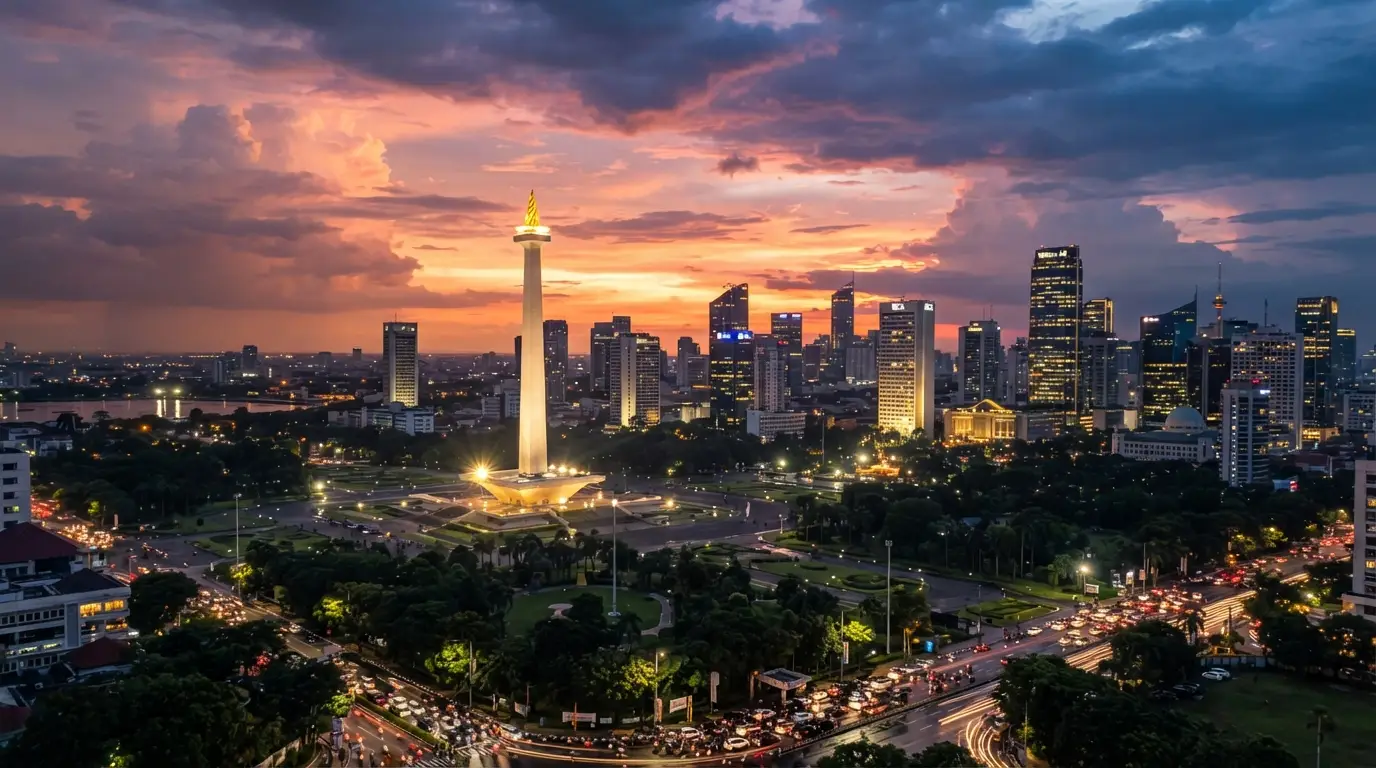
Things to do in Jakarta include exploring the National Monument and its surrounding museums, wandering the Dutch colonial Old Town, trying street food along Jalan Sabang, and spending a day at family friendly parks like Taman Impian Jaya Ancol. Most travelers arrive expecting a quick stopover before the rest of Indonesia and leave surprised by how much the city actually has to offer once the traffic clears.
Is Jakarta Worth Visiting?
Yes, though it takes a little effort to see past the first impression. Jakarta is one of the most populous urban areas in the world, home to more than 28 million people across the Greater Jakarta region, and the sprawl can feel overwhelming from the back of a car on the drive in from the airport. A common mistake first timers make is judging the city purely by that initial traffic-heavy arrival, when the culture, food, and history genuinely reward a few days of exploring. Dutch colonial architecture sits alongside the country’s dominant Islamic identity, and a growing middle class has fueled an explosion of restaurants, shopping malls, and nightlife that gives the city a distinctly different energy from Bali or Yogyakarta.
Is Jakarta Safe?
For the vast majority of visitors, yes, and travelers consistently report feeling more welcomed and less hassled than they expected going in. Locals are generally described as friendly and smiley rather than the more conservative or reserved image some travelers anticipate, and visible poverty is far less obvious to a tourist than outdated stereotypes suggest. As with any major world capital, standard precautions apply, and checking current travel advisories before a trip is always worth doing given how conditions in any large city can shift. The honest takeaway is that day to day safety concerns tend to be more about traffic and heat exhaustion than personal security.
How Do You Get Around Jakarta?
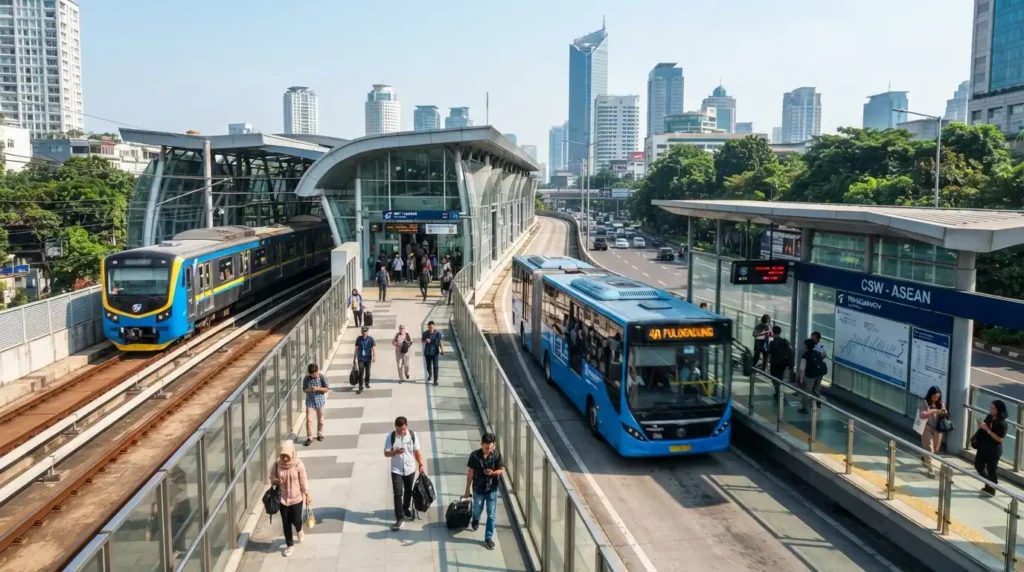
Traffic is Jakarta’s defining challenge, and it shapes nearly every part of a visit here. Local authorities add roughly 90,000 new cars and 320,000 new motorbikes to the streets every year, and ambitious subway and flyover projects remain years from full completion. Taxis are plentiful and generally reliable, running on the meter without needing to be asked, though a ride-hailing app is worth downloading as the modern default for getting around, since it typically offers more predictable pricing and pickup than hailing a cab on the street. A common mistake first timers make is underestimating travel time between attractions; a trip that looks short on a map can easily take an hour or more, so grouping nearby sights into the same day, rather than crisscrossing the city, saves real time and frustration.
What Is There to See Around the National Monument?
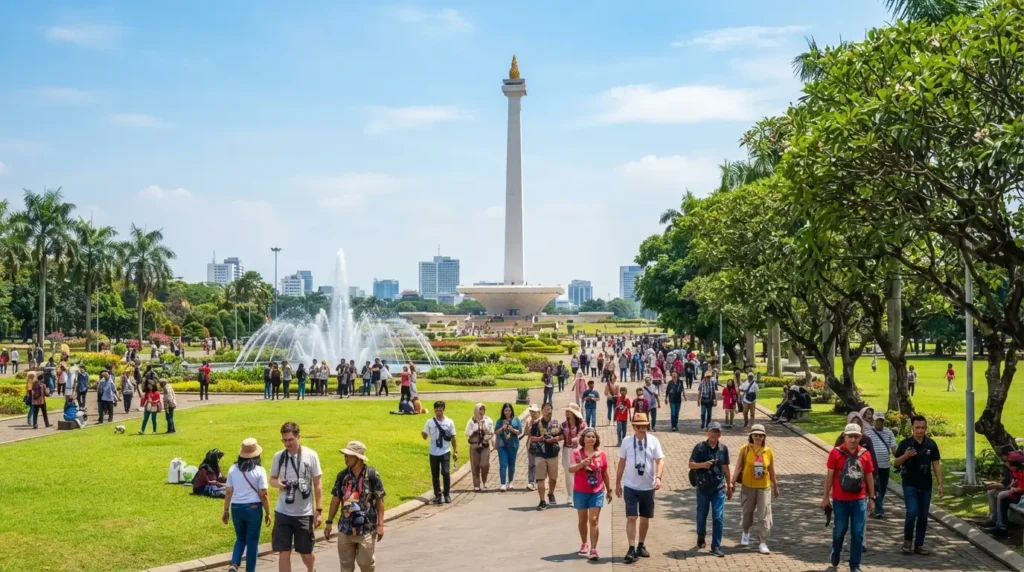
The area around the National Monument, known locally as Monas, is the best starting point for understanding Jakarta’s history in one concentrated area.
| Attraction | Entry Cost | Notes |
| National Monument (top) | Around 10,000 rupiah | Views over the city |
| National Monument (base/museum) | About half the top price | Includes National History Museum dioramas |
| National Museum | 10,000 rupiah adults, 2,000 rupiah kids | Ethnographic and archaeological collections |
| Istiqlal Mosque | Free guided tours | Largest mosque in Southeast Asia |
Monas itself is a soaring obelisk standing well over 130 meters tall, topped with a flame sculpture covered in gold foil, commissioned to celebrate Indonesian independence and completed in the mid 1970s after over a decade of construction. Climbing to the top rewards visitors with sweeping views, but the queue can run genuinely long, with waits stretching past three hours on a busy Sunday, so arriving early on a weekday morning consistently avoids the worst of it. The National History Museum sits in the monument’s base and walks through decades of Indonesia’s struggle for independence across dozens of dioramas, while the National Museum across the street holds a genuinely engaging ethnographic collection covering the country’s diverse ethnic groups. The Presidential Palace borders the same park, and the Istiqlal Mosque faces the National Cathedral across the street, with free guided tours offered to visitors curious about Southeast Asia’s largest mosque.
What Is Old Town Jakarta (Kota Tua)?
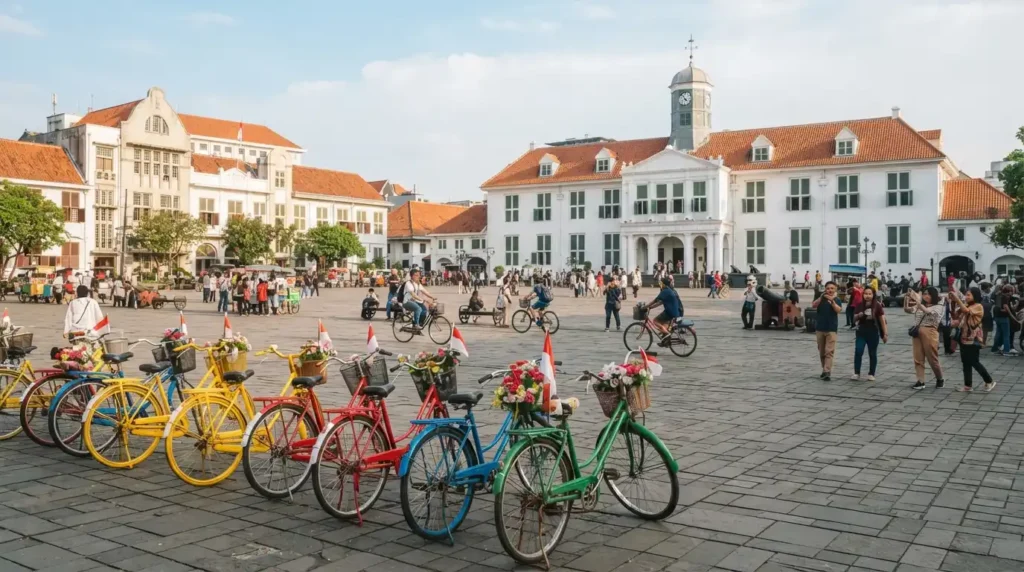
Old Town, or Kota Tua, sits north of the National Monument and preserves the remains of the Dutch colonial capital once known as Batavia. Taman Fatahillah, the old town square, anchors the area, surrounded by colonial era buildings that now house several museums, including the Puppet Museum, the Jakarta History Museum, and a Fine Art and Ceramic Museum housed in a former palace of justice. None of these museums are individually spectacular, but together they make for a genuinely interesting afternoon, and colorful bikes are available for rent around the square for a short, low effort loop before traffic forces a turnaround. The Batavia Café, set inside one of the heritage buildings, offers the best food option in the immediate area if a break is needed between museum stops. Chinatown sits conveniently between Old Town and the National Monument, making it an easy add-on for casual window shopping and electronics browsing on the way between the two.
What Is There to Do in Jakarta with Kids?
| Attraction | Best For | Approx Cost |
| Kidzania Jakarta | Role-play activities, ages 4+ | 250,000 rupiah kids, 200,000 rupiah adults |
| Seaworld Jakarta | Aquarium, touch tanks | 100,000 rupiah per person |
| Taman Impian Jaya Ancol | Amusement park, Dunia Fantasi | 25,000 rupiah base entry |
| Museum Wayang | Puppet collection | 5,000 rupiah adults, free for kids |
Kidzania Jakarta, located on the 6th floor of Pacific Place Mall in South Jakarta, consistently ranks as a top pick for families, letting kids role-play as firefighters, dentists, and shopkeepers using real equipment scaled down to size. Seaworld, part of the larger Taman Impian Jaya Ancol waterfront complex, houses sharks, sea otters, and an 80 meter viewing tunnel, along with a genuinely massive whipray that can weigh up to 450 kilograms. Ancol itself includes Dunia Fantasi, often described as Indonesia’s answer to Disneyland, plus additional water park attractions spread across a large area that requires taxi transport between sections rather than walking. For a rainy day or a break from the heat, Pondok Indah Mall 2 occasionally hosts a seasonal Winter Wonderland complete with an ice rink and an artificial snow playground, a genuinely unusual novelty given Jakarta’s tropical climate.
Is Taman Mini Indonesia Indah Worth Visiting?
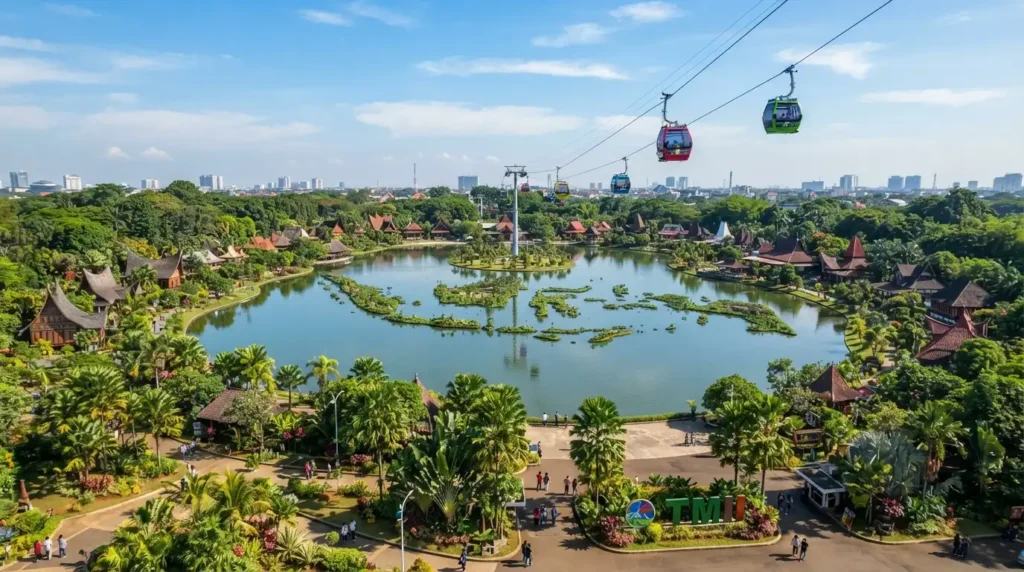
For travelers with a full day and realistic expectations, yes, though it comes with a genuine honest warning. This 100 hectare culture-based recreational park represents Indonesia’s many provinces through traditional houses, dozens of museums, a Komodo Dragon Museum and Reptile Park, and a full Transport Museum packed with planes, trains, and old buses. A cable car ride at the start, running around 40,000 rupiah, offers a useful overview to help decide which sections are worth the walk. The honest downside here matters: the site is large, hot, and can feel genuinely confusing to navigate, with inconsistent signage and some province pavilions that look more like offices than attractions worth stopping for. Visiting on a weekday to avoid crowds can actually backfire, since fewer visitors around means fewer cues for where the interesting spots are and less frequent internal transport. Bringing swimwear for the Snow Bay Water Park and planning to hire a bike or driver rather than walking the whole site both make the visit considerably more manageable.
Where Can You Find the Best Street Food in Jakarta?
Jalan Sabang has built a strong reputation as one of the city’s best street food strips, and the Menteng neighborhood’s evening street food market offers a similarly reliable option with health regulations in place for travelers cautious about hygiene. A full meal from a street stall typically costs around a dollar, making it one of the most affordable ways to sample Indonesian cuisine, while restaurant chains like Sate Khan Senayan offer a more sit-down version of the same flavors across multiple locations. For something more upscale, major hotels host Sunday buffet brunches popular with the city’s expat community, and international cuisine from French to Chinese, including options from Michelin-recognized chefs, clusters around the city’s top hotels.
What Is the Best Nightlife Area in Jakarta?
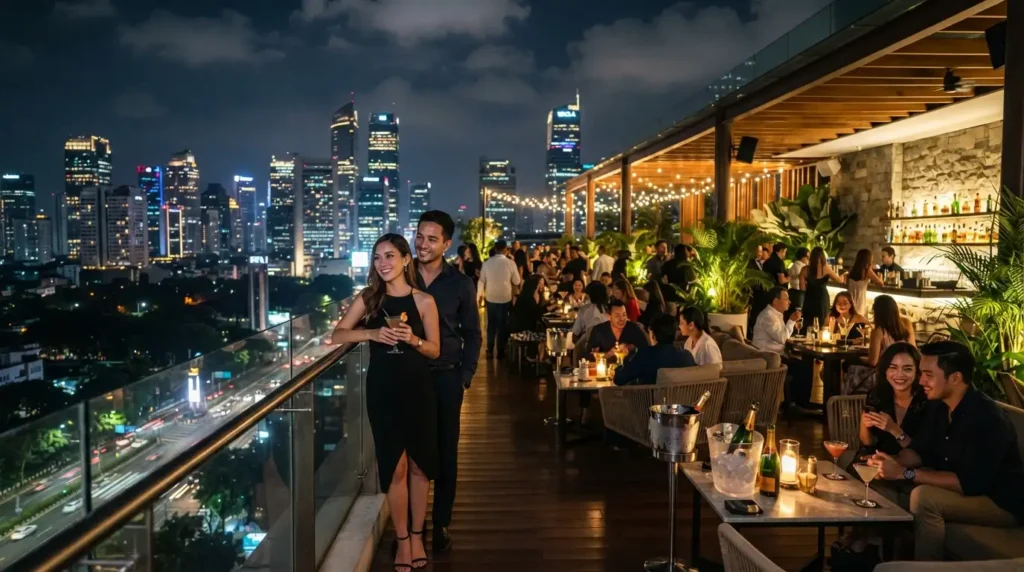
Jakarta carries a genuine reputation as one of the stronger nightlife cities in the region, helped by the fact that its bars and clubs skew toward a mix of upper class locals and Western expats rather than a heavy tourist crowd. Skye Bar, perched on the 56th floor of a downtown skyscraper, delivers sweeping city views in a stylish, comfortable setting and makes a strong first stop for any visitor. Potato Head works well earlier in the evening, while Dragonfly suits a later crowd heading into the early morning hours. Kemang stands out as the most concentrated nightlife district, with venues like Barcode clustered close enough together to move between throughout the night without needing a fresh taxi each time.
What Is the Best Area to Stay in Jakarta?
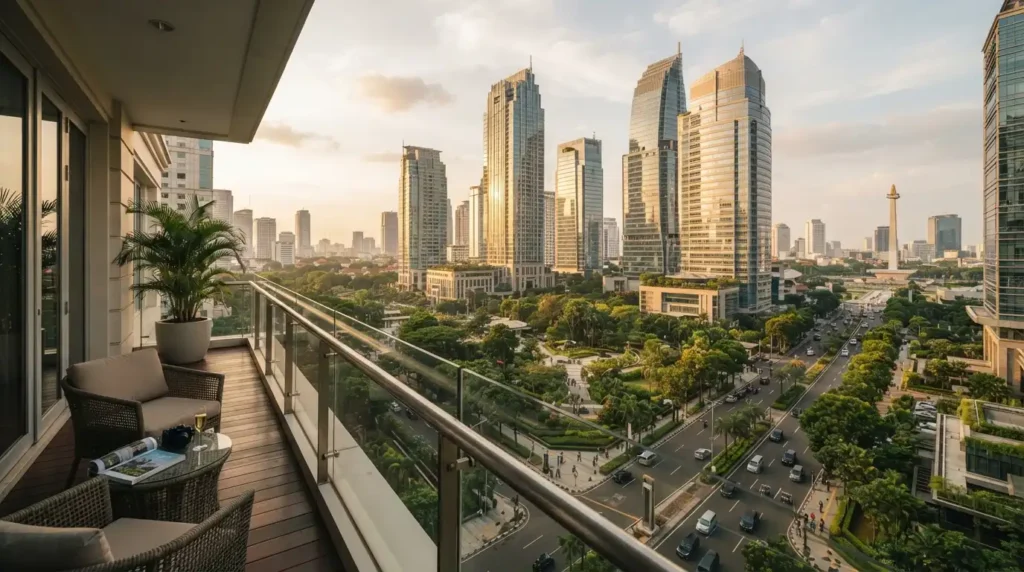
Menteng consistently comes up as the top recommendation for most visitors, offering a central, leafy base close to both the National Monument area and Menteng’s own street food market. Given Jakarta’s traffic, choosing a hotel based on proximity to the specific attractions you plan to prioritize matters more here than in most cities, so mapping out your must-see list before booking accommodation is a genuinely useful step. Families traveling with young kids should weigh a similar approach, prioritizing a hotel near a shopping mall for easy meals and minimizing taxi time between attractions spread across a large, congested city.
Final Thoughts
Jakarta rewards travelers who plan around its traffic rather than fighting it. Group nearby attractions like the National Monument area and Old Town into the same day, visit Monas early on a weekday to skip the worst queues, and pick a base like Menteng that keeps you close to what matters most on your list. Whether it’s street food on Jalan Sabang or sweeping views from a 56th floor bar, the things to do in Jakarta consistently surprise travelers who expected nothing more than a layover before the rest of Indonesia.
FAQs
How much does it cost to visit the National Monument?
Reaching the top costs around 10,000 rupiah for adults, while visiting just the base museum runs about half that price, and arriving early on a weekday helps avoid the multi-hour queues that can build up on weekends.
Is Jakarta good for shopping?
Yes, with roughly 150 shopping malls across the city offering everything from affordable local clothing deals to imported designer goods, while Chinatown’s smaller complexes are the better choice for electronics and gadgets.
What is Istiqlal Mosque?
Istiqlal Mosque is the largest mosque in Southeast Asia, located across from the National Cathedral near the National Monument, and it offers free guided tours to visitors curious about its architecture and significance.
How many days do you need in Jakarta?
Most travelers find 3 to 5 days enough to cover the National Monument area, Old Town, a family attraction or two, and a proper street food outing, though the sprawling nature of the city means longer stays rarely feel wasted.


