Sinking Bell Tower in Laoag City – History, Mystery, and Why It Keeps Sinking
The Sinking Bell Tower stands half-buried in the ground, a silent witness to centuries of Spanish colonial rule and the relentless forces of nature. Built over 200 years ago in Laoag City, this stone and brick structure continues its slow descent into the earth, creating one of the most unusual architectural sights in the Philippines.
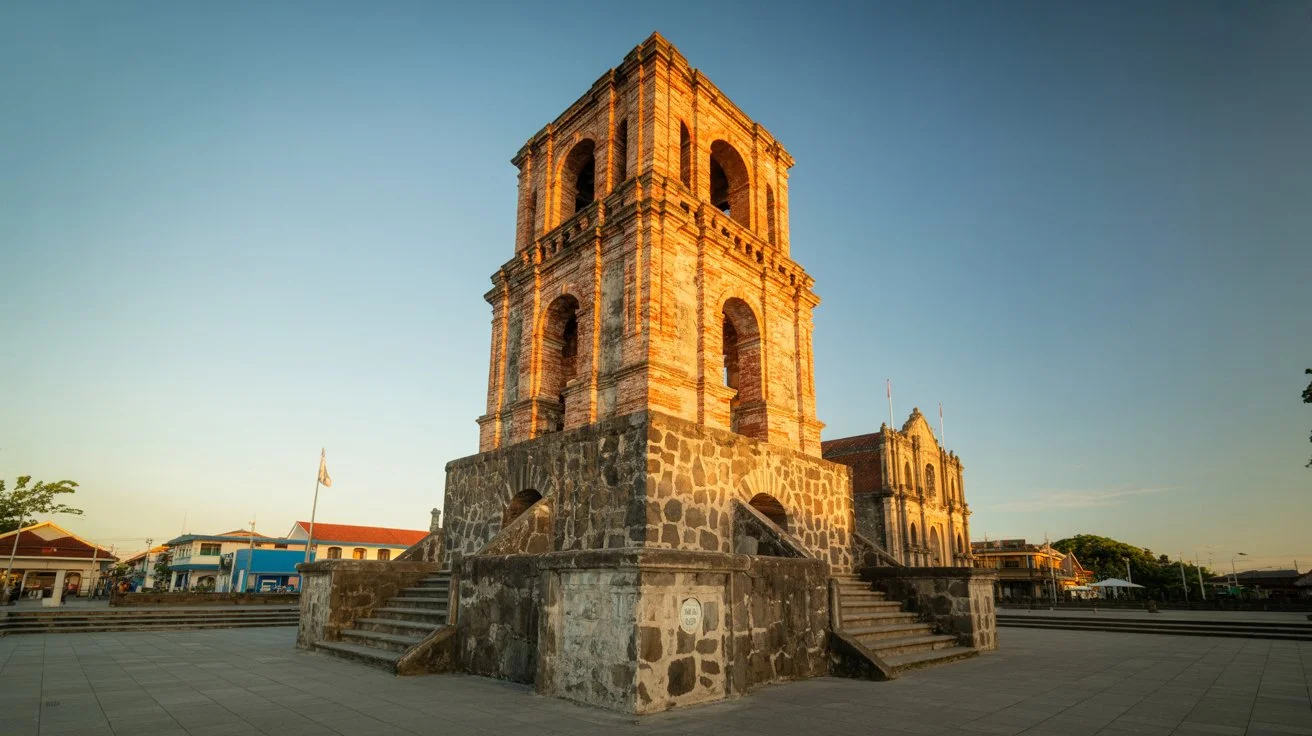
Unlike famous leaning towers that tilt to one side, this bell tower sinks straight down. The structure that once rose proudly above the farmlands now sits with its base buried several feet underground, accessible only by walking down steps that lead to what used to be ground level.
Where Is the Sinking Bell Tower Located?
The tower sits in the heart of Laoag City, the capital of Ilocos Norte province in the Ilocos Region of northern Luzon. You’ll find it standing separate from St. William’s Cathedral, just a short walk from the city plaza and major government buildings in the downtown area.
The location makes sense when you understand the Spanish pattern of building churches and bell towers near administrative centers. What the colonial architects didn’t account for was the ground composition beneath their grand plans.
When and Why the Sinking Bell Tower Was Built
Construction of the bell tower began in 1612 under the direction of Augustinian friars who spread Catholicism throughout the Philippines during Spanish rule. The religious order built the tower to serve the growing Catholic community in what was then a remote northern outpost of the colonial empire.
The Augustinians designed it as a detached campanario, standing separate from the main church building. Spanish colonial architects often built bell towers away from churches for two practical reasons: earthquakes frequently shook the islands, and a detached tower wouldn’t bring down the entire church if it collapsed. The tower also served as a watchtower, giving guards a high vantage point to spot approaching threats.
The bells rang to mark religious services, signal emergencies, and organize daily life in the farming communities around Laoag.
Why Is the Sinking Bell Tower Sinking?
The tower sinks because it was built on soft clay soil that compresses under weight and absorbs water during the rainy season. Every year, rainwater saturates the ground, causing the clay to expand and shift. When the dry season returns, the soil contracts and settles lower than before.
The builders used heavy materials without proper foundation preparation. They stacked bricks and coral stone blocks directly onto the ground, creating tremendous downward pressure. Combined with the solid brick construction, the tower weighs far more than the soft clay beneath can support indefinitely.
Flooding has accelerated the process. Laoag sits in a low-lying area where water accumulates during typhoons and heavy rains. Each flood event weakens the soil structure further, allowing the tower to settle deeper. The clay acts like a sponge, absorbing water and losing its ability to support the massive weight above it.
The tower doesn’t have deep foundations anchored to bedrock. It simply rests on the surface, slowly pushing down through layers of compressible soil.
Architecture and Design of the Sinking Bell Tower
The tower follows the typical Spanish colonial bell tower design common throughout the Philippines. It stands as a four-sided structure with thick brick walls that taper slightly as they rise. The builders used a combination of fired bricks held together with lime mortar, with coral stone blocks reinforcing key structural points.
The detached design separated the tower from St. William’s Cathedral by several meters. This gap protected the main church from potential tower collapse during earthquakes, which strike the Philippines regularly.
The foundation reveals the critical flaw. The Spanish builders did not drive deep pilings or create a reinforced base. They built directly on the surface, trusting that the ground would hold. This worked for structures in Spain, where rocky soil provided stable building conditions. In Laoag, where clay dominates the soil composition, the same approach guaranteed eventual problems.
Is the Sinking Bell Tower Still Sinking Today?
Yes, the tower continues to sink, though the rate has slowed compared to earlier centuries. Modern measurements show minimal movement year to year, but the gradual descent hasn’t stopped completely. The weight of the structure continues pressing down on soil that still compresses and shifts with seasonal water changes.
Local authorities monitor the tower’s condition through periodic surveys and structural assessments. The good news for visitors: the tower remains structurally sound despite its unusual position. The walls show no major cracks, and the sinking happens uniformly across the entire base.
How Deep Has the Sinking Bell Tower Gone?
The tower has sunk approximately 20 feet below its original ground level. What visitors see today represents only about two-thirds of the structure’s total height. The lowest level, including the original entrance, now sits completely underground.
You can observe the extent of sinking by looking at the steps that lead down to the current ground level around the tower’s base. These steps weren’t part of the original design. Workers added them over the years as they excavated around the base to maintain access.
The visible height today measures roughly 45 feet from the current ground level to the top. When first built, the tower likely stood closer to 65 feet tall, making it one of the most prominent landmarks visible for miles around Laoag.
Visiting the Sinking Bell Tower – What to Expect
The tower sits in an open area accessible to pedestrians throughout the day. Visitors can walk around the exterior and descend the steps to the sunken base level. Standing at the base level and looking up gives you the unusual perspective of being below the modern ground surface while standing next to a centuries-old structure.
You cannot enter the interior of the tower. Officials sealed the entrances to prevent damage and ensure visitor safety. St. William’s Cathedral stands just steps away, making it easy to visit both landmarks in a single trip. Plan about 15 to 20 minutes for your tower visit.
Best Time to Visit the Sinking Bell Tower
The dry season, running from November through April, offers the best conditions for visiting. During these months, you’ll encounter clear skies, minimal rain, and comfortable temperatures. The ground stays dry, making it easier to navigate the steps down to the base level.
Avoid the rainy season from June through October if possible. Heavy rains can create puddles around the tower and make the steps slippery. Early morning provides the best lighting for photography, and weekday mornings offer the quietest experience.
Cultural Importance of the Sinking Bell Tower to Locals
For residents of Laoag, the tower represents more than a tourist attraction. It stands as a symbol of their city’s deep historical roots and connection to the Spanish colonial period that shaped much of Philippine culture and religion.
The tower reminds locals of their ancestors who heard those bells marking time and calling them to prayer. Religious significance remains strong, and the tower still connects to St. William’s Cathedral next door. The structure has become a point of civic pride and appears in local government materials, tourism promotions, and cultural celebrations.
Frequently Asked Questions About the Sinking Bell Tower
Why is it sinking?
The tower sinks because workers built it on soft clay soil without deep foundations. The clay compresses under the weight of the bricks and coral stone. Rainwater saturates the ground, causing expansion and contraction cycles that accelerate the settling process.
Is it safe to visit?
Yes, the tower is safe to visit. The structure remains sound with no major cracks or instability. Officials monitor it regularly and have restricted access only to the interior.
How old is it?
Construction began in 1612 under the Augustinian Order, making the tower over 410 years old.
Can tourists go inside?
No, officials sealed the interior to prevent damage and ensure safety. Visitors can walk around the exterior and view the structure from multiple angles.
Why the Sinking Bell Tower Is Worth Seeing in Laoag
The tower offers something you won’t find at most historical sites: a structure actively changing before your eyes. The historical value goes beyond the structure itself. Standing next to this colonial-era building connects you to the Spanish period that fundamentally shaped the Philippines.
Among Philippine landmarks, few combine historical importance, ongoing geological processes, and accessibility the way this tower does. You can see it, touch it, and stand at the buried base level where colonial-era craftsmen once worked at ground level. That physical connection to the past, combined with the tower’s unique condition, makes it a must-see stop in northern Luzon.