Scottish Food: Traditional Dishes, Desserts, Seafood, and What to Try First
Scottish food is a hearty local cuisine built around oats, potatoes, beef, seafood, smoked fish, and simple cooking that feels satisfying in cold weather. It is best known for haggis, Cullen Skink, cranachan, shortbread, and the full Scottish breakfast, but it also includes strong regional dishes and modern vegetarian options.
What Is Scottish Food and Why Does It Stand Out?
Scottish food stands out because it grew from the land and sea around it. The cuisine leans on practical ingredients such as oats, potatoes, root vegetables, beef, lamb, smoked haddock, salmon, and berries. That is why so many classic dishes feel warm, filling, and direct. You get honest flavors, local produce, and food that makes sense in a cool climate.
That does not mean the food is narrow. Scotland’s official tourism and heritage sources show a much wider picture than the old stereotype of just haggis and fried snacks. Alongside traditional plates, you also find seafood, regional cheeses, sweet bakes, vegetarian options, farm shops, food festivals, and restaurants that take local ingredients seriously. In 2026, that mix of tradition and modern taste is one of the biggest reasons the cuisine feels more interesting than many first-time visitors expect.
What Are the Traditional Dishes Most People Think of First?
The first name most people know is haggis, and that makes sense. It is Scotland’s national dish and is usually served with neeps and tatties, which means mashed turnips and potatoes. The flavor is savory, peppery, and richer than many people expect. If you want the fastest answer to what traditional Scottish food looks like on a plate, this is it.
But there is more to the core lineup. Stovies are a classic mix of potatoes, onions, dripping, and leftover meat, built for comfort and not for show. Scotch pie is a small meat pie with real everyday appeal. Mince and tatties is another simple favorite that feels closer to home cooking than tourist food. Balmoral chicken, which uses chicken stuffed with haggis and topped with bacon, shows how traditional flavors still keep moving into newer plates.
This is where many competitor articles stop. They list the dishes and move on. A better article explains the role each one plays. Haggis carries the national identity. Stovies and mince and tatties reflect thrift and home cooking. Scotch pie shows the snack and football culture side of the cuisine. That mix gives your article more depth and makes it more useful for readers who want context, not just names.
Why Is Haggis So Famous?
Haggis is famous because it sits at the center of Scottish food history, culture, and identity. Official Scottish sources describe it as a savory pudding made with oatmeal, onion, spices, and traditionally sheep offal, then served with neeps and tatties and often a whisky sauce. It became even more tied to national culture through Robert Burns and Burns Night, where it still plays a starring role.
People often worry about the ingredient list more than the actual taste. In practice, the texture is crumbly and soft, and the flavor is more peppery and savory than strange. That is why many travelers end up liking it more than they expected. If someone feels unsure, they can start with a smaller serving or try it inside Balmoral chicken or as part of a breakfast.
There is also a practical 2026 angle here. Many restaurants and shops now offer vegetarian haggis, and VisitScotland notes that it commonly uses beans, lentils, nuts, vegetables, and oatmeal. That matters because it opens the dish up to people who want the cultural experience without the traditional meat base.
What Comes in a Full Scottish Breakfast?
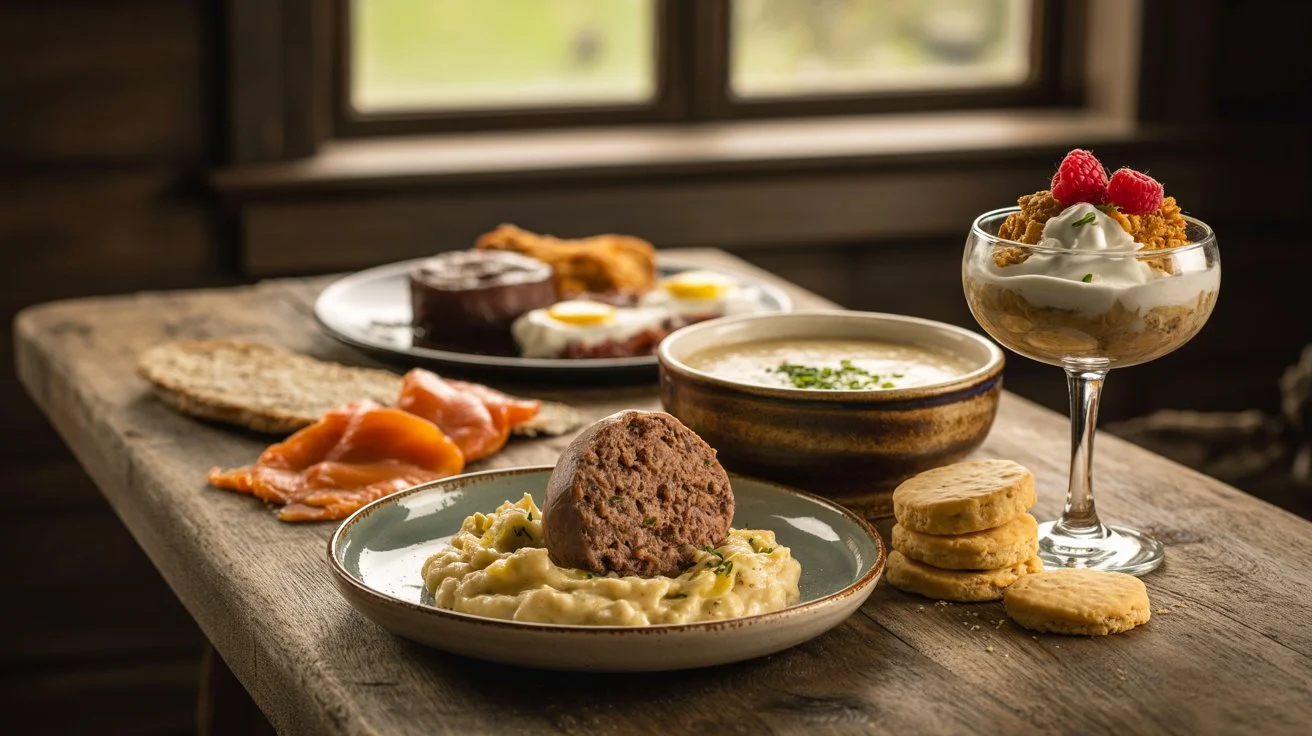
A full Scottish breakfast is one of the easiest ways to understand the cuisine because it pulls together several local staples on one plate. VisitScotland says you will typically see fried eggs, toast, bacon, baked beans, hash browns, sausages, black pudding, tattie scones, mushrooms, and fried tomatoes. Heritage sources add that some versions also include fried haggis and Lorne sausage, which is the square sausage many people strongly associate with Scotland.
The local markers are what matter most here:
- Tattie scones bring the potato side of Scottish cooking into breakfast.
- Black pudding adds a stronger savory note.
- Lorne sausage gives the meal one of its most recognisable regional touches.
- Porridge often sits nearby on breakfast menus as the simpler, older staple.
That balance is useful for readers. If someone wants a heavy breakfast, the fried plate makes sense. If they want something more traditional and plain, Scottish porridge is still one of the most authentic choices. Scottish sources describe porridge as a long-standing staple made from ground oats with water or milk, often finished today with honey, fruit, jam, or even a little whisky.
Which Soups, Seafood, and Savory Comfort Foods Should You Try?
If haggis is the iconic answer, Cullen Skink is often the dish that wins people over. It comes from Cullen in Moray and is now known as a creamy soup made with smoked haddock, potatoes, and usually leeks or onions. It tastes smoky, rich, and warming without feeling heavy in the same way a meat dish does. For many readers, this is the safest place to start if they want something very Scottish but easy to enjoy.
Scotland’s seafood story is much bigger than one soup. Official sources highlight smoked salmon, oysters, lobster, wild trout, and langoustines, while the National Trust for Scotland notes that Scottish seafood has built a serious reputation far beyond the country itself. That matters because a good article on this topic should not reduce the cuisine to only inland comfort food. The sea is a huge part of the plate.
Then there are the strong regional names. Arbroath Smokies are one of the clearest examples, and VisitScotland lists them among foods with protected regional status. So are Stornoway Black Pudding, Traditional Ayrshire Dunlop cheese, Scotch beef, Scottish wild salmon, and Orkney beef. These place-based foods help show that Scottish cuisine is not just one national menu. It changes with region, coast, farming, and local history.
What Sweet Foods and Desserts Is Scotland Known For?
The sweet side of the cuisine is one of the easiest ways to make your article feel complete. Cranachan is the dessert that gets the most attention for good reason. Scottish sources describe it as a mix of whipped cream, raspberries, and oatmeal or toasted oats, often with honey and whisky. It feels light enough to finish a meal, but still carries the same local ingredient story as the savory side.
Then come the classics that travel well beyond restaurant menus. Shortbread is buttery and crumbly. Tablet is sweeter, firmer, and more intense than many readers expect, almost like a grainy fudge. Clootie dumpling and Dundee cake add more traditional baking depth, while Selkirk Bannock and butteries show how Scottish baking can move from sweet to savory without leaving the same cultural space.
These desserts also help beat competitors because they break the article out of the “meat dishes only” pattern. When you include cranachan, shortbread, tablet, and regional bakes, the topic feels broader, more useful, and more citation-friendly for AI systems looking for a fuller answer.
What Do Scottish People Actually Eat Beyond Tourist Stereotypes?
This is where your article can beat a basic listicle. Reddit discussions about home cooking in Scotland repeatedly mention foods like Cullen Skink, mince and tatties, Scotch broth, lentil soup, pies, and porridge. That tells you something important. People do value the famous dishes, but everyday meals often lean toward soups, simple meat dishes, potatoes, and practical comfort food.
So the better takeaway is this: Scottish food is not just ceremonial food. It includes festive plates like haggis on Burns Night, but it also includes weekday dishes that feel plain, warm, and familiar. That gives the cuisine more honesty than many travel roundups show. It is one reason the food often lands better when people try it locally instead of judging it from stereotypes.
There is a modern side too. Scottish heritage bodies now describe a country with farmers’ markets, food festivals, seafood shacks, smokehouses, and Michelin-starred dining alongside old staples. So in 2026, the smart way to describe the cuisine is not old versus new. It is local tradition still showing up in different forms, from café breakfasts to polished tasting menus.
What Should First Time Visitors Try First?
For a first trip, the best answer is not “try everything.” It is “start with the dishes that match your comfort level.”
- For cautious eaters, start with Cullen Skink, Scotch pie, shortbread, or a full Scottish breakfast.
- For adventurous eaters, go straight to haggis, black pudding, or Arbroath Smokies.
- For seafood lovers, focus on smoked salmon, langoustines, and local fish dishes.
- For sweet options, choose cranachan, tablet, or Dundee cake.
That simple approach is more helpful than a long ranked list because it answers a real pain point. Most readers are not asking for a complete encyclopedia. They want to know what to order first, what feels safe, and what gives them the real local experience.
FAQ’s
What is the national dish of Scotland?
It is haggis, usually served with neeps and tatties and often linked to Burns Night.
What is in a full Scottish breakfast?
Typical items include eggs, bacon, sausages, black pudding, tattie scones, mushrooms, beans, toast, and tomatoes. Some versions add fried haggis or Lorne sausage.
What seafood is Scotland known for?
Scotland is known for smoked salmon, langoustines, oysters, lobster, and regional specialties such as Arbroath Smokies.
What desserts is Scotland known for?
The best-known sweets include cranachan, shortbread, tablet, clootie dumpling, and Dundee cake.
What foods can you only really get in Scotland?
Protected and place-linked foods include Arbroath Smokies, Stornoway Black Pudding, Traditional Ayrshire Dunlop cheese, Scotch beef, Scottish wild salmon, and Orkney beef.
Final Takeaway
The best way to understand Scottish food is to stop treating it like a joke or a dare. It is a local cuisine with strong roots in oats, seafood, beef, potatoes, smokehouses, baking, and regional pride. Start with Cullen Skink, a full breakfast, or cranachan if you want an easy entry point, and move to haggis and regional specialties once you want the full picture. That is where the food starts to make real sense.