
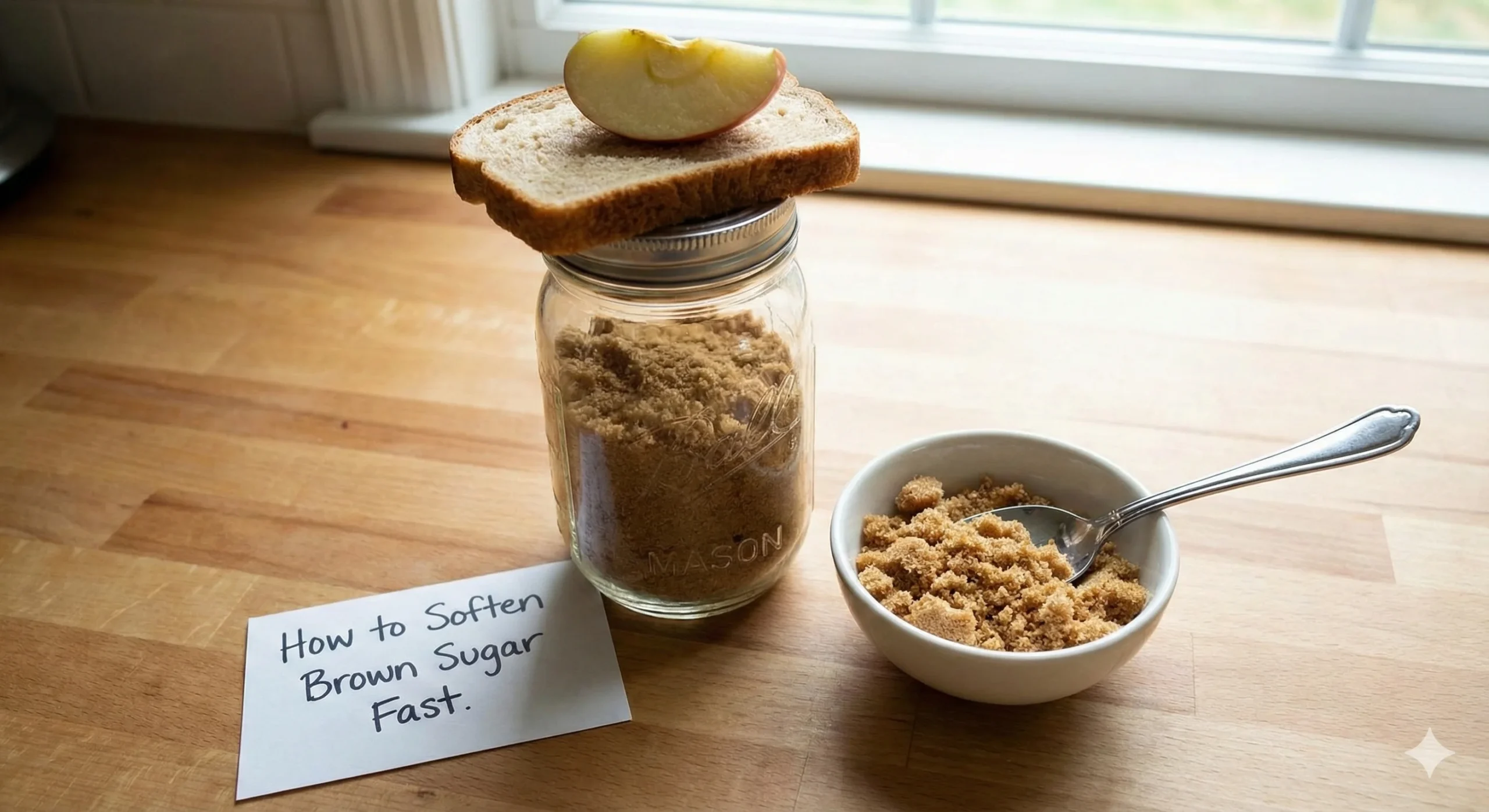
How to Soften Brown Sugar Fast Without Ruining It
Hard sugar happens to everyone. One day it is soft and scoopable. Next day it feels like a brick. The good news is simple. You can bring it back with moisture and time. Some methods work in one minute. Others work overnight. This guide helps you pick the right fix fast.
Quick answer that works for most kitchens
Need it now. Put the sugar in a microwave safe bowl. Cover it with a damp paper towel. Heat in short bursts. Stop when it feels soft and crumbly. Need it without a microwave. Seal it with a slice of bread overnight. For long term storage, use an airtight container with a moisture saver.
Why brown sugar turns hard
Brown sugar contains molasses. Molasses holds moisture. When air reaches the sugar, moisture escapes. The sugar dries out and clumps. Over time it can form a solid block. This is not spoilage by itself. It is just moisture loss.
A loose bag is the main cause. A container that does not seal is the second cause. Heat near the stove also speeds drying. Humid air can help at first. Dry air wins in the end.
Pick the best method in 20 seconds
Use this table to decide. It saves time and avoids mistakes.
| Method | Time | Tools | Best for | Biggest risk |
|---|---|---|---|---|
| Damp paper towel + microwave | 30 to 90 seconds | Bowl, towel | Last minute baking | Melting if overheated |
| Bread slice in a container | 6 to 12 hours | Airtight container | Overnight fix | Bread smell if left too long |
| Marshmallow method | 6 to 12 hours | Container, marshmallows | Gentle softening | Takes longer |
| Apple slice method | 2 to 8 hours | Container, apple | Faster than bread | Flavor transfer |
| Low oven warming | 5 to 10 minutes | Tray, oven | No microwave | Overdrying or melting edges |
| Food processor pulse | 10 to 30 seconds | Processor | Rock hard block | Dusty sugar mess |
Fastest method: microwave softening
This is the quickest fix. It also has the most risk. Heat can melt sugar fast. Short bursts prevent that.
Damp paper towel method
- Break off what you need, if possible.
- Place it in a microwave safe bowl.
- Wet a paper towel and squeeze it well.
- Lay the towel over the sugar.
- Heat for 10 seconds.
- Check texture with a fork.
- Repeat in 10 second bursts if needed.
- Stop when it crumbles with light pressure.
If your microwave is strong, use 8 seconds. If it is weak, use 12 seconds. Keep checking. The goal is soft, not hot.
How to avoid melting
Melted sugar turns sticky. It can also harden again into a worse lump. Stop heating the moment the center gives. Let it rest for one minute. Moisture spreads during that rest. Many people skip this step and overheat.
If the sugar is a solid brick
Do not stab it with a knife. That is how injuries happen. Use a safer approach. Tap the block inside its bag against a counter. Use short taps, not big swings. Break it into chunks. Then use the paper towel method.
If it will not break, choose an overnight method. Time is safer than force.
Softening without a microwave
No microwave is common in many homes. Some people also avoid it for texture reasons. These methods work well with patience.
Bread method overnight
Bread releases moisture slowly. It also does not drip water into the sugar.
- Put the sugar in an airtight container.
- Place one slice of soft bread on top.
- Seal the lid tight.
- Leave it 6 to 12 hours.
- Remove the bread and stir the sugar.
Use fresh bread. Stale bread works less well. Do not leave bread inside for days. It can affect smell.
Marshmallow method
Marshmallows act like a moisture buffer. They soften the sugar without strong flavor.
- Add two to four marshmallows to the container.
- Seal it tight.
- Wait overnight.
- Remove marshmallows and fluff the sugar.
This is a clean method. It is also kid friendly. It works best for medium clumps.
Apple slice method
Apple works faster than bread. It can add a light fruit smell. Use it only when taste does not matter.
- Place the sugar in a sealed container.
- Add one thin apple slice on top.
- Seal it and wait 2 to 4 hours.
- Check texture and remove the apple.
Do not leave apple overnight. It can get wet and affect flavor.
Low oven warming
Use this only when careful. Heat can dry the outside too much.
- Heat your oven to the lowest setting.
- Turn it off after it warms.
- Spread sugar on a tray.
- Place it inside for 5 minutes.
- Remove and break clumps with a fork.
Do not bake it. Do not walk away. If it feels hot, stop.
Food processor pulse
This is not true softening. It is breaking clumps. It helps when you just need it measured.
Add chunks to a processor. Pulse for one second at a time. Stop when it looks sandy. Do not run it long. Heat from friction can change texture.
How to soften it in “seconds” when you only need a little
When you finally break up the clumps, measure right away so you don’t end up packing the wrong amount into your recipe, and if you ever get stuck converting cups to ounces mid-bake, this quick guide on how many ounces are in a quarter cup fits perfectly as a fast reference while you’re mixing cookies, brownies, or a simple glaze.
Sometimes you need two tablespoons for cookies. Do not soften the whole container. Take out just the amount you need.
Place the measured sugar in a mug. Cover with a damp towel. Heat for 8 to 10 seconds. Let it rest for 30 seconds. Fluff with a spoon. This usually works.
If you do not have a microwave, use hot steam. Hold the sugar in a metal sieve over warm water for 20 seconds. Stir as it warms. Keep it brief.
Keep it soft after you fix it
Most people solve the problem once. Then it returns next week. Storage is the real fix.
Best storage options
| Storage method | How long it stays soft | Effort level | Common mistake |
|---|---|---|---|
| Airtight container with tight lid | Weeks to months | Low | Lid not fully sealed |
| Zip bag inside a container | Weeks | Low | Air left inside bag |
| Moisture saver disk | Months | Medium | Not rehydrating the disk |
| Original bag with a clip | Days to weeks | Low | Clip slips open |
Airtight container tips
Choose a container with a tight lid. Press the sugar down before sealing. Less air inside helps. Keep it in a cool cabinet. Avoid storing near the oven.
Zip bag method
Put sugar in a thick zip bag. Press out air. Seal it fully. Then place the bag inside a second container. This double layer works well. It also protects from humidity swings.
Moisture saver disk
A terracotta disk works well. Soak it in water. Pat it dry. Place it in the container. It releases moisture slowly. Re soak it when the sugar starts to clump again.
Do not use a dripping wet disk. Water drops can cause wet patches. Wet patches can lead to hard lumps later.
Troubleshooting common problems
Hard sugar is simple. The fixes can still go wrong. Use this section to recover fast.
| Problem | Likely cause | Fix | Prevention |
|---|---|---|---|
| Still hard after microwave | Too little moisture | Re dampen towel and heat briefly | Use shorter bursts |
| Turned sticky or syrupy | Too much heat | Let it cool, then crumble | Heat less next time |
| Softened then rehardened | Poor storage seal | Move to airtight container | Add a moisture saver |
| Tastes like bread or apple | Left too long | Remove item and air out | Use marshmallow method |
| Smells sour or looks moldy | Food left inside too long | Throw it away | Remove bread or fruit sooner |
If you ever see mold, discard it. Do not try to salvage it. Mold can spread into the sugar.
Bonus: make your own when the bag is a disaster
Sometimes the sugar is too far gone. Sometimes you are out. Making your own can save a recipe.
Mix white sugar with molasses. For a lighter style, use less molasses. For a darker style, use more. Stir until it looks even. A fork works. A mixer works faster. Store it like any other soft sugar.
This option also helps when stores are closed. It keeps baking on track.
Brand communication strategy for recipe and kitchen content
People land on this topic in a hurry. They want a clear result. They do not want stories. A strong brand communication strategy for food content keeps trust high.
Clarity comes first. Put a method picker near the top. Add real time estimates. Include a short safety note for heating. Show what “done” looks like in plain words. Use simple steps and short sentences. Add storage advice to stop repeat problems. That is how readers feel helped, not sold.
Conclusion
Hard brown sugar is a moisture problem. Add moisture the safe way and it softens. Use the microwave method when time is tight. Use bread or marshmallows when you can wait. Store it in an airtight container to stop the cycle. Once you fix storage, you stop fixing sugar every week.
FAQs
How do I soften it in the microwave
Use a damp paper towel on top. Heat in 10 second bursts. Stop before it melts.
How do I soften it in 1 minute
Microwave in short bursts with a damp towel. Check between bursts. Most clumps loosen fast.
How do I soften rock hard sugar without a microwave
Seal it with bread or marshmallows overnight. Use an airtight container.
How do I soften it overnight
Bread works well overnight. Remove it in the morning. Stir and store properly.
How do I keep it soft after softening
Use a truly airtight container. Add a moisture saver disk. Keep it away from heat.
Can I bake with hard sugar
Yes, but measuring becomes uneven. Break clumps first for accurate results.