
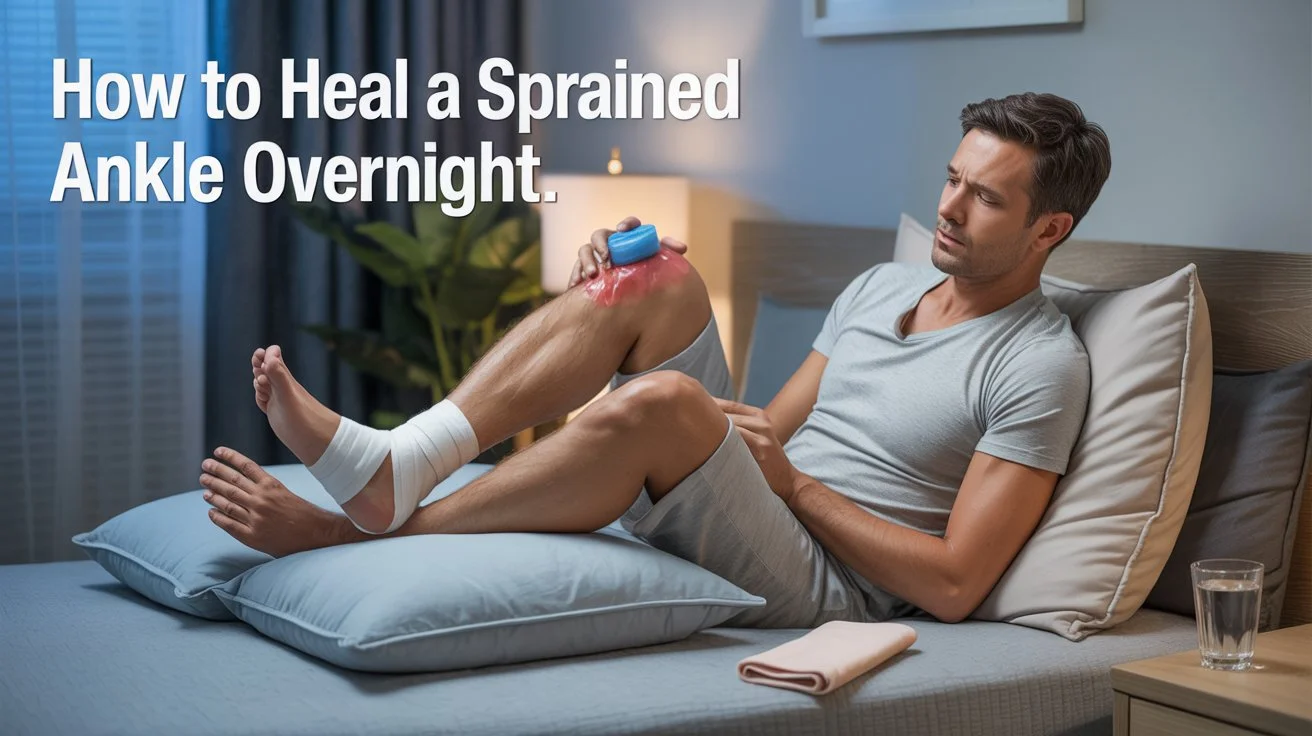
How to Heal a Sprained Ankle Overnight: What Actually Helps by Morning
A lot of people search this topic in a panic. They want the swelling down fast. They want the throbbing to stop. They want to sleep. That makes sense. Still, the honest answer matters. You will not fully heal a sprained ankle overnight. What you can do is cut down swelling, calm pain, protect the injured ligament, and give yourself a better morning. That is the real goal for the first night.
What to do tonight for quick relief
If you hurt your ankle today, focus on a few simple moves first:
- Rest it and stop the activity that caused the injury
- Use an ice pack for short sessions
- Add light compression if it feels comfortable
- Keep the ankle elevated above heart level
- Avoid heat, massage, alcohol, and hard exercise
Those steps will not repair the tissue in one night. They can still lower pain and swelling fast enough to make a real difference.
Can a sprained ankle really heal overnight
Not in the true sense. A sprain means the ligaments were stretched or torn. Ligaments do not rebuild in a few hours. Even a mild injury needs time. What often changes overnight is the pressure inside the joint. When you rest, cool the area, and keep it raised, the ankle often feels less tight and less angry by morning. That is relief, not full healing.
What happens when you sprain your ankle
Most ankle sprains happen when the foot rolls inward. That stretches the lateral ligaments on the outside of the ankle. The most common one involved is the ATFL, which sits on the outer side of the joint. A milder sprain can mean small fiber damage. A worse sprain may mean a partial or full tear.
The usual signs are easy to spot. You may feel pain, swelling, bruising, tenderness, and trouble putting weight on the foot. Some people also notice stiffness, warmth, or a shaky feeling when they try to stand. The harder it is to walk, the more careful you need to be.
The best first 24 hours after the injury
The first day is where you can do the most good. Start with PRICE or RICE. That means protection, rest, ice, compression, and elevation. Keep the plan simple. Do not test the ankle every hour. Do not keep walking on it just to see if it is better. The point is to settle the ankle down, not annoy it again.
Use an ice pack for about 15 to 20 minutes at a time. Wrap the ice in a towel first. Do not place it straight on the skin. Repeat every two to three hours while you are awake if it helps the pain and swelling. That is enough. Longer is not always better.
Elevation helps more than many people think. Put the ankle on pillows so it sits above the level of your heart when you are lying down. Gravity helps fluid move away from the area. If the foot hangs down for long periods, the ankle often gets more swollen and more painful.
How to reduce swelling overnight
The best overnight move is not a special cream or trick. It is a mix of rest, cooling, and smart positioning. Build a small pillow stack under your calf and ankle. Make sure the heel is supported. Try to keep the whole lower leg relaxed. If the ankle twists inward or outward in bed, pain can flare up again.
A light compression wrap can help during the day. It can limit swelling and give the ankle a more secure feel. The wrap should never feel sharp, numb, or tight enough to change the color of your toes. If your toes feel cold, tingly, or look pale, the wrap is too tight.
Night is where you need some nuance. One competitor style tip is to sleep wrapped. Official guidance is more careful. Mass General Brigham says doctors usually advise leaving a compression wrap off while sleeping, because wraps are mainly used for daytime support. So if you are unsure, do not sleep in a tight wrap. Gentle support while resting is one thing. Restricting blood flow all night is another.
How to sleep with a sprained ankle
Pain often feels worse at night because you finally stop moving. There are no errands, no distractions, and no shift in posture. The ankle starts to throb. That is why setup matters. The easiest sleep position is on your back with the ankle raised on pillows. Side sleeping can work too, but place a pillow so the sore ankle does not twist inward.
If the ankle keeps waking you up, check the basics first. Is it hanging off the pillow. Is the wrap too snug. Did you spend the evening on your feet. Small changes can make a big difference. A short ice session before bed often helps. So does getting off the ankle for the last hour of the night.
Pain relief may help some people sleep better. NHS and AAOS both note that over the counter pain relief can be used in many cases, but the right choice depends on the person. Some medicines are not a good fit if you have stomach, kidney, bleeding, or other health issues. If you already know a medicine is not safe for you, skip it and follow your clinician’s advice instead.
Can you walk on a sprained ankle
Sometimes yes. Sometimes no. That depends on how bad the injury is. A mild sprain may let you take a few careful steps. A moderate or severe sprain may get worse if you force it. AAOS notes that walking can be difficult in the first few days and crutches may be needed. NHS guidance also says pain with weight bearing is a reason to be more cautious.
A simple rule works well here. If walking sharply increases pain, makes the ankle feel unstable, or leaves you limping badly, stop. If you can put some weight down with mild discomfort only, short and careful steps may be okay. The goal is normal movement as comfort improves, not pushing through pain to prove something.
What not to do in the first two or three days
This part gets skipped in weak articles. It should not. Early mistakes can make swelling hang around longer.
Do not use heat in the first couple of days.
Do not massage the ankle right away.
Do not go for a run just because you can limp.
Do not drink heavily and then ignore the injury.
NHS and other hospital guidance repeat the same point. Early heat, alcohol, running, and massage can increase swelling and irritation.
How to tell if it is sprained or broken
This is one of the biggest user fears, and for good reason. A broken ankle and a bad sprain can look similar at first. Both can cause swelling, bruising, and pain. What raises concern is severe trouble bearing weight, marked bone tenderness, a misshapen ankle, or pain that feels deep and sharp right over the bone.
Doctors often use the Ottawa Ankle Rules to help decide when an X-ray is needed. In simple terms, an X-ray is more likely if there is pain near the ankle bones and tenderness at the back edge or tip of the inner or outer ankle bone, or if you cannot take four steps. That does not diagnose you at home, but it shows why some injuries need imaging instead of guesswork.
The difference between mild, moderate, and severe sprains
A grade 1 sprain is mild. The ligament fibers are stretched with small damage. You may still walk, though it hurts. A grade 2 sprain means a partial tear. Swelling and bruising are usually more obvious, and walking is harder. A grade 3 sprain is severe. The ligament may be fully torn, and the ankle can feel loose or unstable.
This is why two people can use the same home treatment and get very different results. One person wakes up much better. The other still cannot walk. The second case is not a failure. It is often just a more serious injury.
How long healing usually takes
A lot of people hope for two days. Real life is slower. Many mild sprains improve a lot within one to two weeks. Full recovery can take longer, especially if swelling lingers. Some NHS hospital advice says an ankle sprain should start to feel better within two weeks and can take six to eight weeks to heal fully. Severe sprains and high ankle sprains often take longer.
A high ankle sprain is not the usual rolled ankle on the outside. It affects the syndesmotic ligaments between the tibia and fibula. Those injuries tend to recover more slowly and can be more stubborn. If your ankle pain feels higher up, or recovery is dragging, that possibility is worth keeping in mind.
What helps after the first day
Once the worst pain starts to settle, complete rest stops being helpful. That surprises a lot of people. NHS, AAOS, and sports medicine guidance all support early gentle movement as pain allows. This helps stop the ankle from becoming stiff and weak. It also lowers the chance of a longer, messier recovery.
Start with simple range of motion. Slow ankle circles work well. So does writing the alphabet with your big toe in the air. When that gets easier, move on to calf stretches, heel raises, and light balance work. AAOS specifically highlights balance training because poor balance can lead to repeat sprains and long term ankle instability.
This part is where a lot of people go wrong. They wait until pain is gone, then jump back into sport. The ankle feels okay in a straight line but fails during a quick turn. That is how repeat sprains happen. Gentle rehab is not extra. It is part of healing.
When to see a doctor
Get medical help if the pain is severe, swelling or bruising is getting worse, you cannot bear weight, the ankle looks deformed, or the joint feels very stiff and hard to move. NHS also advises getting help if self care is not improving things, or if symptoms are getting worse instead of better.
Do not try to tough out numbness, pins and needles, major instability, or a foot that changes color. Those are not normal “sleep it off” signs. They need proper assessment.
Final Overview
If you want the best overnight result, stop chasing magic. A sprained ankle will not fully heal by morning. Still, you can do a lot in one night. Rest it. Cool it. Raise it. Support it sensibly. Avoid the common mistakes. Then start gentle movement when the pain allows. That approach is simple, honest, and far more useful than any fake overnight cure.