20 ft. Fitness Container: Dimensions, Layout Ideas, and Build Costs
A 20 ft. fitness container is a shipping container turned into a compact gym. People choose it because it saves space and feels private. It also works well for outdoor training when the setup is planned right.
What a 20 ft. Fitness Container is
A 20 ft. fitness container starts as a standard steel container. Builders add flooring, airflow, lighting, and storage. Some add insulation for hot or cold weather. The goal is a safe training space you can use often.
Why people choose a container gym
It can sit in a yard, driveway, or small lot. It protects equipment from rain and sun. It also gives you a clear place to train without a full building.
20ft container gym dimensions and what they mean in real space
Size decides what you can place inside. A standard 20ft container has a narrow width, so layout matters. You want gear that fits and still lets you move.
Inside size, outside size, and door opening
Most 20ft containers are close to 5.9 meters long inside. The inside width is about 2.35 meters. The inside height is about 2.39 meters. The door opening is about 2.34 meters wide and 2.28 meters high.
Floor area and usable zone
A 20ft container has around 146 square feet of floor area. The usable area can drop if you add thick insulation and wall panels. Plan for that before you buy large equipment.
What fits in a 20 ft. fitness container
A 20ft gym works best with a focused setup. Pick one main strength station. Add one compact conditioning option if space allows. Keep storage on walls to keep the floor clear.
Strength first setup
A half rack or wall rack can fit well. Add an adjustable bench and plates. Add dumbbells with a rack or wall hooks. Add a pull up bar if ceiling height allows.
Hybrid setup
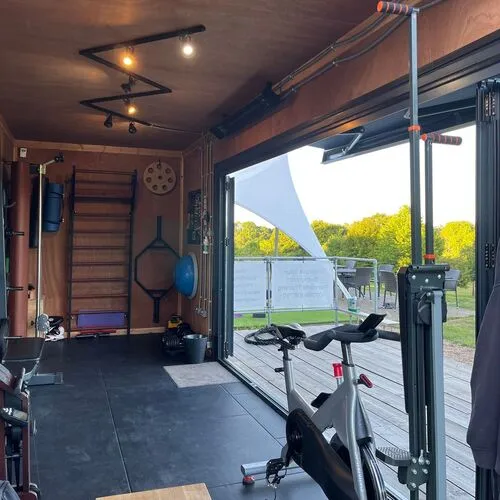
You can add one compact cardio piece. A foldable bike or a rower works in many builds. Keep it on one side so you do not block the center.
Outdoor add on for more space
Many owners train with doors open. Some add an outdoor rig outside the container. This gives more room for swings, sled work, or group sessions.
Layout templates that feel good to train in
A good layout feels simple. You should be able to lift, walk, and store gear without squeezing through tight gaps. If the space feels cramped, training gets skipped.
One wall storage layout
Put storage, dumbbells, and plates on one long wall. Keep the center open for movement. Place the bench so it can slide in and out easily.
Split zone layout
Place strength gear on one end. Place cardio on the other end. Keep a clear lane in the middle for lunges and carries.
Open center layout
Use wall mounts for bars and plates. Keep the middle open for kettlebells, mats, and bodyweight work. This layout feels best for mixed training.
Build essentials power lighting ventilation and insulation
Comfort and safety depend on airflow. Heat and humidity can build fast in steel walls. Plan ventilation and power before you finish the inside.
Ventilation options
Start with natural airflow by opening doors. Add vents for cross flow. Add a fan to move air during training. This can change how the space feels in summer.
Insulation and moisture control
Insulation helps in hot and cold climates. Moisture control matters because steel can sweat inside. Choose a method that reduces condensation and keeps air moving.
Electrical and lighting basics
Plan outlets for fans and lights. Add bright ceiling lighting so the floor is safe. If you use cardio gear, plan power where it will sit.
Flooring that protects the container and your joints
Flooring is not a small detail. Heavy plates can damage the base if the floor is thin. A good floor also protects your knees and ankles.
Rubber rolls tiles and platform zones
Rubber flooring helps grip and reduces noise. Tiles can be easy to replace. Some people add a small lifting platform zone for heavy work.
Drop zones for plates
If you drop weights, add thicker rubber in that area. This protects the container floor and reduces vibration.
Cost of a 20 ft. fitness container
Cost depends on many choices. The container price is one part. Conversion work and equipment can cost more than the box itself. The clean way is to split the budget into four parts.
Container price vs conversion price
A used container can cost less than a new one. Conversion costs depend on insulation, power, flooring, doors, windows, and finish level.
Equipment budget bands
A starter setup can focus on a rack, bench, bar, plates, and a few dumbbells. A mid setup adds more storage and better equipment. A premium setup adds cardio, climate control, and higher end gear.
Delivery and placement costs
Delivery can change the total a lot. Access matters. If a crane is needed, cost goes up. Measure the path before you order.
Site prep and placement
Where you place the container matters. A level base protects the structure. Good drainage protects your equipment.
Base options
Common bases include compacted gravel, concrete pads, or blocks. The goal is a stable and level surface.
Drainage and weather exposure
Avoid low spots where water collects. Keep doors facing away from heavy wind when possible. This helps keep the inside dry.
Security basics
Use strong locks and good lighting outside. If the area is public, add a simple camera. This protects the gear and gives peace of mind.
Permits and rules
Rules depend on your city and your land type. A temporary container may have fewer rules. Electrical work can change what permits apply. A short call to local offices can save money later.
When approval is more likely
Approval is more likely if the container stays long term. It is also more likely if you add permanent power lines or plumbing.
What to ask before you buy
Ask if a container counts as a structure. Ask about setbacks from fences and roads. Ask about electrical permits if you will wire it.
Quick setup checklist before you order
This checklist helps you avoid wasted spending. It also helps you build once, not twice.
Training goal first then equipment
Pick your training style first. Strength only needs fewer pieces. Mixed training needs more space.
Confirm dimensions door and walkway space
Check inside size and door opening. Make sure the largest item can pass through the doors. Leave a clear path for movement.
Plan airflow and power early
Plan fans, vents, and outlets before the walls are finished. This prevents rework and keeps the build clean.
FAQ
How big is a 20ft container inside?
It is about 5.9 meters long, 2.35 meters wide, and 2.39 meters high inside. The door opening is about 2.34 meters wide and 2.28 meters high.
Can a squat rack fit in a 20ft fitness container?
Yes, a half rack or wall rack often fits best. Pair it with wall storage to keep the center open.
Is 20ft enough for two people to train?
It can work for two people with a simple layout. It feels best when one person lifts while the other uses mats or bands. An outdoor add on gives more room.
What is a realistic budget range?
Budgets vary by country and finish level. Costs rise with insulation, electrical work, and premium equipment. Splitting the budget into container, conversion, equipment, and delivery gives the best estimate.
Do I need permission to place one?
It depends on local rules. Temporary placement may be easier. Permanent placement or wiring may need approval.
Conclusion
A 20 ft. fitness container can be a smart outdoor gym. The key is planning around the size and doors. Choose a simple layout and add strong airflow and flooring. Budget for conversion and delivery, not only the container. With a clear plan, the space stays useful for years.