
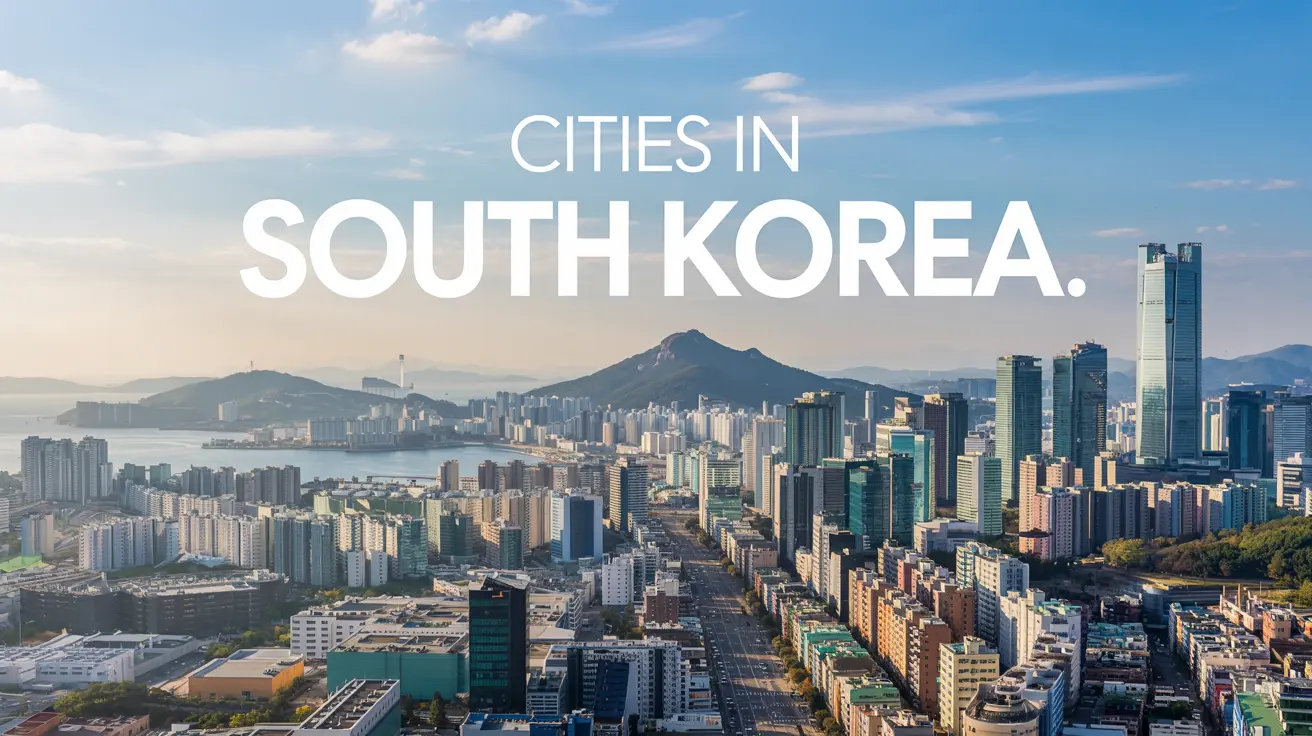
Cities in South Korea: City Types, Biggest Cities, and How to Choose Where to Go
South Korea has many cities, and online lists can feel confusing. Some cities sit at a higher level, like Seoul and the metropolitan cities. Many other cities sit inside provinces as regular “si” cities. This guide explains what counts as a city, shows the largest places by population, and helps you choose cities based on your goal so you can plan with confidence.
Quick snapshot of South Korea’s city system
South Korea has a small set of top level cities with higher administrative authority. It also has many standard cities that belong to provinces. That is why one site may list places by status while another lists them by population.
City status explained
| City status | What it means in simple terms | Examples |
|---|---|---|
| Special City | A top level city with its own status | Seoul |
| Metropolitan City | A major city that operates like a province | Busan, Incheon, Daegu, Gwangju, Daejeon, Ulsan |
| Special Self Governing City | A special status city with a distinct governance model | Sejong |
| City (si) | A standard city inside a province | Suwon, Changwon, Cheongju, Jeonju |
A common issue is mixing up city status. People see the same place listed in different ways and think something is wrong. It is not wrong. The list is using a different grouping method. First check city status. Then compare by province or by population.
City types in South Korea
Special City
Seoul is the only Special City. It is the center of government, business, culture, and transport. Many guides treat it as its own category because its status is unique.
Metropolitan Cities
South Korea has six Metropolitan Cities. These cities have province level authority. They also tend to be the biggest hubs outside Seoul. If you search for “largest cities,” these names show up often.
The six are Busan, Incheon, Daegu, Gwangju, Daejeon, and Ulsan.
Special Self Governing City
Sejong is a Special Self Governing City. It is known as a planned administrative city. Many people ask if Sejong is a province. It is not. It is a city with a special status.
City (si), County (gun), District (gu)
Many city lists focus on “si” cities. Districts are parts of large cities, not separate cities in most lists. Counties are another unit, but they are often smaller and may not appear in popular rankings.
If you are searching a district name in Seoul or Busan, treat it as a neighborhood level area. If you are searching a “si,” treat it as a city level unit.
Largest cities in South Korea by population
Most readers want a clear starting point. Below is a practical list of large cities with population figures that are often used in city comparisons. Numbers can vary across sources. That happens because some count city proper and others count a wider metro area.
Top large cities table
| Rank | City | Status | Population (listed) |
|---|---|---|---|
| 1 | Seoul | Special City | 10,349,312 |
| 2 | Busan | Metropolitan City | 3,678,555 |
| 3 | Incheon | Metropolitan City | 2,954,955 |
| 4 | Daegu | Metropolitan City | 2,566,540 |
| 5 | Gwangju | Metropolitan City | 1,490,092 |
| 6 | Daejeon | Metropolitan City | 1,469,543 |
| 7 | Suwon | City (Gyeonggi) | 1,241,311 |
| 8 | Goyang | City (Gyeonggi) | 1,073,069 |
| 9 | Seongnam | City (Gyeonggi) | 1,031,935 |
| 10 | Changwon | City (Gyeongnam) | 1,025,702 |
| 11 | Ulsan | Metropolitan City | 962,865 |
| 12 | Bucheon | City (Gyeonggi) | 850,731 |
| 13 | Cheongju | City (Chungbuk) | 846,291 |
| 14 | Ansan | City (Gyeonggi) | 716,785 |
| 15 | Cheonan | City (Chungnam) | 666,417 |
Why population numbers look different on different pages
This is another common pain point. You may see a higher or lower number for the same city. Some sources include surrounding built up areas in a wider metro count. Other sources only count the city boundary. If your goal is travel planning, the ranking matters more than the exact number. If your goal is research, use one method across the whole table.
The Seoul Capital Area made simple
Many visitors think Seoul is a single bubble. Then they land at Incheon, stay in Gyeonggi, and still feel close to Seoul. That is normal. Seoul is part of a larger connected region with Incheon and many Gyeonggi cities.
What this means for your trip or move
If you want the classic big city feel, stay in Seoul. If you want more space, consider a nearby Gyeonggi city. If you fly into Incheon, plan for real transit time into central Seoul, especially during busy hours.
Satellite cities people often consider
Suwon, Seongnam, Goyang, Bucheon, Anyang, Ansan, and Yongin come up often. They sit close to Seoul. They can offer different housing options and calmer daily routines. This helps when Seoul prices feel high or when hotels are fully booked.
Cities by province with practical picks
A full list of every city can feel like a wall of names. A better approach is to scan by province and focus on the cities people actually visit, work in, or pass through.
Gyeonggi Province
Gyeonggi surrounds Seoul and connects to Incheon. It includes large cities like Suwon, Seongnam, Goyang, Yongin, Bucheon, Anyang, Ansan, and Pyeongtaek. If you want access to Seoul with more flexibility on price and space, start here.
Gangwon Province
Gangwon is known for nature and open space. Cities like Chuncheon, Wonju, and Gangneung are common starting points. This region fits travelers who want scenery and a slower pace.
North Chungcheong Province (Chungbuk)
Cheongju is a key city here. Chungju and Jecheon also matter for regional travel. This area can work if you want a central base that feels more local.
South Chungcheong Province (Chungnam)
Cheonan is often listed among larger cities. Asan also comes up for industry and connectivity. Gongju is a calmer stop with heritage value. This province can work well for moving between regions.
North Jeolla Province (Jeollabuk)
Jeonju is a standout for food and culture. Iksan and Gunsan can matter depending on your route. This province suits travelers who want local neighborhoods and slower evenings.
South Jeolla Province (Jeollanam)
Yeosu and Suncheon are popular for coastal and nature focused trips. Mokpo is another key city on the southwest coast. This region often feels relaxed, with strong local identity.
North Gyeongsang Province (Gyeongbuk)
Pohang and Gyeongju are major names. Andong is also known for heritage travel. Gumi matters for industry. This province fits people who want history tied to the southeast.
South Gyeongsang Province (Gyeongnam)
Changwon is a major city. Jinju, Gimhae, and Geoje matter based on your route. This region links well with Busan and the southeast coast.
Jeju Province
Jeju is an island province. Jeju City and Seogwipo cover most visitor routes. Many trips here depend on flights, so plan ahead in peak seasons.
How to choose a city based on your goal
Too many choices can block your planning. People open a list and do not know where to start. The fix is to choose a goal first, then match cities to that goal.
If you want a first trip with easy logistics
Start with Seoul as your base. Add one more city only if you have enough days. This reduces transit stress. It also helps you learn the pace of the country before you move around.
If you want a coastal city experience
Busan is a common first pick because it mixes beaches, hills, and city life. If you want a smaller coastal feel, look at coastal cities within Gangwon or the southern provinces.
If you want culture and heritage
Jeonju and Gyeongju often fit this goal. They offer strong history and local identity. Andong can also fit if you want a deeper heritage angle.
If you want a business and industry lens
Incheon can matter for logistics and access. Ulsan is strongly tied to heavy industry. Changwon and several Gyeonggi cities can also fit based on your sector.
If you want a calmer base near Seoul
Look at Gyeonggi cities like Suwon, Seongnam, or Goyang. You still get access to Seoul. Daily life can feel less crowded.
Choosing a city for living, work, or study
Many people choose a city based on vibe. Then they struggle with commute time, housing size, or daily convenience. Use these checks before you commit.
Cost and housing feel
Seoul can feel expensive and tight on space. Nearby Gyeonggi cities may offer more space, but commute planning matters. If you plan to travel across the country often, a central hub like Daejeon can feel practical.
Jobs and career options
Seoul has the widest range of roles. Metro cities can have strong local industries too. If you have a clear industry target, choose the city that matches it.
Language comfort and community
Large cities tend to have more international services and more English support in key areas. Smaller cities can still be welcoming, but daily tasks may take more effort. If you worry about this, start in a bigger city and branch out later.
Weather and lifestyle pace
Coastal and inland cities can feel different across seasons. Mountain regions can feel different too. If you care a lot about climate, let that guide your shortlist.
Getting between cities in South Korea
Transport is strong, but planning mistakes still happen. The biggest mistake is switching cities too often. Another mistake is underestimating time inside metro areas.
Rail, buses, and flights
Rail connects many major hubs. Buses help you reach smaller cities. Flights matter most for Jeju. Choose the option that fits your route and your energy level.
A simple routing rule
If your trip is under a week, choose one main base and one extra city at most. If you have ten days or more, you can build a loop. You will enjoy each place more when you stop packing every other day.
Sample itineraries that use major cities
5 days
Stay in Seoul. Add day trips or one nearby overnight. This keeps planning easy and gives you time to explore neighborhoods.
7 days
Start in Seoul, then add one southern city like Busan. You get two different vibes without rushing.
10 days
Build a loop with three to four stops. Start in Seoul, add a southern city, add a heritage city, then return. Keep hotel changes reasonable so the trip stays smooth.
FAQs
How many metropolitan cities are there in South Korea?
There are six metropolitan cities: Busan, Incheon, Daegu, Gwangju, Daejeon, and Ulsan.
Is Sejong a normal city?
Sejong is a special status city. It is not a province. It is not a standard city inside a province.
What is the difference between si, gu, and gun?
“Si” is a city unit. “Gu” is a district inside a large city. “Gun” is a county. Many city lists focus on “si” and exclude districts and counties.
What are the largest cities by population?
Most city rankings place Seoul first, followed by Busan, Incheon, and Daegu. Other large hubs include several metropolitan cities and big Gyeonggi cities like Suwon.
Why do population numbers differ across sources?
Some sources count a wider metro area. Others count only the city boundary. Choose one method for clean comparisons.
Is Incheon part of Seoul?
Incheon is its own metropolitan city. It sits close to Seoul and connects tightly to the capital region, so the area often feels like one large metro.
Are provinces the same as cities?
No. Provinces contain many cities. Some top level cities exist outside provinces in the administrative sense.
If I only visit two cities, which pairing makes sense?
A common pairing is Seoul and Busan. You get the capital experience and a coastal city feel with manageable transit.
What is the easiest way to pick where to go?
Pick a goal first. Then choose one base and one add on city. This keeps planning realistic.
Do I need to visit many cities to understand the country?
No. A short trip with Seoul plus one other city can give you a strong feel without constant packing.
Wrap up
South Korean cities make sense when you start with city status, then check population, then scan by province. Use the tables to orient yourself. Then choose cities based on what you want to do and how long you have.