
Chapora Fort: A Cliff-Top Viewpoint With History, Movie Memories And Everyday Life
Perched on a rocky headland above the river and the sea, Chapora Fort gives you a rare mix of raw ruins, open sky and sweeping views, so a visit here is not only about ticking off a famous spot but about feeling how wind, light, stone and water meet in one place that has guarded this coast for centuries and now quietly hosts sunset crowds, morning walkers and people chasing that one perfect photograph.
Where Chapora Fort Sits In North Goa
The fort stands on a hill above the Chapora River in Bardez, North Goa, with Vagator spread out on one side and Morjim and the long northern shoreline on the other, so as you climb you keep getting small glimpses of red earth, green slopes and the bright strip of Arabian Sea that tell you why this hilltop was once chosen as a lookout and why it pulls travellers today.
A Short History You Can Actually Picture
Long before it became a sunset spot, this hill held a stronghold linked first to local rulers and later to the Portuguese, who rebuilt the defences to keep an eye on movement along the river and coast, and when you stand near the broken gateway or trace the line of the remaining walls, you can still imagine soldiers scanning the water for ships and riders, using the height the same way visitors now use it for photos and videos.
What The Fort Really Looks Like Today
Do not expect a polished monument; most of the structures inside have fallen, and what remains is a rough ring of dark laterite walls, a few bastion-like corners and a wide, uneven plateau covered in scrub and stones, yet that simple layout is exactly what makes the place feel open, with almost no barriers between you and the sky, and it gives you freedom to wander, sit where you like and frame your own view of the river mouth, the beaches and the fields behind.
The Climb Up: How Hard It Actually Is
From the parking area near the base, a dusty footpath winds up the slope in a steady but manageable climb that takes most people ten to twenty minutes, and although the walk is not very long, the loose rocks and patches of worn soil mean you should wear decent shoes, carry water and avoid rushing, because the main risk here is a slip on the way up or down rather than any dramatic drop from the top.
Best Time To Visit For Light, Heat And Crowds
You can come at any time during daylight, but the experience changes with the hour, since late mornings bring strong sun and washed-out colours, afternoons slowly soften the light, and the last hour before sunset turns the water gold and the sky pastel while also drawing the biggest crowd, so if you want quiet space and clearer paths, choose early morning, and if you want that famous sunset over Vagator, accept that you will share it with many others and plan to arrive at least an hour before the sun dips.
What You See From The Walls
Fort, Once you reach the top and step through the old entrance, walk towards the edge, and you will find long, low walls where people sit facing the sea, watching waves break far below and fishing boats move like tiny dots, and if you follow the outer line of the fort, you discover very different scenes in each direction, from the curve of Vagator Beach and its rocky headlands to the quieter sweep of Morjim across the river and the mixed patchwork of fields, houses and palm groves inland.
Movie Memories And The Dil Chahta Hai Link
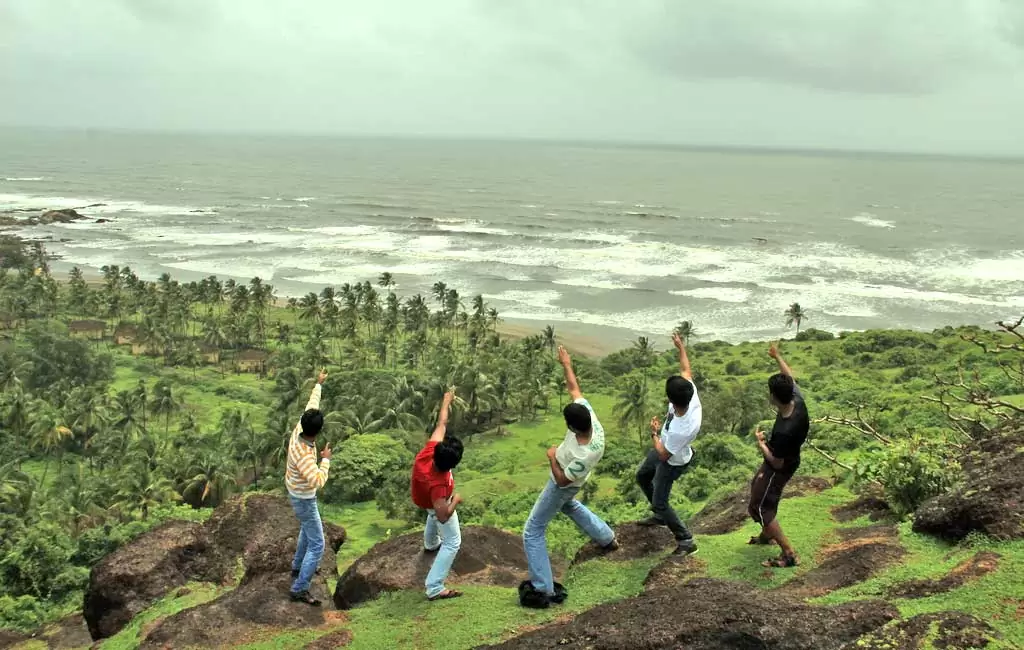
For many travellers the fort is tied to a popular film that used this backdrop for its friendship scenes, and you still see groups copying those poses on the wall, but once you sit down yourself and watch the light change over the water, the place starts to feel less like a film location and more like a natural amphitheatre where friends, couples, solo travellers and families each find their own corner to talk, think or simply stare at the horizon in shared silence.
Common Visitor Problems And Simple Fixes
One common complaint is the heat, especially in the dry season, when there is very little shade on the hill or inside the fort, so a hat, sunscreen and an early or late visit make a big difference; another issue is the path at the start of the monsoon or after rain, when mud and slick stones can make the climb tricky, which you can handle by wearing shoes with grip, taking small steps and avoiding the edges where water has cut channels, while people worried about safety at the top mainly need to stay a few feet back from crumbling outer edges, keep children close and resist the urge to climb on narrow ledges just for a dramatic photo.
Facilities, Food And What You Will Not Find
There is usually basic parking at the base and small stalls or shops nearby selling water, soft drinks and snacks, yet once you leave that cluster and start up the path, you will not find toilets, dustbins or formal seating areas, so it helps to use the washroom before you head up, bring back your own trash in a bag and remember that the fort is still part of a natural hillside, where glass bottles, plastic and loud music quickly spoil the very atmosphere most visitors came to enjoy.
How To Fit The Fort Into A Day In North Goa
Most people pair this visit with time at Vagator or nearby beaches, heading up to the fort for sunset after a swim or lunch, but you can also flip it by starting with sunrise or an early morning walk up the hill, when the air feels cooler and the light is soft, then coming down for breakfast and beach time, which works well if you want to avoid midday heat and still cover both the inland height and the shoreline in one simple loop.
Small Ways To Make Your Experience Better
If you enjoy photography, reach early enough to walk the full circuit of the walls and note how each side catches different light, so you can return to that exact spot when the sky turns orange; if you like quiet reflection, head towards the less crowded corners away from the main entrance, where you often find more space and fewer voices; and if you travel with older family members, help them take the climb slowly, pausing at natural rest points on the slope rather than pushing for speed, because a relaxed pace makes the whole outing feel like a gentle hill walk instead of a rushed dash to a viewpoint.
Responsible Travel On A Fragile Hilltop
The stone at the edges of the fort has weathered over time, and the dirt paths cut by thousands of feet are already widening each season, so small choices like sticking to existing trails, not carving names into walls, keeping sound levels low and carrying your waste back down protect both the hill and the experience of future visitors, and when you treat the place as more than a backdrop for a quick picture, you help keep its mix of history, nature and local life intact.
Is Chapora Fort Worth Your Time?
If you only want polished monuments and detailed plaques, this site may feel too bare, but if you enjoy open spaces, clifftop views and a sense of how a simple ring of stone can still shape the way people meet a landscape, the fort more than earns the hour or two it takes, and with a little planning around timing, clothing and safety you can turn a standard sunset stop into one of the most memorable moments of your time in Goa.