Cape Trafalgar: What to See, Why It’s Famous, and How to Visit
Cape Trafalgar is a calm coastal headland in southern Spain. It sits in Andalusia, in the Province of Cádiz. You come for open Atlantic views, a simple lighthouse, and an easy walk by sand and dunes. Many people also visit because of its name. The Battle of Trafalgar took place offshore in 1805. Today, the place feels quiet and wide, not busy and built up.
This guide keeps it practical. You will know what to expect before you go. You will also avoid the common mistakes that leave people disappointed.
Facts About Cape Trafalgar
Here are the basics most visitors want first.
| Quick fact | Details |
|---|---|
| Local name | Cabo de Trafalgar |
| Region | Andalusia, Province of Cádiz |
| Coast | Atlantic Ocean |
| Main landmark | Trafalgar Lighthouse |
| Best for | Lighthouse photos, beach walk, sunset skies, windy day views |
| Typical time needed | 45 to 90 minutes |
If you want a short stop that still feels worth it, plan for about an hour.
Where Cape Trafalgar Is and What Makes It Special
The geography in plain words
This headland sits on Spain’s Atlantic side, on the Cádiz coast. It feels like a point that sticks out into the sea. The views are open in every direction. The horizon looks huge on clear days. The area is known for wind, bright light, and long stretches of sand.
You may also hear it linked to the Strait of Gibraltar area. That matters for orientation. You are near a major meeting point of waters. The cape itself is still Atlantic in feel.
What the landscape feels like
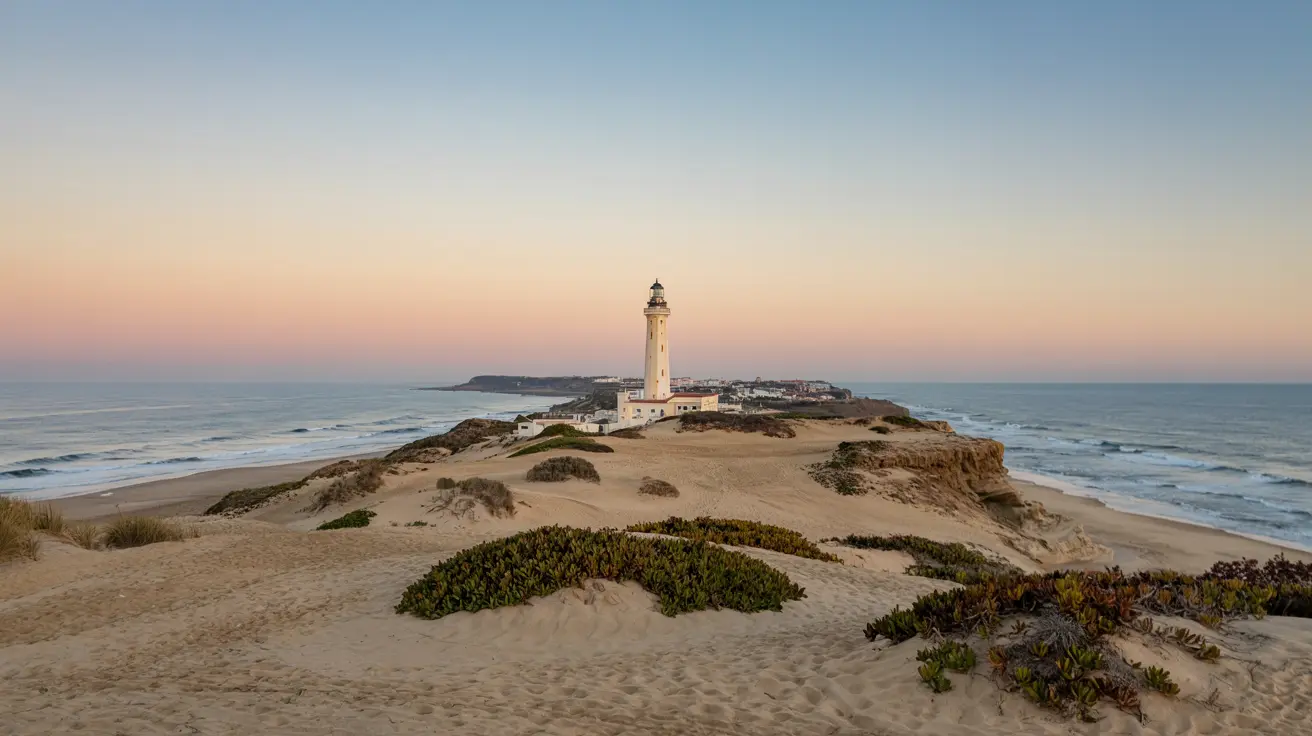
Do not expect tall cliffs. Do not expect a dramatic mountain lookout. The land is low and sandy. Dunes and scrub plants shape the edges. The walk is simple and exposed. On a quiet day, it can feel almost empty.
That is part of the charm. The place is more about space and atmosphere than attractions.
What You’ll See When You Arrive
Trafalgar Lighthouse
The lighthouse is the main visual anchor. It is bright and clean in shape. It stands at the end of the headland. It also makes a strong photo subject in harsh sun or soft sunset light.
Most visitors cannot go inside. Plan for exterior views and photos. If you expect a tour, you may feel let down. Go with the right mindset. It is a viewpoint, not a museum.
What to do around the lighthouse area:
- Walk the path to the viewpoint zones.
- Take wide shots with sea and sky.
- Shoot low angles for scale.
- Stay back from rough edges in strong wind.
The headland walk and viewpoints
The walk is short and easy. You follow a clear path across sand and firm ground. The views open up fast. You will likely stop often. The light changes quickly here. Clouds and wind can shift the mood in minutes.
If you want one simple plan, do this:
- Walk to the lighthouse first.
- Take your main photos there.
- Walk back slowly along the edge.
- Finish with a short beach stretch.
Beach and shoreline details
The shoreline can look smooth from a distance. Up close, it changes. You may see shallow rock shelves and uneven patches. At low tide, more rocks show. At high tide, the water comes closer to the walk zones.
This matters for safety. It also matters for photos. Low tide can give you texture. High tide can give you waves and drama.
Why Cape Trafalgar Is Famous
The Battle of Trafalgar in a simple timeline
This place is tied to one of the best known naval battles in history. The Battle of Trafalgar happened on 21 October 1805. The Royal Navy fought the combined French and Spanish fleets. Admiral Horatio Nelson is the key name most people know.
The battle mattered because it shaped control of the seas. It also became a lasting symbol in British history.
What that history looks like today
On the ground, history feels subtle. You are not walking through a large monument area. You may see a simple memorial note. You may feel the weight of the name more than you see it.
If you love history, keep it simple. Read a short summary before you arrive. Then let the place do the rest. The open sea view makes the story feel real.
How to Get to Cape Trafalgar
Best base towns and day trip logic
Most people visit as a coastal stop while exploring the Cádiz region. It works well as a half day add on. You can pair it with nearby beaches and small coastal towns. The drive is often easy once you are on the coast.
A good approach is this:
- Go early for calm light and fewer people.
- Or go late for sunset and golden tones.
Parking and access
Parking is usually near the approach to the headland walk. From there, you walk the last stretch on foot. The route is straightforward. The only real challenge is exposure. Sun and wind hit you the whole way.
Walking time and accessibility notes
The walk time depends on your pace and stops. Many people reach the lighthouse area quickly. The slower part is the photo stops and the shoreline lookouts.
Simple comfort tips:
- Wear shoes with grip.
- Bring water, even for short visits.
- Use sunscreen and a cap on bright days.
If you have limited mobility, the open ground can still be manageable. The surface can vary. Sand sections may slow you down.
Best Time to Visit
Sunset vs morning light
Sunset is popular for a reason. The lighthouse and sea glow. Shadows soften. Photos look warmer. If you can time it right, it feels special.
Morning can be better for calm and space. You may also get clearer skies. You can walk without the late day crowd feel.
Wind, weather, and comfort
Wind is common here. It can be gentle or intense. It can also make the visit feel colder than you expect.
Fix the wind problem with a simple kit:
- Light jacket or layer
- Hair tie or cap
- Sunglasses for sand and glare
If wind is strong, stay away from rough edges. Keep kids close. Secure your phone and camera.
Tides and shoreline safety
Tide changes what you can do near the water. At low tide, you may walk farther on firm areas. At high tide, the water can cut off some edges.
Basic shoreline rules:
- Watch your footing on rocks.
- Do not turn your back on waves.
- If it looks slippery, skip it.
This is not a place to prove anything. It is a place to enjoy the view.
Things to Do at Cape Trafalgar
Photography and viewpoints
You do not need a long checklist. A few angles are enough.
Photo ideas that work well:
- Wide shot with lighthouse centered
- Side shot with dunes in the foreground
- Low angle with sky filling most of the frame
- Sunset silhouette of the tower
If the day is bright, use the dunes and plants to add texture. If it is cloudy, focus on mood and contrast.
Beach walk and relaxing stop
This is a great place for a short reset. Walk slow. Let the wind and sea sound do the work. Many visitors enjoy it most when they stop chasing “things to do.”
A simple loop can feel complete:
- Lighthouse viewpoint
- Shoreline look
- Short beach stroll
- Back to the car
Kitesurfing and windy day sports
On windy days, you may see kitesurfers in the wider coastal zone. Even if you do not join in, it adds energy to the view. It also confirms what you will feel. Wind is part of the experience here.
If you are planning sports, check local conditions before you go. Wind direction matters. So does safety.
Quick snack stop expectations
Some people find small snack options nearby. Do not plan your trip around food here. Eat before, or plan a meal after in a town. Treat any nearby snack spot as a bonus.
Common Visitor Problems and Easy Fixes
“I expected cliffs or a dramatic lookout”
This is the most common mismatch. The cape is low and sandy. The beauty is in the open horizon. It is not a cliff top viewpoint.
Fix: focus on the sky, light, and wide photos. Walk slower. Let the space be the feature.
“The wind is too much”
Wind can turn a short walk into an annoying one.
Fix: bring one light layer and sunglasses. Keep your hands free. Use a small crossbody bag. Avoid loose hats.
“The shoreline feels tricky”
Rock shelves can look safe until they are wet. Sand can hide dips.
Fix: wear grippy shoes. Stay on firmer ground. Keep kids away from wet rocks.
“There isn’t much to do”
This is a place built for simple time. It is not a theme stop.
Fix: set a short plan before you arrive. Aim for one hour. Take photos. Do a short beach walk. Leave satisfied, not bored.
A Surprising Detail Most Guides Miss
Roman era remains in the dunes
This coastline has more layers than it shows at first glance. In recent years, reports have mentioned Roman era remains appearing from sand dunes in the area. You may not see clear structures on a normal visit. Still, it adds depth to the story of the coast.
If you like history, keep your eyes open for signs and local notes. Also respect protected areas. Do not climb or disturb anything that looks like a site.
Suggested Itinerary Ideas
1 hour quick stop plan
This works if you are driving the coast and want a strong viewpoint stop.
- Park and start the walk
- Go straight to the lighthouse
- Take 10 to 15 minutes for photos
- Walk back along the edge at a slow pace
- Do a short beach stretch if conditions are calm
- Leave before it starts to feel repetitive
2 to 3 hour slow visit plan
This works if you want a calm afternoon and better photos.
- Arrive with enough water and a layer
- Walk to the lighthouse and explore angles
- Sit for a while and watch the sea
- Take a longer beach walk
- Return slowly and time it for sunset if possible
If you choose sunset, arrive earlier than you think. Light changes fast.
Practical Tips for a Better Visit
What to bring
Keep it light. You do not need much.
Bring:
- Water
- Sunscreen
- Sunglasses
- Light layer for wind
- Shoes with grip
- Phone strap if wind is strong
What to avoid
Avoid the choices that lead to regret.
Skip:
- Flip flops on rocky sections
- Long shoreline walks when waves look rough
- Overplanning the stop as a “big attraction”
- Carrying too much gear in high wind
FAQs About Cape Trafalgar
Is Cape Trafalgar worth visiting?
Yes, if you like open sea views, short walks, and calm coastal stops. It is simple, not flashy.
Can you go inside the Trafalgar Lighthouse?
Most visitors only see the outside. Plan for viewpoints and photos, not an interior tour.
Why is Cape Trafalgar famous?
It is linked to the Battle of Trafalgar in 1805. That battle made the name famous worldwide.
How long do you need at Cape Trafalgar?
Most people feel satisfied with 45 to 90 minutes. Stay longer if you want a slow beach walk.
Is it good for sunset photos?
Yes. Sunset light often makes the lighthouse and sea look warmer and softer.
Is it windy at Cape Trafalgar?
It can be. Wind is common on this stretch of coast. Bring a light layer and sunglasses.
Is it safe to walk near the rocks at low tide?
It can be, but use care. Rocks can be slippery. Waves can surprise you. If it looks risky, stay back.
What does “Trafalgar” mean?
Many sources link the name to Arabic roots. It is often explained as a phrase tied to a headland or cape.
Conclusion
Cape Trafalgar is a short, rewarding stop on the Cádiz coast. You get a clean lighthouse landmark, wide Atlantic views, and a simple walk that clears your head. The history gives it weight, but the place still feels quiet. Go with the right expectations. Dress for wind and sun. Watch the tide near rocks. If you do that, this cape delivers a calm, memorable hour by the sea.