26 Batanes Tourist Spots You Must Visit in 2026
Batanes is the northernmost Philippine province where emerald rolling hills meet dramatic ocean cliffs. This remote archipelago sits just 190 kilometers from Taiwan. The Ivatan people maintain a culture so honest that shops operate without staff.
This guide covers 26 must-visit locations across Batan, Sabtang, and Itbayat islands with practical details about costs and timing.
Best Time and Budget for Your Trip
Visit between March and May for sunny weather and calm seas. Round-trip flights cost 10,000 to 15,000 pesos from Manila. Total budget runs 17,000 to 25,000 pesos per person for four days.
Avoid September through November completely. Typhoon season brings flight cancellations and dangerous waves. Boats to Sabtang stop operating when conditions get rough.
Four days covers the essential highlights comfortably. This schedule includes North Batan, South Batan, and a Sabtang day trip. Add three more days if visiting Itbayat.
Critical money fact: Basco has only two ATMs and credit cards rarely work. Bring 5,000 to 10,000 pesos cash from Manila.
Getting Around Batanes Islands
Philippine Airlines operates the only commercial route to Basco. Book two to three months ahead for better rates. The local government requires all tourists to use approved tour operators. You cannot rent a car and explore independently.
Boats to Sabtang leave once daily at 6 or 7 AM from Ivana Port. The 40-minute crossing costs 75 to 100 pesos round trip. Miss this departure and you’ll wait until tomorrow.
12 Must-See Spots on Batan Island
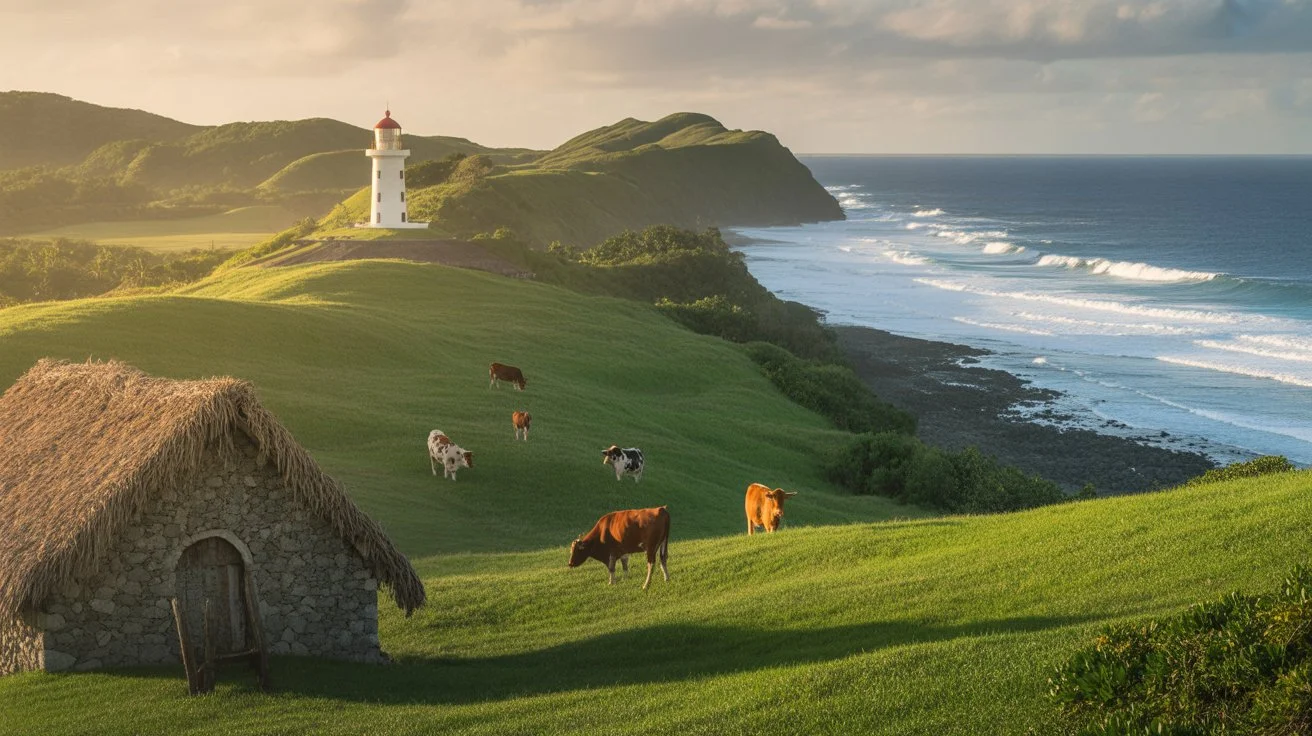
Basco Lighthouse stands 66 feet tall on Naidi Hills offering 360-degree views of the West Philippine Sea and Mount Iraya. Arrive at sunrise or sunset for dramatic lighting.
Vayang Rolling Hills showcase undulating grass where cows and goats graze freely. Walk down established paths beyond the main viewing area for better photos.
Valugan Boulder Beach displays huge volcanic rocks from Mount Iraya eruptions. Swimming here kills people. Strong currents smash against boulders creating deadly conditions.
Racuh a Payaman delivers the iconic Batanes landscape where rolling hills meet the Pacific Ocean. Locals call this Marlboro Country. Walk down from the viewing platform for superior vistas.
Tayid Lighthouse overlooks Pacific cliffs in Mahatao. Less crowded than Basco Lighthouse, this spot works perfectly for sunset watching.
Homoron Blue Lagoon provides the calmest swimming conditions in Batanes. Clear water fills this natural pool protected from open ocean currents.
San Carlos Borromeo Church preserves Spanish colonial architecture dating to the late 1700s. The church choir performs with nearly professional quality.
House of Dakay survived the devastating 1918 earthquake that destroyed most structures. Built in 1877 from limestone and coral, the great-great-grandson of the original owner still lives inside.
Spanish Bridge constructed in 1866 has never needed repairs yet remains fully intact. Modern bridges built nearby require constant maintenance.
Honesty Shop operates 24 hours without staff. Customers drop payment in boxes demonstrating why Batanes has virtually zero crime.
Maydangeb White Beach requires high tide for swimming. Check tide schedules before visiting or you’ll find water too shallow.
Tukon Chapel follows traditional Ivatan house design with thick walls that withstand typhoon winds. Adjacent Fundacion Pacita serves Italian-Filipino fusion at the only fine dining spot in Batanes.
8 Essential Sabtang Island Locations
Chavayan Village preserves authentic stone houses with meter-thick limestone walls topped with cogon grass roofs. The single main road ends at a fishing boat shore.
Morong Beach features the famous Nakabuang Arch that frames ocean views in countless photos. Cream-colored sand makes this one of the better swimming beaches.
Chamantad-Tinyan Viewpoint overlooks dramatic coves where the Pacific Ocean hugs jagged cliffs. Roadside vendors sell homemade fruit wines. Try Alunut made from green walnuts.
Lukuy Beach stays hidden because no road access exists. This white sand beach with calm waters requires a 30 to 40-minute valley hike. Only overnight visitors have time to explore here.
Savidug Village showcases more traditional stone houses with less tourist traffic than Chavayan.
Sabtang Lighthouse sits above Malakdang port greeting visitors arriving by boat.
Sta. Rosa de Lima Chapel remains the only church with a cogon grass roof in all of Batanes.
San Vicente Ferrer Church displays Jesus statues that look Filipino rather than Caucasian, reflecting local artistic interpretations.
6 Itbayat Island Adventure Spots
Only adventurous travelers should attempt Itbayat. The boat journey takes four hours through rough seas. Bring strong motion sickness medication.
Torongan Cave holds archaeological evidence that the first Austronesians from Taiwan landed here around 2000 BC.
Mt. Karaboboan offers hiking with panoramic views as the highest port in Batanes.
Sta. Maria de Mayan Church serves as the community center for this remote island.
Rugged cliffs line the coastline providing dramatic scenery for photographers and nature lovers.
Wild landscapes offer complete isolation for travelers seeking untouched beauty.
Traditional villages maintain practices unchanged for decades.
Swimming Safety and Food Worth Trying
Most beaches look beautiful but hide deadly currents. Stick to three proven safe spots: Homoron Blue Lagoon, Morong Beach, and Lukuy Beach. Maydangeb White Beach only works during high tide.
Batanes lobster costs 400 to 800 pesos and tastes incredible. Dibang or flying fish appears on most menus during March through May. Try the fruit wines on Sabtang especially Alunut.
Four-Day Itinerary That Works
Day one covers arrival and North Batan including Basco Lighthouse, Valugan Beach, and Vayang Rolling Hills for sunset.
Day two starts at 5:30 AM for the Sabtang boat. The full island tour covers Chavayan Village, Chamantad-Tinyan Viewpoint, and Morong Beach. Stop at the Honesty Shop on your way back.
Day three tackles South Batan’s longer circuit hitting Racuh a Payaman, Tayid Lighthouse, Homoron Blue Lagoon, and House of Dakay.
Day four provides departure buffer or retry opportunities if weather cancelled earlier plans.
How Batanes Tourism Maintains Authenticity
Limited infrastructure keeps development in check. The single-airport restriction controls visitor volume naturally. Community-based tourism ensures locals benefit directly through homestays and tricycle tours.
Environmental fees fund conservation. The 550 pesos collected per tourist maintains trails and protects heritage sites. The honesty system attracts visitors interested in values beyond scenery.
Marketing focuses on cultural authenticity rather than luxury amenities. This positioning filters tourists who respect local norms. Other destinations could learn from this approach where controlled access plus community ownership creates sustainable tourism.
The province proves that expensive doesn’t mean exploitative. High costs reflect real scarcity and investment in preservation. You’re paying for exclusivity that protects rather than destroys.
When Batanes Actually Disappoints
The destination fails travelers expecting Boracay-style beaches. Sand beaches barely exist. It disappoints people seeking nightlife since Basco shuts down after dinner.
Impatient travelers wanting fast-paced sightseeing won’t enjoy the slow rhythm. Batanes works best for people who appreciate landscapes, photography, cultural immersion, and peaceful settings.
Weather unpredictability can ruin plans. Boats cancel regularly during rough seas. Build flexibility into your schedule and bring sufficient budget for these constraints.
What Makes the Experience Worth It
The islands preserve something rare in modern tourism. Culture remains genuine rather than performed. Landscapes stay undeveloped. People trust visitors rather than seeing them as revenue sources.
Your photos will look incredible. But the real value comes from experiencing a place where honesty still governs daily life. Where isolation preserved traditions that development erases elsewhere.
Go with realistic expectations and accept weather risks. The experience rewards those who approach it on the destination’s own terms rather than demanding it conform to typical vacation templates.