
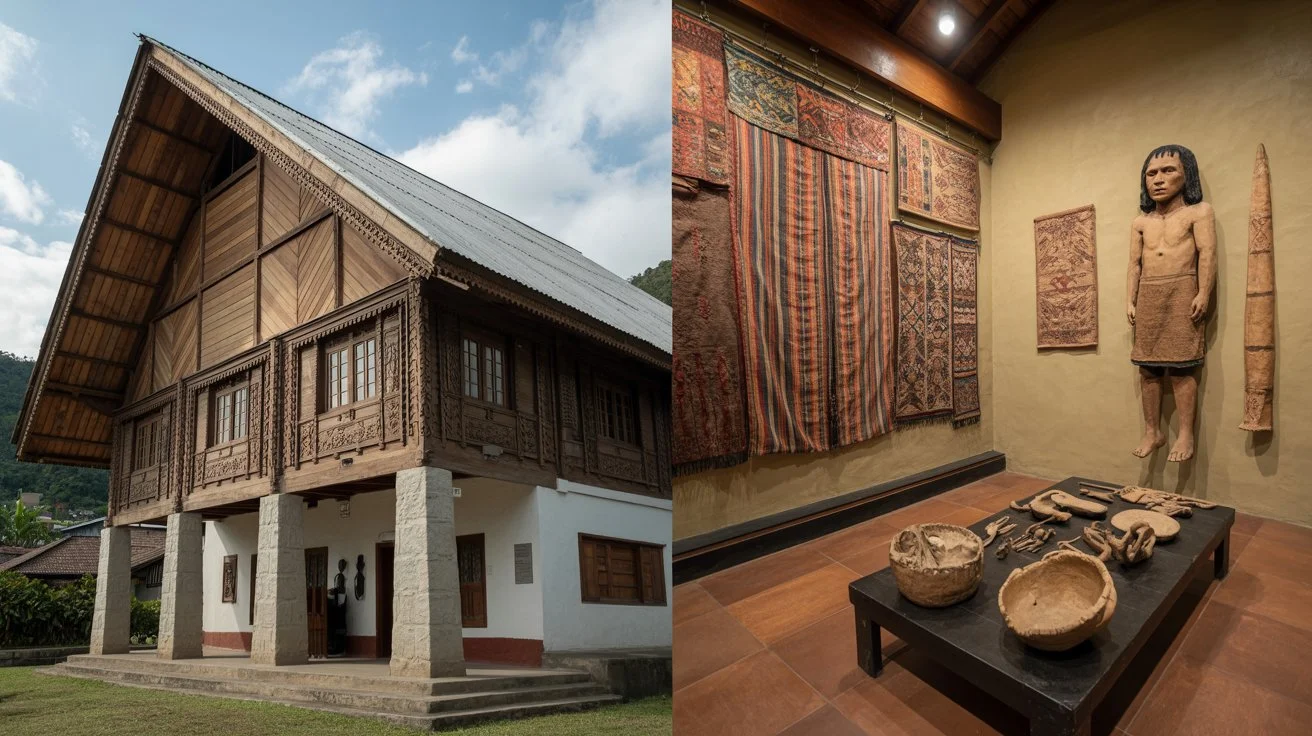
Baguio Museum: A Cultural Gateway to Cordillera Heritage
Beyond the strawberry farms and weekend markets of Baguio City lies a quiet repository of indigenous knowledge. The Baguio Museum, minutes from Burnham Park, preserves the stories of Cordillera communities whose traditions predate the city itself. This is not a space designed for Instagram moments; it is a focused collection of indigenous artifacts, historical documentation, and material culture that provides context most tourists never encounter.
What the Baguio Museum Represents
The museum centers Cordilleran identity through objects and historical documentation. It focuses specifically on indigenous groups like the Ifugao, Kankanaey, Ibaloi, and Bontoc, highlighting how these communities adapted to high-altitude living, developed sophisticated agricultural systems, and maintained social structures that colonial powers never fully understood. Rather than presenting culture as static, exhibits show continuity from traditional textiles to modern weaving cooperatives, from ancestral land concepts to contemporary environmental movements.
Where to Find It and Why Location Matters
Located on Governor Pack Road, the museum sits a short walk from Burnham Park and about ten minutes from Session Road. This central placement makes it accessible on foot or by quick jeepney ride, integrating seamlessly into downtown walking routes. Unlike attractions scattered across mountain barangays, you can visit between morning market runs, and afternoon park strolls without renting transportation.
Inside the Museum: Key Exhibits and Collections
The exhibits unfold through themes rather than timelines: daily life, ritual practice, trade networks, and cultural adaptation. Display cases hold objects that were used, not just made for show.
Indigenous Tribes and Their Artifacts
The Ifugao are represented through rice terrace engineering tools and bulul guardian figures, wooden sculptures believed to protect harvests. Kankanaey exhibits highlight intricate beadwork and epic oral tradition documentation, while Ibaloi materials highlight gold-working techniques and mummification practices unique to Benguet province. Bontoc collections include warrior regalia and peace pact artifacts, documenting inter-village diplomacy before Spanish intervention.
What makes these displays valuable is the context provided. Labels explain social functions, not just aesthetic qualities. A woven blanket isn’t just beautiful, it’s a kinship marker. A brass gong isn’t decorative, it’s a wealth object and ceremonial instrument.
Tools, Textiles, and Cultural Objects
Agricultural tools reflect how subsistence shaped culture: wooden plows, harvesting knives, and irrigation implements showing sophisticated environmental knowledge. Textile exhibits include backstrap looms and finished fabrics with explanations of how patterns encoded social information. Ceremonial items include ritual jars, healing instruments, and extensive photographic archives from the American colonial period, displayed with critical commentary about colonial photography’s problematic framing of indigenous groups.
Practical Visitor Information
Entry remains remarkably affordable, typically 20-30 pesos, with discounts for students and seniors. Standard hours run Tuesday through Sunday with Monday closures. Morning visits offer quieter experiences before school groups arrive, while the museum makes an excellent rainy-day backup since collections are entirely indoors. Most visitors spend 45 minutes to 90 minutes depending on reading pace. Photography policies vary by section, so confirm at entry.
Who Should Visit
Students researching Philippine indigenous cultures, teachers organizing field trips, and families with children interested in anthropology will find concentrated educational value. Culture-focused travelers who’ve seen the standard Baguio circuit will appreciate this as a deeper dive. The slower pace suits visitors who treat museums as learning experiences rather than photo locations.
However, first-time visitors with limited schedules should prioritize Baguio’s signature experiences first. The museum doesn’t offer interactive exhibits or contemporary art installations. Young children without specific interest in history may find it tedious, as there’s no children’s section or hands-on activities.
How It Compares to Other Baguio Attractions
Unlike BenCab Museum, which showcases contemporary Philippine art in a visually striking space, the Baguio Museum is historical and ethnographic. BenCab offers coffee shops and aesthetic experience; the city museum offers context and documentation. Compared to Tam-awan Village, which recreates traditional architecture outdoors, the museum focuses on preservation over recreation, artifacts over immersion. Both sites complement rather than compete, Tam-awan shows what spaces felt like, while the museum shows what people made and valued.
Is the Baguio Museum Worth Visiting?
Worth depends on what you value in travel. If you measure attractions by visual spectacle or social media content, probably not. But if you travel to understand places rather than just see them, absolutely. The museum provides cultural context that transforms how you perceive the entire Cordillera region, answering questions most tourists don’t know to ask about pre-colonial governance, weaving traditions, and how mountain communities negotiated with colonizers while maintaining autonomy.
For students and researchers, it’s essential. For families wanting educational depth, it’s valuable. For general tourists doing a standard weekend, it’s optional but enriching. The low entrance fee and central location remove most barriers, the only question is whether you’re willing to slow down enough to engage.
Frequently Asked Questions
How long does a visit typically take?
Most visitors spend 45 to 90 minutes. Quick walk-throughs take 30 minutes but miss most value, while thorough visits with careful reading can extend to two hours.
Is it suitable for children?
Children with existing interest in history or anthropology will find it engaging. The museum lacks interactive elements, so young kids without specific interest may get bored quickly.
Can you take photos inside?
Photography policies should be confirmed at entry. Some areas may restrict flash photography to protect artifacts. The museum isn’t optimized for content creation or social media photography.
What is the entrance fee?
Entry is typically 20-30 pesos with discounts available for students and senior citizens, reflecting the museum’s public education mission.
Why It Still Matters
In a city increasingly defined by commercial tourism, the Baguio Museum serves as a necessary anchor. It reminds visitors that this land supported complex societies long before it became a vacation destination. The museum provides accessible education about cultures that urban Filipinos and foreign tourists often know little about. Whether you spend an hour there or skip it entirely, it exists as an option for travelers who want their tourism to include learning, offering patience, context, and indigenous voices telling their own story.


