Moalboal Sardine Run: Your Complete 2026 Guide to Swimming with Millions of Fish
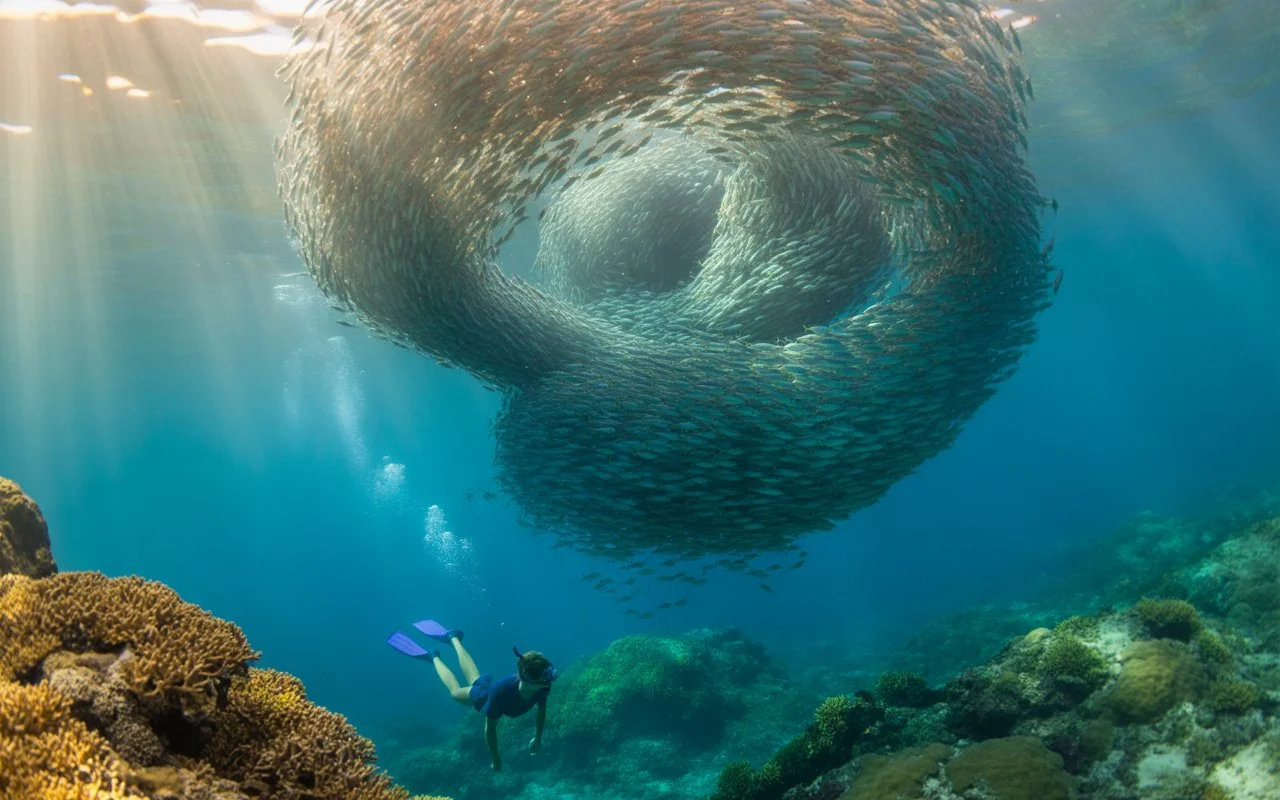
Picture swimming through a living tornado of silver fish, so dense they block out the sunlight above you. The Moalboal Sardine Run lets you do exactly that just 30 meters from shore at Panagsama Beach in Cebu. Over a million sardines form massive swirling balls year-round in these protected waters, making this one of the Philippines’ most accessible marine wonders.
What Makes the Moalboal Sardine Run Special
The sardines here behave differently than anywhere else except South Africa. Instead of migrating seasonally, these fish stay permanently off Panagsama Beach because the Taňon Strait provides constant nutrients. Scientists call this a stationary bait ball, where sardines cluster tightly to confuse predators like jack fish and needlefish.
South Africa’s famous sardine run happens only from May to July and requires expensive boat trips. Moalboal offers something different: consistent access, zero boat fees, and encounters you control at your own pace. The local government designated Panagsama Beach as a Marine Protected Area in 2015, which banned net fishing and allowed the sardine population to thrive.
Finding the Exact Location
Walk down to Panagsama Beach and look for the bright yellow pier extending from Marina Village Dive Resort. The sardines gather along the reef wall about 20 to 30 meters out. Early morning between six and eight brings them closer to shore, sometimes within 15 meters.
GPS coordinates 9°56’58.4″N 123°21’55.1″E will place you right at the yellow pier. The underwater terrain starts as shallow coral gardens at two to five meters depth, then drops suddenly to 40 meters at the wall. Confident swimmers can reach the sardines in under a minute from the beach.
Best Time to Visit
Get there by six thirty in the morning. The water sits glass-calm before wind picks up, and sunrise light makes the silver scales explode in orange and gold. You’ll share the water with just two or three other early risers instead of the noon crowd.
Cebu’s dry season runs November through May, delivering the best underwater visibility. March and April offer peak conditions with 20-meter clarity. September stands out as the secret month when off-season pricing drops 30 percent and beaches empty completely. Weekends draw crowds from Cebu City, especially during summer months.
Getting There from Cebu City
Ceres Liner buses depart hourly from South Bus Terminal in Cebu City from five in the morning until six at night. Look for buses marked “Bato via Barili” and avoid anything saying “Bato via Oslob.” An air-conditioned bus costs 150 to 209 pesos and takes three to four hours.
Tell the conductor to drop you at Jollibee Moalboal. From there, tricycles charge 50 to 100 pesos for the five-minute ride to Panagsama Beach. Private transfers cost 3,000 to 5,000 pesos but deliver you directly to your resort in two and a half hours.
Breaking Down the Real Costs
Swimming with the sardines costs exactly 100 pesos if you’re comfortable in open water and own basic snorkel gear. Hire a guide for 300 to 500 pesos if you’re new to snorkeling or nervous about the depth. This price includes a life jacket, mask, and snorkel.
Fins rent for 150 pesos at dive shops. GoPro cameras rent for 600 pesos including SD card. Photo packages where guides shoot for you run 500 pesos. Discover Scuba Diving costs 2,500 pesos if you want to experience the sardines from below without certification.
Budget travelers sticking to snorkeling spend about 400 to 600 pesos total. Premium experiences with guides, GoPros, and extended sessions reach 1,500 pesos.
Snorkeling Versus Diving
Snorkeling wins for seeing sardines because they swim at one to ten meters depth. You float on the surface and watch them swirl beneath you, then duck dive to swim through the middle of the ball. The silver shimmer effect shows best from above when sunlight reflects off their scales.
Diving offers a different perspective from underneath the school. Looking up, you see sardines blocking out the sky like a living ceiling. Your air tank limits bottom time to 30 or 40 minutes and requires certification or Discover Scuba at 2,500 pesos.
Safety and the Drop-Off Challenge
That sudden depth change at 20 to 30 meters from shore scares more people than anything else. You’re swimming over colorful coral, then the bottom vanishes into dark blue nothingness. Whether the water below you measures two meters or 200, you float the same with a life jacket.
Yellow safety ropes run along the popular route from shore to the reef wall. Grab these if you need stability. Good guides stay within arm’s reach and handle hundreds of panicked moments. Practice floating in a pool before your trip if possible.
Currents strengthen in the afternoon as tides shift. Early morning water sits nearly motionless. Solo swimmers must bring a buddy for basic ocean safety. Tell your guide immediately if you feel uncomfortable, cold, or tired.
What Else You’ll See
Sea turtles feed on seagrass beds between five and 15 meters from shore. They appear most commonly in the morning from six to nine and ignore snorkelers completely. Jack fish and trevally hunt the bait ball edges, darting through at high speed to grab stragglers.
Lionfish emerge around five in the evening at the house reef. Banded sea kraits, highly venomous sea snakes, live in rocky crevices but are docile and unlikely to bite unless cornered. The coral gardens themselves deserve attention with brain coral, staghorn formations, and sea fans.
Where to Stay
Panagsama Beach puts you closest to the action. Sea Turtle House offers dorm beds from 400 pesos per night. Pescadores Seaview Suites at 2,500 pesos delivers the best mid-range value with rooftop bay views. Quo Vadis Dive Resort represents luxury at 4,500 to 6,000 pesos nightly with an infinity pool and PADI five-star facility.
White Beach, locally called Bas Daku, provides sandy shoreline 15 minutes away by tricycle. Families prefer this area for actual beach lounging between underwater adventures. For more beach destinations in the Philippines, explore our guide to the best places to travel to. Book directly through resort Facebook pages to sometimes score discounts.
Essential Packing List
Reef-safe sunscreen matters more than anything else. Chemical sunscreens containing oxybenzone kill coral and are banned in marine protected areas. Brands using zinc oxide cost 400 to 600 pesos locally. A rashguard prevents sunburn during extended water time.
Quick-dry towels pack smaller and dry faster in humid climate. Bring a reusable water bottle and use refill stations at 10 to 20 pesos per liter. Mosquito repellent becomes essential at sunset when dengue risk exists.
Conservation and Ethics
Moalboal’s sardines live completely wild with zero human feeding, unlike Oslob whale sharks where boats feed fish daily. Bantay Dagat patrols enforce a strict no-touch policy with 2,500-peso fines per violation. Human skin oils damage the protective mucus layer on fish, and coral takes decades to grow.
Use only reef-safe sunscreen containing zinc oxide. Ten percent of tourism fees support Marine Conservation Philippines and local reef restoration projects. The economic success of ethical wildlife tourism here influences policy decisions elsewhere in the Philippines.
Common Questions
Can beginners who can’t swim participate?
Yes, with proper guides who provide life jackets and use yellow safety ropes. Many successful participants swim only 10 to 15 meters in pools back home.
Do the sardines ever leave seasonally?
No, these fish maintain year-round residence because the Taňon Strait provides constant food sources. Schools may move slightly deeper based on daily conditions but never leave the Panagsama area.
How crowded does it get during peak season?
Weekends and holidays from December through April bring 50 to 100 snorkelers between nine and three. Early morning before eight sees 90 percent fewer people.
Final Thoughts
Swimming through a million sardines changes how you think about the ocean. The synchronized movement and sheer density of life creates moments that stick with you permanently. The experience stays accessible to almost anyone willing to try at just a few hundred pesos.
Go at sunrise when the water glows orange and the sardines dance in morning light. Use reef-safe sunscreen and maintain two-meter distance from every living thing. Hire a local guide who knows the reef intimately. The sardines will still be here next year because people chose to protect them.