
Food Poisoning vs Stomach Bug: How to Tell the Difference Fast
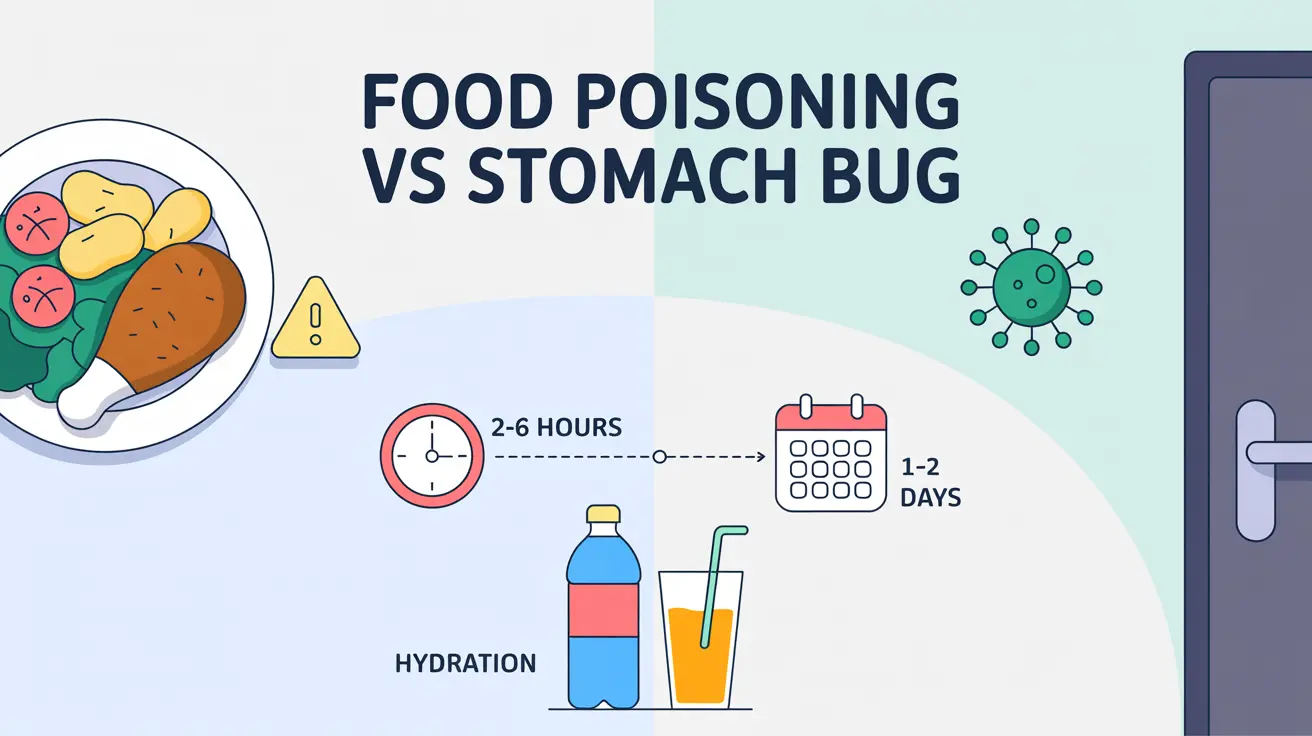
You wake up nauseous, your stomach twists, and you run to the bathroom. Now the guessing starts. Was it something you ate, or did you catch a virus. The truth is simple. The symptoms can look the same.
The fastest way to sort it out is not a long symptom list. It is timing, exposure, and how your body is handling fluids. Once you know those three, you can choose the right next step.
The 3-question check
Ask yourself these questions and answer them honestly.
- Did symptoms start within a few hours after a meal that felt risky.
- Were you around someone sick in the last one to two days.
- Did anyone else who ate the same food get sick.
One strong “yes” can point you in the right direction. Two strong “yes” answers usually make it clear.
What your timing usually suggests
If you felt fine at dinner and got sick late that night, food poisoning rises on the list. Fast onset after a meal is a common pattern.
If symptoms showed up the next day, or the day after, a stomach bug is more likely. Viruses often take longer to show symptoms.
If you cannot link it to a meal or a sick contact, do not panic. Many cases are still mild and short. Focus on hydration and watch for red flags.
Food Poisoning vs Stomach Bug: Side by Side Comparison
Comparison table
Use this quick table when you feel too sick to read a lot.
| Signal | Food poisoning | Stomach bug |
|---|---|---|
| Typical start | Often hours after eating | Often one to two days after exposure |
| Usual source | Contaminated food or drink | Close contact or shared surfaces |
| Who else gets sick | People who ate the same item | Family, schoolmates, coworkers |
| Common symptoms | Vomiting, diarrhea, cramps | Vomiting, diarrhea, cramps |
| Usual length | Often one to three days | Often one to three days |
| Biggest risk | Dehydration | Dehydration |
The simple takeaway
For food poisoning vs stomach bug, timing and exposure beat symptoms. Most symptoms overlap. Your body’s fluid loss matters more than the label.
What Food Poisoning Really Means
Definition in plain words
Food poisoning is illness from germs or toxins in food or drinks. You get sick because something contaminated what you consumed.
Common causes you can name without going deep
Bacteria can trigger strong cramps and diarrhea. Some viruses also spread through food. Parasites are less common, but possible. Toxins from spoiled food can hit fast.
Common food and handling triggers
Undercooked meat and eggs are common risks. Unwashed produce can carry germs. Unpasteurized milk products can be risky. Food left out too long is a classic cause. Cross contamination in the kitchen also matters.
Think about what happened before you got sick. Was it leftovers. Was it a buffet. Was it a rushed meal on the go. That context helps.
What a Stomach Bug Really Is
Definition and common name
A stomach bug is usually viral gastroenteritis. People also call it stomach flu. It is not the same as influenza.
How it spreads
Viruses spread through close contact. They also spread through shared surfaces. Bathrooms, door handles, and phones can carry germs.
Why outbreaks feel sudden
One person gets sick, then others follow. It spreads fast in homes, schools, daycare, and travel groups. It can feel like it came from nowhere.
The Timing Clues That Usually Solve It
Incubation period explained simply
Incubation is the time between exposure and symptoms. That window gives you clues.
When food poisoning symptoms often start
Many food related illnesses start within hours. You may feel fine, then suddenly crash. Some causes take longer, so do not rule it out if onset was later.
When a stomach bug often starts
A stomach virus often starts the next day, or the day after. You may not remember touching a contaminated surface. That is normal.
How long each tends to last
Many cases improve within one to three days. Some linger longer, especially diarrhea. If symptoms keep getting worse after day two, pay attention. That shift can mean you need medical advice.
Exposure Clues That Matter More Than You Think
Food linked clues
A meal stands out in your memory. A food item smelled off. Food sat out at a gathering. A restaurant meal feels like the trigger. Someone else who ate the same thing got sick too.
Those clues push the needle toward a food source.
Contact linked clues
A child had vomiting at school. A coworker was out sick. Someone in your home got ill first. You shared a bathroom with a sick person. Those clues point toward a virus.
Travel and water clues
Recent travel changes your risk. Street food can be a factor. Unsafe water can be a factor too. Even ice can matter in some places.
Symptoms That Overlap So Do Not Overread Them
Shared symptoms bucket
Both problems can cause nausea. Both can cause vomiting. Both can cause diarrhea. Stomach cramps are common. A mild fever can happen. Fatigue is also common.
That is why people get stuck. The symptom list alone rarely solves it.
Symptom patterns that can lean one way
Some people feel mainly gut symptoms with a virus. Others feel chills and body aches too. Some food related illness hits hard and fast after eating. Some viral illness builds over a day.
None of this is perfect. Use it as a hint, not a verdict.
Symptoms That Should Raise Concern
Red flag checklist
These signs mean you should get medical help sooner.
- Blood in stool.
- Black, tar like stool.
- Fever that stays high.
- Severe belly pain that does not ease.
- Confusion or extreme weakness.
- Fainting or trouble staying awake.
- You cannot keep fluids down for many hours.
- Signs of dehydration that are getting worse.
- Diarrhea that lasts more than three days.
High risk groups
Some people get sick harder and faster.
Young kids can dehydrate quickly. Older adults can lose fluids fast. Pregnant people need extra caution. People with weak immune systems need earlier care.
If you are in a high risk group, do not wait too long to call a clinician.
Dehydration: The Real Risk in Both
Signs adults can spot
Check your urine. Dark urine is a warning sign. Going less often is a warning sign. Dry mouth and dizziness can signal fluid loss. A racing heartbeat can happen too.
Signs in babies and kids
Watch wet diapers. Fewer wet diapers can mean dehydration. No tears when crying can be a clue. A dry tongue can be a clue. Unusual sleepiness can be a clue too.
Simple hydration check
Hydration is improving when you can sip fluids without vomiting. Urine should get lighter over time. You should feel less dizzy when standing. If the opposite happens, treat it as urgent.
What to Do at Home First
Fluids strategy that works
Start with small sips. Do not chug a big glass. Try oral rehydration drinks if you have them. Broth can help. If you hate sweet drinks, try a salty soup.
If you keep vomiting, pause for a short time. Then restart with tiny sips again.
Food strategy after vomiting slows
Wait until your stomach settles. Then eat small bland foods. Toast, rice, bananas, applesauce, and plain crackers are common choices. Keep portions small.
Avoid greasy foods at first. Avoid spicy foods at first. Avoid alcohol. Avoid caffeine for now.
Rest and bathroom hygiene
Rest helps your gut calm down. Wash hands often. Clean bathroom surfaces after vomiting or diarrhea. Use gloves if you can. Wash soiled clothes and towels separately.
This reduces spread if a virus is involved.
Medicines: What Helps and What to Be Careful With
Fever and aches
Acetaminophen can help with fever and aches for many people. Avoid taking more than the label allows. If you have liver disease, ask a clinician first.
If you have little food in your stomach, some pain medicines can irritate it. Be cautious.
Anti diarrhea meds
Anti diarrhea medicine can reduce trips to the bathroom. It can also be a bad idea in some cases. Avoid it if you have blood in stool or high fever. In those cases, call a clinician.
Antibiotics
Antibiotics do not help viral illness. They also do not help most simple cases of food related illness. Doctors may use them in specific situations. Do not self start antibiotics.
When to Call a Doctor or Go In
Same day care triggers
Go sooner if you see blood in stool. Go sooner if pain is severe. Go sooner if fever stays high. Go sooner if you cannot keep fluids down. Go sooner if dehydration signs appear.
When symptoms do not follow the normal path
Call if diarrhea lasts more than three days. Call if vomiting lasts beyond a day. Call if you improve, then crash again. That pattern can matter.
What to prepare before you call
Write down when symptoms started. Note what you ate in the prior day. Note sick contacts. Note recent travel. This helps a clinician decide next steps.
When Can You Go Back to Work or School
The practical rule most people need
Return when vomiting and diarrhea have stopped. Return when you can eat and drink normally. Return when you feel steady on your feet.
If you handle food, work in healthcare, or care for kids
Be stricter. Stay home longer to protect others. Keep hygiene tight when you return. If your job has rules, follow them.
How to Prevent the Next Round
Food safety basics that actually prevent food poisoning
Refrigerate leftovers quickly. Do not leave meat or dairy out for long. Keep raw meat separate from ready foods. Wash cutting boards and knives well. Cook meat to safe temperatures.
Wash hands before cooking and before eating. It sounds basic. It works.
Stomach bug prevention
Wash hands after the bathroom. Wash hands before eating. Disinfect high touch surfaces if someone is sick. Avoid sharing towels. Avoid preparing food for others while ill.
Food Poisoning vs Stomach Bug vs Flu: Do Not Mix These Up
What influenza looks like
Influenza is mainly a respiratory illness. It often causes sore throat, cough, and congestion. Fever and body aches can be strong. Vomiting can happen, but it is not the main feature for most adults.
If your main issue is cough and chest symptoms, think beyond the stomach.
FAQs
Can food poisoning be contagious?
Many cases are not spread person to person. Some infections linked to food can still spread through poor hygiene. Wash hands well either way.
Can a stomach bug come from food?
Yes, some viruses can spread through food handling. That is why hygiene matters during cooking.
Why did I get sick but nobody else did?
People eat different amounts. People have different stomach acid and immunity. You may also have eaten the risky item while others did not.
How long after eating is it likely food poisoning?
Fast onset within hours is a common pattern. Later onset can still happen. Use timing with exposure clues.
What is the best drink if I cannot keep water down?
Try tiny sips. Try oral rehydration drinks. Try broth. If vomiting will not stop, seek care.
Should I make myself vomit?
Do not force vomiting. It can cause harm. Focus on fluids and rest.
Do probiotics help?
Some people find them useful during recovery. Keep expectations modest. Hydration matters more.
When should kids be seen sooner?
Seek care sooner if a child seems very sleepy, cannot drink, has fewer wet diapers, or shows dehydration signs. Trust your gut as a parent.
Final Takeaway
Food poisoning vs stomach bug is confusing because symptoms overlap. Do not chase perfect certainty. Use timing and exposure to pick the most likely cause. Then focus on hydration and rest.


